Глава 1
Breaking Free: Tara Westover's Journey from Isolation to Enlightenment
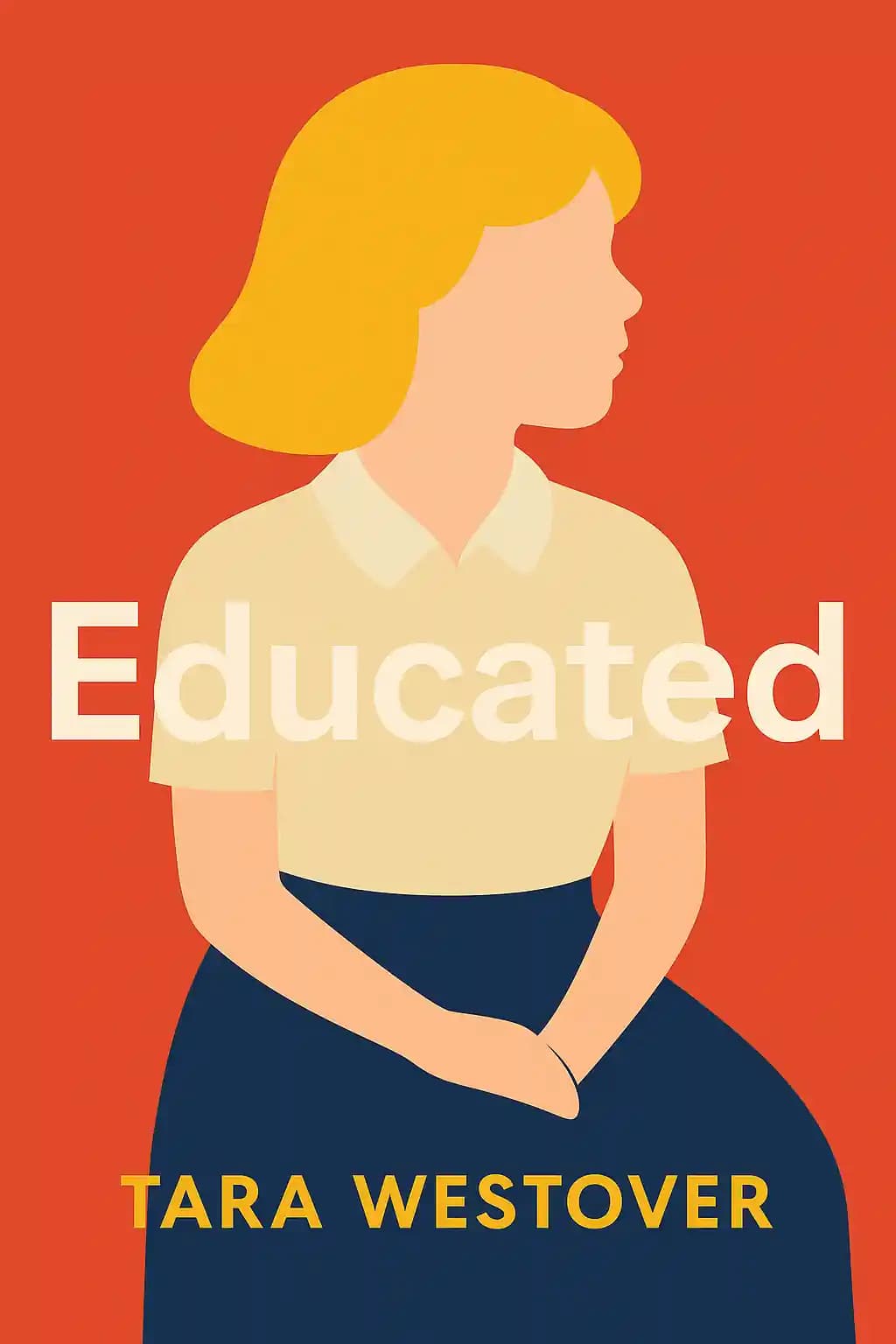
Imagine growing up without a birth certificate, never setting foot in a classroom until age seventeen, and being raised by parents who believed the end of the world was imminent. This isn't the plot of a dystopian novel-it's the extraordinary true story of Tara Westover, chronicled in her memoir "Educated," which rocketed to the top of the New York Times bestseller list and remained there for over two years. Barack Obama and Bill Gates both named it among their favorite books, while Oprah Winfrey described it as "one of the most powerful memoirs I've ever read." The book has been translated into 45 languages and has sold millions of copies worldwide, resonating with readers through its raw exploration of family loyalty, self-invention, and the transformative power of education. In a cultural moment when we're questioning the value and purpose of higher education, Westover's story provides a striking reminder of education's liberating potential-not just as academic achievement, but as a pathway to understanding oneself and one's place in the world.
Глава 2
Mountain Shadows: A Childhood Beyond Government Reach
The red railway car beside the barn serves as the opening stage for Tara Westover's extraordinary tale. Standing there, surrounded by dancing conifers and sagebrush, she introduces us to a world most would find unimaginable in modern America. Buck's Peak in rural Idaho isn't just her home-it's a fortress against the outside world, a place where her survivalist father has created an alternate reality governed by his apocalyptic visions and deep distrust of government.
What makes Tara's childhood so remarkable isn't just its isolation but its complete disconnection from official systems. No birth certificate marks her arrival into the world. No school records track her educational progress because there is no formal education to track. The government doesn't know she exists-a ghost child in the modern age. Her father, Gene (a pseudonym Westover uses), has orchestrated this invisibility deliberately, convinced that government institutions are corrupt arms of the Illuminati, poised to infiltrate their lives and destroy their souls.
The family's preparation for doomsday shapes their daily existence. They can peaches, stockpile supplies, and learn to defend themselves against the "Feds" who might come for them just as they came for Randy Weaver at Ruby Ridge. This isn't abstract paranoia-it's the practical framework of their lives, as routine as brushing teeth is for most children. When Tara hears the mechanical click of firearms being assembled, it doesn't frighten her; it's simply the soundtrack of survival.
The mountain itself becomes a character in this narrative-the Indian Princess peak standing sentinel over their lives, marking the passage of seasons with her changing appearance. "She's always watching," Tara's father would say, and this permanence provides strange comfort in a world where change is viewed with suspicion and fear. The mountain represents constancy in a life otherwise defined by uncertainty-will today be the day the government comes? Will today bring the apocalypse they've been preparing for?
Have you ever wondered what it would be like to grow up believing the end is always near? To see the world not as a place of opportunity but as a corrupted landscape waiting to collapse? This is the lens through which young Tara views reality-not by choice but by circumstance of birth. Her father's grand gestures and absolute certainty leave little room for questioning. The crickets chirp, the guns click, and somewhere in the distance, the Feds are always coming.
Глава 3
Herbal Healing and Hidden Rebellions: Mother's Quiet Revolution
In the shadow of her husband's domineering presence, Tara's mother emerges as a complex figure of quiet rebellion and practical adaptation. As a midwife, she walks a dangerous line between the family's rejection of modern medicine and the practical needs of the community. Each call to assist a birth becomes both an act of service and a small defiance against her husband's isolationist worldview.
The unpredictability of childbirth serves as a crucible, refining Mother's skills and gradually elevating her standing in the community. While Gene preaches complete separation from government systems, Mother pragmatically recognizes certain necessities. The telephone she convinces him to install represents a small victory-a thread connecting their isolated world to the outside. Even more significantly, she arranges for birth certificates for the children, creating official records that their father had long resisted.
What drives this quiet revolution? Is it merely practical necessity, or does Mother harbor deeper doubts about her husband's extreme views? The text suggests a complex interplay of loyalty, pragmatism, and perhaps unacknowledged dissent. She remains devoted to her husband while subtly creating pathways that might eventually allow her children to access the wider world.
Through Mother's character, we see how women in restrictive environments often exercise power through indirect means. Unable to directly challenge her husband's authority, she instead finds ways to work within and around his boundaries, gradually expanding the family's connections to the outside world while maintaining the appearance of conformity.
The contrast between Faye's genteel upbringing and Gene's wild mountain existence reveals the unlikely attraction that brought them together. Faye's choice to leave behind her mother's world of polished appearances for Gene's untamed mountain life represents both rebellion and liberation. Yet this choice also creates tension, as she navigates between her husband's radical independence and her own more conventional background.
As Mother develops her midwifery practice and later her herbal remedies business, we see her carving out a domain of expertise and authority separate from her husband's. This professional identity provides her with both economic power and social connections beyond the family compound-small freedoms that will eventually create openings for her children, particularly Tara, to glimpse alternative possibilities for their lives.
Глава 4
Fractures in Faith: When Beliefs Collide with Reality
Gene Westover's unwavering faith in divine protection creates a dangerous paradox at the heart of family life. Convinced that God will shield his family from harm, he approaches dangerous work with reckless abandon, viewing safety precautions as evidence of insufficient faith. This theological stance transforms the family junkyard from a childhood playground into a theater of potential disaster.
The collision between Gene's faith and physical reality becomes brutally apparent through a series of accidents. Luke suffers severe burns when a fuel tank explodes. Shawn endures multiple head injuries from falls. Even Gene himself becomes a victim of his own convictions when an explosion leaves him with life-threatening burns. Yet remarkably, these incidents only strengthen his belief system. Each survival becomes evidence of God's miraculous intervention rather than a warning about preventable danger.
What happens when a worldview becomes impervious to contradictory evidence? Gene's interpretation of these accidents reveals the circular logic of his belief system. If someone is injured, it tests their faith. If they survive, it proves God's protection. This framework makes his beliefs essentially unfalsifiable-no event, no matter how traumatic, can disprove them.
For young Tara, these incidents create cognitive dissonance. She witnesses the very real suffering of her family members while simultaneously being taught to interpret these events through her father's theological lens. The junkyard, once a place of childhood adventure, transforms in her perception to a site of danger and fear. Her father's disregard for basic safety measures-having children work without gloves or proper equipment-begins to register not as faith but as negligence.
This realization marks one of the first significant fractures in Tara's acceptance of her father's worldview. If he could be wrong about something as fundamental as physical safety, what else might he be wrong about? The question doesn't fully form in her young mind, but the seed of doubt is planted.
The family's response to injuries-treating severe burns and concussions with herbal remedies rather than seeking medical care-further highlights the practical consequences of their ideological isolation. Pain that could be managed, injuries that could heal more completely, are instead endured as spiritual tests. The boundary between martyrdom and unnecessary suffering blurs, raising profound questions about where religious freedom ends and child endangerment begins.
Глава 5
Finding Voice: The First Glimpses of a World Beyond
Against the backdrop of isolation and danger, young Tara begins discovering outlets that connect her to the broader world. Music and performance become her first bridges to experiences beyond her father's control. Taking babysitting jobs in town provides not just income but exposure to different family dynamics and lifestyles. These small freedoms plant seeds of curiosity about the world beyond Buck's Peak.
The contrast between Tara's rough-hewn life in steel-toed boots and the elegance of piano lessons creates a growing awareness of different possible identities. In dance classes, despite restrictions imposed by her family's strict modesty standards, she experiences the liberating anonymity of being just another leotard-clad student. These moments of belonging to something beyond her family become increasingly precious.
When Tara secures a lead role in a local musical, we see a fascinating paradox emerge. Her father, despite his deep suspicion of worldly influences, takes pride in her performance. This brief alignment of Tara's emerging talents with parental approval creates a fleeting harmony-a moment when her individuality is celebrated rather than suppressed.
The Y2K preparations mark another pivotal moment in Tara's developing consciousness. Her father's absolute certainty that civilization will collapse with the calendar change in 2000 leads to frenzied stockpiling and preparation. When midnight passes without incident, something subtle shifts. It's perhaps the first time Tara witnesses her father being definitively wrong about a major prediction. Though he quickly incorporates this disappointment into his worldview, the crack in his infallibility has appeared.
Tyler, Tara's older brother, emerges as a crucial figure in her journey. His love for books and classical music represents an alternative path-one that values knowledge and beauty over survivalist preparation. When he announces his intention to attend college, defying their father's view of higher education as socialist indoctrination, he creates a precedent that will later become Tara's lifeline.
The seeds of Tara's future transformation are visible in these small rebellions and discoveries. Each experience beyond the boundaries of her father's control builds her capacity to imagine alternative futures. Though she remains deeply embedded in her family's worldview, these glimpses of other possibilities accumulate, creating a foundation for the more dramatic breaks that will come later.
Глава 6
Dangerous Bonds: The Shadow of Abuse and Control
The relationship between Tara and her brother Shawn emerges as one of the memoir's most disturbing and complex elements. Initially portrayed as a protective figure who teaches Tara practical skills like driving and self-defense, Shawn gradually reveals a darker side marked by manipulation, humiliation, and physical violence.
The trucking journey they take together offers an early glimpse into this duality. Moments of genuine connection and playfulness alternate with troubling displays of power. When Shawn meets Sadie, a vulnerable young woman, Tara witnesses his deliberate manipulation-the calculated alternation between interest and cold command that keeps Sadie emotionally dependent and desperate for approval.
This pattern later extends to Tara herself. What begins as teasing escalates to physical violence-twisting her wrist, dragging her by her hair, shoving her face in toilet bowls. These episodes are particularly disturbing because they occur within a family system that lacks normal protective boundaries. With parents who prioritize family loyalty over individual safety and who interpret events through a religious lens that minimizes abuse, Tara has no recourse when Shawn's behavior becomes dangerous.
The psychological impact of this abuse manifests in Tara's growing dissociation from her own experiences. She begins to doubt her memories, questioning whether events happened as she recalls them or whether she's exaggerating. This self-doubt becomes a central struggle throughout her journey-the difficulty of trusting her own perceptions when they conflict with the family narrative.
Shawn's character also illustrates how trauma perpetuates itself. His own head injuries from workplace accidents appear to exacerbate his volatile tendencies, creating a cycle where the family's dangerous practices lead to injuries that then contribute to further dysfunction and violence. Without medical intervention or psychological support, these patterns remain unaddressed.
Perhaps most disturbing is how Shawn's behavior reveals the underlying power dynamics of the family system. His ability to switch between charm and cruelty mirrors their father's alternation between charismatic leadership and tyrannical control. The family's isolation creates a closed system where these behaviors normalize, with no external standards for comparison.
When Tara later discovers that her sister Audrey has experienced similar abuse from Shawn, it creates both validation and deeper trauma. Her experiences weren't imagined, but the knowledge that another sibling suffered similarly only highlights the family's catastrophic failure to protect its most vulnerable members.
Глава 7
The Awakening Mind: Education as Liberation
Tara's educational journey begins not in a classroom but through self-directed study at home. Preparing for the ACT exam becomes her first systematic attempt to bridge the vast gaps in her knowledge. The challenges are immense-having never attended school, she lacks even the most basic academic foundations. Mathematics proves particularly daunting; concepts like trigonometry represent not just difficult material but an entirely different way of thinking about the world-logical, orderly, and governed by consistent rules rather than prophetic visions.
When she finally arrives at Brigham Young University at seventeen, the cultural and academic shock is overwhelming. Simple classroom norms that other students take for granted-how to participate in discussions, what plagiarism means, how to structure an essay-are foreign territory. Her first academic paper, written in the stilted biblical language that was her primary literary model, earns her professor's concern rather than approval.
Perhaps the most poignant moment of her early college experience comes during a Western Civilization lecture when she raises her hand to ask what the Holocaust is. The stunned silence of her classmates reveals the enormity of the gaps in her knowledge. It's not just academic information she lacks, but awareness of fundamental historical events that shape our understanding of humanity. This moment crystallizes the depth of her isolation-she has been cut off not just from formal education but from the shared cultural knowledge that connects people to the broader human story.
Despite these challenges, Tara's intellectual awakening accelerates rapidly. Her mind, never lacking in capacity but starved for material, devours new ideas with remarkable hunger. The progression from struggling student to accomplished scholar happens with astonishing speed. Within a few years, she moves from remedial self-study to earning a place at Cambridge University through the prestigious Gates Cambridge Scholarship.
At Cambridge, surrounded by the physical embodiment of scholarly tradition, Tara confronts questions of belonging and worthiness. Do these hallowed halls, these centuries of accumulated knowledge, have a place for someone from Buck's Peak? Her impostor syndrome is not just academic but existential-a question of whether she can truly bridge the chasm between her origins and her aspirations.
The transformative power of education in Tara's life extends far beyond academic achievement. Each new concept she encounters provides tools to reexamine her upbringing. Psychology helps her understand her father's possible bipolar disorder. History allows her to contextualize her family's extremism within broader patterns of American thought. Philosophy offers frameworks for questioning the moral absolutes she was raised with.
Глава 8
Divided Self: Navigating Between Two Worlds
As Tara progresses in her education, she increasingly lives a divided existence. At university, she creates a version of herself that can function in academic settings, engage in intellectual discussions, and form relationships uncomplicated by her background. When she returns to Buck's Peak, she slips back into familiar patterns, careful not to reveal too much of her transformation.
This division creates profound internal conflict. Each world requires the denial of the other. At home, expressing her new ideas or questioning family beliefs risks rejection. At school, fully revealing her background risks misunderstanding or judgment. The psychological toll of this compartmentalization manifests in anxiety, insomnia, and eventually a full breakdown during her time at Harvard.
Charles, Tara's first boyfriend, represents a bridge between these worlds. Their relationship offers her glimpses of "normal" family life-parents who attend college graduations, casual conversations unweighted by apocalyptic concerns, conventional medical care for simple ailments. Yet when Charles visits Buck's Peak, the collision of these realities becomes painfully apparent. What seems like simple cultural differences-using certain words, following particular social norms-are actually manifestations of fundamentally different worldviews.
The physical distance between Cambridge or Harvard and rural Idaho mirrors the growing psychological distance between Tara and her family. Each academic achievement, while bringing her closer to intellectual freedom, takes her further from the possibility of genuine connection with her parents. This creates a grief that academic success cannot compensate for-the realization that she may have to choose between authentic self-expression and family belonging.
Religion becomes a particularly complex aspect of this divided identity. Raised in a fundamentalist interpretation of Mormonism, Tara doesn't reject faith entirely but begins to question the specific doctrines and practices that defined her childhood. Her research on Mormon history allows her to place her family's beliefs in context, seeing them not as absolute truth but as one interpretation among many. This academic perspective on her religious heritage creates yet another divide-she can no longer embrace the certainties of her childhood faith, but neither does she fully reject its influence on her identity.
Perhaps the most painful manifestation of this divided self emerges in Tara's struggle with memory and truth. When she begins to speak about Shawn's abuse, the family's rejection of her account forces an impossible choice-accept their version of reality and deny her own experience, or trust her memories and lose her family. This conflict between competing narratives about the past becomes a central battleground in her struggle for self-definition.
Глава 9
The Price of Truth: Family Bonds Under Pressure
As Tara's education progresses, the tension between her evolving understanding of the world and her family's fixed beliefs reaches a breaking point. The catalyst is her decision to speak openly about Shawn's abusive behavior-first to her parents, then to other family members. Their response reveals the family system's profound dysfunction: rather than protecting her, they close ranks around Shawn and cast Tara as the threat to family unity.
Her mother's response proves particularly devastating. Initially appearing to acknowledge the abuse in private conversations, she later recants completely, claiming Tara is influenced by dark spirits. This betrayal cuts deeper than her father's more predictable rejection. It forces Tara to confront the possibility that even the parent she considered more reasonable and loving will choose family mythology over her safety and truth.
When Tyler writes a letter supporting Tara's account, he too faces ostracism. This shared experience of rejection creates a painful bond between them-siblings cast out for challenging the family narrative. Tara's guilt over what her truth-telling has cost Tyler adds another layer to her emotional burden. How do you thank someone who refuses to let you sink, even when it costs them their own relationship with their father?
The family schism creates ripple effects through the extended community. Relatives are forced to take sides. The family business, which has expanded from junkyard work to a successful essential oils enterprise, becomes another battleground as economic interests align with loyalty tests. Those financially dependent on the business face implicit pressure to accept the official family narrative.
Throughout this painful process, Tara struggles with an almost overwhelming pull to recant her statements and return to the fold. The psychological gravity of family belonging proves nearly as powerful as her commitment to truth. Even as she builds a successful academic career, part of her longs for reconciliation, for a way to bridge the unbridgeable gap between her reality and her family's denial.
This section of the memoir raises profound questions about the nature of family obligation. What do we owe our parents and siblings when their demands conflict with our integrity? Is there a point at which self-preservation justifies cutting ties with those who raised us? Tara's journey offers no easy answers but illuminates the terrible cost of both options-the loss of self that comes with denial of truth, and the loss of belonging that comes with speaking it.
Глава 10
Reclaiming the Narrative: Memory, Identity, and Self-Authorship
Throughout "Educated," memory itself becomes contested territory. Tara's recollections of events often conflict with her family's versions, raising questions about the reliability of memory and the power of narrative in shaping identity. Rather than presenting her memories as unquestionable truth, Tara acknowledges their potential fallibility, even including footnotes that present alternative accounts from family members.
This approach reveals a sophisticated understanding of how memory works-not as perfect recording but as reconstruction influenced by perspective and subsequent experiences. Yet acknowledging memory's imperfection doesn't mean surrendering to others' versions of events. Tara's journey involves learning to trust her own perceptions even when they conflict with the dominant family narrative.
The memoir itself represents an act of reclamation-Tara taking ownership of her story after years of having it defined by others. Writing becomes a form of self-authorship, a way of integrating the disparate pieces of her experience into a coherent whole. The very existence of the book demonstrates her emergence from the shadow of her father's authoritarian narrative control.
Education provides Tara with crucial tools for this process of reclamation. Historical methods teach her to evaluate evidence and consider multiple perspectives. Psychology offers frameworks for understanding family dynamics and the impact of trauma on memory. Philosophy introduces concepts of personal identity and autonomy that help her conceptualize her journey.
The title "Educated" thus takes on multiple meanings. Beyond formal academic learning, Tara's education encompasses self-knowledge, critical thinking, and the ability to construct meaning from experience. It represents not just the accumulation of facts but the development of a self capable of determining its own values and beliefs.
Perhaps the most powerful aspect of this reclamation is Tara's refusal to replace one absolute narrative with another. She doesn't simply reject her family's worldview in favor of academic orthodoxy. Instead, she develops the capacity to hold complexity-to recognize both the damaging aspects of her upbringing and the resilience and values it instilled, to love her family while acknowledging their profound failures.
By the memoir's conclusion, Tara has reached a place of qualified peace. The separation from her parents appears permanent, yet the distance grants her a perspective that allows her to love her father from afar, without the anger that once consumed her. She has learned to navigate the guilt that accompanies her choice to prioritize her own well-being over family loyalty.
Глава 11
The Universal in the Specific: Why Tara's Story Resonates
Though few readers have experienced the extreme isolation and religious fundamentalism of Tara's upbringing, her memoir resonates widely because it touches on universal human experiences-the struggle for self-definition, the tension between family loyalty and personal growth, the transformative potential of education, and the complex process of making peace with one's origins.
Tara's journey from isolation to engagement with the broader world mirrors developmental processes we all undergo, albeit usually in less dramatic circumstances. Her story speaks to anyone who has questioned inherited beliefs, sought knowledge beyond their original horizons, or struggled to integrate disparate aspects of their identity into a coherent whole.
The family dynamics portrayed in "Educated," while extreme, contain elements recognizable in many families-the power of unquestioned authority, the pressure to maintain family unity at the expense of individual well-being, the difficulty of establishing boundaries with parents, and the pain of divided loyalties among siblings. Tara's struggle to maintain connection with her family while being true to herself resonates with anyone who has felt torn between family obligation and personal authenticity.
The memoir also engages with broader cultural and political themes relevant to contemporary American society. It illuminates the experience of rural communities often invisible in mainstream discourse, the appeal of anti-government sentiment and conspiracy theories, the consequences of inadequate access to healthcare and education, and the complex interplay between religious belief and family authority.
Perhaps most powerfully, "Educated" demonstrates the liberating potential of education not primarily as economic advancement but as expanded consciousness. In an era when the value of humanities education is frequently questioned, Tara's story offers a compelling case for education's transformative power. Philosophy, history, and literature don't just provide her with credentials; they give her frameworks for understanding her experience and imagining alternative possibilities for her life.
The book concludes not with triumph but with qualified acceptance-Tara learning to live with the unresolved tensions of her story. This refusal of neat resolution feels both honest and hopeful. It suggests that healing doesn't require perfect reconciliation or complete understanding, but rather the capacity to embrace complexity and continue moving forward despite unanswered questions.
In the end, Tara's journey reminds us that education in its deepest sense isn't about accumulating information but about developing the capacity to author our own lives-to examine inherited beliefs critically, to integrate new knowledge with lived experience, and to choose consciously which values will guide us. Her story challenges us to consider what aspects of our own inheritance we accept unquestioningly and what might be possible if we had the courage to examine them in the clear light of reason and compassion.