Глава 1
The Battle Within: Conquering Creative Resistance
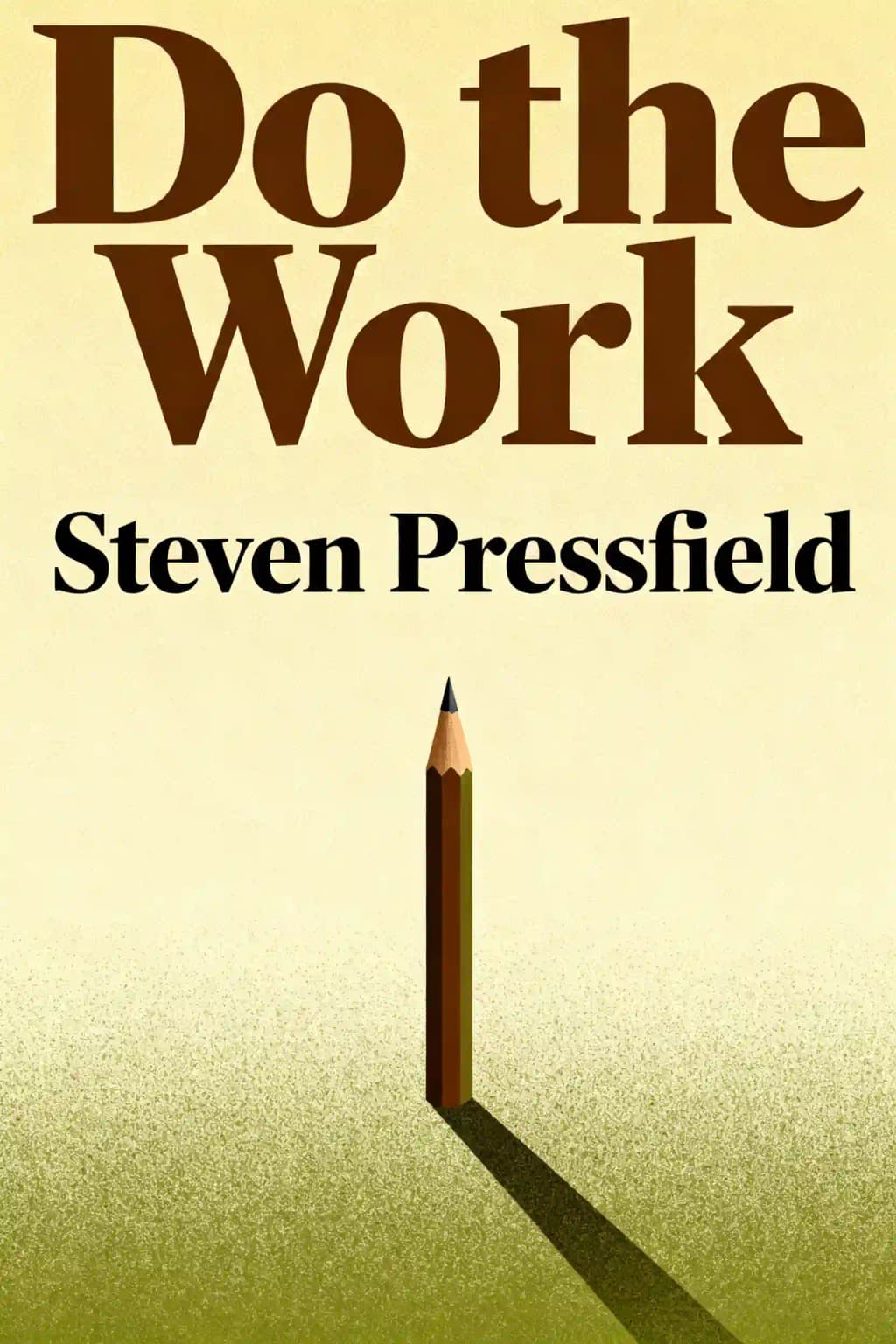
Every day, a fast car sits in your driveway-not a flashy Ferrari, but a reliable Subaru WRX with keys ready for you. A private jet waits to take you anywhere. A powerful hammer lies within reach. A keyboard connects you to the entire world. All these tools await one thing: for you to do the work. Steven Pressfield's manifesto has become a cult classic among artists, entrepreneurs, and anyone facing the paralyzing grip of procrastination. Celebrities like Joe Rogan and Tim Ferriss cite it as transformative, while countless creative professionals keep dog-eared copies on their desks. This slim volume delivers a punch far beyond its size, offering not just motivation but a practical roadmap through the minefield of self-sabotage that prevents most people from realizing their dreams.
Глава 2
The Invisible Enemy That Blocks Your Potential
We face a powerful adversary on our creative journey-an invisible, insidious force called Resistance. This force targets any activity rejecting immediate gratification for long-term growth: creative arts, entrepreneurial ventures, education, health regimens, spiritual advancement, or any act deriving from our higher nature. Though invisible, Resistance manifests as a tangible energy field radiating from work-in-potential, pushing us away from our calling.
What makes Resistance particularly dangerous is its deceptive nature. It will tell you anything to keep you from working-fabricating excuses, seducing with distractions, bullying with fear. Like a skilled lawyer, it reasons persuasively; like a criminal, it threatens mercilessly. It has no conscience and will betray you instantly.
Yet Resistance isn't personal-it doesn't target you specifically. It operates with the indifference of rain, a force of nature acting objectively. Though it feels malevolent, it's simply doing its job: blocking evolution and growth. This understanding is liberating because it means you're not broken or uniquely flawed when you struggle to create.
Paradoxically, Resistance serves as an infallible compass. Like a magnetized needle floating on oil, it points unerringly toward the calling or action it most wants to prevent. The more important a pursuit is to your soul's evolution, the more Resistance you'll feel. That screenplay you've been putting off for years? That business you dream of starting? The intensity of your procrastination reveals the importance of the task.
Remember: everyone experiences Resistance. Even Henry Fonda threw up before performances at age seventy-five. The warrior and artist live by the same code: the battle must be fought anew every day. Resistance's goal isn't merely to wound but to kill-targeting the epicenter of your being, your genius, the unique gift only you possess.
What about rational thought? Surprisingly, it's often your enemy in creative work. Rational thought emerges from the ego, while true creativity flows from the Self, from instinct and intuition. The deeper the source, the more powerful and transformative your work becomes.
Even friends and family can unwittingly serve as agents of Resistance. They know you as you are and are invested in maintaining that version of you. But if you're reading this, you sense an unlived self within-and that emerging being threatens the status quo of your relationships.
Глава 3
Your Arsenal Against Creative Blockage
Against these formidable foes, we have powerful allies that can transform creative paralysis into productive action. First is stupidity-the liberating willingness to attempt what rational minds would deem impossible. Charles Lindbergh flew across the Atlantic when experts said it couldn't be done. Steve Jobs envisioned computers in every home when mainframes filled entire rooms. Winston Churchill stood against Nazi Germany when capitulation seemed logical. They succeeded precisely because they didn't fully comprehend how arduous their tasks were. A child has no trouble believing the unbelievable, nor does the genius or madman. This "productive naivete" allows us to begin before doubt can take hold.
Don't think-act. Analysis paralysis is the enemy of creation. We can always revise, edit, and improve once we've acted, but we can accomplish nothing until we begin. Writers who wait for perfect conditions never write; artists seeking the perfect concept never paint. This leads to our second ally: stubbornness. Once committed to action, the worst thing is stopping. We don't need heroism or grand gestures-just mulish, ornery persistence, sinking our junkyard-dog teeth into Resistance's backside and refusing to let go. Think of Thomas Edison's 1,000 failed attempts at the light bulb, or J.K. Rowling's multiple rejections before Harry Potter found a publisher.
Our third ally is blind faith-belief in something we cannot see or touch. Patricia Ryan Madson describes an illuminating exercise: imagine a box with a lid. Open it. What's inside? No matter how many times you open the box, there's always something in it. That's the creative's religion-unshakeable faith that something will emerge from the void. Every blank page holds infinite possibilities; every empty canvas contains all potential paintings. This faith sustained countless artists through dark periods-Van Gogh never sold a painting in his lifetime but never stopped creating.
Passion constitutes our fourth ally, the burning drive that fuels sustained creative effort. Picasso painted with it into his 90s; Mozart composed with it even while destitute; children play with it all day without tiring. You may think you've lost your passion or can't identify it, but that's never true. Fear saps passion, masquerading as boredom, procrastination, or "writer's block." When we conquer our fears-through action, through stubbornness, through faith-we discover a bottomless well of passion waiting to be tapped.
Finally, there's Assistance-the opposite of Resistance. If Resistance is shadow, Assistance is sunlight. It's the universal force of creative manifestation, translating potential into being, converting dreams into reality. When we commit to our work, Providence moves too. Unexpected mentors appear, resources materialize, and opportunities arise that we never imagined possible. The universe seems to conspire to help those who help themselves. This isn't mystical thinking-it's the practical reality that action creates momentum, and momentum attracts support.
Глава 4
Beginning: The First Steps of Creation
The most important principle for starting any creative project is simple: begin before you're ready. Don't prepare-begin. Our enemy isn't lack of preparation but Resistance. Our chattering brain will produce endless excuses and reasons why we can't or shouldn't proceed. By starting before we're ready, we show courage. Our blood heats up. The gods, witnessing our boldness, look on in approval.
Research can become a form of Resistance. Limit yourself to three books on your subject-no more. Don't highlight, underline, or overthink. Let ideas percolate in your unconscious. We want to work, not prepare to work.
The creative act is primitive, governed by principles of birth and genesis. Babies arrive in blood and chaos; galaxies form amid cataclysms. It's better to be primitive than sophisticated, better to be stupid than smart. The most cultured mother gives birth sweating and cursing like a sailor. That's the space we inhabit as creators-the hospital room may be spotless, but birth itself always involves chaos, pain, and blood.
When creating, swing for the seats. If you want to do great work, you can't think small. A home-run swing resulting in a strikeout beats a successful bunt. Start playing from power; you can always dial back later.
A valuable technique is to outline your entire project on a single sheet of paper. Don't overthink or overprepare. Do it fast, on instinct. Break it into three parts: beginning, middle, and end-the classic three-act structure that has served creators from Leonardo da Vinci to Bob Dylan. This structure provides the skeleton upon which to build your work.
Consider how Leonardo approached the Last Supper: 1) Supper table stretching across the canvas, 2) Jesus standing center with apostles arrayed left and right, 3) Perspective and background tailing off behind. That's all he needed to start-the rest was details.
When planning your project, work backwards. Begin at the finish. If you're writing a movie, solve the climax first. If opening a restaurant, start with the diner's desired experience. Figure out where you want to go, then work backward. Ask yourself: What is this about? What's the theme? When you know that, you'll know the end state and the steps to reach it.
Глава 5
The Creative Process: From Chaos to Structure
With our concept established, we're ready to fill in the gaps between our major beats. A good guideline is to have seven or eight major sequences or movements in any creative project. Now research becomes useful-but stay on your diet and never let it consume your prime working time.
For first drafts, focus on momentum. Get them done ASAP without worrying about quality. Act, don't reflect. Get from A to Z as if the devil himself were breathing down your neck. Don't stop, don't look down, don't think.
During this phase, suspend all self-judgment. Unless you're building something precise like a sailboat, you have a free pass to screw up. The inner critic isn't permitted in the building. Set forth without fear or self-censorship. Only one thing matters: get SOMETHING done, however flawed or imperfect.
When ideas emerge that seem dark, weird, or unconventional-follow them. Suspending judgment means liberating yourself from conventional expectations about what your work "ought" to be. Stay stupid. Follow your unconventional heart.
Remember that ideas don't arrive linearly. They come according to their own logic. You might get the middle before the end, or the end before the beginning. Don't resist this natural flow. Keep a recorder or notepad with you to capture ideas before they vanish.
The creative process progresses in two stages: action and reflection. Act, reflect. Act, reflect. NEVER do both simultaneously. For first drafts, emphasize action over reflection. Spew. Let 'er rip. Launch into the void and soar wherever the wind takes you.
Trust the Muse, the unconscious, the Quantum Soup. Play like a child. Your idea is smarter than you are. Your job isn't to control it but to discover what it wants to be and bring it into being. The song you're composing already exists in potential; your job is to tune to that frequency.
When an idea pops into your head and you think, "No, this is too crazy"-that's precisely the idea you want. When you think, "This notion is completely off the wall"-the answer is yes. Never doubt the soup. The answer is always yes.
Глава 6
Momentum: Building Creative Velocity
As your work progresses, good things start happening in cascading waves. You establish habit and rhythm, like a runner finding their stride. Ideas begin to flow more freely, often appearing unexpectedly during daily activities - in the shower, while driving, or just before sleep. Your project acquires gravitational mass and energy; its field produces attraction, drawing in resources and opportunities you hadn't anticipated. The law of self-ordering kicks in, similar to how a crystal forms in a solution, with elements naturally falling into place. Despite persistent self-doubt, your project rounds into shape, becoming itself, developing its own unique personality and direction.
People respond to you differently when they sense your commitment. You make new friends who share your creative pursuits. Conversations at parties shift from small talk to passionate discussions about your work. You begin feeling professional, as if you've been initiated into a secret society of makers and doers. Other creative people recognize this change in you and offer assistance-exactly what you've needed. They share contacts, suggest resources, or provide crucial feedback. Best of all, you're having fun. The dread that hamstrung you for years miraculously falls away, replaced by anticipation for each day's work.
Stephen King works every day-Fourth of July, birthdays, Christmas-even when he's not feeling inspired. At this stage, momentum is everything. Like a freight train, it takes enormous energy to get moving but becomes unstoppable once rolling. Close the door during your working time and don't let anybody in. No phone calls, no quick questions, no casual interruptions. Keep working. Keep working. Keep working.
Sometimes you'll read yesterday's work and think it's irredeemable garbage. Then you'll re-read the identical passage tomorrow and find it's become brilliant overnight, as if elves improved it while you slept. Ignore these fluctuations-both false negatives and false positives are forms of Resistance trying to derail you. Your judgment of your own work is least reliable when you're in the thick of creation. Keep working.
Now that you're rolling, engage both left and right brain in a deliberate dance. At least twice weekly, pause for a strategic meeting with yourself. Ask: "What is this damn thing about?" Keep refining your understanding of the theme, drilling deeper than surface-level observations. This is the thorniest part of any creative endeavor and evokes the fiercest Resistance. More projects fail due to not confronting this essential question than any other reason. Are you writing about love, or about the fear of being unloved? Are you painting nature, or humanity's relationship with nature?
Ask yourself, "What's missing?" Then fill that gap with surgical precision. Like Robert De Niro in "True Confessions" who requested a simple scene showing his character's sparse bedroom-one moment revealing his entire life through carefully chosen details. Sometimes a single detail, thoughtfully placed, can illuminate an entire work. Identify what's missing, then supply it with the confidence of someone who knows their craft. These small additions often become the soul of the piece.
Глава 7
The Wall: When Creation Crashes
And then you hit the wall. Out of nowhere, terror strikes. Your fragile confidence collapses. Nighttime: you wake in a sweat. That "You suck" voice returns, howling in your head. You're poised at the brink of a creative breakthrough and can't stand it.
You're halfway through-far enough to have invested serious time, money, hopes, dreams, even identity-but not far enough to glimpse the end. You've rounded Cape Horn and gales shriek; ice encases the masts; the storm howls dead in your face. There's no way back and no way forward.
Welcome to hell. Now you're feeling the symptoms. Now you're ready to listen.
The first principle of Resistance is that there is an enemy. In our feel-good world, we've been brainwashed to believe there's no such thing as evil, that human nature is perfectible. We've been conditioned to imagine darkness is merely illusion. It isn't. There is an intelligent, active, malign force working against us. Step one is recognizing this. This recognition alone is enormously powerful.
This hostile force isn't a joke. It's not to be trifled with or taken lightly. It's real. As Rabbi Mordecai Finley says: "It will kill you. It will kill you like cancer." This enemy is intelligent, protean, implacable, inextinguishable, and utterly ruthless. Its aim isn't to obstruct or hamper. Its aim is to kill.
Resistance isn't a peripheral opponent. It doesn't arise from rivals, bosses, spouses, or external adversaries. It comes from within us. You could board a spaceship to Pluto and settle into a perfect artist's cottage ten zillion miles from Earth. Resistance would still accompany you. The enemy is inside you.
Yet-and this is crucial-the enemy is inside you, but it is not you. You aren't to blame for the voices of Resistance in your head. They aren't your "fault." You've done nothing "wrong." I have that same voice. So did Picasso and Einstein. If you've got a head, you've got Resistance inside it. No moral judgment attaches to its presence. You "have" Resistance as you "have" a heartbeat. You're blameless.
Глава 8
The Inner Battlefield: Dueling with Resistance
On the field of the Self stand a knight and a dragon. You are the knight. Resistance is the dragon. There's no way to reason or negotiate with it. The dragon belches fire and lives only to block you from reaching wisdom and freedom. The only possible interaction between knight and dragon is battle. The contest is life-and-death. It asks no quarter and gives none.
What comes first is the idea, the passion, the dream of work so exciting it terrifies us. Resistance is the response of the frightened, petty ego to the brave, generous impulse of the creative self. Resistance is the shadow cast by the innovative self's sun.
Before the dragon appeared, there existed within us a force so potent and life-affirming that it summoned this beast to combat it. The urge to create came first. That urge is love-love for the material, love for the work, love for those to whom we'll offer our work as a gift.
In myths and legends, the knight is always aided in his quest. Providence brings forth champions to assist the hero. Theseus had Ariadne, Jason had Medea, Odysseus had Athena. These characters represent Assistance. They stand for your dream-your project, vision, symphony, startup. We can align ourselves with these universal forces and ride them into battle against the dragon.
Resistance puts two questions to each of us. First: "How bad do you want it?" The scale ranges from Dabbling to Interested to Intrigued but Uncertain to Passionate to Totally Committed. If your answer isn't "Totally Committed," put this book down and walk away.
The second test asks: "Why do you want it?" Only the deepest motivations-for fun/beauty or because you have no choice-are acceptable. All other reasons require entering the Attitude Adjustment Chamber where you must leave behind ego, entitlement, impatience, fear, hope, anger, and all grievances. The only items you can keep are love for the work, will to finish, and passion to serve the creative Muse.
Глава 9
Navigating Creative Crashes and Finishing Strong
Just when everything seems to be going well, inevitably everything crashes. This Big Crash is predictable, arising organically from some act committed or omitted at the project's beginning. Like Navy SEAL candidates who ring a bell to quit training, creative professionals face their own bell in the belly of the beast. But our ordeal is harder because we're alone-no trainers, no structure, no validation when we finish.
Though crashes feel like hell, they ultimately benefit us. A crash means we've failed despite giving everything, but it doesn't make us losers-it means we need to grow. It forces us to understand what works and what doesn't, compelling us to solve problems we created at the outset.
Creative panic signals growth. Our greatest fear isn't failure but success-when we begin overcoming self-doubt and advancing in our craft, panic strikes. Like a child taking first steps away from its mother before freaking out and running back, panic indicates we're crossing a threshold to a higher plane.
In the belly of the beast, we rely on our allies: stupidity, stubbornness, and blind faith. We remind ourselves of two axioms: The problem is not us-the problem is the problem. And: Work the problem.
A professional doesn't take success or failure personally. Our project's crash isn't a reflection of our worth-it's just a mistake, a problem that can be solved. We must return to our sheet of yellow foolscap and determine where we went wrong. The problem is hard because we likely ducked it at the start, hoping it would solve itself despite the warning voice we ignored.
Finishing is the critical part of any project-what Seth Godin calls "shipping." When we ship, we declare our work ready and send it into the world. It takes tremendous courage to ship, requiring killer instinct. We've got the monster down; now we must drive a stake through its heart.
Глава 10
Shipping: The Ultimate Creative Act
Finishing is so difficult that Shakespeare wrote Hamlet about it-how overthinking paralyzes action. Michael Crichton, knowing Resistance was strongest at the finish, would wake progressively earlier until finally checking into hotels to work around the clock. He did whatever necessary, no matter how unorthodox, to finish and ship.
As Marianne Williamson wrote: "Our deepest fear is not that we are inadequate. Our deepest fear is that we are powerful beyond measure." When offered heaven, some perverse force makes us choose books about heaven instead. Fear of success is Resistance's essence-silent, covert, invisible, poisoning our lives in ways we're blind to or deny.
When we ship, we're exposed like mountain climbers with nothing but air beneath us. We'll be judged, we can fail, we can be humiliated. Pressfield shares his experience with the movie "King Kong Lives"-his first professional writing job after seventeen years of trying. Despite devastating reviews, he realized he had become a pro by having a real failure. Shipping plants us on Planet Earth and frees us from self-delusion.
After blowing up his marriage rather than finishing his book, it took Pressfield seventeen years to finally defeat the dragon of Resistance. His promise: "Slay that dragon once, and he will never have power over you again." Though the dragon returns every morning, once you've beaten him, you know you can do it again.
Just because you've shipped doesn't mean Resistance is finished. Like the Terminator, it morphs into crueler forms and will return. The evolving challenges of positioning, branding, marketing, and authentic art will demand continued maturity and professionalism.
By shipping your work-whether losing weight, kicking addiction, surviving loss, or facing any adversity-you've joined an elite, invisible fraternity whose members recognize each other. You've done what only mothers and gods do: created new life. Even if you fail with this project or a thousand others, you've accomplished what few actually perform.
After Pressfield finished his first novel and told his mentor, Paul Rink's response was simple: "Good for you. Now start the next one." Celebrate your accomplishment, then get back to work tomorrow. Stay stupid. Trust the soup. Start before you're ready.