Глава 1
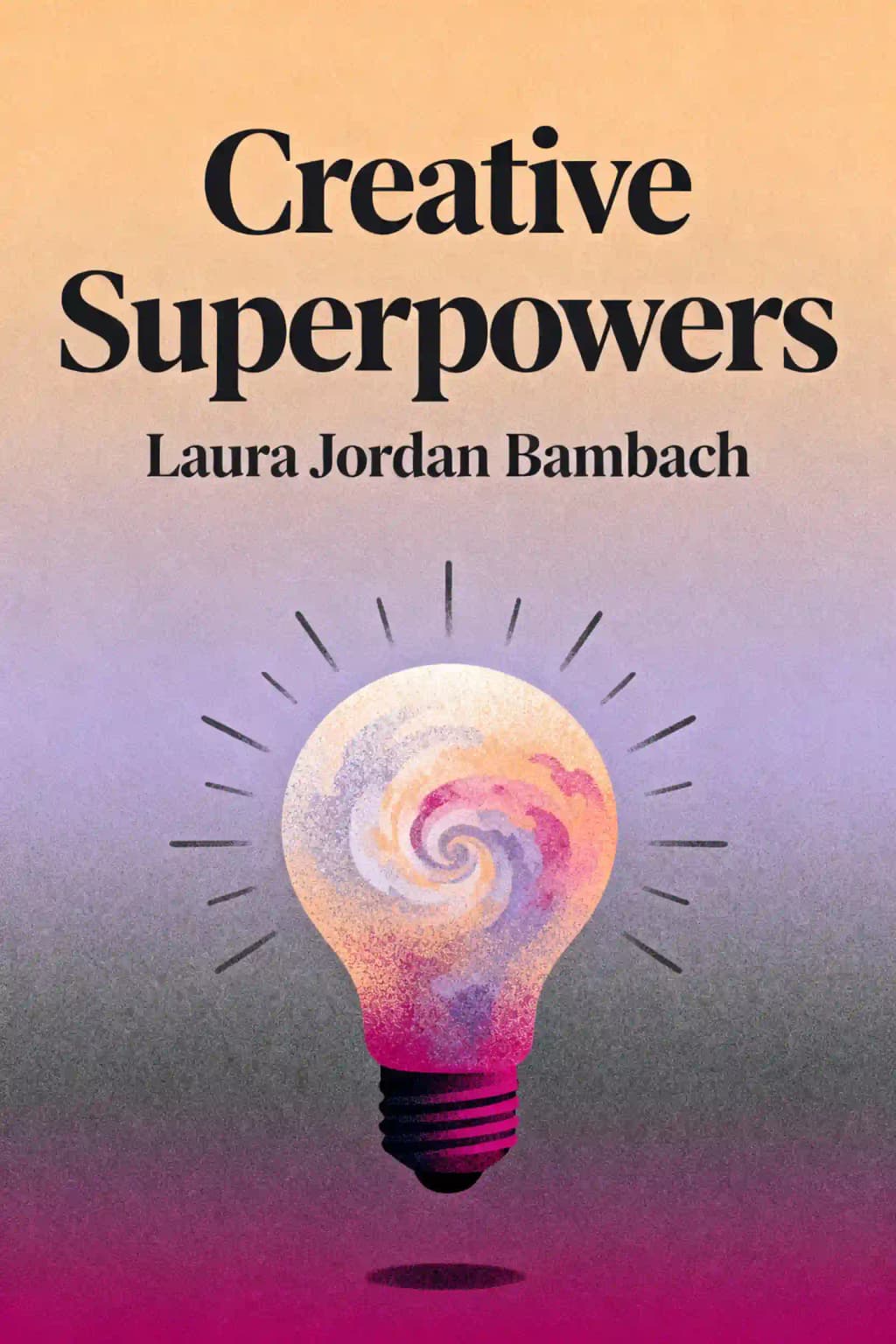
Unleashing Your Creative Superpowers: The Art of Making, Hacking, Teaching, and Copying
Ever feel like your creative spark is dimming in the face of AI and automation? Worried about becoming obsolete in a world where technology seems to be taking over? Take heart-your brain is naturally wired to rewire itself. This groundbreaking book, embraced by creative leaders from Apple to Pixar, reveals how to reclaim four essential creative superpowers we've lost since childhood: making, hacking, teaching, and copying. Through stories of diverse creative "superheroes"-from architects to hat makers to free-noise artists-the book shows how to unlock your innate creativity in ways machines simply cannot replicate. With over 500,000 copies sold and translated into 23 languages, Creative Superpowers has become the essential guidebook for anyone looking to thrive in our rapidly changing world by harnessing their uniquely human creative abilities.
Глава 2
The Maker's Mind: Transforming Ideas into Reality
The creative process of making-whether recording music tracks or painting watercolors-is filled with errors and dead ends. Yet through the act of making-committing notes to tape or pen to paper-we begin a creative alchemy that sparks invention. Making encompasses both the magical flow state and the necessary grind. There's no perfect approach beyond simply starting somewhere and eventually finishing, learning from both successes and failures along the way.
What elevates human creativity above machines are precisely those frustrations that plague the creative process. While everyone creates something, true making involves exploring concepts through tangible experimentation rather than following a linear path. The creative process typically follows a pattern: feeding your brain with diverse ideas, exploring these ideas alone and with others, allowing your subconscious to connect dots, experiencing the "Eureka!" moment, finding flow, and bringing your idea to life.
But there's another approach where ideas emerge through the making process itself. If the standard creative process resembles architecture (building from the ground up with a clear plan), this alternative approach is more like sculpture-chiseling away to reveal the form underneath, adapting to materials and environment in real time. This creative prototyping through experimentation often leads to astonishingly perfect final products.
Making has a conscience, too. O'Shaughnessy's famous poem "Ode" describes creators as "music-makers" and "dreamers of dreams" who move the world forward through their dangerous and radically new creations. While we're all free to have dangerous ideas, when we make something tangible, it takes on power beyond thought alone. The energy born from creating something new can influence many people-a tremendous responsibility. This is why creativity has long been associated with doing good, with "being the change we want to see in the world."
Making is also evolutionary. As a maker, everything you've created influences your future work-mistakes corrected, skills learned, themes refined, and new opportunities discovered. Each new idea naturally evolves from previous work. This iterative approach, called "agile" in technology circles, has become mainstream with mantras like "fail fast" and MVP (minimum viable product) development. What technology calls "test-and-learn strategy" has been fundamental to the creative process throughout history.
Глава 3
The Alchemy of Great Making
Creating conditions for extraordinary making defies conventional linear analysis of creativity. Knowledge can actually be creativity's enemy. An abundance of facts degrades creative work by limiting freedom and creating checkpoints that lead to conventional solutions. While many believe thoroughly studying market research is essential, truly outstanding work requires limiting information intake. Consider Uber-created by outsiders who ignored taxi industry conventions. Rather than obsessing over data, listen to what resonates and trust your instincts when inspiration strikes.
Before beginning a project, consider who you need for success. Most people are more creative when working with others, which is why a "sandbox" approach to creativity works so well. Like children in a sandbox who inspire each other's innovations, diverse teams stimulate discovery. The creative process itself must be new to create something new.
For diverse creative teams to work effectively, everyone must agree it's acceptable to invade each other's expertise. Creative professionals typically avoid commenting outside their specialties, but this boundary-respecting mindset hinders creativity. When everyone speaks freely and listens objectively, true innovation emerges.
Creating something new requires discarding the old, sometimes ruthlessly rejecting ideas team members worked hard to develop. Though painful, these difficult decisions often prove correct when pursuing creative excellence.
Working long hours is detrimental to creativity. Ideas aren't created by our conscious self but by our brain working outside consciousness. Our brains need three things to produce ideas: baseline knowledge about a project, sleep to process information into concepts, and quiet reflection time afterward. When we sleep, our brains organize memories that appear as dreams-this is where ideas are born.
After twenty years in creative industries, I've witnessed countless client briefings for terrible products where everyone pretends they're wonderful. We make bad ads for bad products, then award ourselves for this mediocrity-all for money. This wastes creative talent and resources globally. Total honesty must be our highest virtue-creators should be able to say "this is shit" when necessary.
When setting creative goals, two characteristics define truly great work: love and respect. These natural human desires resonate with people worldwide. We're programmed to value these at a fundamental level-our survival as a species owes much to them. Whether in advertising, branding, or art, great work must be guided by the quest for love and respect.
Глава 4
Maker Culture: Creating Beyond Consumption
Growing up outside a farming town in South Africa, I spent eleven years in what I now recognize as an extended "makerthon"-building forts, creating "robot" necklaces, and using imagination to transform garage odds and ends into treasures. This TV-and-computer-starved childhood of boredom and self-entertainment developed me into a natural maker, laying the foundation for my creative professional life.
My childhood makerthon years fueled an imagination that helped me land in advertising. When I moved into digital, I rekindled my love for analog objects, always injecting physical experiences into digital projects-like turning Johannesburg Zoo's honey badger into a social media spokesanimal using motion sensors connected to Twitter. This maker mindset has made my creative thinking more nuanced, human and fun.
Engaging with South Africa's maker and hacker community revealed how maker culture could address social challenges in a country with failing education and high unemployment. The movement is developing spaces for people to create, fostering entrepreneurship and job creation. This community is filled with dedicated people creating maker spaces, sometimes in their own homes, to empower others through creativity and innovation.
As COO of Geekulcha and Librarian of Maker Library Network South Africa, Tiyiani Nghonyama established the Geekulcha Student Society to cultivate student innovation. With over 9,000 students involved, he emphasizes that successful maker culture requires three elements: Tools, Process and People. Simply providing tools without culture or ecosystem support exhausts the making spirit.
For Marc Nicolson of Thingking Studio, making connects most strongly with fixing-a combination of making and copying that requires understanding why something broke. Good fixing makes objects more robust than before, helping people understand materials, processes and design. In South Africa, fixing and making offer opportunities to share unique skills using locally available materials.
South African designer-maker Mia van Zyl sees making as transformative: "If I can make this thing I knew nothing about, what else is possible?" She describes how collaborative making sessions spark innovative conversations when hands are busy and minds engaged differently. In our digital world, she believes many yearn for tactile experiences-whether kneading dough or building Arduino kits.
Глава 5
The Accidental Noise Maker: Finding Creativity Through Experimentation
Lucas Abela's noise-making journey began accidentally when he incorrectly rewired a VW van's radio, inadvertently creating a contact microphone that amplified the vehicle itself. Rather than fixing this "malfunction," he embraced it, performing impromptu "drive-by recitals" at bus stops-sparking a 25-year vocation in noise-making.
Living in his van and broke, Abela repurposed discarded record players, modifying them by replacing tone arms with flexible wire arms holding multiple styli. This evolved into a "stylus glove" with needles mounted on fingertips for nuanced record scratching. His experimental approach created unique sounds he claims have never been replicated.
When his enthusiasm broke styli during performances, Abela adapted by using sewing needles, then knives and swords to play records. Eventually abandoning turntables altogether, he attached saw blades to industrial motors, creating percussive turntablism. A pivotal moment came during a Japanese tour when motor failure led him to manipulate amplified skewers with his mouth-revolutionizing his approach.
Believing noise-making is more rewarding to create than observe, Abela developed participatory sound sculptures-essentially large-scale noise instruments that transform audiences into performers. His installations create experiential situations that entice people to engage with purposeful, focused musical play.
Abela disguises noise instruments as pinball machines, leveraging people's familiarity with arcade games to lower their defenses toward interactive art. Despite unconventional designs, recognizable elements like flippers and ball shooters make these installations intuitive for all ages.
His creative process flows like stream-of-consciousness discovery-one idea leading naturally to the next, growing more elaborate as his knowledge evolves. Starting with turntables (a method used by Dadaists and John Cage), he developed something uniquely his. Had he stopped because "it had been done before," he'd never have evolved to glass playing or pinball instruments. That's why he believes everything hasn't truly been done until you yourself try it. Self-learning leads to differentiation-if two people learn guitar without instruction, they'll develop idiosyncratic styles, while teaching creates mere replication.
Глава 6
Hacking: The Art of Creative Problem-Solving
When Sir Dave Brailsford became general manager of Team Sky in 2010, he faced a daunting challenge-no British rider had ever won the Tour de France. His approach was revolutionary: improve every aspect of performance by just 1%. Beyond optimizing training, bike ergonomics and nutrition, Brailsford's team sought improvements in overlooked areas-creating custom bedding for each rider to ensure consistent sleep quality during the tour, testing massage gels, teaching proper hand-washing techniques, and even painting maintenance floors to better spot performance-affecting dust. This "marginal gains" approach led to Bradley Wiggins becoming the first British Tour de France winner in 2012, far ahead of Brailsford's five-year target.
This exemplifies hacking-not computer hacking, but creatively overcoming system limitations to achieve novel outcomes. History brims with hackers: Alexander the Great putting his face on coins when sculptors couldn't make enough statues; Florence Nightingale implementing hand-washing to dramatically reduce hospital fatalities; Julia Child baking shark-repellent cakes during WWII to protect weapons targeting German U-boats; New York graffiti artists tagging subway cars for citywide visibility; Mayor Giuliani applying the "Broken Windows theory" to reduce crime; and Ann Makosinski inventing body heat-powered light bulbs when she couldn't study without electricity.
While our definition of hacking is relatively new, it has pervaded business culture for years. "Life hacks"-first coined in 2004 for IT shortcuts-now encompass any productivity trick, like Zappos founder Tony Hsieh using yesterday's emails as today's to-do list. Technology has fueled "growth hacking," exemplified by Hotmail's "PS I love you. Get your free email at Hotmail" signature that gained them 2 million users in five weeks, or Apple's subtle "Sent from my iPhone" branding.
Other cultures have long-established hacking concepts-Indians call it "Jugaad," while Brazilians have "Jeitinho" for circumventing rules to accomplish goals. Becoming a hacker requires a specific mindset: constantly seeking improvement, embracing new ideas, maintaining curiosity, accepting failure as growth, and connecting with problem-solvers. Even if you don't consider yourself a hacker, challenging yourself to make 2% improvements in everything you do can develop this valuable superpower.
Глава 7
Culture Hacking: Transforming Organizations from Within
In 2009, while working at Norwegian company Tandberg, Annicken R. Day pioneered transformative three-day workshops for new hires that fundamentally challenged traditional corporate onboarding. These immersive sessions deliberately broke down hierarchical barriers through carefully designed exercises, team challenges, and authentic dialogue sessions. Participants from different countries, departments, and levels formed lasting cross-cultural bonds that transcended organizational charts. When an observant engineer dubbed her a "culture hacker," it led Day to discover the Netflix Culture deck - a groundbreaking document that redefined workplace dynamics by emphasizing freedom and responsibility over conventional rules and processes.
Corporate culture extends far beyond superficial perks like foosball tables or casual Fridays - it represents the collective behaviors, mindsets, and unwritten rules that govern how people work together. This invisible force shapes everything from daily decision-making and customer interactions to product quality and brand reputation. Leaders face a critical choice: they can proactively design and nurture the culture needed for business success, or passively allow it to evolve through default patterns and habits. As management guru Peter Drucker famously observed, "Culture eats strategy for breakfast." Research consistently shows that organizations with strong, intentionally developed cultures achieve 40-50% better financial results, demonstrate greater innovation, and adapt more nimbly to market changes.
The digital revolution, combined with increasing automation and generational workforce shifts, has created unprecedented pressure for organizational transformation. Deloitte's comprehensive 2016 Human Capital Trend report revealed that 92% of surveyed companies reported fundamental disruption to their organizational structures due to digital forces. This has accelerated the shift from traditional hierarchical models toward more fluid "networks of teams." Leadership paradigms must evolve accordingly - moving from position-based authority to inspiration-driven influence, with emotional intelligence and adaptive capabilities becoming as crucial as traditional business acumen.
Day's experience during Tandberg's 2010 acquisition by Cisco provided a master class in culture clash resolution. The entrepreneurial, fast-moving spirit of Tandberg collided with Cisco's more structured, process-driven environment. Rather than accepting cultural dilution, Day implemented a "hacking" approach - working with individual teams to create micro-cultures that preserved their autonomy while aligning with broader organizational goals. She developed specific tools and frameworks that helped teams transition from feeling like victims of change to becoming architects of their own cultural environment.
Richard Branson's bold move at Virgin exemplifies successful culture hacking at scale. Inspired by Netflix's revolutionary approach, he eliminated traditional vacation policies in favor of unlimited time off. The results were revealing - while most employees didn't take significantly more vacation, the policy transformation profoundly impacted company culture. It demonstrated trust, encouraged personal responsibility, and improved overall wellbeing. This sparked a trend, with forward-thinking companies like LinkedIn, Grubhub, and General Electric adopting similar approaches. These organizations reported multiple benefits: enhanced ability to attract top talent, higher retention rates, increased productivity, and most importantly, a fundamental shift in how employees viewed their relationship with the company.
Глава 8
The Teacher's Wisdom: Learning, Unlearning, and Relearning
Scott Morrison challenges our traditional view of teachers as information providers with leather patches and gimpy glasses. Instead, he proposes a radical shift: what if YOU are the teacher? The key to avoiding 21st-century illiteracy isn't being taught but teaching ourselves-embracing learning, unlearning and relearning. This aligns with Dr. Carol Dweck's work on growth mindsets and Alvin Toffler's predictions about our digital revolution. With AI threatening 38-47% of jobs by mid-2030s and 50% of the US workforce becoming freelance by 2020, this "liquid talent" must constantly evolve, not relying on bosses or HR for development, but proactively reshaping their own skills.
Morrison recalls the transformative childhood moment of learning to ride without stabilizers-falling four times before finally flying on the fifth attempt. This visceral experience illustrates Benjamin Franklin's wisdom: "Tell me and I forget. Teach me and I remember. Involve me and I learn." David Erixon's work with Hyper Island (the "Digital Harvard") builds on this philosophy through experiential learning, lifelong development, reflection and teamwork-creating a framework critical for entrepreneurs seeking to unlock their creative superpowers through real-life application rather than passive instruction.
What initially seemed like "Kum Ba Yar loon-pantery" to Morrison transformed his life so profoundly he became a director at Street Wisdom. Pearl's methodology helps people reconnect with themselves by using everyday streets as teachers. Through a four-stage framework, participants find answers to deep questions that have blocked their progress. As Marshall Goldsmith observed, "what got you here won't get you there"-we must unlearn old patterns to move forward.
The old grad days of pencil placement, serving refreshments and booking tables are over. Today's younger generation brings more experience, forthright views, and expects to contribute beyond passing custard creams. Nadya Powell challenges the outdated notion that "higher ups" possess all knowledge, arguing that relearning from the youngest team members keeps businesses relevant and builds motivated teams unafraid to experiment.
Rather than embracing the trendy but often hollow "fail fast" mantra, Morrison proposes reframing our approach as "learn, unlearn and relearn fast." While less pithy for job specs, this better reflects what truly motivates people-learning and development-while inertia commonly drives departures. By placing this cycle at the heart of organizational culture, people feel free to experiment and "fail" as part of the natural unlearning/relearning process.
Глава 9
Street Wisdom: Finding Answers in Everyday Surroundings
David Pearl introduces Street Wisdom, an immersive three-hour workshop that transforms ordinary streets into spaces for inspiration, solutions, and fresh direction. Now active in thirty countries, the approach helps participants unlearn habitual thinking by engaging deeply with their environment.
Pearl recounts the origins of Street Wisdom in Amsterdam 2012, when he decided to ask "the street itself" rather than people for guidance on his next career move. After spending a morning wandering Westerstraat with heightened senses, he found himself walking in circles-the street beginning to answer his question in an unmistakable way, telling him to "stay with this-don't rush off to the next thing." This experience led him to co-found Street Wisdom with Chris Barez-Brown in 2013, a non-profit movement that transforms urban wandering into learning experiences.
Pearl proposes turning our attention outwards instead of hurrying through streets with headphones blaring. By connecting with our surroundings, we can ask questions we're trying to solve internally. This builds on the age-old idea that walking stimulates thinking, as Nietzsche noted: "All truly great thoughts are conceived by walking." When we stand up from our desks, our thinking loosens up-the Eureka moment rarely happens while staring at a computer screen.
Street Wisdom uses a three-phase process: first, short guided strolls to tune up your senses; second, a quest where participants walk while pondering a specific question; third, gathering to share insights. With heightened awareness, everything in the environment-sounds, smells, conversations, signs-can provoke new associations and insights. As consultant Chris Malings put it, "the city is a stone book."
Street Wisdom transforms mental fretting into outward engagement, enrolling the world around us to help solve internal puzzles. It's applied mindfulness-a mindful "app" that turns introspection into practical outcomes while engaging the Western mind that demands practical reasons for taking time off.
Most people spend significant time commuting with little return on this investment. Street Wisdom techniques allow you to tune into your environment for insight anytime, anywhere. Even a five-minute walk can deliver new learning, as answers are everywhere and every stranger you pass is a potential teacher.
Глава 10
The Thief's Art: Creative Copying as a Superpower
Our ability to use others' ideas and brains-to steal, copy or borrow-is our most important inherited superpower. It allows us to outsource cognitive load beyond our individual skulls and build upon generations of accumulated wisdom. This cognitive outsourcing has been fundamental to human progress, from ancient tool-making techniques to modern scientific discoveries. Like all powers, it can be used for good or ill, but not using it-or denying it-dishonors our heritage. When used well, this approach creates new ideas faster, better, and more enjoyably.
Modern creative culture has developed an almost pathological aversion to copying, viewing the use of others' ideas as unfair or unethical. Self-identifying Creatives often see using others' work as a weakness that undermines their reputation as innovators, leading to what some call "originality theater" - the pretense that ideas emerge from nowhere. We might speak of "inspiration" or "homage" in hushed, apologetic tones, but few admit to copying directly, as we've developed a cultural mythology that praises originality over the familiar or second-hand.
The greatest innovators throughout history not only acknowledge copying but celebrate it as essential to creativity. Picasso famously observed "talent copies, genius steals," while T.S. Eliot insisted a poet's quality is determined by how they copy and transform existing work. The history of innovation is filled with such examples: James Watt didn't invent the steam engine - he dramatically improved Newcomen's design. Dyson didn't invent the vacuum cleaner - he enhanced existing technology. Apple didn't invent the smartphone - they refined and integrated existing technologies. David Bowie, one of music's greatest innovators, freely admitted stealing-his Ziggy Stardust persona drew from William Burroughs' wild narratives, Diamond Dogs from Orwell's dystopian vision, and his Berlin Trilogy from Krautrock's electronic experiments. Even his creative techniques were borrowed, as he proudly declared: "The only art I'm interested in is art I can steal."
This superpower can be wielded in two ways: constructively, to create new solutions by building upon existing ideas, or destructively, by presenting others' ideas as entirely your own without transformation or acknowledgment. "Bad faith" copying typically emerges when monetary interests are at stake, explaining why the music industry employs armies of copyright lawyers and companies like Apple zealously guard their intellectual property. Status considerations can sometimes make thievery seem more acceptable, as evidenced by numerous political speech plagiarism scandals where high-ranking officials have lifted passages wholesale from others' work.
While coding is frequently touted as the essential 21st-century skill, learning to copy effectively is far more fundamental and valuable. Even in software development, using others' well-tested code through libraries and frameworks is considered better practice than writing everything from scratch - a principle embodied in the popular programming mantra "Don't Repeat Yourself" (DRY). Mastering this superpower-whether you call it borrowing, remixing, or thieving-enables you to solve problems faster, generate better ideas, and have more fun in the creative process. The key lies not in avoiding copying, but in copying intelligently and transformatively, adding your own perspective and improvements to what you borrow.