Глава 1
Behind the Locked Doors: A Vatican Thriller That Captivated Millions
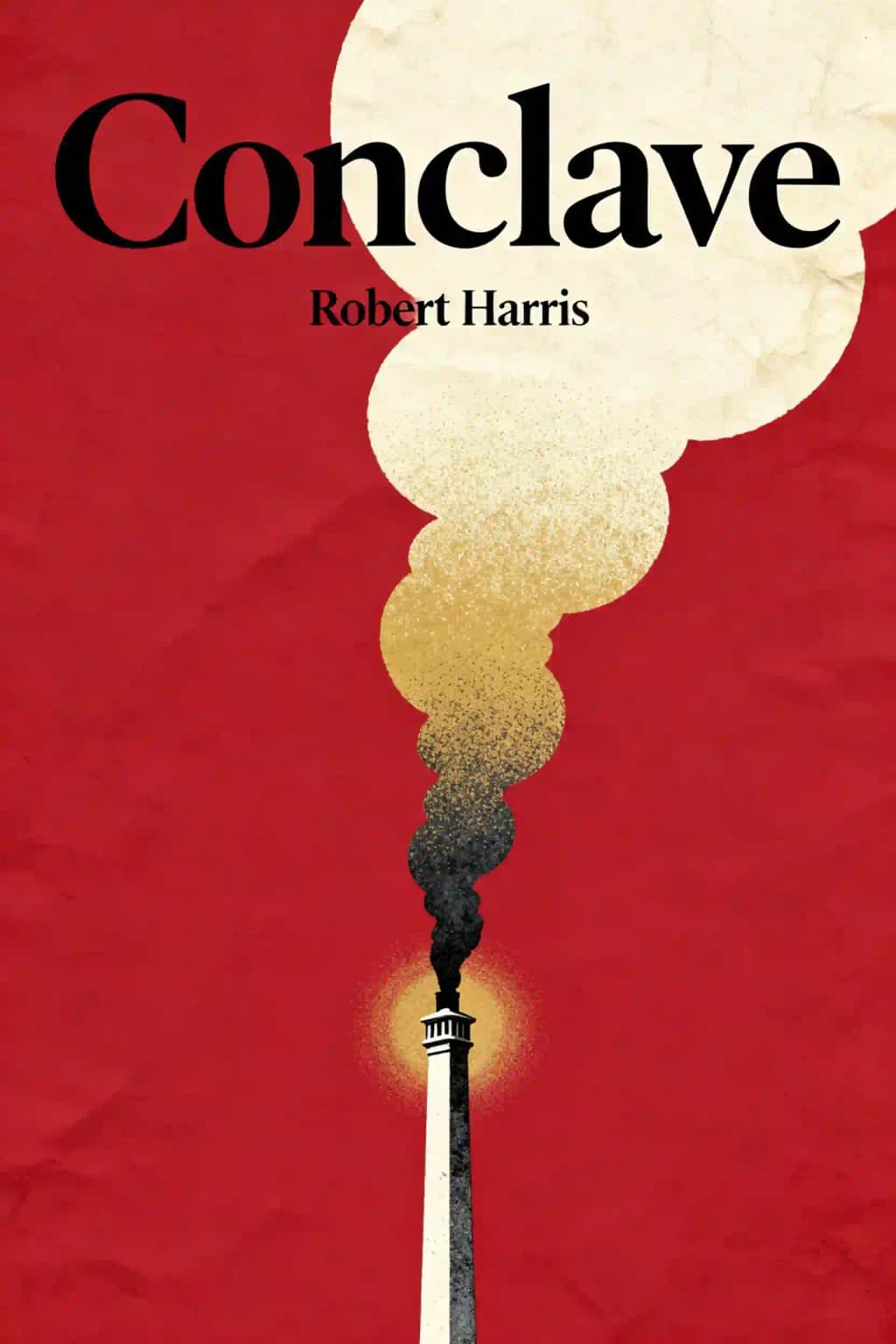
*Conclave* shot to bestseller status upon its 2016 release, captivating readers with its taut psychological drama and rare glimpse into one of the world's most secretive processes. Robert Harris, already renowned for historical fiction like *Fatherland* and *Pompeii*, drew praise from critics for his meticulous research and masterful plotting. The novel found fans in unexpected places-Pope Francis reportedly kept a copy on his nightstand, while celebrities from Meryl Streep to Stephen King praised its page-turning intensity. What makes this thriller particularly compelling is how it transforms an arcane religious procedure into a universal story about power, ambition, and faith. As we witness cardinals jockeying for position behind the locked doors of the Sistine Chapel, we're confronted with timeless questions about leadership, integrity, and the corrupting influence of power.
Глава 2
The Burden of Leadership: Cardinal Lomeli's Reluctant Call
Cardinal Jacopo Lomeli never wanted this responsibility. As Dean of the College of Cardinals, the 75-year-old Italian prelate finds himself thrust into managing the conclave to elect a new pope after the Holy Father's unexpected death. The timing couldn't be worse - the Vatican faces mounting scandals, global tensions are rising, and Lomeli himself battles deep personal crises. Having served the Church for over five decades, Lomeli had actually asked the late Pope to accept his resignation, confessing his spiritual emptiness: "I feel nothing when I pray." The Pope refused, telling him pointedly, "You are not a shepherd. You are a manager." This stinging assessment haunts Lomeli as he must now oversee the selection of the next Vicar of Christ.
Lomeli's personal struggles form the emotional core of the story. His prostate cancer has left him impotent, triggering existential questions about his lifetime of celibacy and dedication to the Church. At night, he lies awake "arms folded across his chest like an effigy," wondering what he has sacrificed - family, intimacy, the simple pleasures of a normal life. His once-sharp memory fails him at crucial moments, forcing him to rely on his assistant for names and dates he should know by heart. The weight of tradition bears down heavily; every previous Dean's portrait in the Apostolic Palace seems to judge his actions. Yet despite these vulnerabilities - or perhaps because of them - Lomeli proves uniquely qualified for his role. His very doubts make him more attuned to the human frailties of his colleagues and more resistant to the seductions of power that corrupt so many within the Vatican's walls.
As the conclave progresses, Lomeli undergoes a profound spiritual awakening. During a pivotal Mass in the Sistine Chapel, surrounded by Michelangelo's intimidating frescos, he abandons his prepared homily and speaks extemporaneously about doubt as essential to faith: "If there was only certainty, and if there was no doubt, there would be no mystery, and therefore no need for faith." The Cardinals, expecting platitudes, lean forward in their seats, struck by his raw honesty. This moment of authenticity marks the beginning of Lomeli's transformation from bureaucratic manager to spiritual leader. Through his journey, Harris suggests that genuine leadership emerges not from ambition or certainty, but from humility and a willingness to question oneself. Lomeli's struggles with faith paradoxically make him the perfect guardian of the Church's most sacred tradition - choosing its next leader.
Глава 3
The Sacred and the Profane: Vatican Politics Unveiled
Behind the ornate rituals and solemn prayers of the conclave lies a political battlefield as cutthroat as any secular election. Harris masterfully contrasts the sacred pageantry with the profane reality of ambitious men vying for the ultimate religious office. The cardinals arrive at Casa Santa Marta (the Vatican guesthouse) already aligned in factions-African cardinals united behind Nigerian Cardinal Joshua Adeyemi, European liberals supporting Italian Cardinal Aldo Bellini, and Vatican insiders backing Canadian Cardinal Tremblay or conservative Italian Cardinal Tedesco.
The political maneuvering begins immediately. Cardinal Sabbadin, acting as Bellini's campaign manager, organizes supporters to lobby different cardinal groups. Tedesco strategically places an ally to deliver a "meditation" that directly attacks Lomeli's sermon on doubt. Tremblay cultivates an image as "a Pope for the modern age" while secretly paying for votes from African and South American cardinals-a practice called simony that carries the penalty of excommunication.
What makes Harris's portrayal so compelling is how he reveals the humanity behind these machinations. These aren't simply corrupt politicians in clerical garb-they're complex men navigating the tension between personal ambition and genuine belief in their vision for the Church. When Cardinal Adeyemi's candidacy collapses after revelations about a past affair with a nun, his dignity in defeat reveals a man who, despite his flaws, truly believes he was called to lead. Similarly, when Lomeli discovers evidence of Tremblay's corruption, his anguish stems not from political calculation but from genuine concern for the Church's integrity.
Through these political struggles, Harris explores a central question: How can an institution built by flawed humans maintain its divine mission? As Lomeli reflects during voting, "the Church was built of crooked timber"-yet somehow must still stand straight enough to support the faithful.
Глава 4
Secrets and Revelations: The Mystery at the Heart of Faith
Like any great thriller, *Conclave* revolves around secrets-some political, some personal, all potentially explosive. The late Pope's private secretary reveals that just before his death, the Holy Father had dismissed Cardinal Tremblay from all offices for "gross misconduct." A nun from Nigeria collapses at the sight of Cardinal Adeyemi, later confessing their decades-old affair that produced a child. Most dramatically, Cardinal Vincent Benitez, the surprise winner of the papal election, harbors perhaps the most shocking secret of all-one that challenges fundamental assumptions about gender, identity, and divine purpose.
These revelations drive the plot forward, but they also serve a deeper thematic purpose. They force both characters and readers to confront the gap between public persona and private reality, between the Church's ideals and its human embodiment. When Lomeli breaks into the late Pope's apartment and discovers hidden financial records of the cardinals, he's confronted with evidence of their varying degrees of wealth and corruption. This moment symbolizes the novel's central tension-the painful discovery that even our most sacred institutions harbor uncomfortable truths.
Yet Harris doesn't present these revelations merely as scandals or plot twists. Instead, they become opportunities for grace and transformation. When Sister Shanumi confronts her former lover Cardinal Adeyemi, the moment is painful but ultimately purifying. When Lomeli distributes evidence of Tremblay's simony to the cardinals, he acts not from malice but from conviction that the Church must face its sins honestly. And when the newly elected Pope Innocent XIV (formerly Cardinal Benitez) reveals his intersex condition to Lomeli, explaining "I am what God made me," the moment becomes not scandalous but profound-a testament to God's mysterious ways.
Through these secrets and revelations, Harris suggests that faith itself requires confronting uncomfortable truths rather than hiding from them. As Lomeli tells the cardinals in his homily, "certainty is the great enemy of unity" and "the deadly enemy of tolerance."
Глава 5
The Weight of Tradition: Ritual and Renewal in the Modern Church
Harris meticulously recreates the ancient rituals of the conclave-from the cutting of the late Pope's Fisherman's Ring to declare "Sede vacante" (the See vacant), to the precise voting procedures in the Sistine Chapel, to the burning of ballots whose smoke signals the outcome to the waiting world. These ceremonies, some dating back centuries, provide structure and continuity amid the chaos of succession.
The novel contrasts traditionalists like Cardinal Tedesco, who laments the abandonment of Latin and insists the next Pope must be Italian, with progressives like Cardinal Bellini, who cautiously advocates for expanding women's roles in the Church. Yet Harris avoids simplistic political categorization. The late Pope himself embodied this complexity-choosing to live in the modest Santa Marta guesthouse rather than the luxurious papal apartment, yet creating a cardinal in pectore (secretly) and hiding financial records in his bedposts.
Through Lomeli's eyes, we see how tradition can be both burden and blessing. The elaborate vestments he dons-the scarlet cassock with thirty-three buttons (one for each year of Christ's life), the red silk sash symbolizing chastity, the white rochet with floral lace-connect him to centuries of predecessors. Yet these same garments can feel like costume when faith falters, making him feel like "some elderly moulting bird" when he examines himself in the mirror.
The novel's most powerful statement on tradition comes in its final scene. The newly elected Pope Innocent XIV breaks with custom by refusing the traditional throne during his first greeting of the cardinals. Instead, he embraces each one personally before the altar-especially his former rivals-signaling that renewal can come through reinterpreting tradition rather than rejecting it entirely.
Глава 6
Faith and Doubt: The Spiritual Journey at the Heart of Power
While *Conclave* functions brilliantly as a political thriller, its deepest concerns are spiritual. Through Cardinal Lomeli's journey, Harris explores how faith and doubt intertwine in the religious life, creating a complex tapestry of belief that challenges conventional notions of religious conviction. When we first meet Lomeli, he confesses to feeling spiritually empty, going through the motions of prayer without experiencing God's presence. His cancer diagnosis has left him questioning not only his mortality but his lifetime of service to an institution that suddenly seems distant and impersonal. Yet paradoxically, it's precisely these doubts - these dark nights of the soul - that ultimately qualify him for leadership in ways that mere certainty never could.
In his unplanned homily, delivered with raw honesty before his fellow cardinals, Lomeli argues that "faith walks hand in hand with doubt" and prays for a Pope "who doubts, who sins and asks forgiveness." This message directly challenges the rigid certainty embodied by traditionalists like Tedesco and Scavizzi, who condemn doubt as weakness and view questioning as dangerous to the faith. Their position represents an old guard that equates strength with unwavering conviction. But Lomeli's spiritual journey suggests that authentic faith requires wrestling with uncertainty rather than denying it - much like Jacob wrestling with the angel until daybreak, emerging both wounded and blessed.
The novel's most profound spiritual insight comes through Cardinal Benitez's confrontation of Lomeli's conventional piety. After Lomeli expresses concern about a prolonged conclave damaging the Church's reputation, Benitez delivers a stunning challenge: "Perhaps God wants a schism... Perhaps you have spent thirty years worshipping the Church rather than God." This rebuke forces Lomeli to confront whether his devotion to the institution - its rituals, hierarchies, and traditions - has superseded his devotion to its divine purpose. The moment echoes centuries of tension between institutional religion and personal faith, between the vessel and its contents.
Throughout the novel, Harris weaves together moments of crisis and revelation that illuminate the complex relationship between certainty and doubt in religious life. We see this in the quiet moments of prayer in the Pauline Chapel, in the heated debates over doctrine, and in the personal struggles of cardinals facing their own demons. The author doesn't resolve these spiritual questions definitively, instead suggesting that the tension between faith and doubt, between institutional loyalty and divine calling, is not just inevitable but essential to authentic religious experience.
When Lomeli finally experiences God's presence - during the cardinals' defiant procession back to the Sistine Chapel after the terrorist attacks - it comes not through certainty but through surrender to mystery. As the cardinals sing the Veni Creator and walk in unity, Lomeli discovers that true faith might not be about resolving doubt but about embracing it as part of the journey. This moment of grace arrives not despite his questioning but because of it, suggesting that spiritual authenticity requires both the courage to doubt and the humility to believe.
Глава 7
The Global Church: Power, Privilege and the Voices from the Margins
Harris portrays the Catholic Church as truly universal yet deeply divided along lines of geography, wealth, and ideology. The 118 cardinals arrive from across the globe - Eastern patriarchs from Lebanon and Alexandria, Indian archbishops, thirteen Asian prelates, thirteen African cardinals, and the dominant European contingent with fifty-six members. This diversity reflects Catholicism's global reach but also highlights its power imbalances. The stark numerical disparity between European representatives and those from other continents becomes particularly glaring when considering that the majority of Catholic growth is occurring in Africa and Asia.
The novel subtly explores how privilege shapes perspective within the Church through multiple revealing encounters. When Cardinal Adeyemi leads his African colleagues across the piazza "with proprietary confidence," he represents both the growing influence of the Global South and its frustration with European dominance. His commanding presence challenges traditional hierarchies, even as his fellow African cardinals discuss their struggles to secure basic resources for their dioceses. When Cardinal Tedesco insists the next Pope must be Italian to preserve the Roman Church, he reveals how entrenched European privilege has become theological justification. His arguments - cloaked in tradition and history - mask a deeper resistance to changing power dynamics within the Church.
Financial disparities among cardinals mirror these power dynamics in stark detail. When Lomeli discovers the late Pope's hidden records, he finds striking wealth differences that reveal a complex web of inequality: Tedesco with merely 2,821 in his Vatican Bank account, while Tremblay has 519,732 and others like Archbishop Scozzazi possess millions. These disparities reflect not just personal corruption but systemic inequality within the Church. Some cardinals from wealthy European dioceses enjoy substantial financial resources, while others from developing nations struggle to maintain basic church operations. The discovery forces Lomeli to confront how economic power shapes Church politics and decision-making at the highest levels.
The most powerful voice from the margins comes from Cardinal Benitez, the Archbishop of Baghdad, whose character embodies the complexities of modern Catholicism. His ministry has taken him from Manila's slums - where he worked with street children and established education programs - to dangerous work with rape victims in Africa's civil wars. His experiences in war-torn regions have given him a unique perspective on interfaith dialogue and the Church's role in conflict zones. When terrorist attacks strike during the conclave, Benitez counters Tedesco's inflammatory rhetoric about Islam with his lived experience of Christian persecution in Iraq, sharing poignant stories of Muslim neighbors who risked their lives to protect Christian communities. His gentle wisdom - born from suffering rather than privilege - ultimately wins him the papacy, suggesting that the Church's renewal might come from its peripheries rather than its power centers. Benitez's election represents a symbolic shift toward a Church that embraces its global identity and learns from its margins.
Глава 8
The Final Revelation: Identity, Acceptance and Divine Mystery
The novel's most startling twist comes after Cardinal Benitez's election as Pope Innocent XIV. Lomeli discovers that Benitez was born with an intersex condition that led everyone, including Benitez himself, to believe he was male. Only after being injured in Baghdad did he discover his true biological sex. Though he considered gender reassignment surgery, he ultimately decided: "I am what God made me." The late Pope knew this secret and still made him a cardinal in pectore (secretly).
This revelation transcends mere plot twist to become a profound theological statement about identity, acceptance, and divine purpose. By placing an intersex person on the throne of St. Peter, Harris challenges conventional assumptions about gender in religious leadership while suggesting that God works through human difference rather than despite it. Benitez's statement-"I am what God made me"-becomes not just personal acceptance but a universal affirmation of human dignity regardless of physical characteristics.
The revelation also transforms our understanding of the late Pope's actions. What initially appeared as secretive or paranoid behavior-creating a cardinal in pectore, hiding documents, becoming increasingly withdrawn-now appears as profound spiritual discernment. The Pope recognized in Benitez's unique identity not a disqualification but a special calling.
Most importantly, this final revelation challenges both characters and readers to expand their understanding of divine mystery. Throughout the novel, characters have sought God's will through prayer, scripture, and tradition. Yet God's choice-a Filipino intersex cardinal who has ministered to the world's most vulnerable-confounds all human expectations. As Lomeli reflects earlier in the novel, God created not a single archetype to serve Him, but "a whole ecosystem of mystics and dreamers and practical builders" with different strengths. The election of Pope Innocent XIV becomes the ultimate expression of this divine diversity.
Глава 9
The Church in Crisis: Faith Amid Violence and Uncertainty
The conclave unfolds against a backdrop of escalating crisis. Terrorist attacks strike across Europe-a suicide bomber in Rome's Piazza del Risorgimento, shootings at churches in Rome and Munich, an explosion at Louvain University-leaving dozens dead and creating panic during the papal interregnum. These attacks force the cardinals to confront their responsibility not just to the Church but to a wounded world.
The violence triggers dramatically different responses, revealing competing visions of the Church's role in society. Cardinal Tedesco delivers an inflammatory speech blaming relativism and tolerance of Islam, citing the Battle of Lepanto as a model for Christian response to Muslim aggression. Cardinal Benitez counters with his experience of Christian persecution in Iraq, offering a message of reconciliation rather than retaliation. Their contrasting reactions represent fundamental questions about whether the Church should respond to violence with defensiveness or dialogue.
Lomeli's response to the crisis reveals his growth as a leader. When some cardinals suggest postponing the conclave, he insists they must continue precisely because the world needs spiritual leadership in its darkest hour. The cardinals' decision to process on foot back to the Sistine Chapel after the bombing-singing hymns as news helicopters capture their defiant unity-becomes a powerful symbol of faith persisting amid violence.
Through this crisis, Harris suggests that the Church's relevance depends not on its political power but on its moral witness. When Cardinal Francis George's once-hyperbolic prediction-"I expect to die in my bed, my successor will die in prison, and his successor will die a martyr in the public square"-suddenly feels prophetic, we're reminded that Christianity was born in persecution rather than privilege. The Church finds its truest voice not in comfort but in crisis.
Глава 10
The Human and Divine: Finding God in Flawed Vessels
At its heart, *Conclave* explores the fundamental paradox at the center of institutional religion: how divine purpose works through deeply flawed human vessels. Throughout the novel, we witness the cardinals' weaknesses laid bare with unflinching clarity - Adeyemi's past affair that haunts his conscience, Tremblay's web of financial corruption that threatens the Church's integrity, Tedesco's naked ambition that blinds him to true service, Bellini's paralyzing indecision that masks deeper doubts, and Lomeli's spiritual emptiness that echoes through his prayers. Yet somehow, through this "crooked timber," the Church must continue its two-thousand-year mission of spiritual guidance and salvation.
Harris navigates this complex terrain with remarkable nuance, avoiding both cynical dismissal and naive idealization. He doesn't suggest these human failings invalidate the Church's spiritual claims - the cardinals' struggles don't negate their genuine moments of faith and insight. Nor does he excuse their shortcomings as irrelevant to the Church's divine purpose. Instead, he presents the Catholic Church as inherently paradoxical - simultaneously human and divine, temporal and eternal, political and spiritual. This duality manifests in everything from the ancient ritual of the conclave to the modern political maneuvering that accompanies it.
This paradox finds its most powerful expression in Lomeli's profound realization during the voting process that "the Church was built of crooked timber." The phrase deliberately echoes philosopher Immanuel Kant's famous observation that "out of the crooked timber of humanity, no straight thing was ever made." Yet Harris suggests something more nuanced and ultimately more hopeful - that perhaps God works not despite human crookedness but through it, using our very limitations, doubts, and struggles as instruments of grace. The novel presents numerous examples of how personal weaknesses become channels for deeper understanding and compassion.
The election of Cardinal Benitez as Pope Innocent XIV becomes the ultimate embodiment of this paradox. His intersex condition - once viewed as a flaw or anomaly by traditional Church doctrine - becomes the very quality that makes him uniquely qualified to lead the Church into a new era of acceptance and understanding. His first symbolic act as Pope - refusing to sit upon the traditional throne and instead embracing his fellow cardinals as equals - powerfully illustrates how divine purpose manifests through human connection rather than institutional power. This moment transforms what could have been a scandal into a testament to God's mysterious ways.
Through Lomeli's personal journey from spiritual emptiness to renewed faith, through the conclave's progression from political calculation to inspired choice, Harris suggests that finding God in flawed vessels - including ourselves - may be the essence of faith itself. The novel presents this idea through multiple layers: in the individual struggles of the cardinals, in the collective process of the conclave, and in the larger historical arc of the Church itself. Each level reveals how human imperfection, rather than being an obstacle to divine purpose, might be the very means through which it operates.