Глава 1
When Wealth Meets Scandal: The Dazzling World of Asia's Ultra-Rich
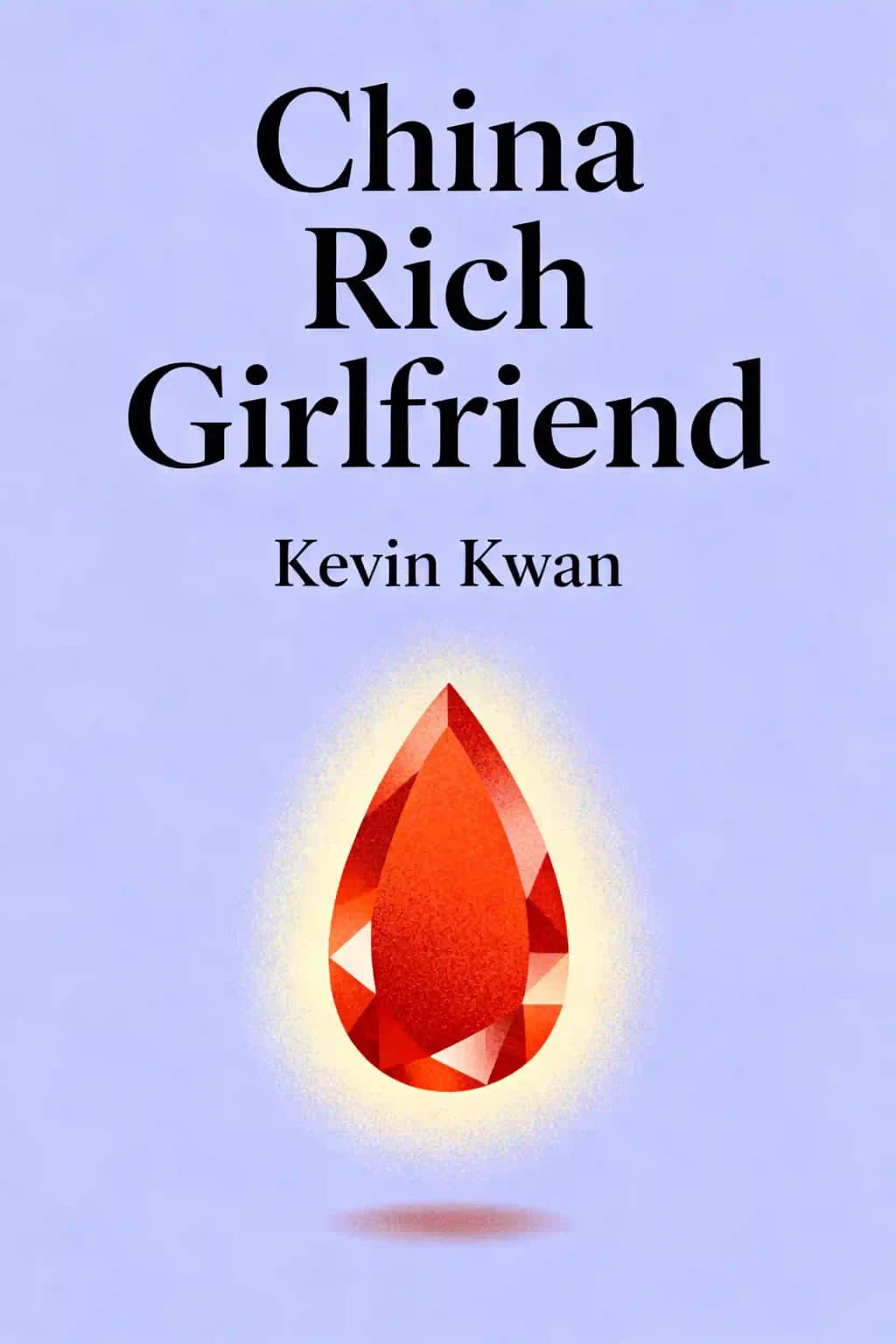
Kevin Kwan's "China Rich Girlfriend" exploded onto the literary scene as the eagerly anticipated sequel to his groundbreaking debut "Crazy Rich Asians." This cultural phenomenon has captivated millions with its intoxicating glimpse into the rarefied world of Asia's hyper-wealthy elite. The book became an instant New York Times bestseller, with readers and celebrities alike-including Reese Witherspoon and Mindy Kaling-praising its delicious blend of social satire and family drama. Beyond mere entertainment, Kwan's work has been credited with bringing authentic Asian representation to Western literature and challenging stereotypes through its nuanced portrayal of diverse Asian characters. What makes this series particularly fascinating is Kwan's insider knowledge-having grown up in Singapore's elite circles, he draws from real-life inspirations to create a world where private jets are customized with koi ponds, and wedding gifts include rare artworks worth millions. Prepare to be transported into a realm where wealth isn't just displayed-it's weaponized.
Глава 2
The Tangled Web of Family Secrets
The story opens with a shocking revelation that sets the tone for the entire novel. Eleanor Young, the formidable matriarch who previously opposed her son Nick's relationship with Rachel Chu, makes a dramatic helicopter entrance at their California wedding. But instead of trying to stop the ceremony, she delivers life-changing news: she has found Rachel's biological father-Bao Gaoliang, a powerful Chinese politician who never knew of Rachel's existence.
This revelation creates ripple effects throughout multiple families. Rachel, who grew up believing she was fatherless, suddenly discovers she has a half-brother, Carlton Bao, who bears an uncanny resemblance to her. The similarities between them go beyond physical appearance-they share mannerisms, food preferences, and even the same laugh. Their instant connection forms one of the novel's most touching relationships.
Meanwhile, Bao Gaoliang must navigate the explosive implications of Rachel's existence. His wife, Shaoyen, refuses to accept Rachel, viewing her as a threat to their family's reputation and her husband's political career. "That bastard girl will never be part of this family," she declares, setting up a dangerous dynamic that will escalate throughout the novel.
Eleanor's motivations for finding Rachel's father prove characteristically complex. Initially appearing to have had a change of heart, she later reveals to Nick that her newfound enthusiasm stems from learning the Baos are "China rich"-a level of wealth that makes even Singapore's elite look middle-class. "These people aren't just everyday rich with a few hundred million," she explains. "They are China rich! Billionaires!"
The novel expertly weaves these family tensions with themes of identity and belonging. Rachel must reconcile her American upbringing with her newly discovered Chinese heritage. Nick struggles to support Rachel while managing his mother's mercurial behavior. And Carlton finds himself torn between loyalty to his mother and his growing affection for the sister he never knew existed. Through these relationships, Kwan explores how family secrets, once revealed, can both heal old wounds and create devastating new ones.
Глава 3
Status Anxiety and Social Climbing in Asian High Society
In the glittering world of Asian high society, appearances aren't just important-they're everything. No character embodies this reality more perfectly than Kitty Pong, a former soap opera actress desperate to transform herself from social pariah to respected society matron. After marrying Bernard Tai, heir to a Hong Kong fortune, Kitty hires social consultant Corinna Ko-Tung to orchestrate her makeover.
Corinna's brutally frank assessment of Kitty's social standing provides some of the novel's most satirical moments. "Your current penthouse looks like the Miami Beach bachelor pad of a Bolivian drug cartel kingpin," she tells Kitty, before prescribing a complete lifestyle overhaul. Every aspect of Kitty's existence must be recalibrated-from her wardrobe ("elegantly but forgettably dressed") to her reading habits (starting with social novels and progressing to "light Proust").
The meticulous details of this social engineering reveal the arbitrary yet rigid rules governing elite Asian circles. Kitty must attend the right church, donate to the right causes, and even smell right-trading perfume for an essential oil blend that makes her smell "like you have been baking apple tarts all morning." Most importantly, she must learn that true old money values "invisibility" over ostentation.
This theme extends beyond Kitty to characters like Eddie Cheng, the "Prince of Private Bankers" who obsesses over status markers and treats every social interaction as a potential business opportunity. When hosting Rachel's father at his home, Eddie frantically micromanages everything from the background music to the presentation of caviar, revealing how status anxiety permeates even seemingly casual gatherings.
The novel's portrayal of social climbing isn't limited to Hong Kong. In Shanghai, we meet Colette Bing, daughter of one of China's richest men, who has cultivated a massive social media following and surrounds herself with an entourage of fellow "fu er dai" (rich second-generation children). Her weekend retreat-a thirty-acre private compound with eight interconnected pavilions arranged in an "Emperor's Throne formation" for proper feng shui-showcases how China's nouveau riche have created their own status symbols that blend traditional Chinese elements with Western luxury.
Through these characters and their social machinations, Kwan offers a wickedly entertaining yet insightful critique of how wealth and status operate in contemporary Asian societies, where ancient traditions of family honor collide with the brash materialism of new money.
Глава 4
Conspicuous Consumption: When Money Is No Object
"China Rich Girlfriend" elevates conspicuous consumption to an art form, showcasing a world where the ultra-wealthy compete not just through what they own, but how extravagantly they display it. The novel's most jaw-dropping example comes in the form of Colette Bing's private Boeing 747, which features an interior designed like a Javanese temple, complete with a three-story rock wall carved with Buddhas (smuggled from an Indonesian archaeological dig) and-most incredibly-a koi pond with prized fish, one worth $250,000. When a flight attendant fails to prepare the proper tea before takeoff, Colette demands that the Aircraft Standards Manual be reprinted and memorized by all crew members.
This isn't merely excess for excess's sake-it's a calculated display of power. As Rachel observes during their Paris shopping expedition, Colette and her friends don't just buy luxury items; they "decimate boutiques," with Stephanie Shi purchasing an entire wall of handbags at Moynat except for three bags. These shopping sprees function as competitive sport, with each woman trying to outdo the others in both quantity and exclusivity of purchases.
Even the characters' modes of transportation become extensions of their wealth. Carlton imports rare exotic cars to China for profit, driving a 1998 McLaren F1 worth millions through Shanghai's chaotic traffic. Michael Teo drives an $8.9 million Ferrari California Spyder, deliberately circling blocks before arriving at restaurants to ensure maximum visibility. And when Richie Yang challenges Carlton to a street race, the stakes are set at ten million dollars-a sum that barely registers as significant to either competitor.
Art collecting represents another battlefield for status warfare. The novel opens with Astrid Leong and Kitty Pong engaged in a bidding war for ancient Chinese scrolls, with the price escalating to "idiot territory" at $195 million before Astrid finally concedes. Later, we learn Kitty purchased "The Palace of Eighteen Perfections" for nearly two hundred million dollars-not because she appreciates its artistic value, but because owning the most expensive Chinese artwork ever sold at auction elevates her social standing.
Food, too, becomes a luxury commodity beyond ordinary comprehension. Jack Bing celebrates by ordering special Tiger Bone wine of indeterminate but clearly astronomical value. At the Bao residence, Rachel is served bird's nest soup where each bowl contains "at least ten thousand dollars' worth of the finest-grade red blood bird's nest."
Through these extravagant displays, Kwan satirizes how wealth functions as its own language among Asia's elite-a language where every purchase, every possession, and every experience is carefully calibrated to communicate one's position in the social hierarchy. The result is both comically absurd and uncomfortably revealing about how money transforms human relationships.
Глава 5
The Dark Side of Dynastic Wealth
Beneath the glittering surface of luxury and privilege, Kwan reveals the often toxic dynamics that sustain dynastic wealth across generations. The novel's central poisoning plot-where Rachel is deliberately targeted with a rare pharmaceutical toxin-dramatically illustrates how far some will go to protect family interests and bloodlines.
The poisoning is eventually traced to Roxanne Ma, Colette Bing's personal assistant, who explains she acted to prevent Rachel from threatening Carlton's inheritance. "I overheard Bao Gaoliang threaten to disinherit Carlton," she confesses, revealing how inheritance becomes a weapon wielded by patriarchs to control their children. This theme resonates throughout the novel, as multiple characters face similar pressures tied to family wealth.
Jack Bing exemplifies the patriarchal obsession with legacy when he pressures his daughter Colette to marry Richie Yang against her wishes. During their confrontation, he reveals his true motivation: "I need grandsons... I need to know that my legacy will continue." When Colette protests that she might choose Carlton Bao instead, her father dismisses him as coming from a less wealthy family, showing how dynastic considerations override personal happiness. To enforce his will, Jack freezes Colette's accounts-a financial punishment meant to bring his adult daughter to heel.
Similarly, we learn that Bernard Tai's father restricted his access to the family fortune, allowing him only the annual income from his trust fund after he eloped with Kitty. This financial control mechanism, designed to discipline wayward heirs, backfires spectacularly when Bernard undergoes a psychological transformation following botched plastic surgery, abandoning his family's materialistic values entirely.
The novel also explores how wealth corrupts moral boundaries. When Carlton was involved in a fatal car accident in London, his mother orchestrated an elaborate cover-up, paying millions to conceal that a Chinese girl died on impact. This incident haunts Carlton throughout the story, contributing to his self-destructive behavior and heavy drinking. The family's ability to literally buy their way out of consequences represents one of the most disturbing aspects of extreme wealth.
Perhaps most poignantly, Michael Teo's storyline illustrates how wealth can poison even loving relationships. After achieving financial success, Michael transforms from a humble, loving husband into a status-obsessed tyrant who spies on his wife Astrid and threatens her with a medieval poleax when she tries to leave with their son. His behavior stems from discovering that his business success was secretly engineered by Astrid's family-a revelation that destroys his sense of self-worth and identity.
Through these dark undercurrents, Kwan suggests that immense wealth often comes at the cost of authentic human connection, creating environments where family members are valued primarily for their contribution to dynasty-building rather than for their individual worth.
Глава 6
Cultural Identity in a Globalized World
As Rachel navigates her newfound Chinese heritage, the novel explores the complex interplay between cultural identity and globalization. Rachel, described by Colette as "a total banana" (yellow outside, white inside), embodies the cultural dissonance many diaspora Asians experience when reconnecting with their ancestral homeland.
Her journey through China becomes a crash course in cultural codes she never learned growing up in America. During shopping expeditions with Colette's friends, she's bewildered by their approach to luxury consumption, where buying entire collections rather than individual pieces is the norm. At dinner with the Bings, she struggles to navigate the intricate social hierarchies and unspoken rules governing Chinese business and family relationships.
Yet Rachel's outsider perspective also gives her clarity when confronting Colette about her treatment of others. In their viral confrontation at the Waldorf Astoria, Rachel delivers a devastating critique of Colette's entitled behavior: "You think because your father has money, you can treat people however you want." This moment resonates with millions of Chinese viewers precisely because Rachel articulates values that transcend cultural differences-basic human decency and respect.
The novel also explores how globalization has transformed traditional Asian societies. The "fu er dai" (rich second generation) like Colette and Carlton move effortlessly between Shanghai, Paris, and New York, creating a transnational elite culture with its own norms and values. They speak multiple languages, collect Western art, and adopt cosmopolitan lifestyles while maintaining distinctly Chinese approaches to family obligation and social hierarchy.
This cultural hybridity extends to physical spaces as well. Colette's weekend retreat blends traditional Chinese feng shui principles with contemporary Western luxury. The Bing family's private Boeing 747 features Indonesian temple aesthetics alongside cutting-edge technology. Even the novel's fashion descriptions highlight this fusion, with characters wearing Parisian haute couture accessorized with imperial jade passed down through generations.
Perhaps most tellingly, when Kitty Pong seeks social rehabilitation in Hong Kong society, her consultant Corinna prescribes a reading list that progresses from contemporary social novels to Jane Austen, Edith Wharton, and eventually "light Proust." This cultural curriculum reveals how elite Asian society has incorporated Western literary traditions into its definition of refinement while maintaining distinctly Asian social structures.
Through these explorations, Kwan suggests that cultural identity in the twenty-first century isn't a fixed inheritance but a dynamic negotiation-especially for those with the wealth and mobility to move between different worlds. The result is neither simple assimilation nor rigid traditionalism, but something more complex: a continuous process of selection and synthesis that creates new forms of cultural expression.
Глава 7
Marriage as Strategic Alliance
In Kwan's world, marriage functions less as a romantic union and more as a strategic alliance between powerful families. This theme emerges most explicitly when Jack Bing orchestrates an elaborate proposal between his daughter Colette and Richie Yang, son of another billionaire. When Colette protests, her father explains the dynastic logic: "The Yangs are one of the wealthiest families in China. Do you know how much more powerful our two families would be together?"
This view of marriage as corporate merger extends beyond the Bings. Eleanor Young's newfound enthusiasm for Nick and Rachel's relationship stems entirely from discovering Rachel's connection to the wealthy Bao family. "These people aren't just everyday rich with a few hundred million," she explains to her husband. "They are China rich! Billionaires!" Her rapid transformation from opposing the match to enthusiastically supporting it reveals how financial considerations outweigh personal compatibility in her worldview.
Even Astrid's seemingly love-based marriage to Michael proves vulnerable to financial power dynamics. When Michael discovers that his business success was secretly engineered by Charlie Wu to save Astrid's marriage, his sense of masculine identity collapses. "It's all been handed to you," Astrid's father tells Michael, undermining years of perceived achievement with a single sentence. This revelation destroys their relationship, suggesting that genuine equality might be impossible in marriages across vast wealth disparities.
The novel also explores how marriage serves as a vehicle for social advancement. Kitty Pong's marriage to Bernard Tai represents her attempt to enter Hong Kong's elite circles, though she discovers that money alone cannot buy acceptance. Her social rehabilitation requires completely reinventing herself according to old-money values that prioritize discretion, restraint, and proper lineage.
Conversely, we see how refusing advantageous matches can trigger severe consequences. When Colette rejects Richie Yang's proposal, her father immediately freezes her accounts-financial punishment designed to force compliance with family expectations. This control mechanism reveals how patriarchs use wealth to maintain authority over even adult children's most personal decisions.
Perhaps the novel's most optimistic perspective on marriage comes through Rachel and Nick's relationship, which stands apart precisely because it formed without knowledge of Rachel's wealthy connections. Their genuine affection for each other-demonstrated when Nick supports Rachel through her poisoning ordeal and when Rachel takes his last name because "Rachel Young" is "the only name that's truly hers"-offers a counterpoint to the strategic alliances surrounding them.
Through these varied portrayals, Kwan suggests that in a world where everything has a price, genuine love becomes both the rarest luxury and the only one that truly matters.
Глава 8
The Price of Redemption
Throughout "China Rich Girlfriend," characters seek redemption for past mistakes, often discovering that even unlimited wealth cannot easily erase the consequences of their actions. Carlton Bao's storyline most powerfully embodies this theme, as he struggles with guilt over the fatal car accident he caused in London-a tragedy his mother covered up with millions in hush money.
This buried secret manifests in Carlton's self-destructive behavior: heavy drinking, reckless driving, and emotional volatility. When he lashes out at Rachel after Richie Yang's party, revealing their father has been deliberately avoiding her because of his mother's opposition, his cruelty stems from his own unresolved trauma. "You're my brother, goddammit, you're the only brother I've got," Rachel pleads when he considers racing Richie, showing how their newfound sibling bond offers Carlton a path toward healing.
Eleanor Young's journey also explores redemption's complexity. Her discovery of Rachel's father appears initially as an act of atonement for her previous cruelty. Yet when she reveals to Nick that her enthusiasm stems from the Baos' wealth, we see how her attempt at redemption remains tainted by materialistic values. Only when she witnesses Rachel's emotional reunion with her father does Eleanor show genuine emotion, suggesting that authentic human connection might eventually redeem even her calculating nature.
Bernard Tai's transformation represents perhaps the most extreme form of redemption in the novel. After botched plastic surgery where he was mistaken for "Kristen Bell" instead of "Christian Bale," Bernard undergoes a complete psychological metamorphosis. He abandons his family's materialistic lifestyle for a modest cottage where he raises his daughter on mindfulness sessions and organic food. While played partly for comedy, his rejection of wealth as a value system raises profound questions about what truly constitutes a good life.
Astrid's storyline offers a different perspective on redemption through her relationship with Charlie Wu. Years after their broken engagement, Charlie secretly purchases Michael's company for $300 million to save Astrid's marriage-a selfless act meant to ensure her happiness even if it means watching her with another man. This revelation helps Astrid recognize that true love means being accepted exactly as you are, not constantly changing to meet someone else's expectations.
The poisoning plot that drives the novel's climax ultimately reveals Roxanne Ma's misguided attempt at protecting Colette's happiness by eliminating Rachel as a threat to Carlton's inheritance. Her confession-that she intended only to make Rachel ill enough to leave China-demonstrates how even acts meant to protect loved ones can cause irreparable harm when moral boundaries are crossed.
Through these intertwined redemption arcs, Kwan suggests that while wealth can cover up mistakes, true healing requires something money cannot buy: honesty, accountability, and genuine connection with others. In a world where appearances often matter more than reality, this message becomes particularly powerful.
Глава 9
Beyond the Glitz: Finding Authenticity in a World of Illusion
Beneath its dazzling surface of luxury and excess, "China Rich Girlfriend" ultimately explores the search for authenticity in a world built on carefully constructed illusions. Throughout the novel, characters struggle to distinguish between genuine connections and relationships mediated by wealth and status.
Rachel's journey exemplifies this search for authenticity. Despite being suddenly thrust into the world of China's ultra-wealthy, she maintains her groundedness, choosing to wear modest clothing and questioning the extravagant consumption around her. When Carlton takes her to an unassuming hole-in-the-wall restaurant on Jinxian Lu, she delights in its authenticity-a tiny fluorescent-lit space with just five tables downstairs, serving traditional Shanghainese dishes without menus. This moment of genuine cultural connection contrasts sharply with the manufactured experiences that dominate the novel's social landscape.
The relationship between Astrid and Charlie Wu provides another window into authentic connection. Despite years of separation and Charlie's marriage to another woman, their bond remains genuine. Their conversations-whether about Northern Exposure episodes or a fantasy restaurant concept they once dreamed up-reveal a connection based on shared memories and understanding rather than social calculation. When Astrid finally recognizes that Charlie has loved her all along, "never breaking his promise from their time in Paris," she chooses this authentic love over her increasingly toxic marriage to Michael.
Colette Bing's character arc similarly explores the challenge of finding authenticity amid extreme privilege. Despite her carefully curated social media presence and entourage of sycophants, Colette shows moments of genuine emotion-particularly in her defense of Carlton against her father's marriage demands. Her confrontation with her parents reveals her desire for autonomy and self-determination beyond the dynastic expectations placed upon her.
Even Kitty Pong's social rehabilitation contains an implicit critique of authenticity. Corinna's meticulous instructions-from how Kitty should dress to how she should smell-create an entirely manufactured persona designed to gain acceptance from Hong Kong's elite. The absurdity of these transformations highlights how social belonging in these circles depends not on authentic self-expression but on conformity to arbitrary rules.
Perhaps the novel's most pointed commentary on authenticity comes during Astrid's appearance at Richie Yang's Paris party. When Colette attempts to identify Astrid's designer outfit, she's stunned to learn the perfect dress is from Zara. This moment reveals how true elegance transcends price tags-a concept lost on many of the novel's status-obsessed characters.
Through these explorations, Kwan suggests that in a world where everything seems purchasable-from art to relationships to social standing-genuine human connection becomes both increasingly rare and increasingly valuable. The characters who find happiness are those who manage to create authentic relationships that exist outside the transactional logic of extreme wealth.
As Rachel reflects while taking Nick's last name, some things-like identity and belonging-cannot be bought or sold but must be freely chosen and freely given. In this insight lies the novel's moral center: that beneath the glittering facade of China's new gilded age, the search for authenticity remains the most compelling human story of all.