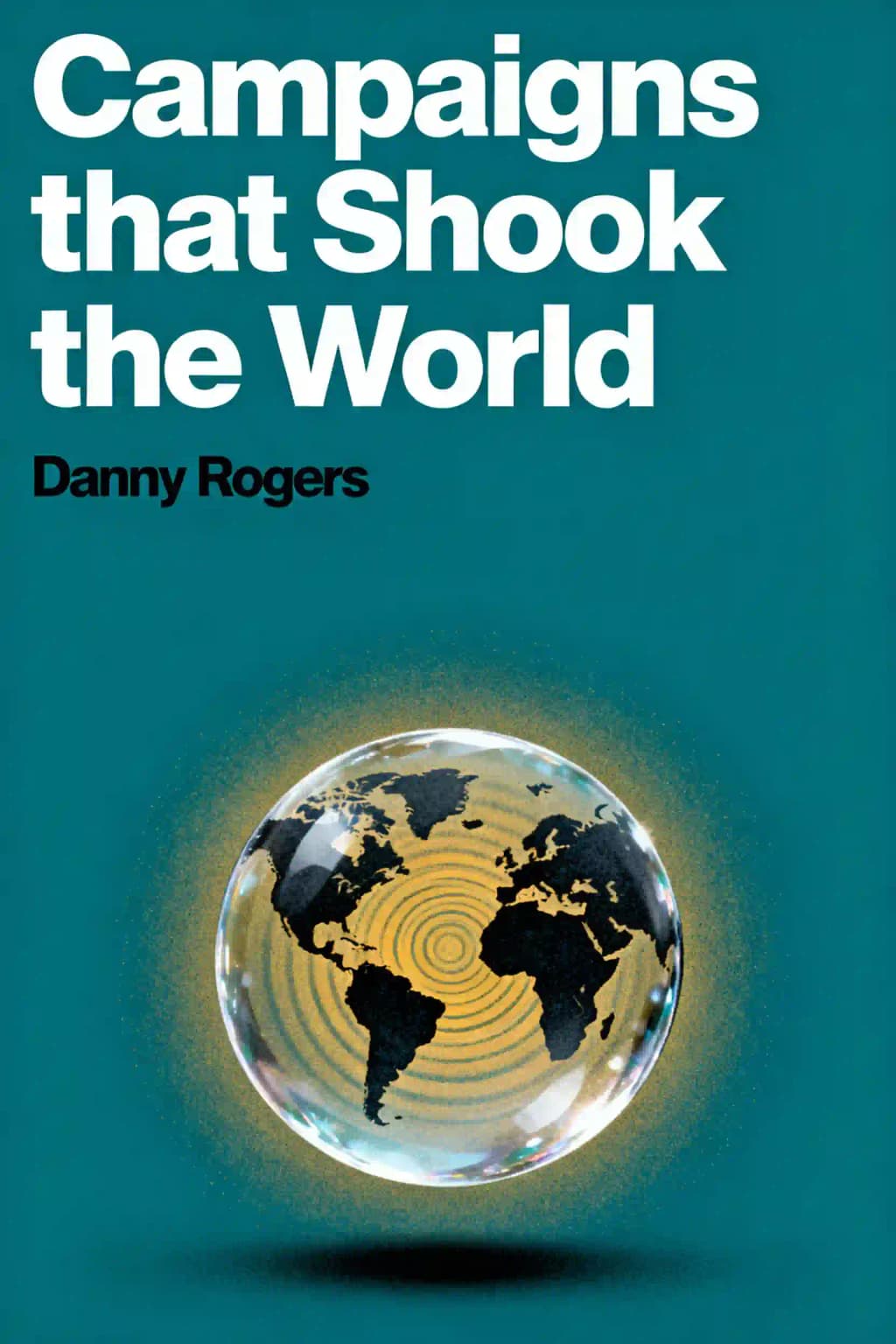
Campaigns that shook the world
the evolution of public relations
Обзор книги Campaigns that shook the world
Dive into PR's transformative power with "Campaigns That Shook the World," featuring exclusive insights from Alastair Campbell and Matthew Freud. From Obama's groundbreaking 2008 campaign to Dove's body-positive revolution - how did these strategies forever change how we perceive brands and politics?
Ключевые темы в Campaigns that shook the world
- political brand strategy
- cultural engineering
- mass media manipulation
- public relations history
- strategic communications
Цитаты из Campaigns that shook the world
These campaigns transcended traditional boundaries.
The campaign communicated feelings rather than just rational arguments.
Campbell fundamentally changed British politics.
New Labour succeeded as a classic "challenger brand".
People began to question what the Monarchy was for.
Персонажи в Campaigns that shook the world
- Danny RogersAuthor and marketing expert
- Tim BellAdvertising executive and adviser to Thatcher
- Tony BlairFormer British Prime Minister and campaign subject
- Alastair CampbellBlair's strategist and media relations manager
Об авторе
Об авторе книги Campaigns that shook the world
Danny Rogers, author of Campaigns That Shook the World, is a pre-eminent media and marketing journalist renowned for dissecting groundbreaking advertising and PR strategies. As editor of Campaign and PRWeek and group editor-in-chief of the Brand Republic Group, Rogers leverages decades of industry expertise to analyze iconic campaigns that redefine consumer engagement.
His work, rooted in commercial creativity and strategic communication, bridges academic marketing theory with real-world impact, informed by contributions to The Guardian, Financial Times, and international broadcast commentary.
Awarded ‘Editor of the Year’ by the British Society of Magazine Editors in 2008, Rogers combines incisive analysis with accessible storytelling, making complex marketing concepts actionable for professionals and enthusiasts alike. His insights are frequently cited in top-tier business programs and industry conferences, cementing his authority in global marketing discourse.
Campaigns That Shook the World has become a staple for marketing students and executives, praised for its blend of historical case studies and forward-thinking frameworks.
Скачать резюме книги «Campaigns that shook the world»
Получите резюме книги «Campaigns that shook the world» в формате PDF или EPUB бесплатно. Распечатайте или читайте офлайн в любое время.
Часто задаваемые вопросы об этой книге
Campaigns That Shook the World analyzes groundbreaking marketing and PR campaigns that redefined industries, blending case studies with strategic insights. Danny Rogers, a leading UK media journalist, explores how brands like Nike, Dove, and Red Bull leveraged creativity, timing, and cultural shifts to achieve global impact. The book dissects campaign mechanics, leadership decisions, and societal contexts, offering a playbook for modern marketers.
Marketing professionals, PR specialists, and business leaders seeking to understand high-stakes campaign strategies will gain actionable insights. Students of advertising, communications, or business studies also benefit from its real-world examples. Rogers’ analysis caters to anyone interested in the intersection of branding, media, and cultural momentum.
Yes—the book remains relevant for its timeless principles on audience psychology and crisis management. Rogers updates examples to reflect digital-era challenges like viral misinformation and AI-driven targeting, making it essential for navigating today’s fragmented media landscape.
- Cultural Timing: Aligning campaigns with societal trends (e.g., Dove’s Real Beauty).
- Narrative Ownership: How brands like Apple craft stories that audiences adopt as personal identity.
- Risk Amplification: Using controversy strategically, as seen in Benetton’s provocative ads.
Rogers argues these elements distinguish memorable campaigns from transient promotions.
The book adapts traditional principles to digital contexts, emphasizing micro-influencer networks and real-time analytics. Case studies like Old Spice’s viral YouTube responses illustrate how agility and platform-specific creativity drive engagement in algorithmic ecosystems.
Rogers introduces the 3D Impact Model:
- Disruption (breaking category norms).
- Diffusion (organic audience sharing).
- Duration (sustaining cultural relevance).
This model helps evaluate campaigns like Burger King’s Whopper Detour.
- “A campaign that doesn’t risk offense rarely achieves remembrance.”
- “Algorithms distribute, but humans curate—never confuse reach with resonance.”
- “The best marketers are cultural anthropologists first.”
These lines underscore Rogers’ focus on audacity and human-centric strategy.
Rogers challenges overreliance on demographic data, advocating for psychographic segmentation. He critiques brands that prioritize short-term metrics over narrative legacy, using examples like Pepsi’s failed protest-themed ad as cautionary tales.
Some argue the book overlooks small-budget campaigns and overemphasizes Western案例. Rogers addresses this in later editions, adding global examples like Safaricom’s mobile payment system in Kenya, but critics note a lingering corporate bias.
While both explore viral marketing, Rogers focuses on large-scale campaigns with institutional backing, whereas Berger examines grassroots sharing. Campaigns prioritizes boardroom strategy; Contagious delves into psychological triggers for everyday shareability.
Rogers’ updated chapters discuss using AI for sentiment analysis and predictive trend modeling but warn against losing creative intuition. He cites Netflix’s AI-aided content campaigns as balanced examples of human-machine collaboration.
The “Apology Paradox” framework advises swift, authentic responsibility-taking (e.g., JetBlue’s 2007 Valentine’s Day crisis) over legalistic denials. Rogers shows how transparent crises can boost long-term trust if managed empathetically.




