Глава 1
The Oracle of Omaha: How Warren Buffett Built America's Greatest Fortune
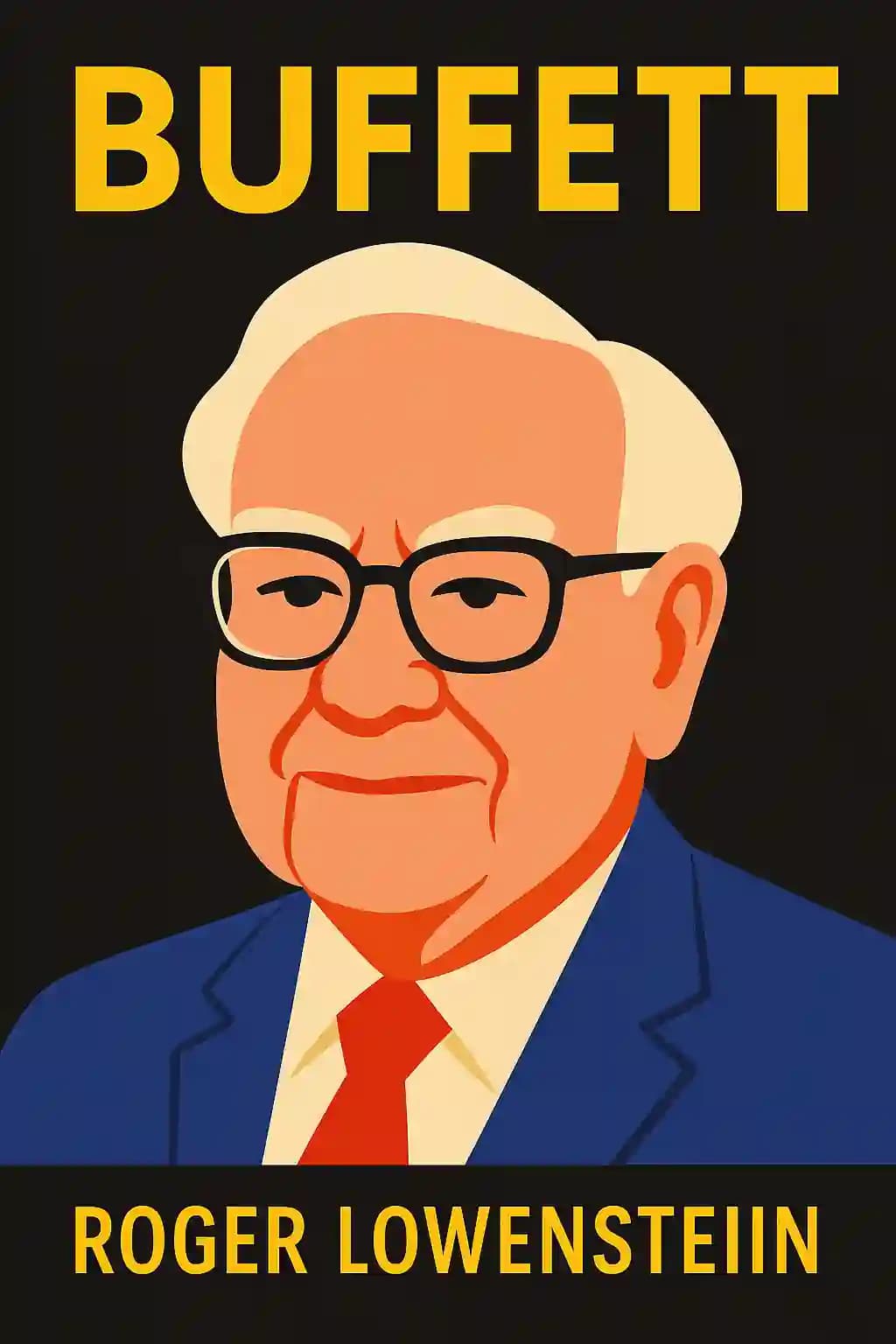
Warren Buffett stands alone in the annals of investing history. From humble beginnings in Omaha, Nebraska, he built one of the greatest fortunes of the twentieth century simply by selecting stocks and companies with remarkable precision. For over four decades, Buffett outperformed the market by stunning margins without taking undue risks or suffering a single losing year-a feat experts had declared impossible. His story isn't just about money; it's about character, discipline, and an unwavering commitment to principles in a field where such virtues are rare. Named "the Oracle of Omaha" by admiring Wall Street professionals, Buffett has become something of a folk hero, his annual shareholder letters eagerly anticipated by investors worldwide. Even celebrities like Bill Gates and LeBron James count themselves among his devotees, with Gates calling Buffett's annual reports "the best business education available anywhere."
Глава 2
The Mathematical Mind Behind the Money Machine
From his earliest days, Warren Buffett displayed an extraordinary fascination with numbers and money that bordered on obsession. While other children played baseball or read comic books, young Warren counted license plates, tracked letter frequencies in newspapers, and memorized city populations with uncanny precision. At age nine, he was already lamenting to his friend's mother about the "shame" they weren't monetizing the traffic passing their house.
This precocious financial mind seemed almost genetic. Born in 1930 to Howard Buffett, a stockbroker and later congressman, and Leila Stahl, Warren inherited both his father's financial acumen and his mother's high spirits. The Buffetts were known for being frugal, sweet-natured, and skilled at business-traits that would define Warren throughout his life.
His childhood entrepreneurial ventures were numerous and methodical. He sold gum door-to-door, delivered newspapers, collected and resold golf balls, and even set up a primitive pinball machine business with a friend. At eleven, he bought his first stock-three shares of Cities Service preferred at $38 each. When the price dropped to $27, he held on anxiously until it recovered to $40, whereupon he sold, making a $5 profit. To his lasting regret, the stock soon climbed to $200-teaching him his first lesson in patience, a virtue that would later become his trademark.
Despite his family's religious devotion, Warren didn't adopt their faith. Too mathematical and logical to make the leap of faith, he was instead stricken with a terrifying fear of death that would follow him throughout his life. This existential anxiety, combined with his mother's unpredictable rages, helped shape his defensive, risk-averse approach to investing. While neighborhood friends noticed he avoided all conflict, they also observed his unwavering conviction about his future success. He would sit on the fire escape at Rosehill elementary school and tell friends he would be rich before thirty-five-not as a boast, but as a simple statement of fact.
Глава 3
The Education of a Value Investor
Warren's formal investment education began at Columbia University under Benjamin Graham, whose approach to investing would transform the young man's life. Graham had revolutionized investing by providing the first reliable methodology for picking stocks in a field previously dominated by speculation and gambling. His insight was deceptively simple: investors should focus on businesses beneath stock certificates rather than market psychology.
Graham taught that stocks represented ownership in actual businesses with intrinsic values independent of market prices. The market was not a "weighing machine" but a "voting machine" where choices reflected both reason and emotion. Investors should buy when prices fell far below intrinsic value and trust the market's tendency to correct over time.
This philosophy was distilled to three words: "margin of safety." Investors should insist on a substantial gap between purchase price and estimated value, providing room for error. Graham illustrated this with his famous Mr. Market parable-an obliging partner who daily offers to buy or sell shares at prices that sometimes seem reasonable and other times appear silly.
To Buffett, these ideas were the Rosetta stone, freeing him from speculative techniques and trend-following. He experienced it as a revelation, "like Paul on the road to Damascus." Despite earning the only A+ Graham had awarded in twenty-two years at Columbia, Buffett faced disappointment after graduation in 1951 when Graham rejected his offer to work for free at Graham-Newman.
Returning to Omaha, Buffett joined his father's brokerage, Buffett-Falk & Co. As a stockbroker, he was an unusual salesman who researched extensively, reading Moody's manuals cover-to-cover and discovering undervalued "cigar butts" trading at three times earnings or less. Despite his research prowess, customers thought him too green, often taking his recommendations to more seasoned brokers.
In 1954, Buffett finally got his chance to work with Graham in New York. At Graham-Newman, he showcased his exceptional talent for arbitrage with trades like the Rockwood & Co. cocoa bean exchange, which generated significant profits. His brilliance exceeded even Graham's legendary abilities-Howard Newman described him as "Graham exponential." When Graham retired in 1956, Buffett returned to Omaha with $140,000 in personal capital and established Buffett Associates, Ltd. with seven limited partners contributing $105,000 while he invested just $100 as general partner.
Глава 4
Building the Buffett Partnership
At twenty-six, despite having modest savings and no steady income, Buffett possessed extraordinary self-confidence about his financial future. In 1957, he received a pivotal call from Edwin Davis, a prominent Omaha urologist who'd heard Buffett was raising money. Despite Davis's initial skepticism about the youthful-looking investor, Buffett laid out his terms with remarkable confidence: no disclosure about investments, yearly summaries only, and investors could only add or withdraw capital on December 31. His compensation structure was equally straightforward-partners would get all profits up to 4%, with remaining profits split 75% to investors and 25% to Buffett. If returns were mediocre, Buffett would earn nothing.
By year-end, Buffett was managing five partnerships totaling around $500,000. His first-year performance showed a 10% gain while the Dow dropped 8%. Working from a sitting area off the master bedroom in his modest home, Buffett was consumed by investing, claiming he thought about making money "before his feet hit the ground." His partnerships soared 41% in 1958, slightly outperforming the Dow's 39% gain. By the end of his third year, the original partnership money had doubled.
Behind his cordon of secrecy, Buffett followed Graham's principles, picking up small cheap stocks one after another. His edge came not from breadth but from intensity-his entire being focused on analyzing companies and pouncing when prices dropped. National American Fire Insurance became his first big strike, netting over $100,000 after he and lawyer Dan Monen tracked down shareholders across Nebraska.
By 1960, approaching thirty, Buffett was ready to expand. He asked partner Dr. William Angle to gather ten doctors willing to invest $10,000 each. Despite some skepticism, eleven doctors signed on. The following year, Buffett made his biggest investment yet-$1 million for controlling interest in Dempster Mill Manufacturing, a struggling windmill maker. Appointing himself chairman, he tried managing the business directly but struggled with the operational details, quickly putting the company up for sale when he couldn't get management to implement his cost-cutting recommendations.
Buffett's partnership letters evolved beyond mere reporting to become educational manifestos written in his distinctive voice-articulate, droll, self-deprecating, and surprisingly literate. In these night-written missives, he explored investing principles with memorable examples, like Isabella's $30,000 investment for Columbus that, at 4% compound interest, would have grown to $2 trillion-illustrating his obsession with compounding and opportunity cost.
Глава 5
The Evolution of an Investment Philosophy
By 1962, Buffett was making a significant departure from Graham's strict value approach. While still hunting bargains like Berkshire Hathaway (bought at $7.60 per share when its working capital was $16.50 per share), he began thinking in qualitative terms about businesses with unique dynamics and potential.
This shift became evident in 1963 when Buffett studied American Express, seeing immense value in its franchise despite the salad oil scandal. While Wall Street panicked, Buffett concluded that American Express's name remained "one of the great franchises in the world." This marked a significant departure from Graham's emphasis on tangible assets, as Buffett recognized the intangible value of American Express's dominant market position-80% of traveler's checks and a lock on charge cards. When shares plunged to $35, Buffett boldly invested nearly a quarter of his assets in this single stock.
Buffett distinguished himself from Wall Street's "high priests" by rejecting conventional diversification. He concentrated his portfolio in just five stocks, ridiculing fund managers who followed "the Noah School of Investing-two of everything." While acknowledging diversification would be ideal if he could find fifty equally "superior" stocks, he found that impossible in practice. Unlike Graham who insisted on substantial diversification, Buffett believed he could "safeguard his eggs without spreading them around"-a brassy claim he continued to validate with returns of 39% in 1963 and 28% in 1964.
Despite his growing wealth, Buffett remained obsessively frugal. He refused to buy life insurance, believing he could compound the premiums faster himself. When his wife Susie spent $15,000 on home furnishings, he complained to a friend, "Do you know how much that is if you compound it over twenty years?" In his mind, every dime had the potential of Queen Isabella's lost fortune.
As the stock market entered the euphoric "Go-Go" years of the late 1960s, Buffett found himself increasingly out of step with market trends. Graham's generation had retired, replaced by younger investors with no memory of the 1929 crash and an appetite for speculation. The combination of Buffett's growing capital and fewer available bargains created a dilemma that led him to close the partnership to new accounts in early 1966.
Глава 6
The Courage to Walk Away
In May 1969, just as Business Week proclaimed Fred Carr "may just be the best portfolio manager in the U.S.," Buffett made a remarkable decision-he quit. He stunned partners by announcing the liquidation of Buffett Partnership, explaining: "I am not attuned to this market environment, and I don't want to spoil a decent record by trying to play a game I don't understand just so I can go out a hero."
The courage behind this decision was extraordinary-on Wall Street, nobody folded and returned money at the top, especially after their best year. Though he could have simply moved to cash and waited, Buffett felt inescapable pressure to lead the league each year. "If I am going to participate publicly, I can't help being competitive. I know I don't want to be totally occupied with out-pacing an investment rabbit all my life. The only way to slow down is to stop."
As Buffett liquidated his portfolio throughout 1969, the market began to collapse, validating his decision. The Dow, which had hovered near 1,000, dipped below 900 in June. High-fliers crashed spectacularly-Litton Industries fell 70%, Ling Temco-Vought plunged from 169 to 25. Fred Carr, celebrated by Business Week in May, quit by December, leaving his fund stuffed with illiquid stocks. By May 1970, the entire stock market had fallen by half from early 1969.
Buffett's partnership eked out a 7% gain in 1969, beating the Dow by 18 points. His record remained unblemished-he had made a profit and beaten the benchmark every single year. Had an investor put $10,000 in the Dow in 1957, their profit over thirteen years would have been $15,260. The same investment with Buffett would have yielded $150,270. His portfolio had grown at a compound annual rate of 29.5%, compared to 7.4% for the Dow-an unprecedented achievement in investment history.
The partnership liquidated all investments except two: Berkshire Hathaway and Diversified Retailing. Partners could take proportional interests in these companies or cash out. Buffett himself kept his shares, stating: "I think both securities should be very decent long-term holdings and I am happy to have a substantial portion of my net worth invested in them."
Глава 7
Transforming Berkshire Hathaway
Berkshire Hathaway began as a struggling New England textile mill, but under Buffett's leadership, it would become something entirely different. In 1967, Buffett acquired Jack Ringwalt's National Indemnity Company for $8.6 million. This acquisition revealed Buffett's strategic vision: while textiles consumed cash through constant reinvestment, insurance generated it through "float"-premiums collected upfront with claims paid later. This float provided investable funds that Buffett could deploy elsewhere.
Following National Indemnity, Buffett acquired Sun Newspapers of Omaha and Illinois National Bank & Trust. By 1970, the results were clear: textiles earned just $45,000 while insurance and banking each generated over $2 million with similar capital investments. Buffett became Berkshire's chairman that year with 29% ownership following his partnership's dissolution, and began writing the annual shareholder letters that would become his trademark.
Despite his ruthless capital allocation philosophy, Buffett maintained the struggling textile operation at minimal investment levels. Though Buffett's capitalist principles suggested closing the mill, he felt an emotional connection to this symbol of the New England work ethic. He struck a compromise: the mill would continue operating as long as it didn't require significant new capital, even if returns remained mediocre.
As the market turned in the early 1970s, Buffett underwent a remarkable transformation-like watching the previous decade's filmstrip in reverse. While Wall Street retreated into malaise after the collapse of the "nifty fifty" stocks, Buffett's enthusiasm surged. In 1973, with the market sinking, he was "running like a colt," sweeping through investments like National Presto Industries, Detroit International Bridge, and dozens of others.
With more investment ideas than cash, Buffett raised $20 million through Berkshire by selling senior notes at 8%-timing the market perfectly before rates climbed above 9%. Armed with this capital, he began accumulating shares in the Washington Post Company in 1973, eventually becoming its largest outside investor. He valued the Post's assets (which included four television stations, Newsweek magazine, and newsprint mills) at $400 million, yet the stock market valued the entire company at merely $100 million.
Глава 8
The Buffett-Munger Partnership
Howard Buffett thought his father was the second-most-intelligent man he knew-the smartest being Charlie Munger. This quirky thinker served as Buffett's sounding board and only confidant. Though they seemed like "clones" with similar mannerisms, Munger was dour where Buffett was cheerful. Dubbed "the abominable no-man," Munger's deep skepticism made him invaluable as an investor. He liked to quote algebraist Carl Jacobi: "Invert, always invert"-approaching problems by asking what could go wrong.
In 1971, Buffett and Munger got a once-in-a-lifetime opportunity when See's Candy Shops became available. Initially reluctant about the candy business, Buffett quickly reconsidered after "looking at the numbers"-California customers willingly paid premium prices for See's respected brand. Though initially balking at the $30 million asking price due to See's low book value, they eventually acquired it for $25 million-Buffett's largest investment yet. This represented Buffett's evolving understanding that book value, which measures capital invested, doesn't capture intangibles like brand value that drive future earnings.
Unlike the affable Buffett, Munger embodied aristocratic values and noblesse oblige. Enormously active in civic life, he could be both brilliant and pompous. He dominated conversations with weighty discourses on science and philosophy, reading obscure paleontology works even while bouncing through the Australian jungle. Though Munger articulated these psychological principles, it was Buffett who had the natural touch in applying them.
During SEC questioning about their business practices, Buffett and Munger's unusual business philosophy bewildered investigators. When asked why they intentionally paid more than necessary for Wesco shares, Munger explained they "wanted to look very fair and equitable" to Vincenti and Peters. The SEC lawyers, expecting profit maximization, couldn't comprehend this approach. Buffett explained that a long-term investment was more than a bet on stock-it was a partnership with responsibilities and loyalties.
Глава 9
The Media Mogul
When Warren Buffett began buying Washington Post stock, Katharine Graham was midway through a remarkable personal transformation. Having inherited control of the newspaper in 1963 after her husband's suicide, the once-shy, self-deprecating Graham had already proven her mettle by hiring Ben Bradlee and supporting the Pentagon Papers publication and Watergate investigation despite government threats.
Graham was alarmed by Buffett's stock purchases, with her son Donald fearing a "super-right-wing type from Nebraska" was targeting them. Despite owning controlling Class A shares, Graham "stalked him like a dog circling a snake," making inquiries with publisher friends. Buffett, sensing her concern as a 10% shareholder, wrote her a friendly letter recalling his days as a Post paperboy.
Buffett became Graham's personal finance tutor, bringing stacks of annual reports to review line by line. Though some colleagues suspected manipulation, Graham appreciated his patient counsel. He made a major impact by suggesting the Post buy back its own stock-a concept Graham initially thought crazy until Buffett explained how shrinking share count increased value per share.
Buffett's influence proved decisive when Time Inc. proposed a joint operating agreement between the Post and the failing Washington Star. Against sharing profits with a weaker competitor, Buffett convinced Graham to make a tougher counteroffer, which the Star rejected. The Star soon folded, creating a windfall for the Post.
In 1976, Buffett met with Kay Graham about potentially acquiring the Buffalo Evening News. Despite being an afternoon paper in a declining industrial city with high labor costs and no Sunday edition, the Evening News had impressive market penetration, reaching a higher percentage of local households than any other big-city daily in America. After the Post decided not to pursue the acquisition, Buffett moved forward independently, offering $32.5 million for the paper-an extraordinarily high price relative to its meager $1.7 million pretax earnings.
Even before finalizing the purchase, Buffett had a clear strategy for the Evening News. He immediately questioned the paper's managing editor Murray Light about starting a Sunday edition-something Light had been advocating for years. The Evening News had reportedly refrained from Sunday publication due to a tacit agreement with the rival Courier-Express, whose Sunday edition was its lifeblood.
Глава 10
The Coca-Cola Investment and Efficient Market Challenge
In fall 1988, Coca-Cola executives Roberto Goizueta and Donald Keough noticed someone was aggressively buying their company's stock after it had fallen 25% from pre-crash highs. By spring, Berkshire had acquired $1.02 billion worth-7% of Coca-Cola-at an average price of $10.96 per share. Within three years, this stake would soar to $3.75 billion, roughly equaling Berkshire's entire value when the Coca-Cola investment began.
Unlike Washington Post or GEICO investments that hinged on balance sheet values or specific events, Coca-Cola's value couldn't be computed from its balance sheet alone. Buffett likened stock valuation to bonds-determining future cash flows discounted to present value. The difference was that with stocks, investors had to determine the "coupons" themselves.
What attracted Buffett was Coca-Cola's renewed international focus. Between 1984-1987, overseas gallon sales rose 34% while profit margins improved from 22% to 27%. Foreign profits surged from $607 million to $1.11 billion, with three-fourths of income now coming from international markets. The potential remained vast-Pacific Rim consumers averaged fewer than 25 Cokes annually, Africans even less, and European and Latin American markets under 100 per capita, all far below U.S. consumption.
This investment approach directly challenged the Efficient Market Theory that had become academic gospel. This theory claimed all public information was already reflected in stock prices, making security analysis "logically incomplete and valueless." It suggested stocks followed a "random walk," implying Buffett's success was merely luck rather than skill.
The academic definition of risk diverged dramatically from Buffett's approach. While Buffett defined risk as overpaying for a business after careful fundamental analysis, efficient market theorists reduced risk to a single mathematical measure: beta, or price volatility. They argued that higher returns could only come from accepting higher "risk" (volatility), completely ignoring business fundamentals. Buffett found this absurd, noting that a stock becoming cheaper didn't make it riskier: "I have never been able to figure out why it's riskier to buy something at $40 million than at $80 million."
Глава 11
The Salomon Brothers Crisis
In 1990, despite Salomon's profits plunging by $118 million, CEO John Gutfreund increased the bonus pool by $120 million, infuriating Buffett who served on the compensation committee. The firm was earning just 10% on equity pretax, with its stock unchanged over eight years while the Dow had nearly tripled. Buffett demanded cuts, telling executives he didn't care how they distributed bonuses but "the overall number is wrong."
The crisis deepened when Paul Mozer, head of Salomon's government bond desk, submitted phony bids on behalf of customers who hadn't authorized him to do so in Treasury auctions. Despite being informed of this illegal activity, Gutfreund hesitated to disclose it to regulators. By August 1991, the scandal threatened Salomon's status as a primary dealer and its funding. Gutfreund resigned and called Warren Buffett to ask him to step in.
As Salomon's crisis deepened, Buffett faced mounting challenges. On Sunday morning, the Treasury banned Salomon from its auctions, threatening the firm's survival. With $150 billion in assets and $50 billion rolling over daily, Salomon needed short-term funding to avoid bankruptcy. Buffett frantically negotiated with Treasury Secretary Nicholas Brady, promising thorough reforms and new controls while employees gathered anxiously on the trading floor preparing for possible collapse.
Buffett's strategy was complete transparency and cooperation with investigators. Rather than fighting accusations, he disarmed critics through humility and accountability. His testimony began with a simple apology: "I would like to start by apologizing for the acts that have brought us here." He promised compliance reforms and delivered his now-famous standard: employees should only take actions they'd be comfortable seeing "on the front page of their local paper."
In May 1992, U.S. Attorney Otto Obermaier announced he wouldn't bring charges, though Salomon paid $290 million in civil penalties. In June 1992, Buffett stepped down as chairman, appointing his lawyer Bob Denham as successor while Deryck Maughan continued running the business. Buffett was relieved when his Salomon duties ended. He wrote that the experience was "interesting and worthwhile" but "far from fun," and made clear where his heart lay: "Berkshire is my first love and one that will never fade."
Глава 12
The Legacy of Warren Buffett
By 1995, Berkshire stock had reached $32,100-a 57% gain that year alone. This made Buffett, with $15.2 billion, temporarily the richest person in America, surpassing Bill Gates. Over 31 years, Berkshire had appreciated at 27.68% annually, compared to 10.7% for the S&P 500. A $10,000 investment in Berkshire in 1965 would have grown to $17.8 million by 1995, versus just $224,000 in the S&P 500.
Unlike other great capitalists who built fortunes on single products or innovations-Rockefeller with oil, Carnegie with steel, Walton with retail, Gates with software-Buffett created his wealth purely through investing across diverse businesses. Starting with a dying textile mill in 1965, he built an industrial empire worth $38 billion, making Berkshire the nineteenth-largest company in America, surpassing household names like American Express, Citicorp, and Xerox-all with a corporate staff of just twelve.
In 2006, Buffett made a stunning reversal of his intention to hold assets until death, announcing a plan to gradually donate 85% of his Berkshire stock. Five-sixths would go to the Bill and Melinda Gates Foundation, dedicated to fighting disease in developing countries, with the remainder distributed among four family foundations. This decision to combine his fortune with his friend Gates' would create the world's largest foundation.
Buffett's public legacy was secure as the Great Explainer of American capitalism. He taught a generation how to think about business, showing that investing needn't be a game of chance but a logical enterprise connected to tangible businesses. Unlike the dark side of Wall Street, Buffett got rich without leaving victims, treating investors and investees as partners with no "exit strategies."
His commitment to "forever" holding periods transcended finance, breaching the usual short-term horizons of Wall Street. In an age of fraying loyalties, Buffett turned investments into relationships and social contracts, preserving commitments rather than trading them. The man who taught America how to invest was writing a new chapter on giving it away, cementing his legacy not just as the greatest investor of all time, but as someone who understood that true wealth lies in what you give back.