Глава 1
When Brokenness Becomes Your Superpower
Jenny Lawson's "Broken (in the Best Possible Way)" isn't just another memoir-it's a raw, hilarious journey through the chaos of mental illness that has resonated with millions. This New York Times bestseller has been embraced by celebrities from Neil Gaiman to Brene Brown, who praise Lawson's unique ability to find humor in life's darkest moments. As the beloved blogger known as "The Bloggess," Lawson has built a community of followers who find comfort in her unfiltered honesty about depression, anxiety, and the strange moments that make us human. Her work has transformed how we talk about mental health, proving that vulnerability can be both powerful and side-splittingly funny.
Глава 2
The Beautiful Disaster of Being Jenny Lawson
Life with Jenny Lawson is a glorious catastrophe. She can barely "mammal" correctly, as she puts it-forgetting entire vacations she's taken, losing shoes while actively wearing them, and standing confused in her own refrigerator wondering whose house she's in. Her memory loss is so profound that she repeatedly discovers "new" documentaries about serial killers that she's already watched multiple times. She argues with her husband Victor about whether she's seen movies before, only to recognize them at exactly the same moment she recognized them last time.
This memory impairment has unexpected benefits. She gets to experience books as perpetually new-her e-reader reveals highlighted passages and notes from previous readings, creating an unintentional book club with herself. She's read Murder on the Orient Express countless times, always impressed with herself for solving the mystery. Her forgetfulness has even kept her marriage intact for twenty years-she'll forget what they're fighting about mid-argument, making it impossible for her to win.
Behind the humor lies a more sobering reality: dementia runs strongly in her family. Her grandmother has it but happily reads the same first chapter of a Stephen King novel every week, enjoying it anew each time. This family history serves as both a frightening reminder of mental fragility and a strange comfort. Lawson believes all those forgotten memories are still there, locked away safely. "If one day I look at you without recognition," she writes, "know that your importance remains real-the me who loved you is still sitting on that beach, forever feeling the sunlight."
This balance between hilarity and heartbreak defines Lawson's approach to her broken brain. She embraces her peculiarities with a kind of defiant joy, finding the absurd humor in moments that might otherwise crush her. When she loses her shoe in an elevator and has to report to security that "your elevator ate my shoe," she transforms potential humiliation into a story that connects with thousands of readers who recognize their own awkwardness in her experiences.
Глава 3
The Social Anxiety Chronicles: Hiding from the World
For Lawson, socializing is a special kind of terror. She keeps a running list of horrific things she's said during uncomfortable silences-a document she shows Victor whenever he suggests attending an office party, quickly convincing him it's a bad idea. Her list includes bizarre non-sequiturs about bat rabies, uncomfortable facts about bee reproduction, and accidental sexual innuendos about "wind beneath legs."
Her social awkwardness extends to grocery store interactions where she wears sticky notes on her chest to remind herself what to say, philosophical debates about whether "nice guys finish last" that inevitably lead to margaritas, and existential concerns about breathing in cremated celebrities. She's even woken Victor at 2 a.m. to debate whether touching poop or having poop touch you is worse-the kind of endurance conversation that keeps a marriage going for twenty years.
This intense social anxiety manifests physically during her book tours. While fans wait eagerly outside, she hides in hotel rooms, paralyzed by fear. During one New York trip, she stood frozen at her hotel door, shaking and crying at her inability to step outside to visit Times Square and Carnegie Hall-places she desperately wanted to see. Instead, she curled up by the window, watching tourists enter Carnegie Hall while imagining its interior.
Yet from this trapped position, she witnessed something extraordinary-a fountain shaped like a dandelion caught the sunlight at just the right angle, creating an enormous rainbow wall that waved like fire made of colors. No one else noticed this spectacle-only Lawson, from her specific vantage point, could see it. "I realized my brokenness had placed me exactly where I needed to be to witness something beautiful that others couldn't see," she writes. Though it didn't immediately cure her anxiety, it reminded her that perhaps she's exactly where she's supposed to be-"beautiful, terrible, unseen by most, unique."
This moment perfectly encapsulates Lawson's perspective on mental illness-that our broken parts sometimes give us unique perspectives that "normal" people miss. The very things that isolate us can sometimes become our greatest gifts, if only we learn to see them that way.
Глава 4
The Monster Within: Battling Autoimmune Diseases and Depression
Lawson's body and mind seem locked in competition to see which can kill her first. Her autoimmune diseases cascade into each other, with her body attacking itself like blind soldiers mistaking her joints for dragons and snakes. While outsiders see her visible illnesses like pneumonia and think she's better when those symptoms fade, they don't see the persistent fog, bone aches, joint deformities, and exhaustion so intense she sometimes can't make it to the couch.
Recent tests revealed three major issues: severe testosterone deficiency causing depression and brain fog, pre-diabetes requiring a strict diet eliminating everything she enjoys eating, and "all of the anemias" including pernicious anemia-which means she's mysteriously losing blood. While her doctor suggests reasonable medical explanations, Lawson is convinced attic vampires are the culprits, especially after her correspondence with "the Vampire Brotherhood"-a scammer offering immortality for $150 whom she engages in an absurd exchange about feminist vampire naming conventions.
Despite finding humor in her situation, depression remains her constant companion during illness, whispering lies about her worthlessness. "I recognize these thoughts as untrue," she writes, "but perception feels like reality when you're in it-like how nightmares seem real until you wake up."
The real blow came when Victor reminded her that she doesn't have life insurance because she was too honest about her health issues to qualify. She lamented the absurdity of being considered "a bad risk" when mortality is universal. Under the stars, Victor hugged her and made her laugh, acknowledging she was indeed "a bad risk, but one I'm happy to take."
This combination of physical and mental illness creates a perfect storm of suffering, yet Lawson somehow transforms it into both comedy and profound insight. Her ability to find humor in her darkest moments becomes not just a coping mechanism but a gift she shares with readers who recognize their own struggles in hers.
Глава 5
The Things We Do to Quiet the Monsters: TMS Treatment
"I am not suicidal," Lawson declares. "This is what I say out loud, what I believe, what I want to believe. Yet I am at risk of suicide-this is what I know, what lurks in my doctor's notes, the unsaid thing that haunts my house."
Suicide from mental illness isn't selfish in the way most think, she explains. The disease itself is selfish, stealing your essence and replacing it with terrible lies. Depression twists logic until the irrational seems real. In her darkest moments, she reminds herself her brain is lying, that she'll recognize this when she recovers.
After years of her psychiatrist's encouragement, Lawson finally tried repetitive transcranial magnetic stimulation (TMS), which sends electromagnetic pulses to stimulate dormant parts of the depressed brain. Despite the painful procedure (like a woodpecker drilling into her skull) and insurance battles, she began treatment, documenting her journey from numbness back to feeling.
By day seven, something shifted. She bounced back from depression to feeling "okay" and then actually "good." She wanted to leave the house voluntarily and, most tellingly, wanted to listen to music again-something she avoids during depression because it either makes her feel too much or highlights her numbness.
After her fourteenth session, she sat crying in the parking lot-not from sadness but from relief. Depression for her is a painful lack of emotions, a disconnection, so tears meant feeling human again. She recorded herself crying as a reminder that treatment was working, that mental illness was real, and that she was worth fighting for.
By day twenty, each session felt less like her illness being beaten into submission and more like goodness being pulsed into her head. The slow tapping on her anxiety-prone right brain whispered "YOU. WILL. BE. STRONGER" while the rapid drilling on her depressed left brain repeated "YouWillBeOkayYouWillBeOkay."
Six months after treatment, she needed less anxiety medication and hadn't had any in six months. Her depression returns but usually only for a few days. "Nothing lasts forever, good or bad," she writes. "But TMS gave me that borrowed half year where I came back to life. I saw Europe for the first time-ate haggis, explored Paris catacombs, fed owls at a castle, watched my daughter see the Eiffel Tower. It was worth it."
This section offers not just a personal journey but valuable information about an emerging treatment for depression. Lawson's willingness to share her experience provides hope for readers struggling with similar conditions while demystifying a procedure many might find intimidating.
Глава 6
The Awkward Moments That Bind Us Together
After tweeting about telling an airport cashier "you too" when they wished her a safe flight, Lawson received thousands of responses from people sharing their own moments of social awkwardness. These shared moments of mortification brought thousands of people together in glorious solidarity, creating an unexpected virtual community bonded by their collective social missteps.
The responses ranged from mild faux pas to spectacularly awkward encounters. People confessed to high-fiving retail workers who were actually waving to someone else, accidentally texting "love you" to their boss, and telling elderly customers they were "getting ready to expire" instead of their discount cards. One person shared how they said "Man Licker Bonglist" instead of "Man Booker Longlist" during a literary discussion, while another described shaking a cashier's hand when they were simply asking for coupons. The cringe-worthy moments extended to serious occasions, with multiple people admitting to congratulating families at funerals or responding "you too" when a waiter said "enjoy your meal" at a restaurant.
The thread expanded into increasingly elaborate scenarios. One woman described accidentally flashing her entire neighborhood when attempting to remove a spider from her bikini top on her front porch. Another recalled calling teeth "mouth bones" during a first meeting with an attractive dentist, then spending the rest of the appointment trying to pretend it never happened. A teacher shared how they spent an entire parent-teacher conference referring to the wrong child, while a businessman admitted to ending a major presentation with "thank you for coming to my Ted talk" despite it not being a TED event.
These confessions gained such traction that they appeared in the New York Times, demonstrating that what truly resonates with people are not stories of success and perfection, but rather tales of messing up in incredibly human ways. The viral nature of these shared experiences revealed a universal truth: everyone, regardless of their status or sophistication, has their own collection of awkward moments they carry with them.
"As these strangers shared their embarrassing stories, they felt celebrated rather than ashamed," Lawson observes. The overwhelming response showed that these moments of vulnerability created stronger connections than any carefully curated social media presence ever could. The thread became a testament to how our shared imperfections and ability to laugh at ourselves create authentic human connections. What started as a simple tweet transformed into a powerful reminder that our most embarrassing moments often become our most relatable ones, fostering a sense of community through shared vulnerability and honest human experience.
Глава 7
An Open Letter to My Health Insurance Company
"Sometimes I think you want me dead," Lawson begins her letter to her health insurance company. "But the truth isn't so absolute-you just don't care for me to live."
Their dysfunctional relationship began decades ago when they denied coverage for her antidepressants shortly after her husband cut off her internet access when he found her browsing suicide message boards. They claimed the medication wasn't "medically necessary," then apologized profusely when she called, helping with her appeal while making her feel grateful for receiving what should have been rightfully hers.
The denials continued: medications for rheumatoid arthritis, forcing her to endure years of unnecessary pain until a new doctor informed her better treatments existed; requiring her to get additional medications that made her sick just to qualify for coverage; suddenly refusing to cover the brand-name antidepressants she'd taken for years when the generic version caused a breakdown.
They've made each victory hollow-covering medications but with "penalty fines" exceeding the medication's cost. Her psychiatrist's office won't even deal with them anymore. She pays cash for visits and nearly $250 for each antidepressant prescription, causing pharmacists to question if the price is correct.
"You claim to have my best interests at heart while denying treatments my doctors recommend," she writes. "You've rejected a noninvasive procedure with no side effects that could help my depression, insisting instead I take maximum doses of medications with terrible side effects-medications you don't even cover."
Her words echo the frustrations of millions of Americans caught in a healthcare system that often seems designed to maximize profit rather than health. By sharing her personal battle, Lawson transforms an individual struggle into a powerful critique of systemic failure.
Глава 8
The Secret to a Long Marriage: Embracing Imperfection
Lawson is often asked how she's stayed happily married for over two decades. "The long answer is that we haven't always been happy," she admits. "The short answer is I was too lazy to get divorced during the really hard parts."
She and Victor were "crazy in ways neither was prepared for." He hid wads of cash in strange places-twenties in teacups, nickels in boots, money in seashells-not because she was frivolous but because he feared running out. She had her own oddities, like the night she screamed uncontrollably and hid in fire ant-infested bushes during an argument.
They've learned to pick their battles, though she still thinks they'll get divorced during one fight each year. Victor immediately quashes the idea, knowing no one else would put up with either of them and she's too lazy for divorce paperwork. Even separated, she'd still call him to check for clown murderers in her gutters and fix the Wi-Fi.
What keeps them wanting to be together is laughter. Even when furious, Victor can make her laugh and wash away the anger-like when she was exhausted during travel and he randomly asked a ticket seller, "Is this where we kiss a wizard to remove a curse?" His ability to make her laugh helps her forgive and love him, despite the cheese wrappers he complains about and the thermostat she can't stop touching.
This honest portrayal of marriage cuts through the idealized versions often presented in media. Lawson suggests that lasting relationships aren't built on perfection but on accepting each other's quirks and finding ways to laugh together even in difficult moments.
Глава 9
We Are All Broken and Healing
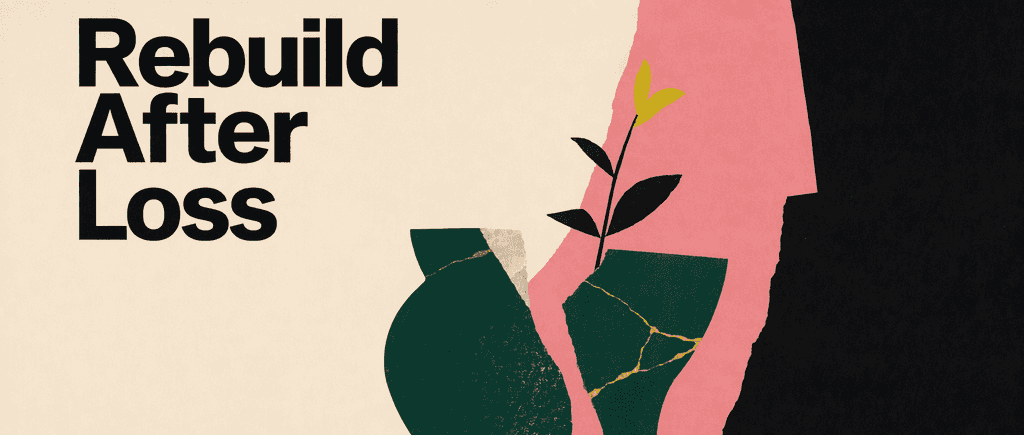
"I'm not much for organized religion," Lawson writes, "but I think we all have souls." She envisions them as glowing half orbs-flat at our back and round at our chests, like glass paperweights with golden centers, radiating warmth and light unique to each individual. As we live, our spheres crack and splinter with sadness, loss, doubt, or pain - each experience leaving its distinct mark, some hairline fractures, others deep fissures that threaten to shatter us completely.
We search for tiny pieces to fill these gaps, like archaeologists hunting for fragments of ancient pottery. Sometimes it's a song with important words we couldn't form ourselves, its lyrics becoming a mantra of healing. Other times it's a line of truth from a book that resonates so deeply it feels like it was written just for us. Sometimes we desperately try filling holes with things that aren't right-alcohol to numb the pain, drugs to escape reality, wrong relationships that promise false comfort, or unfulfilling jobs that provide security but steal our joy. These temporary fixes act like poorly matched puzzle pieces, blocking the truly healing splinters from entering and preventing authentic recovery.
Sometimes our spheres are too broken to go on, cracked beyond what seems repairable. In these moments, we might lean into someone else's emptiness, seeking completion in another's incompleteness, but codependence never lasts - it's like trying to build a house on shifting sand. Sometimes loved ones leave, taking pieces of us with them, leaving gaps that feel impossible to fill. The hollow spots they leave become monuments, sacred spaces within us that carry their memory, their impact, their lessons.
Some people are natural healers, leaving healing shards everywhere they go-spreading love like seeds in fertile soil, creating art that speaks to wounded souls, showing kindness that repairs broken spirits, and sharing the vital message that YOU ARE NOT ALONE. These individuals become lighthouses for others, their own cracks allowing light to shine through. Others move through life with sledgehammers, carelessly smashing spheres, unaware of both their destructive power and the precious value of what they're breaking.
"We are all broken and healing," she concludes, "wandering barefoot through one another's shattered shards. Some of us bleed from the cuts, carrying scars that tell stories of survival. Some of us heal, finding strength in the very places we were broken. If you're lucky, you do both - learning from the pain while growing through recovery. And if you look at it in just the right light, if you can see past the jagged edges and missing pieces, it is beautiful."
This powerful metaphor for human connection and healing transforms Lawson's personal struggles into a universal message about the beauty of imperfection and shared humanity. By embracing our broken parts rather than hiding them, we find not just personal healing but deeper, more authentic connections with others who are also walking their own paths of brokenness and recovery. Our imperfections become bridges rather than barriers, connecting us in our shared vulnerability and resilience.
Глава 10
Embracing Your Monsters: Finding Beauty in Brokenness
Years ago, Lawson discovered a transformative painting that would become a metaphor for her life's struggles - a child holding a grotesque but fascinating demon monster with perfect contentment. The image resonated deeply, mirroring her daily battle with depression and anxiety. These personal beasties, as she calls them, manifest as ugly, ridiculous, and exhausting companions that she must carry. Sometimes they appear as dark thoughts that won't quiet down, other times as paralyzing fears that freeze her in place. They weigh her down like invisible backpacks filled with stones, occasionally feeling larger than her own presence, destroying the careful order she tries to maintain in her life.
"And yet, there's something wonderful in embracing the peculiar monsters that make us unique," she writes. "Joy comes in accepting the curious beasts that force us to see the world differently. And there's an uncanny fellowship in recognizing others' invisible battles." This recognition has led her to understand that these monsters, while challenging, often give her a perspective others might miss - like noticing the quiet strength in someone else's trembling hands or finding humor in life's darkest moments.
We all carry these monsters, though they manifest differently for each person. Some battle the demon of perfectionism, others wrestle with impostor syndrome, and still others fight against chronic illness or past trauma. What matters most is not the nature of our monsters but how we choose to live with them. Lawson describes days when she takes her monsters out in the sun, watching as they rampage through her carefully tended garden. Yet even in destruction, she finds beauty - like the way torn flowers look surprisingly lovely when stuck in her monster's terrible teeth, creating an accidental artwork of chaos and grace.
"Embrace your beasties," she urges with passionate conviction. "Love your awkwardness. Celebrate your bizarreness, because you are more wondrous than you can possibly imagine-monsters and all." She shares examples of how this acceptance has transformed her life - from turning social anxiety into hilarious stories that connect with others, to using depression's dark lens to create art that speaks to fellow survivors.
This final message encapsulates the heart of Lawson's philosophy-that our broken parts aren't just something to endure but can become our greatest strengths. By accepting and even celebrating our peculiarities, we not only find personal peace but create safe spaces for others to embrace their own monsters. She demonstrates this through her online community, where people share their struggles openly, creating chains of support and understanding. In a world obsessed with perfection and carefully curated social media images, Lawson's radical embrace of brokenness offers a liberating alternative: the revolutionary idea that we are lovable and valuable not despite our flaws, but sometimes because of them. These imperfections, she argues, are what make us real, relatable, and ultimately, human.