Глава 1
Beyond Binary Attraction: The Invisible Lives of Bisexual Men
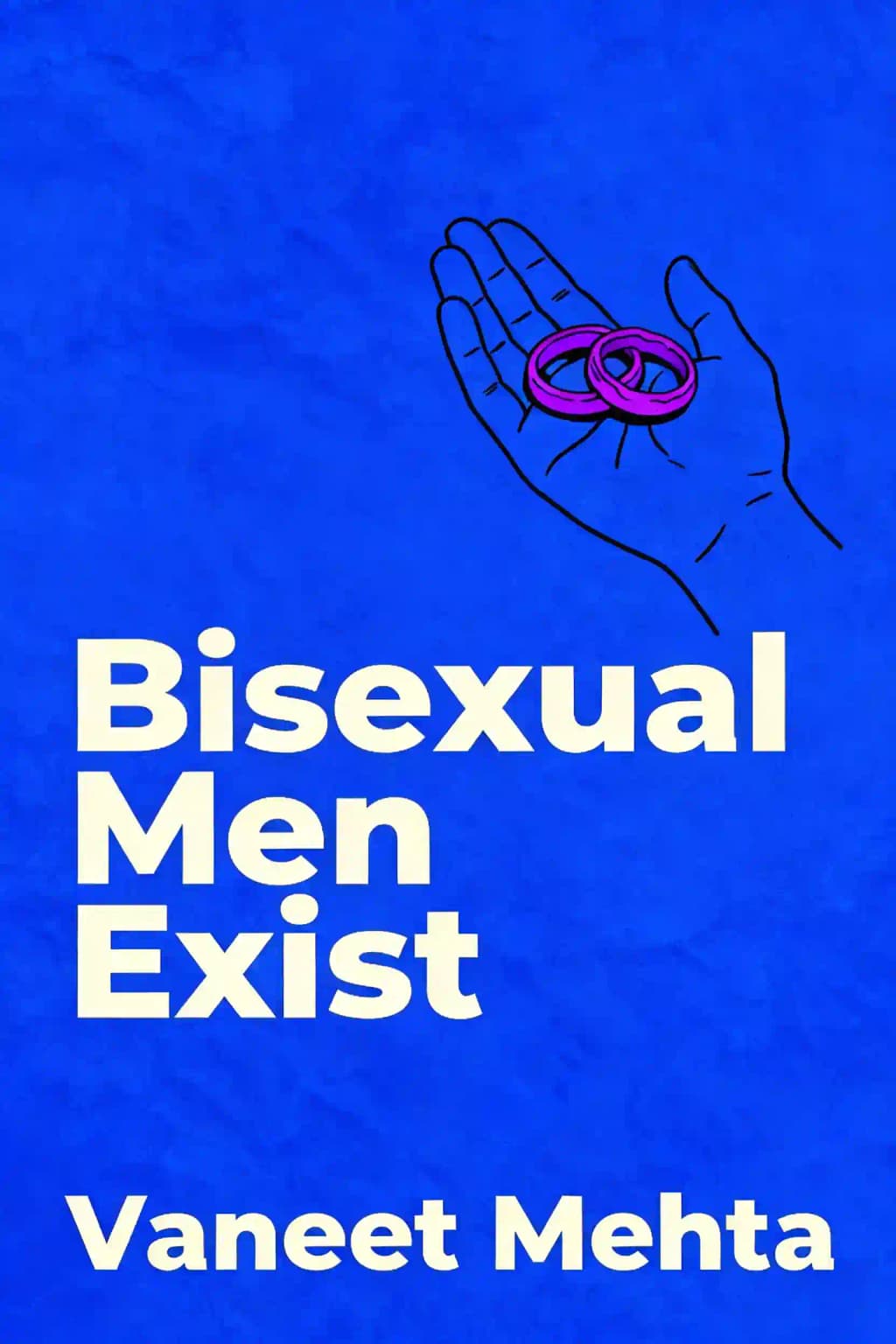
In a world that often views sexuality as a simple binary of straight or gay, millions of men find themselves caught in an invisible middle ground. Vaneet Mehta's groundbreaking book "Bisexual Men Exist" challenges this erasure with a powerful rallying cry that began as a viral hashtag and evolved into a comprehensive exploration of bisexual male identity. The book has become a cornerstone text in LGBTQIA+ studies, praised by publications like The Guardian and Pink News for finally giving voice to an often-silenced community. Drawing from both personal experience and dozens of interviews, Mehta's work resonates deeply with celebrities like Alan Cumming and Evan Rachel Wood, who have publicly embraced their bisexual identities despite facing similar erasure. As bisexual visibility grows in importance-with research showing bisexual+ people comprise over half of the LGBTQ+ community yet receive less than 1% of LGBTQ+ funding-this book arrives at a crucial moment to challenge persistent myths and stereotypes.
Глава 2
The Invisible Majority: Representation and Education
For most m-spec men (those on the multi-gender attracted spectrum, including bisexual, pansexual, and other identities), the journey of self-discovery is complicated by a profound lack of representation. Despite bisexual+ people comprising 52% of the LGB community, GLAAD's 2019-2020 report showed only 26% of LGBTQ characters were bisexual+, with just 28% of those being men. This absence of representation creates a vocabulary gap that leaves many questioning their identity without the language to describe it.
I first realized I wasn't "straight" around age ten, finding myself attracted to both girls and boys. Yet I lacked the terminology to make sense of these feelings. The binary portrayal of sexuality in media-characters were either straight or gay, never in between-reinforced the notion that my experience wasn't valid or real. This "no bisexuals" trope appears repeatedly in popular culture, with characters switching from straight to gay with no acknowledgment that bisexuality exists.
Take Willow from Buffy the Vampire Slayer, who transitions from dating men to exclusively women. Joss Whedon later admitted he was pressured into making her "fully gay" rather than bisexual, with fears that acknowledging her attraction to multiple genders would make same-sex attraction appear as merely a phase. Similarly, in 90210, Teddy goes from being a ladies' man to coming out as gay after sleeping with a man, completely erasing the possibility of bisexuality.
Even when characters do show attraction to multiple genders, they're often left "ambiguously bi"-never explicitly labeled, creating debate rather than representation. This ambiguity fails what's known as the Ramirez Test, which evaluates whether a character is recognizably bisexual within the media, whether their bisexuality is presented as a joke or flaw, and whether they ever explicitly identify as bi/pansexual.
The consequences of this representation gap are profound. Not one m-spec man interviewed for this book could recall seeing bisexual characters in media when they first experienced attraction to multiple genders. Without models or language, many spent years in denial or confusion. As one interviewee put it: "I knew I wasn't gay because I liked girls, but I also knew I wasn't straight because I liked boys. I just didn't know what I was."
Beyond the absence of representation, m-spec men face actively harmful portrayals. The "just an experiment" trope shows characters briefly exploring same-gender attraction before confirming they're "100% gay" or returning to heterosexuality. The "anything that moves" stereotype portrays m-spec people as indiscriminately promiscuous, while the "depraved bisexual" trope presents them as manipulative villains using sexuality as a weapon.
The AIDS epidemic particularly damaged perceptions of bisexual men, with a 1987 New York Times article titled "AIDS Specter for Women: The Bisexual Man" portraying them as threats to heterosexual women. This gave rise to the "bisexual bridge" theory-the unfounded idea that bisexual men were primarily responsible for HIV transmission between gay and straight communities. This stigma persists today, particularly affecting Black m-spec men who face additional layers of discrimination.
Fortunately, representation is improving. Recent years have seen excellent portrayals like Rosa Diaz on Brooklyn Nine-Nine (played by bisexual actress Stephanie Beatriz), David Rose on Schitt's Creek, and multiple LGBTQIA+ characters on Sex Education. Education is also advancing, with the UK mandating LGBTQ+ inclusive education and several US states requiring LGBT history in curricula. Additionally, m-spec people have created their own content platforms like The AmBIssadors YouTube channel and the Two Bi Guys podcast to fill representation gaps and provide authentic visibility.
Глава 3
Coming Out: A Unique Challenge
Coming out presents distinctive challenges for m-spec men compared to other LGBTQIA+ community members. The statistics tell a sobering story: only 14% of bisexual men are out to their entire families (versus 59% of gay men), while 46% aren't out to anyone. These barriers stem from both homophobia and m-spec phobia, with 18% of bisexual men experiencing discrimination within LGBT communities (versus just 4% of gay men).
The root of these challenges lies in monosexism-the structural privileging of single-gender attraction that creates a binary concept of sexuality erasing m-spec identities. This structure produces both external erasure and internalized doubt, making it difficult for m-spec men to understand their own feelings. Without representation or education, many lack the vocabulary to describe their experiences, forcing them to "pick a side."
A common misconception is that bisexuality is merely a phase-that bisexual people are confused or undecided about whether they're gay or straight. This view assumes m-spec identities lack permanence and that entering a relationship represents "choosing" to be gay or straight. This erasure ignores that attraction to multiple genders doesn't disappear when in a relationship.
Society often assumes m-spec men are "actually gay but in denial," while m-spec women are viewed as "actually straight" seeking male attention. This contradiction stems from phallocentrism-the notion that sexuality is determined by one's relationship with penises. As one researcher explains, expressing desire for penises immediately categorizes men as gay, while attraction to vaginas is considered irrelevant in determining sexuality.
Educational environments have historically failed m-spec students. Those interviewed faced severe challenges: one feared becoming a bigger target for bullies; another worried about being forced out of school; several experienced abuse after coming out, being told "bisexual men don't exist" and to "pick a side." Support was virtually non-existent-no LGBTQIA+ groups existed, bullying reports were ignored, and some teachers actively perpetuated bigotry.
The workplace presents significant barriers too, with 49% of m-spec men not out to anyone at work. Discrimination is rampant-18% of LGBT staff report negative comments from colleagues, 17% experience exclusion, and 18% face hiring discrimination. Research reveals bisexual men earn 10.3% less than straight counterparts-worse than for lesbian women, bi women, and gay men.
Faith communities present particular challenges, with 64% of bisexual men not out to anyone in their faith community compared to just 26% of gay men. One interviewee hasn't come out to his family due to religious reasons, recalling his mother's words: "You can be gay and I'll still love you but I will be very disappointed."
To improve these experiences, inclusive education is essential. Schools must teach about the full LGBTQIA+ spectrum, including dedicated time to explain different m-spec identities and break down stereotypes. Workplaces must implement inclusive policies with language that explicitly protects m-spec individuals, making diversity and inclusion core values.
For those questioning their identity, nearly every m-spec man interviewed wished they had come out earlier, though many emphasize not rushing to label yourself. Experimenting can be helpful but isn't necessary-attraction is defined by what you feel, not what you've done or what others tell you. When ready to come out, start with supportive LGBTQIA+ friends, ensure you have a safety net with family, and remember to prioritize your safety and wellbeing above all else.
Глава 4
Dating While Bisexual: Double Discrimination
M-spec men face unique challenges in dating and relationships, contrary to the misconception that attraction to multiple genders gives them more options. Instead, they experience "double discrimination" from both straight people and the LGBTQIA+ community, often being invalidated and labeled as "closeted gay." This prejudice from both sides actually makes dating more difficult rather than easier.
Dating women presents significant challenges, with studies showing 81% of women wouldn't date a bisexual man. This rejection stems from monosexism, phallocentrism, and implicit inversion theory-the belief that m-spec men are actually gay men in denial. Women often perceive male attraction to other men as undermining masculinity, viewing m-spec men as less "real men." For men of color, especially Black men, these challenges intensify due to heightened expectations of masculinity.
Within LGBTQIA+ spaces, m-spec men face similar invalidation, particularly from gay men who often view them as "confused" or "on their way to coming out as gay." This perspective stems from some gay men having temporarily identified as bisexual during their coming-out journey. Consequently, many gay men project this experience onto m-spec men, treating their identity as unstable or transitional.
Beyond rejection, m-spec men face fetishization from both straight women and gay men. Claims that "bisexual men are the best in bed" or "less misogynistic" reduce them to their sexuality rather than seeing them as individuals. Within the LGBTQIA+ community, m-spec men experience different forms of fetishization-gay men often expect them to be more dominant or aggressive, viewing their attraction to women as evidence of heightened masculinity.
More disturbingly, m-spec men face disproportionately high rates of sexual violence. CDC data reveals 47% of bisexual men experienced sexual violence compared to 40% of gay men and 21% of straight men. Their sexuality often motivates these attacks, with 42% of bi respondents believing their orientation was a factor. One interviewee described being sexually assaulted three times after becoming homeless, with his bisexuality being a motivating factor each time.
M-spec people in monogamous relationships face constant erasure because society views sexuality through a straight/gay binary, determining orientation solely by one's current partner. This leads to absurd logical problems-if an m-spec man dating a man is considered gay, what happens to his sexuality after they break up? Monosexual people often fail to understand that sexual orientation remains consistent regardless of current partnership.
Coming out as m-spec while in a relationship presents unique challenges that can test even strong partnerships. The case of Javier Vilalta illustrates the extreme consequences some face-after coming out as bisexual to his ex-wife years after their divorce, she sued him for 10,000, claiming he concealed his "homosexuality." Though Vilalta identified as straight during their marriage and only discovered his bisexuality through therapy after their divorce, the court ordered him to pay 3,000 in damages, completely erasing his bisexual identity by referring to him only as homosexual throughout proceedings.
Despite these challenges, many m-spec men find fulfilling relationships. For those navigating dating, being upfront about one's sexuality is widely recommended, though timing varies-some suggest putting it on dating profiles, while others wait until the second date. Though this honesty might seem to limit options, it efficiently filters out m-spec phobic individuals. Many interviewees noted preferences for dating queer women over cisallo straight women due to previous negative experiences, with several favoring relationships with other m-spec people to avoid stigma entirely.
Глава 5
The Health Crisis No One's Talking About
M-spec men face disproportionate health challenges compared to their gay counterparts. The statistics are alarming: 59% of bi people experience depression versus 46% of gay/lesbian people; 56% of bi men suffer anxiety compared to 53% of gay men; 18% of bi men self-harm versus 7% of gay men; and 43% of bi men report suicidal ideation compared to 32% of gay men.
These disparities likely stem from the "double discrimination" m-spec men face-experiencing both homophobia and rejection from both straight and LGBTQIA+ communities. This impacts every aspect of their lives-from education to relationships to family bonds. Many m-spec men struggle with confusion over their identity, remaining closeted, or denying their feelings, which severely impacts their mental wellbeing.
Mental health stigma creates a devastating barrier for m-spec men seeking help. Nearly 90% of people with mental health issues report stigma negatively affecting their lives. This stigma is particularly potent for men due to toxic masculinity-the harmful expectation that men must be stoic and emotionally restrained. Multiple interviewees described being told to "man up," "stop being dramatic," or "pray away" their issues-all factors that prevented these men from accessing vital mental health support.
Even when m-spec men overcome stigma and seek help, they face significant barriers accessing mental health services. In the UK, NHS waiting times are prohibitively long-one interviewee waited 18 months for counseling. In the US, access depends entirely on insurance coverage, with therapy sessions costing $65-$200 without insurance. This creates particular hardship for bisexual men, who according to The Williams Institute, are more likely to live in poverty (25.9% of bisexual men live at or below poverty level compared to 20.5% of gay men and 15.3% of straight men).
Beyond the hurdles of overcoming stigma and accessing affordable care, m-spec men face a third barrier: finding quality, effective treatment. Healthcare professionals often lack understanding of m-spec identities and needs, frequently making patients uncomfortable with inappropriate questions. One interviewee had a therapist who was "completely clueless on LGBTQIA+ issues," forcing them to educate their own therapist. Another encountered a doctor who questioned his masturbation habits and determined his sexuality based on pornography preferences rather than accepting his self-identification.
The medical establishment continues to treat m-spec identities as conditions requiring scientific validation rather than accepting people's self-identification. A 2020 study measuring penile arousal patterns while watching pornography to "prove" bisexuality exists exemplifies this dehumanizing approach. Such studies reduce sexuality to physical arousal, ignoring the complex emotional, romantic and personality factors that shape attraction.
Beyond mental health, m-spec men face sexual health stigma, being unfairly characterized as disease vectors between gay and straight communities. The AIDS epidemic created a damaging narrative that forced many m-spec men back into the closet to avoid discrimination. These harmful perceptions persist today, with many m-spec men still concealing their identity from medical professionals, preventing them from accessing appropriate sexual health resources and putting them at risk.
The concept of the bisexual bridge theory significantly impacted m-spec men's lives, but research challenges its validity. A 1994 San Francisco study showed dramatic drops in unprotected sex among bisexual men during the AIDS crisis and concluded that single bisexual men "do not appear to be a common vector for spreading HIV disease to women." Rather than scapegoating m-spec men as disease vectors "bridging" communities, we must address root causes of HIV transmission, recognizing that transmission occurs in many contexts, including between heterosexual partners.
The scarcity of research specifically addressing m-spec men's sexual health needs perpetuates a cycle where they don't receive appropriate care or resources. Brian Dodge's experience attempting to research bisexual men's HIV risks reveals the institutional barriers preventing progress. Despite growing understanding of sexual identity's complexity in the early 2000s, Dodge faced persistent resistance from grant reviewers who demanded evidence that bisexual men even existed.
These structural barriers create a perfect storm for poor sexual health outcomes. Unable to comfortably access LGBTQIA+ spaces due to bigotry, many m-spec men lack crucial information about safer sex practices across multiple genders. Research reveals the consequences: compared to gay men, bisexual men are less likely to receive HIV/STI prevention information, get tested less frequently, and use PrEP less often.
Глава 6
Intersectionality: When Multiple Identities Meet
M-spec phobia compounds with other forms of discrimination when individuals hold multiple marginalized identities. Drawing on Kimberle Crenshaw's concept of intersectionality-originally describing Black women's unique oppression-we can understand how this "metaphor for understanding multiple forms of inequality" applies to m-spec men's lives. The statistics are telling: 62% of BAME LGBT people and 59% of bi people report experiencing depression, with these rates potentially compounding for those belonging to both groups.
Trans m-spec men face particularly complex challenges. Historically, being heterosexual was required for trans people to access gender-affirming healthcare. Though this criterion has been officially removed, the expectation persists. M-spec trans men report lying about their sexuality to avoid discrimination in healthcare settings. One interviewee concealed being bisexual at his hormone replacement therapy appointment, while another's doctor insisted "normal transsexuals are all straight" and invalidated his relationship.
M-spec and trans identities share common ground in subverting societal binaries. As Shiri Eisner explains, both challenge fundamental binary systems-m-spec disrupts the gay/straight binary while trans identities challenge the man/woman binary. Both identities threaten essentialism by offering "options of mutability and change" rather than fixed categories.
Despite facing societal bigotry, trans m-spec men often can't find safety within LGBTQIA+ spaces either. One interviewee found these spaces overly cisgender-focused, making him feel excluded. Another wasn't welcomed warmly in spaces dominated by cisallo gay men. A third felt anxious using toilets in LGBTQIA+ venues, fearing being "discovered" as trans. Stonewall statistics confirm this problem, showing 36% of trans people experienced discrimination within their local LGBT community.
M-spec people of color face unique intersectional challenges that are underresearched. A survey by Bi's of Colour revealed that LGBTQIA+ communities are predominantly white and lesbian/gay-focused, with respondents experiencing racism, Islamophobia, and m-spec erasure that left them feeling excluded from mainstream queer movements.
Growing up in a British Indian household, the author experienced strict expectations of masculinity steeped in heteronormativity. South Asian cultures often enforce traditional gender roles where men must be providers, strong, unemotional, and successful-qualities intrinsically tied to heterosexuality. Similarly, a Black bisexual interviewee described the hypermasculinity in Black culture that shuns men who "shy away from masculinity."
Many South Asian cultures maintain collectivist values where community perception and social standing are paramount, creating a pervasive culture of shame. The author frequently heard phrases like "Don't you have any shame?" and "What will people think?" that enforced conformity to community expectations. When coming out, his parents urged secrecy to avoid community judgment.
Christianity profoundly influences many POC communities' attitudes toward LGBTQIA+ people. One interviewee experienced his mother invoking the Bible to condemn his sexuality as sinful, with the refrain "What will God think?" replacing the South Asian "What will others say?" Another described his community putting "God before family," with church members refusing to acknowledge LGBTQIA+ identities while simultaneously condemning them.
Ironically, the criminalization of homosexuality in many countries originated not from indigenous cultures but from British colonial rule. India's Section 377, which outlawed homosexuality for over a century, was imposed by British colonizers, as were similar "buggery laws" in countries like Jamaica. Before colonization, many of these societies demonstrated acceptance of LGBTQIA+ identities-Indian sculptures and texts showed same-sex attraction was acceptable, while various African cultures embraced gender diversity.
A-spec people (those on the asexual or aromantic spectrum) who are also m-spec face unique challenges as stereotypes and assumptions about these communities sometimes conflict. Ace-spec people face discrimination similar to m-spec people, often hearing they're "confused" or "going through a phase." While m-spec erasure stems from monosexism, ace-spec erasure comes from allonormativity-the societal belief that everyone experiences sexual attraction.
For people who are both m-spec and a-spec, society's failure to acknowledge the split attraction model-that sexual and romantic orientations can differ-creates unique challenges. This dismissal erases cross-orientated or variorientated people, privileging periorientism (when sexual and romantic attractions align). The stereotypes conflict: m-spec people are seen as hypersexual while ace-spec people are viewed as virgins.
When discussing m-spec issues, an intersectional lens is crucial. People with multiple marginalized identities face unique challenges that those with single marginalized identities may never experience. We must solve issues for all m-spec people, including those with multiple marginalized identities-because none of us are free until we are all free.
Глава 7
Pride and Community: Finding Belonging
Pride represents both personal self-confidence and community celebration for LGBTQIA+ people, yet m-spec men face unique challenges in both contexts. According to Stonewall, 18% of bi men experience discrimination in LGBT spaces compared to just 4% of gay men, making these supposedly "safe spaces" anything but safe. The impact of discrimination from within the LGBTQIA+ community can be just as painful as that from heterosexual society, leading half of bi men to avoid LGBT-specific events entirely.
The LGBTQIA+ community has evolved dramatically over decades, historically being known simply as "gay" or "lesbian and gay" spaces. Despite m-spec people being prominent founders and organizers of these early movements-including activists like Brenda Howard, ABilly Jones-Hennin and Donny the Punk-they weren't always accepted within them.
In the 1980s, the London Lesbian and Gay Centre banned bisexual groups, ostensibly because bisexual men might harass lesbians. When the London Bisexual Group challenged this decision, they discovered the true objection was semantic-"bisexual people cannot be lesbian and gay." The committee insisted their space was for people escaping heterosexual pressures, suggesting bisexual groups might be reconsidered if they renamed themselves "lesbian/gay bisexual groups."
Throughout LGBTQIA+ history, bisexual and m-spec people have been accused of "copping out" of fully embracing their queer identity. Historical evidence shows this rhetoric appearing repeatedly: complaints at the London Lesbian and Gay Centre suggested bisexual people were "just copping out"; the Scottish Homosexual Rights Group hosted a discussion titled "Bisexuality: Trend or Cop-out?"; and the 1979 Lesbian Conference in Toronto debated whether bisexuality was a cop-out and if bisexual women belonged in lesbian spaces.
Despite the LGBTQIA+ community becoming more inclusive over time, m-spec people still face discrimination within it. From one interviewee experiencing abuse at an LGBTQIA+ bar to another facing hostility on apps, the same harmful rhetoric continues. The author describes being interrogated about his identity and experiences by gay men, with one questioning how he could identify as bisexual despite having no experience with women.
Gatekeeping in LGBTQIA+ spaces often manifests through slogans like "No straights at Pride" and debates about who belongs in queer venues. While likely targeting cisallohet people, these statements lack nuance and can harm m-spec, a-spec, trans, non-binary, and intersex people who may appear to be in "straight" relationships. This gatekeeping problematically assumes sexuality can be visually determined, essentially demanding people conform to stereotypical "queer coding" through feminine mannerisms or appearance.
In response to double discrimination, m-spec activists have worked to create more inclusive environments within the broader LGBTQIA+ community while establishing their own dedicated spaces. Today, numerous m-spec organizations exist worldwide, including The Bisexual Index and Bi Pride UK in Britain, Bisexual Resource Center in the US, and groups across India, Canada, Brazil, Poland, Turkey, Norway, the Philippines, and Australia.
Despite these efforts, m-spec organizations face severe funding challenges. Research shows most bi-specific groups don't apply for funding because they're run entirely by unpaid volunteers without time for complex grant applications. Funders frequently assume that donating to general LGBTQIA+ organizations covers bi people's needs, but these organizations rarely address bi-specific issues. The result is that grassroots m-spec organizations operate on shoestring budgets, with organizers often using personal funds, leading to limited reach and frequent burnout among community leaders.
Despite the overwhelming challenges of monosexism, heteronormativity, and phallocentrism that lead to erasure and bigotry, many m-spec men have found pride in their identities. The m-spec community plays a crucial role-one interviewee found that spending time with other m-spec people normalized his feelings and helped his confidence grow. Online spaces, while sometimes difficult to navigate, connect people who might otherwise be inaccessible to each other.
The author encourages readers, if safe to do so, to claim their m-spec identity proudly-talk about it, connect through it, and wave that flag. Though some relationships may be lost in the process, those who truly love you will support your journey, and those who don't may not be worth keeping. In the end, visibility matters-hiding one's identity reinforces the misconception that m-spec people eventually "choose sides," while being open helps create a world where future generations won't have to struggle with the same erasure and discrimination.
Глава 8
A Catalyst for Change
This book isn't meant to be the final word on m-spec men's experiences but rather a catalyst for further conversation. For non-m-spec readers, especially those in the LGBTQIA+ community, the goal is to create awareness of the structures perpetuating bigotry and the need to make spaces truly safe for m-spec people. For m-spec men, the book shows they aren't alone and encourages them to connect with community and share their stories. For those questioning their identity, it offers awareness of internalized structures and the freedom to embrace their authentic selves.
The journey toward full acceptance and understanding of m-spec identities continues. With improved representation, education, and community support, the next generation of m-spec men may face fewer barriers to self-acceptance and social inclusion. By challenging monosexism, phallocentrism, and binary thinking about sexuality, we create space for the full spectrum of human attraction and experience-acknowledging that bisexual men exist, have always existed, and deserve to be seen, heard, and celebrated.




![Bisexual Relations [Preview] | The Bi Pod: A Queer Podcast - by, for, and about bisexuals](/_next/image?url=https%3A%2F%2Fd1y2du6z1jfm9e.cloudfront.net%2Fassets%2Fpodcast%2Fgreen.png&w=1024&q=50)