Глава 1
Unlocking the Mind of Your Market: The Power of Asking the Right Questions
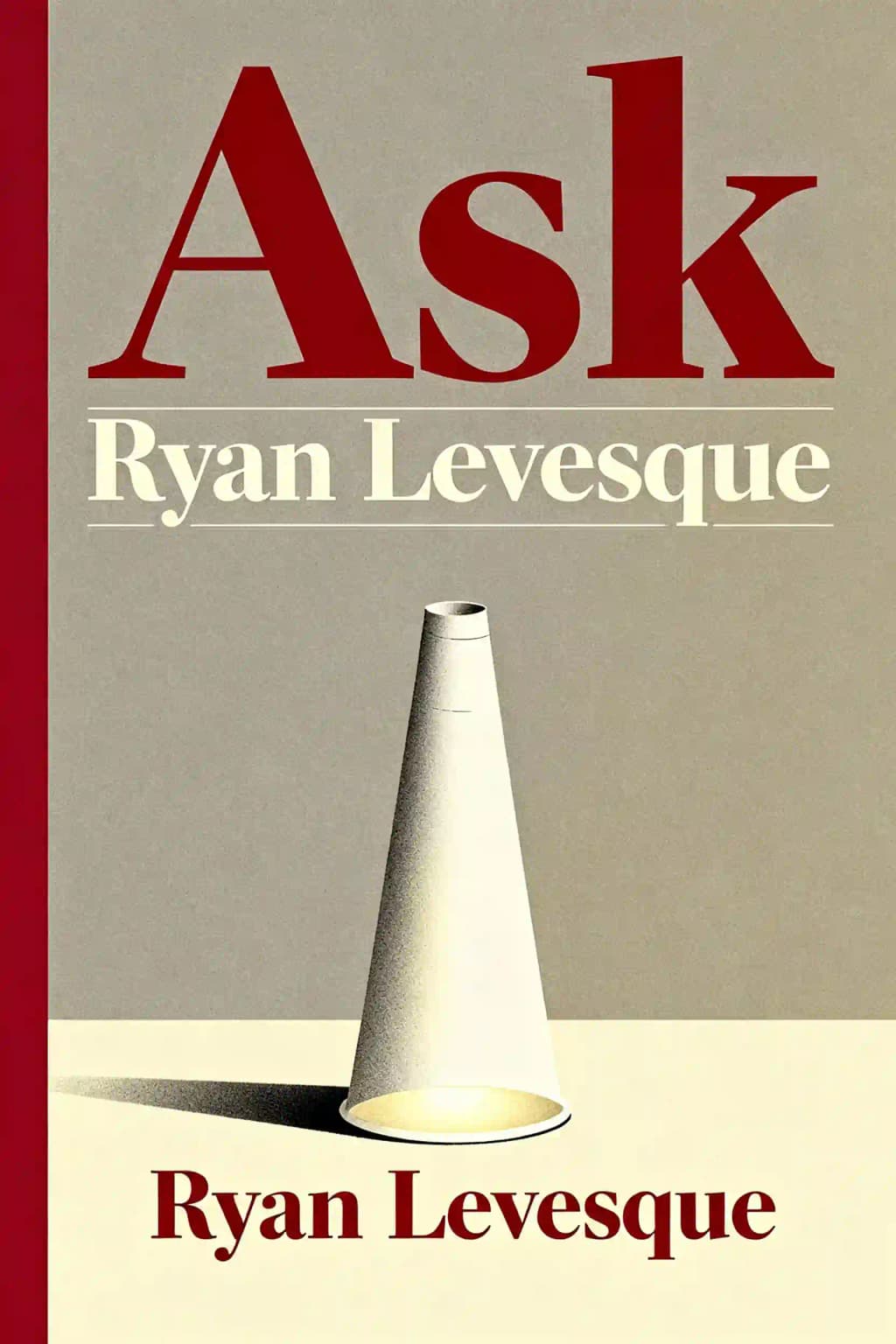
Have you ever wondered why some businesses seem to read their customers' minds, while others struggle to connect? In 2015, a marketing methodology quietly revolutionized how companies understand their customers, generating over $100 million in online sales across diverse industries. Ryan Levesque's "Ask Method" became an instant sensation, endorsed by marketing legends like Jay Abraham and Dan Kennedy, and quickly climbed to bestseller status on both the USA Today and Publisher's Weekly lists. What makes this approach so powerful is its counterintuitive simplicity: instead of guessing what customers want or shouting louder than competitors, it creates a systematic way to let customers tell you exactly what they want to buy-and precisely how they want you to sell it to them. The method has transformed businesses across 23 different markets, from memory improvement to satellite TV, generating millions in revenue while creating raving fans. Perhaps most remarkable is Levesque's personal journey-from Ivy League neuroscience student to Wall Street executive to entrepreneur who nearly lost his life before discovering his true calling: helping businesses understand their customers at a profound level.
Глава 2
The Counterintuitive Path to Customer Understanding
In today's digital landscape, we're bombarded with up to 5,000 advertisements daily-ten times more than in the 1970s. Most marketers respond by simply shouting louder, creating a deafening cacophony that customers increasingly tune out. The Ask Method takes the opposite approach, using a quiet, almost hushed voice that breaks through the noise by speaking directly to customers' specific needs.
The core insight driving this methodology is both powerful and paradoxical: while customers can't tell you what they want to buy (despite what they might claim), they excel at telling you what they don't want and what they've done in the past. This mirrors Henry Ford's famous observation that "If I had asked people what they wanted, they would have said 'faster horses.'" Traditional surveys fail because they ask the wrong questions in the wrong way, like asking friends where they want to eat dinner-a question that typically leads to the frustrating "I don't care, where do you want to go?" loop.
The Ask Method solves this problem through a system of intentionally designed questions that reveal exactly what customers want and the precise language to use with them. Rather than directly asking what people want to buy, it guides them through counterintuitive questions and customizes solutions based on their answers. This approach delivers three massive benefits: you learn what customers want to buy and when they're ready to purchase, you discover why non-buyers didn't purchase, and once optimized, you can scale your business dramatically.
What makes these surveys different from the annoying pop-ups we typically ignore? They're designed to appeal to our natural curiosity and desire for self-discovery. When properly positioned, customers eagerly participate because the process feels like it's about them, not about helping the business. The method uses four distinct survey types that work together to define your market, engage your prospects, refine your marketing, and redeem your efforts with those who didn't initially buy.
Think of it as the difference between a pushy salesperson and a skilled doctor. The former tries to convince you to buy something; the latter asks questions to diagnose your problem before prescribing a solution. Which approach would you prefer?
Глава 3
From Wall Street to Hospital Bed: A Journey of Discovery
Ryan Levesque's path to creating the Ask Method wasn't straightforward. With degrees in neuroscience and Chinese studies from Brown University, he initially followed a traditional corporate path at AIG, eventually landing a coveted position in Shanghai. Despite the six-figure salary, luxury apartment, and status, he felt empty inside. Inspired by Tim Ferriss's "The 4-Hour Workweek," he began secretly exploring entrepreneurship while still working his corporate job.
His entrepreneurial journey started with humble beginnings-creating tutorial guides for Scrabble-tile jewelry makers on Etsy. The breakthrough came when he realized customers fell into three distinct segments: those making jewelry with origami paper, photographs, or glass-mosaic tiles. By creating specialized guides for each segment instead of one generic tutorial, his business exploded from $500 to over $10,000 monthly.
This was his "aha moment"-discovering that identifying market segments and customizing products for each could yield remarkable results. The seeds of the Ask Method were sprouting as he integrated salesmanship with sophisticated survey methodology.
When AIG faced bankruptcy during the financial crisis, Ryan seized the opportunity, resigned, donated everything that wouldn't fit in two suitcases, and moved to Hong Kong to pursue entrepreneurship full-time. After the Scrabble-tile jewelry market crashed, he and his wife relocated to Brownsville, Texas, living extremely frugally while he launched his second business in the gardening market, applying the Ask Method in its modern form. Within 18 months, they grew from $0 to $25,000 monthly.
But the true catalyst for Ryan's focus came in February 2012, when his life changed dramatically. As a new father, he was experiencing extreme fatigue, constant thirst, and unexplained weight loss, dropping from 165 to 132 pounds. When he applied for life insurance, he was denied-his blood tests showed textbook Type-1 diabetic numbers. At the doctor's office, he was told he should be in a coma and was rushed to the ER with diabetic ketoacidosis-his body shutting down with failing kidneys and liver. The doctors said he could have died within 24 hours.
During his week in intensive care, isolated and facing mortality, Ryan began asking himself deep questions about what he truly wanted in life and what impact he wanted to make. He realized his focus had been too dispersed across multiple businesses. What he enjoyed most-and what created the most value-was figuring out what people want and giving it to them through his Ask Method. This near-death experience became the clarifying moment that transformed his approach to business and life.
Глава 4
The Deep Dive: Understanding Your Market at Its Core
The foundation of the Ask Method is the Deep Dive Survey-a critical "pre-funnel" process that reveals what your customers really want by asking specific questions about their challenges. Even established companies often discover they don't truly understand their customers. One sports instruction business found their ideal customers were 64 rather than 55 years old, allowing them to fine-tune marketing with age-appropriate imagery and nostalgic references that dramatically improved results.
The Deep Dive Survey process begins with sending an email to your list (or using paid traffic if you don't have one) directing them to take a survey with open-ended questions. The most important question asks about their "single biggest challenge" related to your market. The survey intentionally uses a basic, unpolished design-this filters out casual respondents while retaining those who truly care about the topic, creating a natural bias toward the most motivated prospects.
What makes this approach different from traditional market research is the analysis process. While computers can analyze word patterns, they can't effectively categorize responses into meaningful buckets. Someone must manually review responses and thoughtfully categorize them. This immersion process is like standing in Times Square-you might not identify individual faces, but you absorb powerful impressions about the groups present.
When analyzing results, focus on identifying "hyper-responsive" prospects-those most likely to become customers-by examining their detailed responses. People who write longer responses and provide phone numbers are typically 50% more likely to purchase. Sort your spreadsheet to identify the top 20% of respondents based on these factors-these become your primary marketing focus.
The goal is to categorize responses into 3-5 "buckets" that address 80% of your market. Start by identifying dozens of categories, then combine similar labels and group sub-buckets into larger themes. This practical approach provides massive returns without becoming unmanageably complex.
The insights from this process are invaluable-you'll discover exactly who your customers are, what language they use to describe their problems, and which segments are most likely to buy. This information becomes the foundation for everything that follows in the Ask Method.
Глава 5
The Landing Page: Turning Curiosity into Engagement
With your Deep Dive Survey insights in hand, the next step is creating an effective landing page that serves as the entry point to your Survey Funnel. This becomes a permanent part of your sales funnel where prospects begin their journey through what's called the Micro-Commitment Bucket Survey.
The key to this landing page is proper positioning. You're not asking visitors to take a survey so you can sell to them-you're positioning yourself as a doctor diagnosing their problems to prescribe customized solutions. This framing dramatically increases participation rates.
The most critical element is the video (or text for some markets), which convinces people to complete your survey. The script should hit key psychological points, beginning with a compelling "hook"-a question that promises a significant benefit without triggering skepticism. For example: "Is it really possible to double your revenue simply by identifying your number one marketing bottleneck?"
A powerful hook narrows unlimited possibilities down to a finite number of potential solutions, immediately relieving prospect anxiety. After hooking viewers, include a series of "if-then" statements that help them recognize themselves in your scenarios: "If you've struggled to make cold traffic work... if you've struggled with an under-optimized marketing funnel... or if you're launching a new product or business..." These statements reassure viewers they're in the right place.
Next, dismiss the "one-size-fits-all" solution approach: "The challenge is this: When it comes to identifying what's holding your business back, there is no one-size-fits-all answer..." This resonates because it acknowledges our desire to be seen as unique individuals with specific needs.
Establish your credibility without bragging by framing accomplishments as facts viewers may not know: "If you haven't followed our work closely, you might not realize that we've helped over 10,000 businesses identify their marketing bottlenecks..." This approach feels informative rather than boastful.
Finally, position the survey as a valuable alternative to expensive one-on-one consultation, explaining how your expertise was previously only available to high-paying clients but you've created this online tool to make it accessible to everyone. End with clear calls to action, instructing viewers exactly what to do next.
This carefully crafted landing page creates the perfect transition to the next phase of the Ask Method: segmentation.
Глава 6
The Art of Segmentation: Asking Questions That Reveal Buying Intent
The Micro-Commitment Bucket Survey is where the magic happens. After watching your landing page video, prospects are presented with a series of multiple-choice questions, one at a time, culminating in a request for their name and email in exchange for your promised solution.
The survey uses data from your Deep Dive Survey to create questions that segment prospects into those 3-5 buckets covering about 80% of your market. The questions follow a specific sequence designed to maximize completion rates and gather the most valuable information.
Your survey should include three types of questions: a "Grease the Wheels" question that's simple and gets people started (like "Are you a man or a woman?"), "Personalization" questions that gather useful demographic information, and "Segmentation" questions that direct people to the right bucket.
The first question should be extremely simple, requiring no thought to answer. This creates action-taking momentum without triggering the brain's fight-or-flight response. The micro-commitment approach makes people more willing to provide their contact information later.
The second and third questions should be "personalization" questions that help customize your marketing messaging. These responses can be captured in your database and used in email follow-ups through merge fields.
The final question is the crucial segmentation question that funnels prospects into different buckets based on their biggest challenge. Rather than segmenting by demographics, focus on the core issues prospects face. Include a "none of the above" option as a check to ensure your categories cover 80-90% of your market.
What makes this approach so powerful is how it mimics the experience of speaking with someone in person. This is the core concept of the Ask Method-replicating the natural process of asking questions to understand someone's needs before recommending solutions. Online, this rarely happens, creating inefficiency where website visitors feel unheard and merchants lose potential sales. While connecting every visitor with a live salesperson isn't feasible for most businesses, this survey approach approximates that experience in a scalable way where everyone wins.
After completing the survey, prospects either go directly to a customized sales page or, more commonly, to a name/email capture page that allows for targeted follow-up based on their specific bucket.
Глава 7
The Prescription: Customized Solutions That Convert
After completing the Micro-Commitment Bucket Survey, prospects land on what's called the Post-Survey "Same Visit Sale" page. This critical page focuses entirely on providing personalized feedback based on survey results before introducing a paid solution.
The page features a clean white background with minimal distractions, containing only a video, headline, and hidden sales elements that appear only when the offer is introduced in the video. The key is to first demonstrate understanding of the prospect's situation before revealing pricing-much like a doctor explaining symptoms before recommending treatment.
The video script follows a Problem-Agitate-Solution framework with four key steps: First, acknowledge the prospect's survey submission and thank them for their time. Second, provide a diagnosis with a unique "label" that creates curiosity (like "Cold Traffic Curse"). Third, demonstrate deep understanding by vividly describing their symptoms using Deep Dive Survey insights, emphasizing both urgency and genuine care.
Finally, present your solution as the recommended option among alternatives, covering benefits, offer details, bonuses, pricing, guarantees, and urgency factors. When done correctly, prospects will feel you've "read their mind" and naturally want to know your recommended solution.
For visitors who can't watch the entire video, an "Exit Lander" appears when they attempt to leave the page. Rather than providing a full transcript, this summary page includes six key elements: the big benefit, the offer details, included bonuses, the discounted price, guarantee information, and a reason to act immediately.
This approach balances providing free valuable education while leaving prospects wanting more and motivated to invest in the paid solution. The delicate balance requires careful attention to nuance in both the educational content and the sales message presentation.
Глава 8
Maximizing Profit: The Strategic Upsell Sequence
While generating that initial sale from your Post-Survey page is important, it's typically not where most profit comes from. In fact, you might break even or even lose money on that first sale. The real profit comes from what else you sell to that customer both immediately and over time through the Profit Maximization Upsell Sequence.
A famous fast-food restaurant demonstrates this principle perfectly-they spend $1.97 in advertising to get a customer to their drive-through, then make only $0.11 profit on the initial hamburger purchase. However, by simply asking "Would you like fries and a drink with that?", they increase profit tenfold to $1.13 per customer.
The greatest challenge in online business is getting someone to make that first purchase-overcoming both mental hesitation and physical inertia. However, once someone has bought something and is in a "buying mindset," they're much more likely to spend additional money immediately.
The Profit Maximization Sequence capitalizes on this psychology through "one-click upsells"-additional related products offered sequentially after the initial purchase that customers can add without re-entering payment information. These offers must enhance the initial purchase rather than suggesting it was incomplete.
There are three primary upsell frameworks: The first is simply selling more of what the customer just purchased at the same or better-discounted price. For consumable products like protein powder, you might offer three additional tubs (90-day supply) at a discount with free shipping.
The second framework offers customers a faster, easier result for the problem they're trying to solve. For example, if selling a gym membership, you might upsell a 30-day boot camp for faster results with one-on-one support. For an online course, you could offer software that does the heavy lifting.
The third and most sophisticated framework introduces a "good" problem customers will have after succeeding with your initial product. For instance, if selling a salary-negotiation course, your upsell might address what to do with the extra money after getting a raise. You reinforce confidence in the initial purchase by assuming success while presenting a solution to a future problem.
When customers decline your upsell offer, a downsell provides a less expensive alternative that delivers about 80% of the benefits at 20% of the cost. Make your one-click offers genuinely available only in that moment to create legitimate urgency and value.
Глава 9
The Follow-Up: Turning No into Yes Through Strategic Email Sequences
Email follow-up is essential to the Survey Funnel Strategy, often generating 25-75% of total sales. Most marketers give up too soon, missing the opportunity to convert the 90-99% of visitors who don't buy immediately. Email also provides a constant feedback loop to improve your marketing funnel in real time.
For non-buyers who completed your survey but didn't purchase, a 12-email sequence keeps them engaged and rescues the sale. The first email delivers the promised survey results with a brief explanation of what they mean and how they can be applied to solve the prospect's problem.
The next three emails use casual, story-based reminders to pull non-buyers back to your core sales message. Create them by choosing your three strongest sales points and retelling each from a firsthand perspective. You don't need literary genius-just share simple anecdotes in a conversational tone, like talking to a friend at the water cooler.
The second series of four emails turns up the heat for prospects who haven't purchased but remain subscribed. Rather than offering further discounts, these emails modify your offer to lower the commitment barrier and create urgency. Each email targets a different buyer psychology: an Urgency Email appeals to impulse buyers, an FAQ Email addresses analytical minds, a Testimonial Email shares customer stories for those who respond to social proof, and a Last Day Email gives procrastinators one final reminder.
The final four-email series creates interaction opportunities while giving one last chance to close the sale. The "Do You Hate Me?" Survey asks why they didn't buy using a tongue-in-cheek approach that often generates thoughtful responses. These objections help improve sales materials and inform subsequent emails. The sequence concludes with the Pivot Survey, allowing prospects to choose which topic they'd like to explore next, effectively starting a new Survey Funnel sequence based on their selection.
For customers who purchased your offer, a separate 12-email sequence helps them consume your product and positions them for additional purchases. It begins with a Welcome Email, followed by a Consumption Series designed to ensure customers actually use what they bought, then transitions into an Upsell/Cross-Sell Series introducing relevant "next step" products.
Throughout all these emails, create subject lines that form incomplete thoughts to trigger curiosity, write in a casual, conversational style, use short, punchy sentences, and always "condition for the click" by including a link in every email.
Глава 10
Real Results: How Businesses Transform Through Asking
The proof of any methodology lies in its results. Will Hamilton's tennis training business Fuzzy Yellow Balls implemented the Ask Method to break through a sales plateau. His product ServeKillers had initially performed well but sales had stagnated. After implementing the Survey Funnel Strategy-conducting Deep Dive Surveys, creating bucket segments, and developing customized video content with tennis pro Pat Rafter-the results were dramatic. The relaunched product generated $25,000 in its first week.
Building on this success, Will created a second Survey Funnel for a new "DoublesKillers" product that generated $250,000 and brought in 3,500 new customers in just six months. Will now uses the Survey Funnel Strategy for every new product launch.
Even more impressive was Ross Bridgeford's water ionizer business Live Energized, which faced the challenge of selling $2,000 filtration systems in a skeptical, competitive market. Working with Ryan, they developed a hybrid Survey Funnel using Deep Dive Surveys that revealed surprising insights-customers were more motivated by fear of what was in their tap water than by alkalizing benefits.
This completely changed their marketing approach. They created a sequence of targeted videos refined through real-time feedback: a "Shock and Awe" video revealing tap water dangers, an "Options" video comparing available solutions, and an instructional demonstration video. The results were astounding-$750,000 in just five days when launched in March 2014. The success was so overwhelming that Ross completely sold out the manufacturer's worldwide supply, putting the product on backorder for weeks.
These case studies demonstrate the versatility and power of the Ask Method across different industries and price points. By systematically understanding what customers truly want and delivering it in a way that resonates with their specific concerns, businesses can achieve breakthrough results that traditional marketing approaches simply can't match.
Глава 11
A Vision for the Future of Marketing
After revealing the complete Ask Method, Ryan addresses why he chose to share his "secret family recipe" despite many advising against it. His near-death experience fundamentally changed his perspective on life, making him focus on contribution, legacy, and impact.
While acknowledging the commercial benefits to his business, Ryan shares his extraordinary vision: that every homepage in the world will someday have a Survey Funnel. This would create a marketplace where customers are always satisfied because sellers consistently provide what customers truly want, while sellers profit from genuinely meeting customer needs.
This vision represents a fundamental shift in how marketing works-from guessing what customers want or manipulating them into buying, to a genuine dialogue that benefits both parties. It's a future where businesses succeed not by shouting louder than competitors, but by listening more carefully to customers.
Ryan emphasizes that implementation is about starting, not perfection. The most important thing is to begin immediately while the concepts are fresh. Whether that means accessing the Survey Funnel Software, deepening methodology knowledge through video instruction, connecting with other Ask Method users, or working directly with Ryan's team, the key is taking that first step.
In a world increasingly dominated by artificial intelligence and automation, the Ask Method represents a return to something fundamentally human-conversation. By systematizing the art of asking questions and truly listening to the answers, businesses can cut through the noise and connect with customers in a meaningful way. And in doing so, they can transform not just their marketing results, but the entire customer experience.
The Ask Method isn't just a marketing technique-it's a philosophy that puts understanding at the heart of business. And in a world of increasing complexity and noise, that might be the most valuable approach of all.