Глава 1
The Quest for Wisdom: From Ancient Athens to Modern Ethics
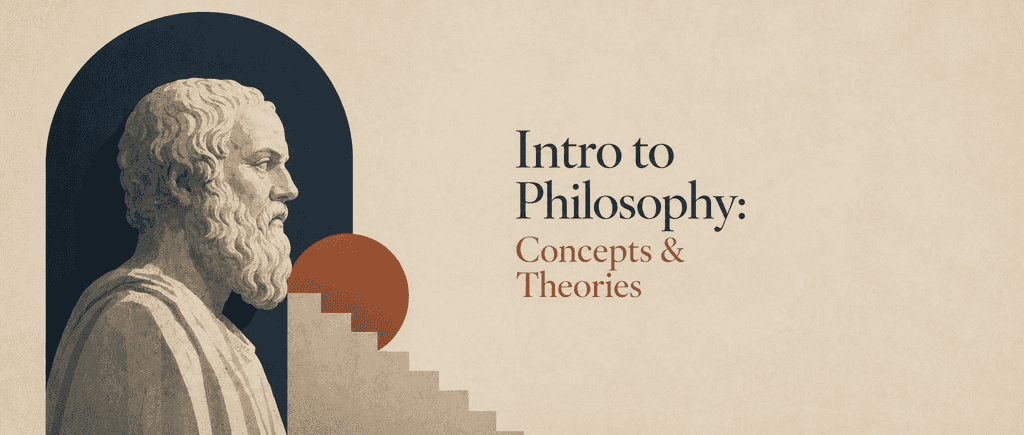
Have you ever wondered why a shabby, snub-nosed man who lived 2,400 years ago still captivates our imagination? Socrates, executed for "asking too many questions," launched Western philosophy's grand adventure-not through writing books or founding schools, but through conversations in the Athenian marketplace. His method of questioning revealed how little we truly understand concepts we claim to know. When the Delphic oracle declared no one wiser than Socrates, he realized true wisdom begins with acknowledging ignorance. This revolutionary idea-that an unexamined life isn't worth living-continues to inspire thinkers worldwide. Today, philosophers like Peter Singer carry Socrates' torch, challenging our comfortable assumptions about ethics and responsibility. From Barack Obama citing Rawls in policy discussions to tech giants grappling with AI ethics using thought experiments from the 1950s, philosophy remains our essential toolkit for navigating life's deepest questions.
Глава 2
The Birth of Western Philosophy: Socrates, Plato, and Aristotle
In the bustling marketplace of ancient Athens, an unusual figure wandered about, engaging citizens in seemingly innocent conversations that invariably left them confused and questioning their most basic assumptions. Socrates, physically unattractive but intellectually brilliant, practiced philosophy not by writing treatises but through dialogue-a method that revealed profound ignorance beneath confident assertions. When he confused Euthydemus about whether deception is always immoral by citing examples of justified deception, Socrates demonstrated his signature technique: revealing contradictions in supposedly simple concepts.
Unlike the Sophists who charged fees for teaching rhetoric, Socrates claimed to know nothing. When the Delphic oracle proclaimed no one wiser than Socrates, he eventually understood this paradox: true wisdom begins with recognizing one's ignorance. This humility before knowledge became the foundation of Western philosophical inquiry.
Plato, Socrates' brilliant student, preserved his teacher's ideas while developing his own distinctive vision. His famous cave allegory illustrates how most people mistake shadows for reality, while philosophers-like prisoners who escape the cave-perceive truth beyond appearances. His Theory of Forms proposed that perfect concepts (like the ideal circle) exist beyond their imperfect physical manifestations. Since philosophers understand reality best, Plato argued they should rule society, designing his "Republic" as a rigidly structured state with philosophers at the top.
Aristotle, completing this triumvirate of genius, rejected Plato's abstract Forms in favor of studying the concrete world. After tutoring Alexander the Great, he established the Lyceum in Athens, where researchers investigated everything from politics to biology. While Plato pointed upward to abstract Forms, Aristotle reached outward toward the sensible world. His concept of happiness (eudaimonia) wasn't fleeting pleasure but human flourishing-achieving excellence according to our rational nature through virtues like courage, which he placed between extremes of foolhardiness and cowardice in his Golden Mean. As "political animals," humans could only achieve eudaimonia within society.
When Socrates faced trial in 399 BCE for "corrupting youth" and "neglecting the gods," he refused to compromise his principles. Rather than seeking leniency, he provocatively suggested he deserved free meals for life. Sentenced to death by hemlock, he gathered students and family for philosophical discussions until his final breath, demonstrating that questioning and seeking wisdom transcended even self-preservation.
Глава 3
Skepticism, Stoicism, and Finding Peace of Mind
"No one knows anything-and even that's not certain." This radical stance defined Pyrrho's skepticism, a philosophy that rejected all certainty. Unlike philosophers who sought truth, Pyrrho refused to commit to any belief whatsoever, living so dangerously that friends had to protect him from cliff edges and aggressive dogs. His philosophy rested on three questions: What are things really like? What attitude should we adopt? What happens to someone who does? His answers: we can never know reality's true nature; therefore, we should suspend all judgment; this leads to freedom from worry. Though impractical in its extreme form, moderate skepticism-questioning assumptions without doubting everything constantly-remains essential to philosophical inquiry.
The Stoics offered a more practical approach to tranquility. Named after the painted porch (Stoa) in Athens where they gathered, Stoics taught that while external events may be beyond our control, our responses remain entirely within our power. Epictetus, who began life as a physically abused slave, embodied this philosophy through personal experience. His teaching that "our thoughts are up to us" later inspired Vietnam POW James Stockdale to endure years of torture by focusing on what he could control-his reactions.
Cicero addressed aging's challenges by arguing we can choose our response to this natural process. Experience compensates for reduced energy, exercise slows decline, and conversation replaces physical pleasures. Seneca similarly tackled life's brevity, arguing the problem isn't insufficient time but poor use of available time. Many waste their lives pursuing wealth or indulgence, then complain life is too short-when it's typically long enough for meaningful accomplishment with proper focus.
Epicurus, often misunderstood as advocating luxury, actually taught that simple living brings greater happiness. His Garden commune in Athens practiced moderation-bread and water over exotic foods-believing simple desires are easily satisfied while complex ones lead to endless craving. His cure for death anxiety was elegant: death shouldn't frighten us because when it occurs, we no longer exist to experience it. As his epitaph stated: "I was not; I have been; I am not; I do not mind."
These ancient philosophers developed practical techniques for achieving peace of mind that continue to influence modern psychology and self-help approaches. Their emphasis on controlling reactions rather than circumstances remains powerful wisdom in our anxiety-ridden world.
Глава 4
God, Faith, and the Problem of Evil
Augustine desperately sought truth, believing philosophical errors could condemn him to eternal hell. Born in North Africa to a Christian mother and pagan father, he lived a wild youth before converting to Christianity. As Bishop of Hippo, he adapted Platonic ideas to Christianity while wrestling with the Problem of Evil: how could an all-powerful, all-good God allow suffering?
In his youth, Augustine embraced Manichaeism, which posited equal forces of good and evil in eternal struggle. But he later rejected this view-if God were truly good, why wouldn't He ultimately triumph? His mature solution, the Free Will Defense, argued that God grants humans free choice rather than making us puppets. This freedom allows moral action but also enables evil choices. Augustine believed our sinful tendencies stemmed from Original Sin-Adam and Eve's disobedience that corrupted human nature.
Anselm of Canterbury later attempted to prove God's existence through pure logic. His Ontological Argument began with the definition of God as "that being than which nothing greater can be conceived." Since we can conceive of God in our minds, and a God who exists in reality would be greater than one who exists only in imagination, Anselm concluded God must necessarily exist. The monk Gaunilo countered with his "perfect island" analogy: imagine the most perfect island conceivable-would it necessarily exist simply because a real island would be more perfect than an imaginary one?
Thomas Aquinas offered five proofs for God's existence, including his First Cause Argument: since everything has a cause, and this chain cannot extend infinitely backward, there must be an uncaused first cause-God. Critics noted this doesn't prove this first cause possesses divine attributes like goodness or omniscience.
Blaise Pascal approached the question of God's existence through probability rather than proof. His famous "Wager" framed belief as a rational bet: if you believe in God and live accordingly, you risk minor inconveniences if wrong but gain eternal bliss if right. If you bet against God, you might gain worldly pleasures but risk eternal damnation.
Baruch Spinoza proposed a radically different conception of God: not as existing outside the world, but as being the world itself. His pantheistic view-"God is nature and nature is God"-led to his excommunication from Amsterdam's Jewish community. Unlike traditional religious conceptions, Spinoza's God was utterly impersonal and indifferent to human affairs.
These diverse approaches to reconciling faith with reason demonstrate how philosophy has grappled with ultimate questions of existence, suffering, and the divine throughout history.
Глава 5
Political Philosophy: From Machiavelli to Marx
Machiavelli advised rulers that success requires virtu-not moral virtue but "manliness" or valor. While believing half of life depends on chance, he argued that preparation and decisive action improve one's odds. For Machiavelli, it's better to be feared than loved as a leader since fear ensures loyalty while love is fickle. A successful ruler must sometimes combine human qualities with animal ones: the cunning of a fox to spot traps and the strength of a lion to terrify enemies.
Thomas Hobbes shared Machiavelli's pessimistic view of human nature. He believed all humans are fundamentally selfish, driven by fear of death and desire for power. Without laws or authority-what Hobbes called "a state of nature"-life would be "solitary, poor, nasty, brutish, and short." The solution was a "social contract" where individuals surrender dangerous freedoms to a powerful sovereign who enforces laws, represented in his masterwork "Leviathan" as a giant figure composed of many smaller people.
Jean-Jacques Rousseau began his political philosophy with the declaration: "Man was born free, and everywhere he is in chains." Unlike Hobbes, Rousseau believed humans are naturally good but corrupted by civilization. In The Social Contract, he tackled an impossible problem: how could people live together in society while remaining as free as they were in nature? His solution centered on the General Will-what is best for the whole community, not what individuals selfishly want. True freedom, for Rousseau, comes from obeying laws aligned with this General Will.
Karl Marx witnessed the brutal conditions of Industrial Revolution factories and developed his critique of capitalism in response. The factory system dehumanized workers, reducing them to specialized cogs performing repetitive actions while barely earning enough to survive. Marx believed capitalism would eventually destroy itself through proletariat revolution. His vision was a communist society where "from each according to his ability, to each according to his need" would prevail. Though Marx's ideas inspired real revolutions, communist states proved oppressive and inefficient.
John Rawls proposed a thought experiment to design a just society: imagine choosing principles of justice without knowing what position you'll occupy-whether rich, poor, disabled, or otherwise. Behind this "veil of ignorance," you'd choose fairer principles because you wouldn't know your own circumstances. From this, Rawls developed two principles: the Liberty Principle (protecting basic freedoms) and the Difference Principle (allowing inequality only if it benefits the worst off).
These political philosophers grappled with fundamental questions about human nature, freedom, and social organization that continue to shape our understanding of government and justice today.
Глава 6
Mind, Knowledge, and Reality
Rene Descartes developed his Method of Doubt to find absolute certainty by rejecting any belief with even the slightest possibility of being false. Through radical skepticism, he discovered one certainty: "I think, therefore I am." Even if an evil demon deceived him about everything else, the very act of thinking proved his existence as a thinking entity. This became the foundation of Cartesian Dualism-the separation of mind and body as distinct substances.
John Locke tackled the puzzle of personal identity: what makes someone the same person over time despite physical and psychological changes? For Locke, personal identity follows consciousness and memory, not physical form. To illustrate this, he imagined a prince and cobbler swapping memories overnight-though the prince's body remained unchanged, the person inside would be the cobbler. Thomas Reid later challenged Locke with a counterexample: an old soldier remembers his actions as a young officer, who in turn remembered being a boy stealing apples. Though the elderly soldier can't directly remember the childhood theft, Reid argued he remains the same person through these overlapping memories.
George Berkeley proposed that objects cease to exist when unobserved. His immaterialism claimed that only ideas exist, not material objects. When Samuel Johnson famously "refuted" this theory by kicking a stone, he missed Berkeley's point: feeling the stone's hardness proves only the existence of the idea of hardness, not a physical stone. Berkeley maintained we perceive the world directly because the world consists solely of ideas. "Esse est percipi"-to exist is to be perceived. But how could objects persist when unobserved? Berkeley's answer: God perceives everything continuously.
Immanuel Kant believed we all experience reality through an inescapable filter-the human mind itself. Like rose-tinted spectacles we can never remove, our minds impose certain structures on everything we perceive. Time, space, causation-these aren't necessarily features of ultimate reality but contributions of our minds. Kant distinguished between the phenomenal world (what we experience) and the noumenal world (ultimate reality behind appearances). We can never directly know this noumenal reality, but through rigorous thinking, we can understand how our minds shape experience.
William James and the pragmatists judged truth by practical consequences. For Peirce, statements are true based on observable effects-"glass is brittle" means it breaks when struck. James extended this view: truth is what works beneficially in our lives. Applied to religious belief, James controversially argued "God exists" is true if believing produces useful results for the believer.
Ludwig Wittgenstein approached philosophy as therapy for minds "bewitched by language." He challenged the assumption that all language works the same way-simply naming things. Instead, he proposed that language consists of many different "language games" with no single common feature. Like family members who share overlapping resemblances without one trait common to all, words like "game" apply to diverse activities without a single defining essence.
These philosophers transformed our understanding of knowledge, perception, and the relationship between mind and world in ways that continue to influence fields from cognitive science to linguistics.
Глава 7
Existentialism and the Search for Meaning
Sren Kierkegaard examined Abraham's near-sacrifice of Isaac as a profound exploration of faith. Unlike conventional interpretations emphasizing blind obedience, Kierkegaard focused on Abraham's agonizing journey, believing that true faith involves an irrational leap that transcends conventional ethics. After breaking his engagement to Regine Olsen despite loving her, Kierkegaard explored difficult choices throughout his work. He argued that religious faith requires risking everything without certainty-a terrifying, solitary decision that trumps social duties.
Friedrich Nietzsche's famous declaration "God is dead" wasn't claiming God literally died, but that belief in God had become unreasonable. This eccentric thinker abandoned his promising academic career to travel through Europe while writing books that gained little recognition in his lifetime. His central question was what happens after God's "death"-arguing it removes the foundation for morality, leaving us "beyond good and evil." While terrifying, this godlessness offered exhilarating possibilities for individuals to create their own values and transform their lives into works of art.
Jean-Paul Sartre and Simone de Beauvoir developed existentialism in post-war Paris, becoming cultural icons who wrote in cafes and developed a philosophy perfectly suited to a traumatized Europe questioning life's meaning. Sartre's central theme was radical freedom. Unlike objects designed for specific purposes, humans have no predetermined essence-we exist first, then create meaning through our choices. This freedom is inescapable; we're "condemned to be free" and fully responsible for our actions. Many flee this terrifying responsibility through "bad faith," like the waiter who performs his role mechanically, pretending he has no choice.
The weight of choice creates existential anguish, as Sartre illustrated through a student torn between caring for his mother or joining the Resistance. Every choice we make implicitly suggests how all humans should act, making decisions even more burdensome. De Beauvoir applied existentialism to gender, arguing women aren't born but become women by accepting men's definitions of femininity. Meanwhile, Albert Camus used the myth of Sisyphus to embrace life's absurdity-finding meaning in the meaningless struggle itself.
Arthur Schopenhauer's philosophy is built on a profound pessimism: life is endless suffering, a hopeless cycle of wanting, getting, then wanting more until death. Reality, for Schopenhauer, has two aspects: Will and Representation. The World as Will is the blind, aimless force driving everything in existence-from plant growth to human desires. The World as Representation is reality as we experience it through our senses. While we can't directly access the Will, we glimpse it through our bodily actions and especially through art-music above all, which Schopenhauer considered a direct copy of the Will itself.
These philosophers grappled with the challenge of finding meaning in a world without inherent purpose, developing frameworks that continue to help people navigate existential questions today.
Глава 8
Ethics in a Complex World
For Immanuel Kant, morality wasn't about feelings or consequences but about duty and reason. If you help an injured person solely because you feel compassion, Kant would say your action isn't truly moral. Only when you help because you recognize it as your duty-regardless of your emotions-is your action morally worthy. True morality must be accessible to all rational beings through reason alone. Kant took this principle to extreme conclusions, maintaining you should never lie-even to save a friend's life-because lying couldn't be universalized as a principle for everyone to follow.
Jeremy Bentham championed utilitarianism, or the Greatest Happiness Principle-the idea that the right action is whatever produces the most happiness. For him, happiness was simply pleasure and the absence of pain, measurable on a single scale he called the Felicific Calculus. All pleasures counted equally; poetry reading was no better than pushpin (a simple game) if they produced equal pleasure. This approach directly contradicted Kant's duty-based ethics. For Bentham, lying isn't inherently wrong-if telling a lie produces more happiness than truth-telling, the lie becomes morally right.
John Stuart Mill refined Bentham's utilitarianism, distinguishing between higher and lower pleasures. He believed intellectual pleasures were superior to physical ones-better to be a dissatisfied Socrates than a satisfied fool. His influential book "On Liberty" introduced the Harm Principle: adults should be free to live as they please as long as they harm no one else. Mill's radical feminism, expressed in "The Subjection of Women," argued for complete gender equality in law and society.
Philosophers often use thought experiments to clarify moral intuitions. Philippa Foot created the famous runaway train dilemma: should you divert a train to kill one person instead of five? Most say yes. But what if saving the five requires pushing a large man off a bridge to stop the train? Many find this harder to justify despite identical consequences. The Law of Double Effect explains this difference: predictable bad side effects of good intentions may be acceptable, while deliberately causing harm isn't.
Peter Singer challenges us with a powerful thought experiment: If you'd save a drowning child in front of you even at the cost of ruining expensive shoes, why wouldn't you donate the same amount to save a child dying of preventable causes in Africa? Singer argues there's no morally relevant difference between these situations. We should care equally about those we can save worldwide, giving up luxuries to help those suffering extreme poverty. His 1975 book "Animal Liberation" revolutionized thinking about animal ethics, arguing that "speciesism" resembles racism by unfairly privileging one's own group.
These ethical frameworks continue to shape debates about everything from medical ethics to global poverty, demonstrating philosophy's practical relevance to our most pressing moral challenges.
Глава 9
The Future of Philosophy: Artificial Intelligence and Beyond
Imagine sitting in a room receiving cards with strange squiggles through a letterbox. Following a rulebook, you match each squiggle with another symbol and push the corresponding card back out. Unknown to you, you're answering questions in Chinese-a language you don't understand. This Chinese Room thought experiment, devised by John Searle, challenges our understanding of artificial intelligence.
Alan Turing, the Cambridge mathematician who helped invent modern computers, proposed what became known as the Turing Test. He believed a machine's function matters more than its physical composition. His "Imitation Game" involved a tester communicating via screen with either a human or computer. If the tester couldn't determine which was which, the computer would pass as intelligent.
Searle's Chinese Room counters that passing the Turing Test doesn't prove genuine understanding. The person in the room (representing a computer) produces appropriate responses without comprehending them. Computers, Searle argues, merely manipulate symbols according to programmed rules (syntax) without grasping their meaning (semantics)-like parrots mimicking speech without understanding.
Critics respond that while the individual in the room doesn't understand Chinese, perhaps the entire system does. Searle countered by modifying his thought experiment: imagine the person memorizes the rulebook and works in an open field-they'd still lack understanding despite giving correct answers.
Karl Popper revolutionized our understanding of science by arguing that scientists don't prove theories true-they learn by proving them false. His approach addressed the Problem of Induction-the logical impossibility of proving universal statements from particular observations. For Popper, a key feature of any scientific hypothesis is falsifiability. He distinguished science from "pseudo-science" by whether claims could be proven wrong. Thomas Kuhn challenged Popper's view in 1962, arguing that science typically operates within established paradigms until accumulated anomalies force paradigm shifts-like the move from an earth-centered to sun-centered model of the solar system.
As artificial intelligence advances, philosophical questions about consciousness, understanding, and what it means to think become increasingly practical. If machines ever develop consciousness, would they have moral rights? Could they experience suffering? Would their thinking differ fundamentally from human cognition? These questions, once purely theoretical, may soon require concrete answers as technology evolves.
Philosophy's future lies in addressing emerging challenges while preserving its ancient mission: helping humans understand themselves and their place in the universe. From Socrates questioning citizens in the Athenian marketplace to contemporary philosophers grappling with AI ethics, philosophy remains our essential toolkit for navigating life's deepest questions.