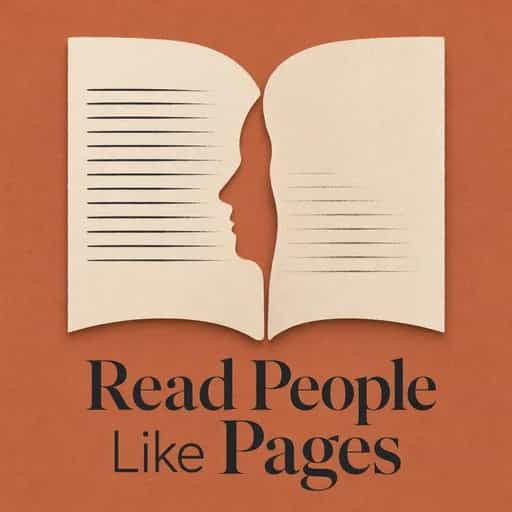
The Social Blindness You Never Knew You Had
Imagine you are standing in a crowded room—perhaps a networking event or a busy coffee shop—and you feel perfectly confident that you understand the vibe. You see a couple talking, a manager nodding at an employee, and a friend smiling at you. You think you’re reading the room, but the reality is much more startling. Research from the University of Chicago suggests that even in our most intimate relationships—with spouses we’ve known for years—we only accurately predict their deep internal responses about 25% of the time . We think we’re getting it right more than half the time, but we’re actually hovering at 25%. This "social accuracy gap" is the invisible friction that defines your life. It’s the reason you miss the buying signal in a sales meeting, the reason you don't realize your boss is actually frustrated when they say "that's fine," and the reason your personal connections often stay on the surface. Most of us actually stopped "learning" how to read people when we hit puberty. Around age twelve, you likely shifted your focus from observing others to managing your own social performance . You became so worried about how you looked, what you said, and how you were being perceived that you effectively went "socially blind" to the data streaming at you from everyone else. This episode is about turning that vision back on. We are going to explore the science of reading intent, from the "sentence rule" of body language to the "thin-slice" judgments your brain makes in the first thirty seconds of a meeting . You’re going to learn why the feet are more honest than the face and how to build a behavioral baseline so you can spot a lie or a shift in sincerity before a single word is even spoken.