






정말이지 아직 앱을 다 써 보지도 않았는데, 며칠 써 본 것만으로도 깊은 인상을 받았어요… BeFreed는 제가 써 본 어떤 학습 앱과도 차원이 달라요. 몰입감이 엄청나고 집중력도 실제로 좋아져서, 스마트폰을 하염없이 스크롤하는 분들께 딱이에요!
@ladyInfinity
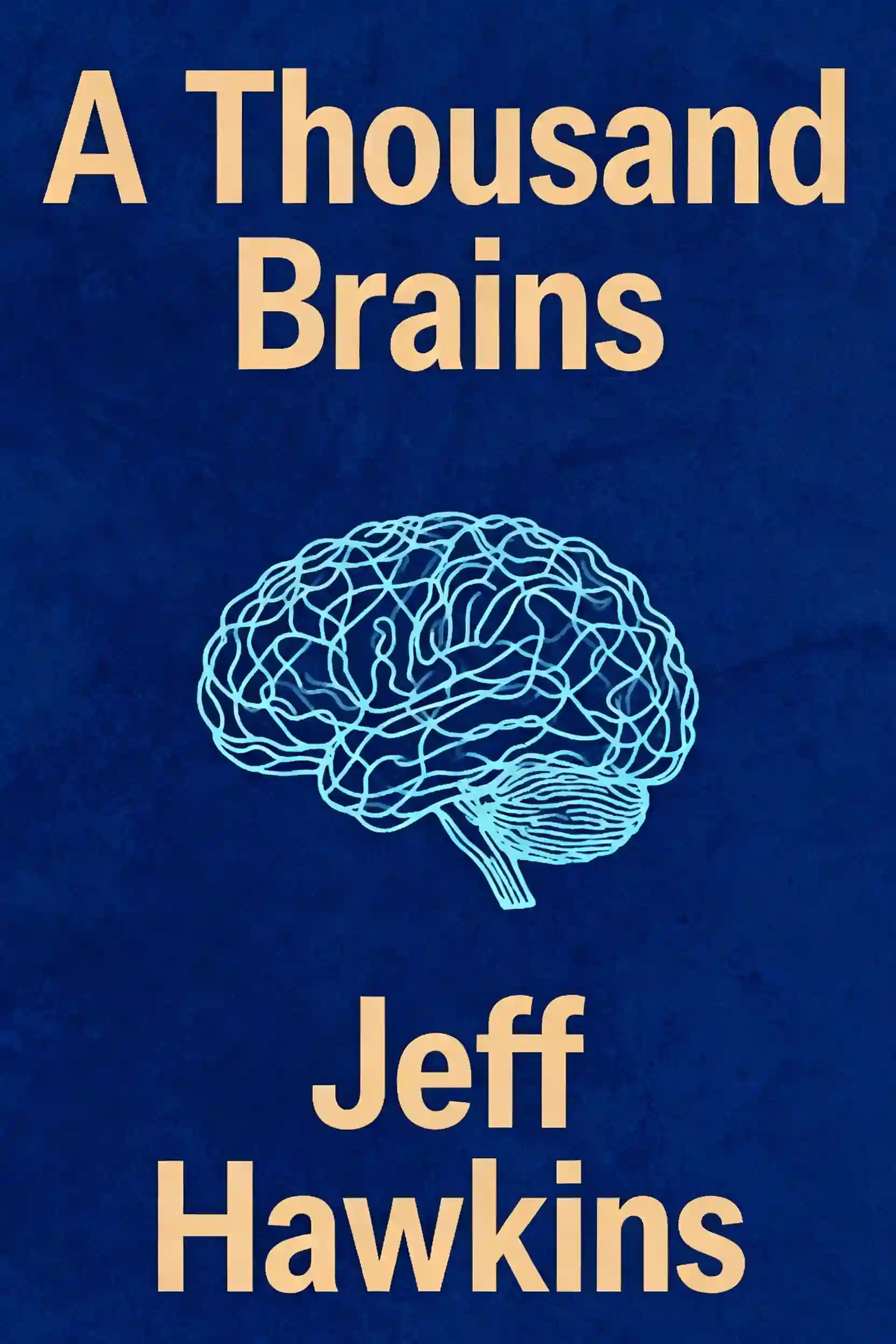
Discover how Nobel Prize-winning research revealed neurons that fire at specific locations, creating cognitive maps in your brain. From navigation to consciousness, explore the spatial intelligence that makes thinking possible.

Thinking is actually a form of movement through mental maps; when you solve problems or recall memories, your brain activates successive locations within these mental reference frames, just as it would when physically exploring an environment.
# Place cells: A quantitative guide for computational model validation Place cells are hippocampal pyramidal neurons that fire when an animal occupies specific locations in an environment, forming the neural basis of cognitive spatial maps. For computational model validation, cells should exhibit **spatial information ≥0.5 bits/spike**, **peak firing rates of 5-40 Hz** with baseline rates below 1 Hz, and **place field sizes of 30-50 cm** in standard environments. Verification requires permutation testing against shuffled controls, with genuine place cells exceeding the 95th percentile of null distributions across spatial information, coherence, and stability metrics. ## Discovery established the hippocampal cognitive map John O’Keefe and Jonathan Dostrovsky’s 1971 Brain Research paper documented the first evidence that hippocampal neurons encode spatial location. Recording from freely-moving rats, they discovered neurons that fired only “when the rat was situated in a particular part of the testing platform facing in a particular direction.” Controls eliminating auditory and olfactory cues ruled out simple sensory explanations, leading to their conclusion that the hippocampus provides “a spatial reference map.” O’Keefe and Nadel’s 1978 book *The Hippocampus as a Cognitive Map* formalized this theory, proposing place cells as basic units of an internal cognitive map— work that earned O’Keefe the 2014 Nobel Prize in Physiology or Medicine. Place cells are found throughout the hippocampal formation with distinct regional properties. **CA1** is the most extensively studied region, with approximately **25% of neurons** displaying place field firing in familiar environments. **CA3** shows more stable representations across trials and days, with fields emerging gradually but remaining consistent. The **dentate gyrus** contributes to pattern separation, differentiating similar spatial memories. A critical feature is the dorsoventral gradient: **dorsal hippocampus** place fields measure roughly **30-50 cm** on standard linear tracks, while **ventral hippocampus** fields can span **5-10 meters**, reflecting a tenfold difference in spatial resolution. ## Firing rates and field sizes define the core phenotype Place cell firing exhibits a stark contrast between in-field and out-of-field activity. **Baseline firing rates** outside the place field remain below **1 Hz** (typically 0.6 ± 0.2 Hz), while **in-field rates** average **4.7-7.3 Hz** with **peak rates reaching 20-40 Hz** during single passes and **80-100 Hz** during theta bursts. This firing rate differential produces the characteristic spatial selectivity used for classification. Place field dimensions scale with both brain region and environment size. In standard recording chambers, fields occupy approximately **13% of a 76 cm diameter cylinder**. On linear tracks, rat place fields measure **40 cm** median width (interquartile range: 33-48 cm), while mouse fields are smaller at **33 cm** median (IQR: 25-40 cm). The Kjelstrup et al. (2008) study on an 18-meter track demonstrated that ventral hippocampus fields average **5-6 meters** with maximum extent reaching **10 meters**—the gradient is approximately linear along the dorsoventral axis. In small environments (approximately 1 m²), **63-82% of place cells** exhibit single fields. However, in larger environments, multiple fields become prevalent: CA3 cells average **4.96 fields per cell** while dentate gyrus granule cells show **5.35 fields per cell** in expansive arenas. Stability is robust—place fields can persist **up to 153 days** in unchanging environments, though recent calcium imaging reveals that only **15-25%** of cells with fields on one day maintain them on subsequent days, reflecting representational drift. ## Spatial information metrics quantify place cell quality The Skaggs et al. (1993, 1996) spatial information metric is the standard for place cell identification. The formula calculates **bits per spike**: **SI = Σ pᵢ × (λᵢ/λ̄) × log₂(λᵢ/λ̄)** where pᵢ represents occupancy probability in spatial bin i, λᵢ is the mean firing rate in that bin, and λ̄ is the overall mean firing rate. **Values exceeding 0.5 bits/spike** typically indicate genuine place cells, with well-tuned cells reaching **1-4 bits/spike**. Statistical significance requires comparison against **500-1000 shuffled versions** where spike times are shifted by at least 5 seconds relative to position data. Cells must exceed the **95th or 99th percentile** of the shuffled distribution (equivalent to z-score >2.29, p<0.01). Complementary metrics strengthen classification. **Sparsity**, calculated as [E(λ)]²/E(λ²), measures firing concentration, with values of **0.22-0.24** indicating spatially confined activity (lower is more selective). **Spatial coherence**—the first-order autocorrelation of unsmoothed rate maps—should exceed **0.4-0.5** for genuine place fields. The **peak-to-mean firing rate ratio** typically requires values **≥4** for classification, with place field boundaries defined where firing exceeds **20% of peak rate**. Four primary classification methods exist: the **Peak method** (activity at one location statistically higher than elsewhere), **Information method** (Skaggs metric), **Stability method** (correlation between session halves), and **Combination method** (multiple thresholds including field width 20-120 cm, in-field/out-field ratio ≥4, activity in ≥20% of traversals). Critically, these methods identify **largely non-overlapping populations**— only approximately 1.1% of cells satisfy all four criteria simultaneously. ## Remapping, phase precession, and replay reveal computational mechanisms **Global remapping** occurs when animals move between distinct environments: the population of active cells and field locations become completely uncorrelated, producing statistically independent representations. **Rate remapping** preserves place field locations while varying firing rates—observed during subtle environmental changes like altered colors or odors. CA3 shows particularly dramatic rate remapping, with individual cells changing peak rates by an **order of magnitude**. **Phase precession** couples place cell firing to the **6-12 Hz theta rhythm**. As an animal traverses a place field, spike timing advances progressively earlier relative to theta phase. Spikes begin approximately **90-120° after** the population activity peak upon field entry and precess through **100-355°** total (typically ~180°) by field exit. This temporal code provides information beyond rate coding alone, with theta-scale compression ratios reaching **10:1**—behavioral sequences spanning seconds compress into single theta cycles. **Replay** during sleep and rest reactivates place cell sequences within **sharp-wave ripple** oscillations (**110-200 Hz**, lasting 40-100 ms). Approximately **5-20% of hippocampal neurons** fire within these brief windows. **Forward replay** precedes navigation and supports planning; **reverse replay** occurs at reward locations and correlates strongly with theta-scale compression during prior behavior (r=0.80). Replay compression factors reach 50-100 ms for sequences originally spanning seconds. **Behavioral timescale synaptic plasticity (BTSP)** enables one-shot place field formation. Unlike classical spike-timing-dependent plasticity, BTSP potentiates inputs arriving **seconds before and after** dendritic plateau potentials, with rise time ~4 seconds and decay ~3 seconds. This mechanism produces predictive place fields that anticipate behaviorally significant locations. ## Distinguishing place cells from other spatial cell types Place cells differ fundamentally from **grid cells**, which exhibit **hexagonal/triangular firing patterns** with multiple evenly-spaced fields spanning entire environments. Grid cells reside in medial entorhinal cortex (MEC) with spacing increasing along the dorsoventral axis (~50 cm dorsally to ~3 m ventrally). Grid scores—computed from rotational autocorrelation of rate maps—quantify hexagonal periodicity: **grid score = min(r₆₀, r₁₂₀) - max(r₃₀, r₉₀, r₁₅₀)**, with positive values indicating grid-like organization. **Head direction cells** fire when the animal’s head points in specific allocentric directions, independent of location—they fire throughout the environment. **Border/boundary cells** activate at fixed distances from environmental boundaries, providing geometric reference signals. **Speed cells** show firing rates proportional to movement velocity. Place cells are distinguished by their **single localized fields** (in standard environments), **allocentric coding** anchored to external landmarks rather than body-centered coordinates, and **environment-specific representations** that globally remap across distinct contexts. ## Validating artificial place cells requires multiple convergent analyses The DeepMind grid cells paper (Banino et al., Nature 2018) established methods for validating emergent spatial representations. For neural network hidden units: 1. **Rate map construction**: Record unit activations across positions, bin into N×N grid (typically 50×50), divide by occupancy, apply Gaussian smoothing (σ = 3-5 cm) 1. **Spatial information calculation**: Apply Skaggs formula to activations, require **≥0.5 bits/spike** 1. **Shuffling controls**: Time-shift activations relative to position (≥5 seconds), generate 500-1000 shuffles, require exceeding 95th/99th percentile 1. **Population decoding**: Train linear or Bayesian decoders to predict position from population activity; genuine spatial representations should support accurate position reconstruction 1. **Ablation experiments**: Silencing spatial units should impair navigation performance if representations are causally relevant Properties that models readily replicate include spatially localized fields, environment-spanning coverage, and basic path integration. However, several features remain challenging: **hexagonal grid symmetry** (many models produce environment-shaped patterns instead), **discrete multi-scale organization** (biological grid modules have discrete scales), **realistic remapping dynamics**, and **theta-coupled phase precession**. Common failure modes include sensitivity to regularization hyperparameters, overfitting to training environments, and missing the ~50% of hippocampal neurons with non-spatial responses. ## Conclusion For computational model validation, place cell identification requires spatial information **≥0.5 bits/spike** (exceeding shuffled controls at p<0.01), spatial coherence **>0.5**, peak firing rates **>1 Hz** with in-field/out-field ratios **≥4**, and place field widths between **20-120 cm**. Multiple complementary metrics provide robustness, as single criteria yield non-overlapping populations. Models should demonstrate decoding accuracy, remapping across environments, and ideally capture temporal phenomena like phase precession. The field increasingly recognizes that spatial representations may emerge as computational primitives in networks processing complex information—recent work shows place-like and grid-like patterns arising even in networks trained purely on visual perception, suggesting these representations may be fundamental features of spatial information processing rather than hippocampus-specific adaptations.

컬럼비아 대학교 동문들이 제작 | 샌프란시스코에서 개발
평균 평점
앱 평가 7.84천 개 이상
BeFreed 커뮤니티
정말이지 아직 앱을 다 써 보지도 않았는데, 며칠 써 본 것만으로도 깊은 인상을 받았어요… BeFreed는 제가 써 본 어떤 학습 앱과도 차원이 달라요. 몰입감이 엄청나고 집중력도 실제로 좋아져서, 스마트폰을 하염없이 스크롤하는 분들께 딱이에요!
@ladyInfinity
정확히 23일 전에 BeFreed를 구입했는데, 그날부터 하루도 빠짐없이 쓰고 있어요. 제 일상 업무 흐름과 학습 습관에 완전히 자리 잡았어요.
@jayallen
솔직히 이 앱은 제 기대를 전부 뛰어넘었어요. 어떤 주제든 오디오로 만들어 달라고 할 수 있고, 결과물이 놀라워요. 제 전문 분야는 심리치료 쪽이고 여러 학문이 얽혀 있는데도 답변이 아주 정확해요.
@Raguipa
제일 고마운 건 스크롤하는 시간이 확 줄었다는 거예요. 검색하는 시간은 줄고 흡수하는 시간은 늘었어요. 오디오북 전권, 팟캐스트, 학습 플랜의 조합이 정말 훌륭해요.
@colonyofcreatorsNGO
저는 24년째 PhotoReading 속진 학습 강사로 일하고 있어요… 책과 독서, 배움이 제 전문인데, BeFreed는 정보를 소화하기 쉽게 전달하는 혁신적인 방식을 정말 잘 구현했어요.
@BeFreed user
단순한 책 요약 앱이 아니에요. '재미' 스타일을 써 봤는데, 전통적인 방식보다 훨씬 나은 요약이고 아이디어를 이해하기도 쉬워요. 이것만으로도 값어치를 해요.
@austinakon
이 앱이 정말 좋아요. 며칠 써 봤는데 듣는 걸 멈출 수가 없어요. 시작하기에 이보다 좋을 수 없어요.
@jcrules328
정말 마음에 들어요. 한 달 정도 써 봤는데 숨은 보석을 찾은 기분이에요. BeFreed로 제가 원하는 주제를 직접 만들 수 있어서 좋고, 목소리도 훌륭한 데다 내레이션 선택지가 무궁무진해요.
@DanielCZ
유용한 정보와 아이디어를 8~15분짜리 팟캐스트 스타일 오디오로 압축해서 들을 수 있다는 게 정말 좋아요. 원래 팟캐스트는 군더더기가 많아서 안 좋아했는데, 여기는 그걸 싹 걷어냈어요.
@BeFreed user
박사 과정을 마무리하는 중이라 낯선 자료를 많이 읽어야 해요… BeFreed에서는 프롬프트만 입력하면 앱이 자료를 찾아서 오디오 팟캐스트로 만들어 줘요. BeFreed의 과정이 NotebookLM보다 더 매끄럽게 느껴져요.
@Brad
아침을 준비하거나 산책하거나 출퇴근할 때 들을 것을 YouTube에서 자주 찾곤 했는데, BeFreed는 광고도 군더더기도 없이 훨씬 더 딱 맞는 걸 들려줘요!
@BeFreed user
이 플랫폼의 가장 큰 장점은 활용도예요. 다루지 못하는 주제가 말 그대로 하나도 없어요. 무엇을 던져도 다 소화해요… 제한이 전혀 없으면서 약속을 실제로 지키는 학습 도구는 정말 드물어요.
@jayallen
BeFreed는 환상적이에요. 디자인이 편해서 헤매는 시간은 줄고 배우는 시간은 늘었어요. 오디오북, 팟캐스트, 학습 플랜의 조합은 천재적이에요. 제 하루가 완전히 달라졌어요.
@BeFreed user
처음엔 이탈리아어로 팟캐스트를 만드는 방법을 이해하는 데 시간이 좀 걸렸는데, 알고 나니까 — 와! 정말 대단해요! 어떤 주제든 설명해 달라고 하면 정말 똑똑하게 잘 설명해 줘요!
@matteo77
BeFreed는 제가 매일 쓰는 오디오북 앱이 됐어요… 제일 마음에 드는 건 텍스트를 넣으면 이동 중에도 들을 수 있는 오디오로 만들어 준다는 점이에요.
@kotanzu1




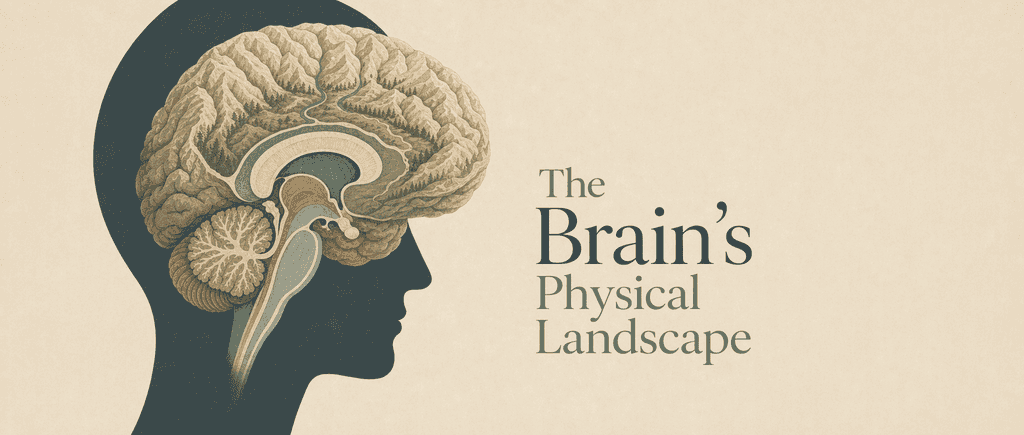
Understanding the brain's physical architecture is the foundation for mastering neuroscience and psychology. This plan is ideal for students or professionals seeking a clear, structural map of how neural biology translates into human behavior.

This learning plan is essential for students and professionals in medicine or neuroscience seeking to bridge the gap between cellular biology and functional anatomy. It provides a systematic approach to understanding how the body's wiring translates into complex physiological movement and sensation.

This plan is essential for neuroscience students and researchers interested in the cutting-edge intersection of cognitive mapping and synaptic plasticity. It provides a technical foundation for understanding how we navigate space, value information, and potentially reset neurological patterns.

This learning plan bridges the gap between biological architecture and complex human behavior. It is designed for students, researchers, or healthcare professionals seeking a comprehensive understanding of how modern technology and clinical case studies inform our knowledge of the mind.

This learning plan bridges the gap between biological neuroscience and practical psychology to reveal how our brains construct reality. It is ideal for curious minds, professionals, and students seeking to master their cognitive processes and understand the hidden drivers of human behavior.

This learning plan bridges neuroscience and philosophy to explain how our brains construct both our internal world and our external reality. It is ideal for thinkers, psychologists, and curious minds wanting to understand the biological roots of selfhood and perception.

This plan is essential for high-performers struggling with digital distraction and professional stagnation. It is designed for individuals looking to reclaim their cognitive sovereignty and transform their self-concept through evidence-based neurobiology.

This multidisciplinary framework is essential for thinkers who want to bridge the gap between biological evolution, historical narrative, and physical laws. It is designed for visionaries and problem-solvers looking to build a holistic understanding of how to reboot global systems.