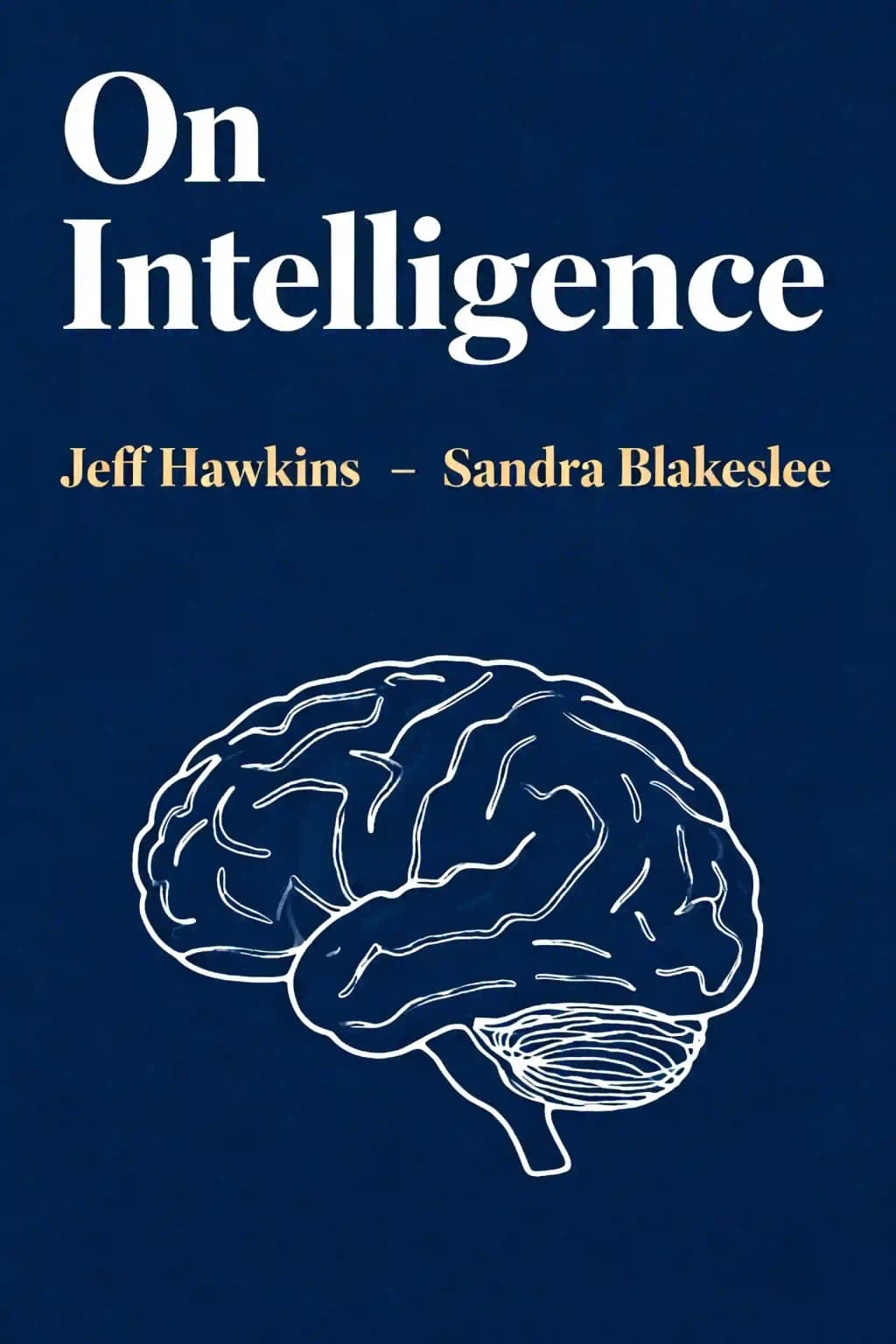
PalmPilot inventor Jeff Hawkins revolutionizes our understanding of intelligence, arguing the brain is a memory-prediction system, not a computer. Elon Musk once called it "essential reading" for anyone curious about AI's future. What if consciousness itself is just sophisticated pattern recognition?
저자의 목소리로 책을 느껴보세요
지식을 흥미롭고 예시가 풍부한 인사이트로 전환
핵심 아이디어를 빠르게 캡처하여 신속하게 학습
재미있고 매력적인 방식으로 책을 즐기세요
Imagine picking up your morning coffee cup. Before your fingers even touch the ceramic, your brain has already predicted its weight, texture, and temperature. This remarkable feat-performed effortlessly by your neocortex-represents the true essence of intelligence. Not the behavioral outputs that AI researchers have chased for decades, but prediction. This insight forms the cornerstone of Jeff Hawkins' groundbreaking theory in "On Intelligence," a book that has influenced everyone from Elon Musk to Ray Kurzweil. Unlike traditional views of intelligence as computation, Hawkins reveals a profound truth: our brains don't compute solutions-they predict them based on stored patterns. This fundamental shift in understanding intelligence has maintained relevance for nearly two decades while traditional AI approaches repeatedly hit walls of limitation. For decades, artificial intelligence has overpromised and underdelivered. The field's founding assumption-that the brain is just another kind of computer with intelligence emerging from symbol manipulation-led researchers down a frustrating path. Remember when IBM's Deep Blue defeated chess champion Garry Kasparov? The media hailed it as a triumph of machine intelligence, but Deep Blue wasn't intelligent-it was just incredibly fast, evaluating 200 million positions per second without understanding chess any more than a calculator understands mathematics. The problem stems from AI's behavior-centric approach. Following Alan Turing's influence, researchers equated intelligence with producing correct outputs for given inputs. But intelligence isn't about behavior-you're still intelligent while lying in the dark, thinking. Neural networks emerged as an alternative but quickly settled on simplistic models that missed three essential brain characteristics: time-based processing, feedback connections, and hierarchical architecture.
On Intelligence의 핵심 아이디어를 이해하기 쉬운 포인트로 분해하여 혁신적인 팀이 어떻게 창조하고, 협력하고, 성장하는지 이해합니다.
On Intelligence을 빠른 기억 단서로 압축하여 솔직함, 팀워크, 창의적 회복력의 핵심 원칙을 강조합니다.

생생한 스토리텔링을 통해 On Intelligence을 경험하고, 혁신 교훈을 기억에 남고 적용할 수 있는 순간으로 바꿉니다.
무엇이든 물어보고, 목소리를 선택하고, 진정으로 공감되는 인사이트를 함께 만들어보세요.

샌프란시스코에서 컬럼비아 대학교 동문들이 만들었습니다
"Instead of endless scrolling, I just hit play on BeFreed. It saves me so much time."
"I never knew where to start with nonfiction—BeFreed’s book lists turned into podcasts gave me a clear path."
"Perfect balance between learning and entertainment. Finished ‘Thinking, Fast and Slow’ on my commute this week."
"Crazy how much I learned while walking the dog. BeFreed = small habits → big gains."
"Reading used to feel like a chore. Now it’s just part of my lifestyle."
"Feels effortless compared to reading. I’ve finished 6 books this month already."
"BeFreed turned my guilty doomscrolling into something that feels productive and inspiring."
"BeFreed turned my commute into learning time. 20-min podcasts are perfect for finishing books I never had time for."
"BeFreed replaced my podcast queue. Imagine Spotify for books — that’s it. 🙌"
"It is great for me to learn something from the book without reading it."
"The themed book list podcasts help me connect ideas across authors—like a guided audio journey."
"Makes me feel smarter every time before going to work"
샌프란시스코에서 컬럼비아 대학교 동문들이 만들었습니다

On Intelligence 요약을 무료 PDF 또는 EPUB으로 받으세요. 인쇄하거나 오프라인에서 언제든 읽을 수 있습니다.