BeFreed
    Categories>Politics>Machiavelli: The Mechanics of Power and The Prince

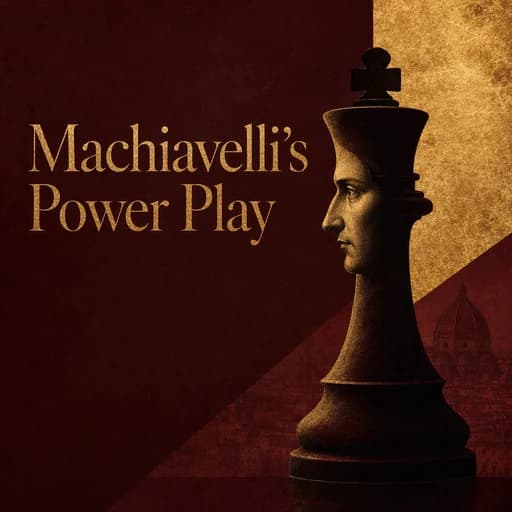
    Machiavelli: The Mechanics of Power and The Prince

    15분
    |
    |
    2026년 8월 22일
    • Politics
    • Leadership & Corp Culture
    • Philosophy & Spirituality

    Explore Niccolò Machiavelli’s The Prince and the mechanics of power. Learn how the exiled diplomat used political philosophy to analyze how to get and keep power.

    Machiavelli: The Mechanics of Power and The Prince
    0:00 / 0:00
    전달 방식을 선택하세요

    하나의 에피소드, 다양한 청취 방식.

    Machiavelli: The Mechanics of Power and The Prince의 같은 아이디어를 나에게 맞는 목소리, 깊이, 속도로 만나보세요. 언제든 바꿀 수 있습니다.

    전체 대본 및 챕터

    챕터 1

    The Letter from a Fallen Diplomat

    In the winter of 1513, a man named Niccolò Machiavelli sat in a small farmhouse outside Florence, nursing the wounds of a shattered career. Just a year earlier, he had been a high-flying diplomat, the kind of person who moved between the royal courts of Europe, negotiating the fate of republics. But the political winds shifted, the Medici family returned to power, and Machiavelli found himself not just out of a job, but imprisoned, tortured, and finally exiled to the quiet, dusty countryside. It was in this state of "great and continued malignity of fortune" that he decided to write a little volume known as The Prince. He wasn't writing for a general audience or a history book; he was writing a "personal_account" addressed to Lorenzo de’ Medici, hoping to prove that he understood the brutal mechanics of power better than anyone else alive. He didn't offer the prince gold or horses, which were the standard bribes of the day; instead, he offered him the "knowledge of the actions of great men," distilled into a slim, punchy volume that stripped away all the fluff of traditional political philosophy.

    You might think of Machiavelli today as a name synonymous with being a "snake" or a master of the "dark arts" of office politics, but his original goal was actually quite practical. He wanted to solve a specific problem: how do you get power, and more importantly, how do you keep it once the honeymoon phase is over? He tells Lorenzo right at the start that he isn't going to use "swelling or magnificent words" to dress up the truth. He’s the ultimate career coach for the ruthless, and his insights matter to you because they reveal the cold, hard reality of how influence works when the stakes are at their highest. He argues that to truly understand the nature of the people, you have to be a prince, but to understand the nature of princes, you have to be one of the people—looking up from the plains to see the mountain for what it really is. This isn't about how the world should work in a perfect Sunday school version of reality; it’s about how it actually works when the doors are closed and the daggers are drawn. As we dive into the frameworks he built for Lorenzo, you'll start to see that the same logic he applied to 16th-century Italian city-states applies to any high-stakes environment you might find yourself in today.
    챕터 2

    The Friction of the New

    Machiavelli starts by categorizing the world into two types of power structures: republics and principalities. He quickly brushes aside the republics—he’s written about those elsewhere—to focus on the "principality," which he splits into the "hereditary" and the "new." If you inherit a position of power, he says, your life is relatively easy. All you have to do is not mess up the "customs of your ancestors" and handle problems with a bit of average prudence. The people are already used to your family name; they have a "natural affection" for the status quo. But the moment you step into a "new" role—whether you’ve conquered a territory or just been promoted into a department that doesn't know you—everything changes. This is where the "difficulties occur".

    The core problem with being the "new person" is a psychological trap that Machiavelli identifies with brutal clarity: people change their leaders willingly, hoping to better themselves, only to find out through experience that they’ve gone from "bad to worse". When you take over a new state, you are forced to offend the very people who submitted to you. You have to bring in your own "soldiery" and impose "infinite other hardships" just to secure your position. This creates a double-edged sword of resentment. You have enemies in all those you injured to get to the top, and you cannot keep the "friends" who put you there because you can never satisfy their expectations as much as they imagined. You are bound to them by debt but limited in how you can reward them. Machiavelli points to Louis XII, the King of France, who occupied Milan and lost it almost immediately because the locals who opened the gates for him realized they had been "deceived in their hopes of future benefit". They didn't want to endure the "ill-treatment" of a new boss who was trying to consolidate power. The takeaway for you is that the transition period is the most dangerous moment of any power play. It’s the time when your allies are most likely to turn into your detractors because the reality of your rule can never match the fantasy they had when they helped you climb the mountain.

    이 에피소드로 더 깊이 배우기

    이 에피소드의 아이디어를 BeFreed의 가이드 학습 경험으로 더 깊이 탐구해 보세요.

    챕터 3

    Settling in the Ruins

    If you’ve managed to acquire a new territory, Machiavelli argues that your next moves depend entirely on whether that territory shares your language and customs. If it does—like Burgundy or Brittany to France—you can hold it fairly easily by doing two things: extinguishing the family of the former ruler and leaving the "laws and taxes" alone. People will settle into a quiet life if their daily routines aren't disrupted. But when you move into a place with a different language, different laws, and different customs, you need "good fortune and great energy" to survive. His primary recommendation here is something that sounds like a modern management tip: you have to be physically present. He notes that the Turk held Greece only because he "settled there". When you are on the spot, you see "disorders as they spring up" and can remedy them instantly. If you are far away, you only hear about the fire when the whole building is already burning.

    Beyond physical presence, Machiavelli suggests a tactic that is both cost-effective and psychologically devastating: colonies. He argues that sending a few settlers to key locations is better than keeping a massive standing army. Why? Because colonies only offend a "minority" of the citizens—the ones whose houses and lands you took—and those people are now "poor and scattered," so they can't hurt you. Meanwhile, everyone else stays quiet because they are uninjured and terrified that if they act out, the same thing will happen to them. This leads to one of Machiavelli’s most famous and chilling observations: "men ought either to be well treated or crushed". You can’t just give someone a light slap on the wrist; they will spend the rest of their lives plotting revenge for that minor insult. But if you crush them completely, they are incapable of striking back. He warns that any injury you do to a man "ought to be of such a kind that one does not stand in fear of revenge". It’s a binary world of total commitment—either you are their best friend, or you are their total undoing. Anything in the middle is just a slow-motion invitation to your own assassination.

    챕터 4

    The Ghost of Alexander

    Machiavelli then pivots to a fascinating historical puzzle: why didn't the empire of Alexander the Great fall apart immediately after he died? Alexander had conquered Asia in just a few years and died before things were truly settled. Yet his successors held on to it with no major rebellions from the conquered people. To explain this, Machiavelli breaks down two different ways to govern a state. The first is the model of the Turk: one lord and a bunch of servants. The lord divides his kingdom and sends administrators who serve entirely at his pleasure. These administrators have no "particular affection" from the people; they are just cogs in the machine. This kind of state is incredibly hard to conquer because the people are united and you can't "corrupt" the ministers—they are all slaves to the lord and have no personal power base to offer you. But once you do conquer it and "exterminate the family" of the prince, it’s incredibly easy to hold. There are no other "lords" left to lead a rebellion.

    The second model is the King of France, who is surrounded by "ancient lords" who have their own subjects and their own "prerogatives" that the king can't easily take away. This kind of state is easy to enter—you can always find a "discontented baron" to open the door for you—but it’s almost impossible to hold. Even if you kill the king’s family, the other lords remain, and they will make themselves the "heads of fresh movements" against you. You can neither "satisfy nor exterminate" them all. Alexander’s conquest worked because the empire of Darius was like the Turk’s—once the head was cut off, the body didn't know how to fight back. This is a crucial lesson in organizational structure. If you are entering a new environment, you need to know if you are dealing with a monolithic hierarchy where one person holds all the cards, or a decentralized web of influencers who each have their own loyal following. If it’s the latter, your victory will be short-lived unless you are prepared for a never-ending game of Whac-A-Mole against a dozen different "barons" who all think they should be in charge.

    이 에피소드로 더 깊이 배우기

    이 에피소드의 아이디어를 BeFreed의 가이드 학습 경험으로 더 깊이 탐구해 보세요.

    챕터 5

    The Watchword of Liberty

    When you take over a city that has been "accustomed to live under its own laws and in freedom," Machiavelli offers a bleak set of options: you can ruin it, go live there yourself, or let them keep their laws while you extract a tribute and set up a small "oligarchy" of locals to run things for you. But he’s skeptical of the third option. He points out that the Spartans tried to hold Athens and Thebes through oligarchies and failed, while the Romans held Capua and Carthage by "dismantling them" and succeeded. His reasoning is purely psychological. A city used to being free will never forget the "watchword of liberty". No amount of time or benefits will make them forget their ancient privileges. If you don't destroy a free city, it will eventually destroy you, because the memory of freedom is a "rallying point" that remains even after a hundred years of bondage.

    This is contrasted with people who are used to living under a prince. Once the old prince’s family is gone, these people don't know how to "govern themselves". They are slow to take up arms and much easier for a new prince to win over. But in republics, there is "more vitality, greater hatred, and more desire for vengeance". The safest way is to either level the place or move in and watch them like a hawk. This is Machiavelli’s way of saying that culture is the most stubborn force in politics. You can change the leader, and you can change the laws, but you cannot easily change the collective memory of a people who once felt they were their own masters. If you are trying to "rebrand" or "take over" a culture that prides itself on its independence, you are in for a fight that might outlast your own career. The "watchword of liberty" isn't just a slogan; it’s a virus that stays dormant until the moment you show weakness.

    챕터 6

    Armed Prophets and the Archery of Power

    Machiavelli believes that the most successful "new princes" are those who rise through their own "ability" rather than just "fortune". He looks at figures like Moses, Cyrus, and Romulus, and he notices a pattern. These men didn't just get lucky; they were "clever archers" who took aim much higher than their mark, knowing the limits of their bow. They recognized "opportunity" when it arrived—like Moses finding the Israelites enslaved in Egypt—and they had the "ability" to mould that opportunity into a new state. But here is the catch: to "consummate their enterprise," they had to rely on themselves and use "force". Machiavelli famously observes that "all armed prophets have conquered, and the unarmed ones have been destroyed".

    The problem is that the "nature of the people is variable". It’s easy to persuade people to believe in a new idea, but it’s incredibly difficult to keep them in that persuasion. When the initial excitement of a new "order of things" wears off, the "innovator" finds himself with enemies in everyone who did well under the old system, and only "lukewarm defenders" in those who might do well under the new one. This coolness comes from fear of the opponents and a general "incredulity" toward anything new until it’s been proven over a long period. Therefore, a leader must be able to make the people "believe by force" once they stop believing by choice. He cites the example of Girolamo Savonarola, who was ruined in Florence the moment the multitude stopped believing in him, because he had no "means of keeping steadfast those who believed". To be a visionary is not enough; you must also be the person with the "sling and the knife" ready to defend that vision when the crowd gets bored or scared.

    이 에피소드로 더 깊이 배우기

    이 에피소드의 아이디어를 BeFreed의 가이드 학습 경험으로 더 깊이 탐구해 보세요.

    챕터 7

    The Tragedy of Cesare Borgia

    If you rise to power through "good fortune" or the "arms of others"—like being given a state because you are the son of a Pope—you have an easy time getting to the top but a "miserable" time staying there. You are "elevated upon the goodwill and the fortune" of others, two of the most "inconstant and unstable things" in the world. You don't have the "knowledge requisite" to command, and you don't have "loyal and faithful" forces of your own. Machiavelli holds up Cesare Borgia, the son of Pope Alexander VI, as the ultimate example of a man who did everything right but was ultimately "overthrown" by the extreme "malignity of fortune". Cesare, known as Duke Valentino, acquired his state through his father’s power but worked tirelessly to "fix firmly his roots" so he wouldn't need his father anymore.

    Cesare’s methods were a masterclass in Machiavellian pragmatism. He weakened the rival factions in Rome by "gaining to himself all their adherents" with good pay and offices. He used "wiles" to lure his enemies into a trap at Sinigalia, where he had them all "exterminated". Most famously, he brought peace to the Romagna by appointing a "swift and cruel" governor, Ramiro d’Orco, to crush the local criminals. Once the job was done and the people were peaceful but terrified of the governor’s cruelty, Cesare had Ramiro "executed and left on the piazza at Cesena" with a "bloody knife" at his side. This satisfied the people and "dismayed" them at the same time, while clearing Cesare of the "hatred" that the governor’s severity had caused. Cesare’s only mistake, according to Machiavelli, was allowing Julius II to be elected Pope—a man Cesare had "injured" in the past. He believed that "new benefits" would make a powerful person forget "old injuries," but he was wrong. Even the most "cunning fox" can be undone by a single lapse in judgment or a sudden stroke of bad luck—like Cesare being "sick unto death" at the exact moment his father died.

    챕터 8

    The Playbook of the Lion and the Fox

    Machiavelli’s final "practical playbook" for you is a series of lessons on how to manage your reputation and your resources. First, he addresses "wickedness." You can rise to power through "infamous" crimes—like Agathocles of Syracuse, who slaughtered the entire Senate in one morning—but Machiavelli warns that while such methods may gain you "empire," they will not gain you "glory". If you must use "severities," use them "properly"—which means doing all your "injuries" at one blow. Don't repeat them daily, or your subjects will never feel secure. On the flip side, "benefits" should be given out "little by little," so their "flavour" lasts longer. Always live with your people in a way that "no unexpected circumstances" make you change your behavior.

    When it comes to the "art of war," Machiavelli is uncompromising: a prince should have "no other aim or thought". Even in peace, you should be out hunting, learning the "nature of the terrain"—how the mountains rise and the valleys open—so you are never surprised by your surroundings. You should read history and "imitate" the actions of "illustrious men" like Alexander or Caesar. On the question of whether it is better to be "loved or feared," he famously concludes it is "much safer to be feared than loved" if you can't be both. Love is a "link of obligation" that men break whenever it suits them, but fear is a "dread of punishment" that never fails. However, you must avoid being "hated." You do this by keeping your hands off your subjects’ "property" and their "women". A man will forget the death of his father sooner than the "loss of his patrimony".

    Finally, he introduces the most iconic metaphor in political literature: the "lion and the fox". The lion cannot defend himself against "snares," and the fox cannot defend himself against "wolves". You must be a fox to "discover the snares" and a lion to "terrify the wolves." This means you shouldn't keep your word if doing so "may be turned against you". Since men are "bad" and won't keep faith with you, you aren't bound to keep it with them. But you must be a "great pretender and dissembler". You should always appear to be merciful, faithful, humane, and religious, even if you are ready to "change to the opposite" the moment fortune shifts. In the end, people "judge by the result". If you "conquer and hold your state," the means will always be "considered honest". Machiavelli’s legacy is a reminder that in the high-stakes game of power, the "vulgar" are always taken by appearances—and in this world, there is "only the vulgar". Thank you for walking through these ruthless halls of history with me; perhaps the next time you find yourself in a "principality" of your own, you'll remember to watch for the snares and the wolves. If you found these insights useful, take a moment to reflect on which "barons" in your own life might be waiting for their moment—and whether you've been a lion or a fox lately.

    ★★★★★

    Machiavelli: The Mechanics of Power and The Prince의 끝까지 도달했어요

    “23일째 매일 사용하고 있어요. 이제 제 일상의 한 부분이 되었습니다.”

    jayallen

    Machiavelli: The Mechanics of Power and The Prince 베스트 인용

    “

    To truly understand the nature of the people, you have to be a prince, but to understand the nature of princes, you have to be one of the people—looking up from the plains to see the mountain for what it really is.

    ”
    A

    Generated by Artha

    질문 입력

    Summarize the key takeaways from the video: https://youtu.be/87raPfrRcIs?si=hkudCYkG1k4P9ebB

    호스트 음성
    Lenaplay
    지식 출처
    The Prince by Niccolò Machiavelli | Audiobook with Text
    link
    https://youtu.be/87raPfrRcIs?si=hkudCYkG1k4P9ebB

    자주 묻는 질문

    In 1513, Niccolò Machiavelli wrote The Prince while living in exile in a farmhouse outside Florence. After a successful career as a high-flying diplomat negotiating for republics, the return of the Medici family led to his imprisonment and torture. Facing a shattered career and what he called a malignity of fortune, he authored the work as a career manifesto to prove his deep understanding of political mechanics.

    Machiavelli specifically addressed his work to Lorenzo de’ Medici. Rather than offering traditional gifts like gold or horses to the ruler, Machiavelli offered a personal account of the knowledge of the actions of great men. He intended the slim volume to serve as a practical guide, stripping away the fluff of traditional political philosophy to show he understood the brutal mechanics of power better than anyone else.

    The podcast focuses on the practical application of diplomacy and political philosophy. While modern audiences often associate Machiavelli with the dark arts of office politics, his original goal was highly practical. He sought to solve the specific problem of how an individual can acquire power and, more importantly, maintain that power once the initial honeymoon period of leadership has ended.

    컬럼비아 대학교 동문들이 제작 | 샌프란시스코에서 개발

    BeFreed는 호기심 넘치는 글로벌 커뮤니티를 하나로 연결합니다

    4.7

    평균 평점

    앱 평가 7.84천 개 이상

    BeFreed 커뮤니티

    정말이지 아직 앱을 다 써 보지도 않았는데, 며칠 써 본 것만으로도 깊은 인상을 받았어요… BeFreed는 제가 써 본 어떤 학습 앱과도 차원이 달라요. 몰입감이 엄청나고 집중력도 실제로 좋아져서, 스마트폰을 하염없이 스크롤하는 분들께 딱이에요!

    @ladyInfinity

    정확히 23일 전에 BeFreed를 구입했는데, 그날부터 하루도 빠짐없이 쓰고 있어요. 제 일상 업무 흐름과 학습 습관에 완전히 자리 잡았어요.

    @jayallen

    솔직히 이 앱은 제 기대를 전부 뛰어넘었어요. 어떤 주제든 오디오로 만들어 달라고 할 수 있고, 결과물이 놀라워요. 제 전문 분야는 심리치료 쪽이고 여러 학문이 얽혀 있는데도 답변이 아주 정확해요.

    @Raguipa

    제일 고마운 건 스크롤하는 시간이 확 줄었다는 거예요. 검색하는 시간은 줄고 흡수하는 시간은 늘었어요. 오디오북 전권, 팟캐스트, 학습 플랜의 조합이 정말 훌륭해요.

    @colonyofcreatorsNGO

    저는 24년째 PhotoReading 속진 학습 강사로 일하고 있어요… 책과 독서, 배움이 제 전문인데, BeFreed는 정보를 소화하기 쉽게 전달하는 혁신적인 방식을 정말 잘 구현했어요.

    @BeFreed user

    단순한 책 요약 앱이 아니에요. '재미' 스타일을 써 봤는데, 전통적인 방식보다 훨씬 나은 요약이고 아이디어를 이해하기도 쉬워요. 이것만으로도 값어치를 해요.

    @austinakon

    이 앱이 정말 좋아요. 며칠 써 봤는데 듣는 걸 멈출 수가 없어요. 시작하기에 이보다 좋을 수 없어요.

    @jcrules328

    정말 마음에 들어요. 한 달 정도 써 봤는데 숨은 보석을 찾은 기분이에요. BeFreed로 제가 원하는 주제를 직접 만들 수 있어서 좋고, 목소리도 훌륭한 데다 내레이션 선택지가 무궁무진해요.

    @DanielCZ

    정말이지 아직 앱을 다 써 보지도 않았는데, 며칠 써 본 것만으로도 깊은 인상을 받았어요… BeFreed는 제가 써 본 어떤 학습 앱과도 차원이 달라요. 몰입감이 엄청나고 집중력도 실제로 좋아져서, 스마트폰을 하염없이 스크롤하는 분들께 딱이에요!

    @ladyInfinity

    정확히 23일 전에 BeFreed를 구입했는데, 그날부터 하루도 빠짐없이 쓰고 있어요. 제 일상 업무 흐름과 학습 습관에 완전히 자리 잡았어요.

    @jayallen

    솔직히 이 앱은 제 기대를 전부 뛰어넘었어요. 어떤 주제든 오디오로 만들어 달라고 할 수 있고, 결과물이 놀라워요. 제 전문 분야는 심리치료 쪽이고 여러 학문이 얽혀 있는데도 답변이 아주 정확해요.

    @Raguipa

    제일 고마운 건 스크롤하는 시간이 확 줄었다는 거예요. 검색하는 시간은 줄고 흡수하는 시간은 늘었어요. 오디오북 전권, 팟캐스트, 학습 플랜의 조합이 정말 훌륭해요.

    @colonyofcreatorsNGO

    저는 24년째 PhotoReading 속진 학습 강사로 일하고 있어요… 책과 독서, 배움이 제 전문인데, BeFreed는 정보를 소화하기 쉽게 전달하는 혁신적인 방식을 정말 잘 구현했어요.

    @BeFreed user

    단순한 책 요약 앱이 아니에요. '재미' 스타일을 써 봤는데, 전통적인 방식보다 훨씬 나은 요약이고 아이디어를 이해하기도 쉬워요. 이것만으로도 값어치를 해요.

    @austinakon

    이 앱이 정말 좋아요. 며칠 써 봤는데 듣는 걸 멈출 수가 없어요. 시작하기에 이보다 좋을 수 없어요.

    @jcrules328

    정말 마음에 들어요. 한 달 정도 써 봤는데 숨은 보석을 찾은 기분이에요. BeFreed로 제가 원하는 주제를 직접 만들 수 있어서 좋고, 목소리도 훌륭한 데다 내레이션 선택지가 무궁무진해요.

    @DanielCZ

    유용한 정보와 아이디어를 8~15분짜리 팟캐스트 스타일 오디오로 압축해서 들을 수 있다는 게 정말 좋아요. 원래 팟캐스트는 군더더기가 많아서 안 좋아했는데, 여기는 그걸 싹 걷어냈어요.

    @BeFreed user

    박사 과정을 마무리하는 중이라 낯선 자료를 많이 읽어야 해요… BeFreed에서는 프롬프트만 입력하면 앱이 자료를 찾아서 오디오 팟캐스트로 만들어 줘요. BeFreed의 과정이 NotebookLM보다 더 매끄럽게 느껴져요.

    @Brad

    아침을 준비하거나 산책하거나 출퇴근할 때 들을 것을 YouTube에서 자주 찾곤 했는데, BeFreed는 광고도 군더더기도 없이 훨씬 더 딱 맞는 걸 들려줘요!

    @BeFreed user

    이 플랫폼의 가장 큰 장점은 활용도예요. 다루지 못하는 주제가 말 그대로 하나도 없어요. 무엇을 던져도 다 소화해요… 제한이 전혀 없으면서 약속을 실제로 지키는 학습 도구는 정말 드물어요.

    @jayallen

    BeFreed는 환상적이에요. 디자인이 편해서 헤매는 시간은 줄고 배우는 시간은 늘었어요. 오디오북, 팟캐스트, 학습 플랜의 조합은 천재적이에요. 제 하루가 완전히 달라졌어요.

    @BeFreed user

    처음엔 이탈리아어로 팟캐스트를 만드는 방법을 이해하는 데 시간이 좀 걸렸는데, 알고 나니까 — 와! 정말 대단해요! 어떤 주제든 설명해 달라고 하면 정말 똑똑하게 잘 설명해 줘요!

    @matteo77

    BeFreed는 제가 매일 쓰는 오디오북 앱이 됐어요… 제일 마음에 드는 건 텍스트를 넣으면 이동 중에도 들을 수 있는 오디오로 만들어 준다는 점이에요.

    @kotanzu1

    유용한 정보와 아이디어를 8~15분짜리 팟캐스트 스타일 오디오로 압축해서 들을 수 있다는 게 정말 좋아요. 원래 팟캐스트는 군더더기가 많아서 안 좋아했는데, 여기는 그걸 싹 걷어냈어요.

    @BeFreed user

    박사 과정을 마무리하는 중이라 낯선 자료를 많이 읽어야 해요… BeFreed에서는 프롬프트만 입력하면 앱이 자료를 찾아서 오디오 팟캐스트로 만들어 줘요. BeFreed의 과정이 NotebookLM보다 더 매끄럽게 느껴져요.

    @Brad

    아침을 준비하거나 산책하거나 출퇴근할 때 들을 것을 YouTube에서 자주 찾곤 했는데, BeFreed는 광고도 군더더기도 없이 훨씬 더 딱 맞는 걸 들려줘요!

    @BeFreed user

    이 플랫폼의 가장 큰 장점은 활용도예요. 다루지 못하는 주제가 말 그대로 하나도 없어요. 무엇을 던져도 다 소화해요… 제한이 전혀 없으면서 약속을 실제로 지키는 학습 도구는 정말 드물어요.

    @jayallen

    BeFreed는 환상적이에요. 디자인이 편해서 헤매는 시간은 줄고 배우는 시간은 늘었어요. 오디오북, 팟캐스트, 학습 플랜의 조합은 천재적이에요. 제 하루가 완전히 달라졌어요.

    @BeFreed user

    처음엔 이탈리아어로 팟캐스트를 만드는 방법을 이해하는 데 시간이 좀 걸렸는데, 알고 나니까 — 와! 정말 대단해요! 어떤 주제든 설명해 달라고 하면 정말 똑똑하게 잘 설명해 줘요!

    @matteo77

    BeFreed는 제가 매일 쓰는 오디오북 앱이 됐어요… 제일 마음에 드는 건 텍스트를 넣으면 이동 중에도 들을 수 있는 오디오로 만들어 준다는 점이에요.

    @kotanzu1

    웹에서 BeFreed가 어떻게 논의되고 있는지 더 보기
    129.7K19.5K
    55.2K19.2K
    154.2K10827355
    48.1K2.5K
    81.2K6.6K
    82.3K1.8K
    지금 바로 학습 여정을 시작하세요
    BeFreed 앱
    BeFreed

    무엇이든 개인화된 학습

    DiscordLinkedIn
    추천 도서 요약
    Crucial ConversationsThe Perfect MarriageInto the WildNever Split the DifferenceAttachedGood to GreatSay Nothing
    인기 카테고리
    Self HelpCommunication SkillRelationshipMindfulnessPhilosophyInspirationProductivity
    유명인 추천 도서
    Elon MuskCharlie KirkBill GatesSteve JobsAndrew HubermanJoe RoganJordan Peterson
    수상작 컬렉션
    Pulitzer PrizeNational Book AwardGoodreads Choice AwardsNobel Prize in LiteratureNew York TimesCaldecott MedalNebula Award
    추천 주제
    ManagementAmerican HistoryWarTradingStoicismAnxietySex
    연도별 베스트 도서
    2025 Best Non Fiction Books2024 Best Non Fiction Books2023 Best Non Fiction Books
    추천 저자
    Chimamanda Ngozi AdichieGeorge OrwellO. J. SimpsonBarbara O'NeillWinston ChurchillCharlie Kirk
    BeFreed vs 다른 앱
    BeFreed vs. Other Book Summary AppsBeFreed vs. ElevenReaderBeFreed vs. ReadwiseBeFreed vs. Anki
    학습 도구
    Knowledge VisualizerAI Podcast Generator
    정보
    회사 소개arrow
    가격arrow
    FAQarrow
    블로그arrow
    채용arrow
    파트너십arrow
    앰배서더 프로그램arrow
    디렉토리arrow
    BeFreed
    Try now
    © 2026 BeFreed
    이용 약관개인정보 처리방침
    BeFreed

    무엇이든 개인화된 학습

    DiscordLinkedIn
    추천 도서 요약
    Crucial ConversationsThe Perfect MarriageInto the WildNever Split the DifferenceAttachedGood to GreatSay Nothing
    인기 카테고리
    Self HelpCommunication SkillRelationshipMindfulnessPhilosophyInspirationProductivity
    유명인 추천 도서
    Elon MuskCharlie KirkBill GatesSteve JobsAndrew HubermanJoe RoganJordan Peterson
    수상작 컬렉션
    Pulitzer PrizeNational Book AwardGoodreads Choice AwardsNobel Prize in LiteratureNew York TimesCaldecott MedalNebula Award
    추천 주제
    ManagementAmerican HistoryWarTradingStoicismAnxietySex
    연도별 베스트 도서
    2025 Best Non Fiction Books2024 Best Non Fiction Books2023 Best Non Fiction Books
    학습 도구
    Knowledge VisualizerAI Podcast Generator
    추천 저자
    Chimamanda Ngozi AdichieGeorge OrwellO. J. SimpsonBarbara O'NeillWinston ChurchillCharlie Kirk
    BeFreed vs 다른 앱
    BeFreed vs. Other Book Summary AppsBeFreed vs. ElevenReaderBeFreed vs. ReadwiseBeFreed vs. Anki
    정보
    회사 소개arrow
    가격arrow
    FAQarrow
    블로그arrow
    채용arrow
    파트너십arrow
    앰배서더 프로그램arrow
    디렉토리arrow
    BeFreed
    Try now
    © 2026 BeFreed
    이용 약관개인정보 처리방침

    비슷한 콘텐츠

    Machiavelli: Power and the Realist’s Edge 책 표지
    10 Lessons to Learn from the Book 'The Prince' by Niccolò Machiavelli | Times Now#28. Reading Machiavelli today: power, morality, and leadershipThe Leadership Ethics of Machiavelli's PrinceThe prince of the people: Machiavelli was no ‘Machiavellian’ | Aeon Essays
    5 sources
    Machiavelli: Power and the Realist’s Edge
    When being 'good' leads to getting steamrolled, how do you stay effective? Explore Machiavelli’s lessons on navigating power and managing your image.
    980 min
    Machiavelli: The Realist’s Guide to Power 책 표지
    Machiavelli's Influence on Modern PoliticsMachiavelli’s The Prince, reconsidered | VoxVirtue, Opportunity and Fortune: Insights for Business Leaders in Machiavelli’s The Prince | Philosophy of Management | Springer Nature LinkBargaining your way to success: The effect of Machiavellian chief executive officers on firm costs
    6 sources
    Machiavelli: The Realist’s Guide to Power
    Modern politics requires more than good intentions. Discover why Machiavelli’s tactics are still the key to surviving today’s boardroom battles.
    18 min
    Machiavelli: the exile who wrote the rulebook of power 책 표지
    Full text of "01 Machiavelli In Context, Part 1"Niccolò Machiavelli (Stanford Encyclopedia of Philosophy/Winter 2016 Edition)Machiavellianism reveals the path towards peace | Hartmut Behr » IAI TVThe Role of Power in Machiavelli's Political Theory • PolSci Institute
    5 sources
    Machiavelli: the exile who wrote the rulebook of power
    When the world doesn't reward being 'good,' how do you survive? Explore Machiavelli’s realist toolkit for navigating influence and competition.
    1141 min
    The Prince 책 표지
    The Prince
    Niccolò Machiavelli
    24 min
    The Art of Machiavellian Strategy 책 표지
    The Art of Worldly WisdomThe 48 Laws of PowerThe ArthashastraThe Prince
    20 sources
    The Art of Machiavellian Strategy
    Explore Machiavellianism beyond stereotypes—from its 16th century origins to modern applications in power dynamics, workplace relationships, and digital influence. Learn to recognize and respond to these strategic tactics.
    31 min
    Machiavelli: the exile who wrote the rulebook of power 책 표지
    Niccolò Machiavelli (Stanford Encyclopedia of Philosophy/Spring 2010 Edition)The Prince: Literature and Death — Aet. 43-58—1512-27 | SparkNotesNiccolo Machiavelli - New World Encyclopediasource 4
    5 sources
    Machiavelli: the exile who wrote the rulebook of power
    After surviving torture and exile, Machiavelli wrote a desperate guide to survival. Discover the true story behind the world's most infamous political manual.
    1101 min
    Machiavelli in the C-Suite 책 표지
    Business strategy through a Machiavellian lensFrom The Prince to the Boardroom: Power in Machiavelli and Jeffrey Pfeffer - HorkanVirtù: Applying Machiavellian Strategy in the C-SuiteMachiavelli on Fear vs. Love: Leadership Lessons for 2026
    7 sources
    Machiavelli in the C-Suite
    Being the 'nice boss' can put your company at risk. Explore how Machiavellian realism and calculated power create a strategic edge in the boardroom.
    1286 min
    The Prince and the Sage: Ancient Strategy for Modern Chaos 책 표지
    How to Apply Art of War Principles to Business Strategy and Dominate Your Competition - Jeremy Haynes BlogHow to Apply The Art of War to Product ManagementRevisiting the Received Image of Machiavelli in Business Ethics ...Machiavelli vs. Sun Tzu: Which Ancient Strategist Wins the Modern Business War?
    4 sources
    The Prince and the Sage: Ancient Strategy for Modern Chaos
    Modern business can feel like a battlefield. Learn how Sun Tzu and Machiavelli’s timeless tactics help you navigate office politics and lead with clarity.
    1339 min