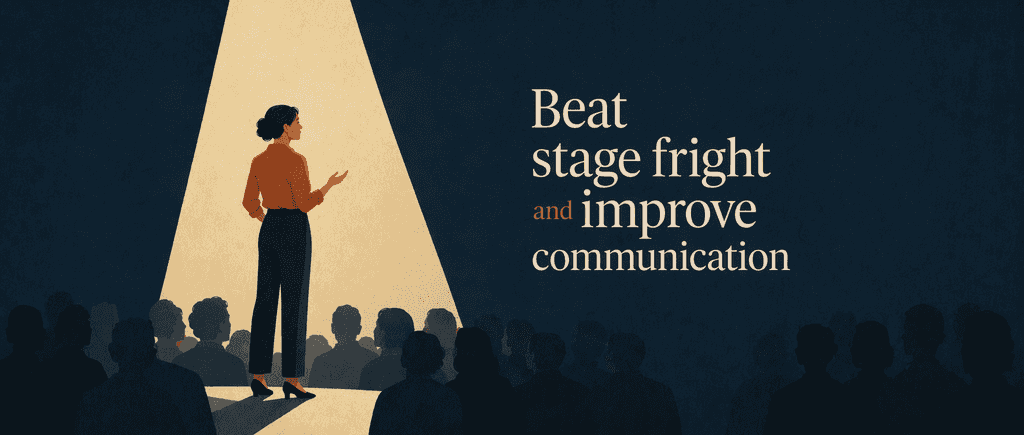
From Stage Fright to Performance Power
Discover the science behind performance anxiety and learn how to reframe adrenaline as the fuel you need to lead your band with confidence.

From Stage Fright to Performance Power 베스트 인용
The pounding in your chest isn’t a sign that you’re failing; it’s a sign that you’re prepared to do something extraordinary. You’re essentially a high-performance engine that’s revving at a stoplight.
Generated by Andres
I want to understand the science behind stage fright and how I can overcome it. I will be performing as a lead singer for a band.

자주 묻는 질문
These physical symptoms are triggered by the sympathetic-adrenal-medullary (SAM) axis, which releases adrenaline and norepinephrine when the brain perceives an "evaluative threat," such as a judging audience. Your brain essentially confuses a crowd of fans with a physical threat, like a pack of wolves, and floods your body with oxygen-rich blood to prepare you for "fight-or-flight." Rather than a sign of failure, these symptoms are actually your body turning into a "battery" to provide the high energy needed for a performance.
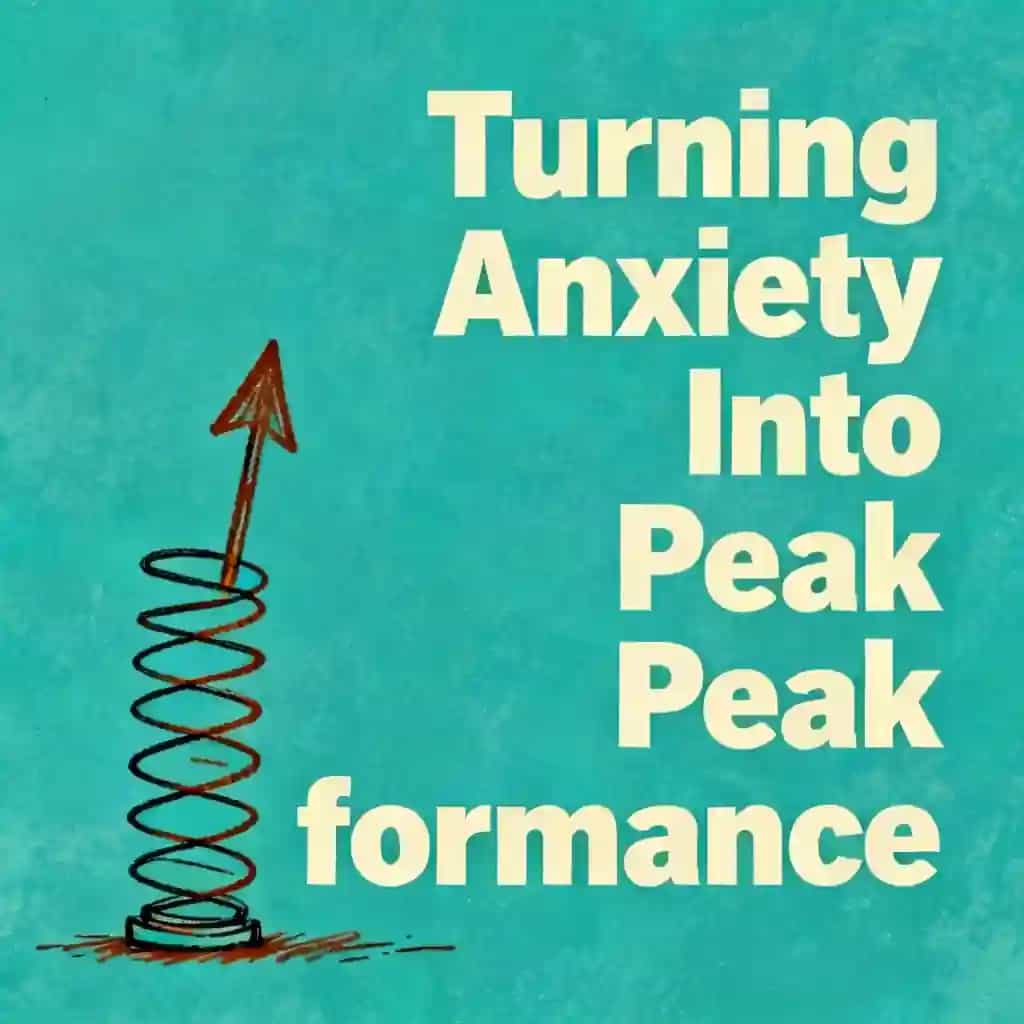
Based on the Yerkes-Dodson Law, there is a specific balance point where stress actually improves performance. At the low end of the curve, a performer might be too relaxed and appear boring; at the high end, the stress becomes "debilitative anxiety," leading to memory lapses and technical errors. The goal for a lead singer is to find the "sweet spot" at the top of the curve where they are "charged" with enough adrenaline to be focused and passionate, but not so overwhelmed that they lose control of their instrument.
Standard rote memorization creates a "serial associative chain" where you only know how to get to the next line by singing the one before it. To break this fragile chain, you should use "retrieval practice" and "non-serial practice." This involves forcing your brain to recall the music without looking at sheets and practicing starting from random points in the song, such as the bridge or the second verse. This builds a "mental map" with multiple entry points, making your memory more resilient even under high pressure.
Research suggests that "stress reappraisal"—telling yourself "I am excited"—is significantly more effective than trying to stay calm. Because anxiety and excitement are both high-arousal states with similar physical symptoms (like a rapid heart rate), it is much easier for the nervous system to shift the label of the energy than to try to force the body into a low-arousal state of "calm." Viewing the performance as a "challenge" rather than a "threat" actually dilates blood vessels and helps the heart pump more efficiently.
The cyclic sigh is a specific breathing technique used as a physical "emergency brake" for the nervous system. It involves taking a deep breath through the nose, adding a second tiny "sip" of air at the very top, and then releasing a long, slow exhale through the mouth. This long exhalation triggers the parasympathetic nervous system, signaling the brain that you are not in immediate danger. For singers, this also helps reset the diaphragm and prevents the shallow chest-breathing that often causes the voice to tremble.
샌프란시스코에서 컬럼비아 대학교 동문들이 만들었습니다
"Instead of endless scrolling, I just hit play on BeFreed. It saves me so much time."


"I never knew where to start with nonfiction—BeFreed’s book lists turned into podcasts gave me a clear path."


"Perfect balance between learning and entertainment. Finished ‘Thinking, Fast and Slow’ on my commute this week."
"Crazy how much I learned while walking the dog. BeFreed = small habits → big gains."
"Reading used to feel like a chore. Now it’s just part of my lifestyle."

"Feels effortless compared to reading. I’ve finished 6 books this month already."
"BeFreed turned my guilty doomscrolling into something that feels productive and inspiring."

"BeFreed turned my commute into learning time. 20-min podcasts are perfect for finishing books I never had time for."
"BeFreed replaced my podcast queue. Imagine Spotify for books — that’s it. 🙌"

"It is great for me to learn something from the book without reading it."
"The themed book list podcasts help me connect ideas across authors—like a guided audio journey."
"Makes me feel smarter every time before going to work"
 Ask ChatGPT
 Ask Claude
샌프란시스코에서 컬럼비아 대학교 동문들이 만들었습니다
"Instead of endless scrolling, I just hit play on BeFreed. It saves me so much time."
"I never knew where to start with nonfiction—BeFreed’s book lists turned into podcasts gave me a clear path."
"Perfect balance between learning and entertainment. Finished ‘Thinking, Fast and Slow’ on my commute this week."
"Crazy how much I learned while walking the dog. BeFreed = small habits → big gains."
"Reading used to feel like a chore. Now it’s just part of my lifestyle."
"Feels effortless compared to reading. I’ve finished 6 books this month already."
"BeFreed turned my guilty doomscrolling into something that feels productive and inspiring."
"BeFreed turned my commute into learning time. 20-min podcasts are perfect for finishing books I never had time for."
"BeFreed replaced my podcast queue. Imagine Spotify for books — that’s it. 🙌"
"It is great for me to learn something from the book without reading it."
"The themed book list podcasts help me connect ideas across authors—like a guided audio journey."
"Makes me feel smarter every time before going to work"
"Instead of endless scrolling, I just hit play on BeFreed. It saves me so much time."
"I never knew where to start with nonfiction—BeFreed’s book lists turned into podcasts gave me a clear path."
"Perfect balance between learning and entertainment. Finished ‘Thinking, Fast and Slow’ on my commute this week."
"Crazy how much I learned while walking the dog. BeFreed = small habits → big gains."
"Reading used to feel like a chore. Now it’s just part of my lifestyle."
"Feels effortless compared to reading. I’ve finished 6 books this month already."
"BeFreed turned my guilty doomscrolling into something that feels productive and inspiring."
"BeFreed turned my commute into learning time. 20-min podcasts are perfect for finishing books I never had time for."
"BeFreed replaced my podcast queue. Imagine Spotify for books — that’s it. 🙌"
"It is great for me to learn something from the book without reading it."
"The themed book list podcasts help me connect ideas across authors—like a guided audio journey."
"Makes me feel smarter every time before going to work"
"Instead of endless scrolling, I just hit play on BeFreed. It saves me so much time."
"I never knew where to start with nonfiction—BeFreed’s book lists turned into podcasts gave me a clear path."
"Perfect balance between learning and entertainment. Finished ‘Thinking, Fast and Slow’ on my commute this week."
"Crazy how much I learned while walking the dog. BeFreed = small habits → big gains."
"Reading used to feel like a chore. Now it’s just part of my lifestyle."
"Feels effortless compared to reading. I’ve finished 6 books this month already."
"BeFreed turned my guilty doomscrolling into something that feels productive and inspiring."
"BeFreed turned my commute into learning time. 20-min podcasts are perfect for finishing books I never had time for."
"BeFreed replaced my podcast queue. Imagine Spotify for books — that’s it. 🙌"
"It is great for me to learn something from the book without reading it."
"The themed book list podcasts help me connect ideas across authors—like a guided audio journey."
"Makes me feel smarter every time before going to work"