The Silent Intelligence of the Limbic System
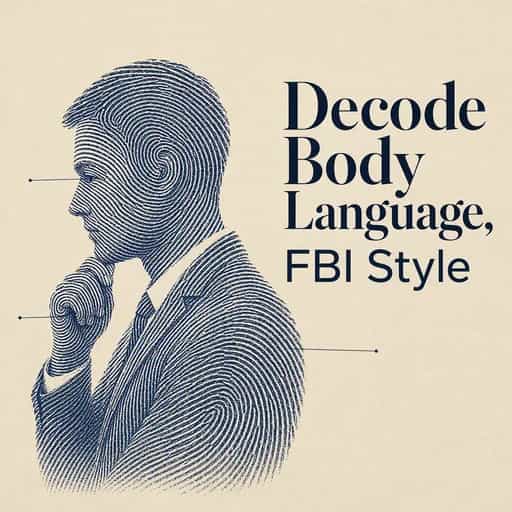
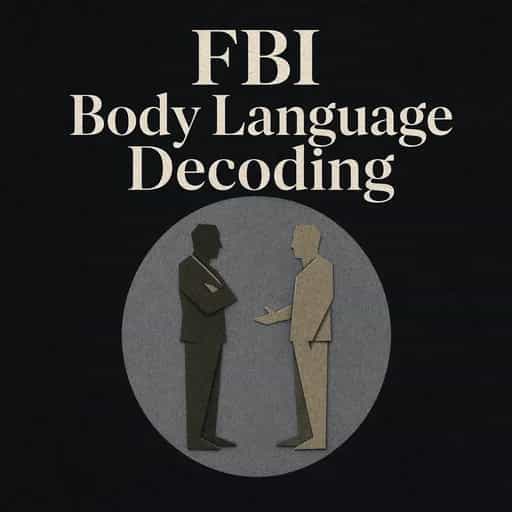
There is a specific kind of intelligence that doesn’t use words, and once you learn to recognize it, the world starts to look very different. You see it in the way a colleague shifts their feet during a high-stakes meeting, or how a friend’s hand instinctively moves to their neck when a certain sensitive topic comes up. This is the language of nonverbal communication, and for twenty-five years, Joe Navarro used it as his primary tool in the FBI to identify spies, moles, and terrorists. What he discovered through thousands of hours of observation is that our bodies are constantly transmitting our deepest feelings and intentions in real time, often despite our best efforts to stay composed or professional. We like to think we are in total control of the image we project—that our curated words and practiced smiles define us—but our physiology has its own agenda. This agenda is dictated by a biological imperative that predates language by millions of years.
The core of this lecture is about moving past the pop-psychology myths of body language and into the actual mechanics of human behavior. To do that, we have to understand the limbic system—the primitive, elegant, and brutally honest part of the brain that reacts to the world before we even have a chance to think. It is the part of you that would make you freeze instantly if a predator walked into the room, or jump back before you even realize you’ve seen a snake on a hiking trail. This system is essentially the honest brain. Because this system is tied directly to our survival, its outputs are incredibly authentic. They are governed by what researchers call paleocircuits, ancient neural pathways that haven't changed much in millions of years. Unlike the neocortex—the thinking part of the brain that allows us to calculate, plan, and lie—the limbic system cannot be easily suppressed. It is the seat of our emotions and our reflexive responses to the environment around us.
Consider how the limbic system functions as a high-speed processor. When you hear a sudden, loud crash behind you, your shoulders hunch and your neck tightens before your conscious mind even identifies the sound as a dropped tray or a car backfiring. This is the limbic system taking command to protect your vitals. In a social setting, this same system reacts to psychological threats. If a boss delivers an unexpected criticism, you might see the employee's pupils dilate or their torso pull back an inch. These are not conscious choices; they are the limbic system's ancient survival software running in a modern office environment.
In the next hour, we are going to map out how this system works and how you can decode it. We will start by dismantling the biggest myth in the field: the idea that you can use body language to catch a liar like a human polygraph. This is a dangerous misconception that has led to countless misunderstandings in law enforcement and personal relationships alike. Then, we will look at the specific taxonomy of indicators the FBI uses to read people with precision. We will explore the biology of stress and why we pacify ourselves through repetitive touching when we feel threatened. We'll look at the specific ways the body attempts to calm the brain down when things get heated. For instance, we will examine why a person might rub their neck or stroke their beard when faced with a difficult question. Finally, we will look at how you can use this knowledge not to interrogate people or win arguments, but to build deeper empathy, trust, and influence. By the end, you should be able to move through your daily interactions with a much sharper sense of what is actually happening beneath the surface of every conversation. You will begin to see that while people may say one thing, their bodies are often telling a much more nuanced and truthful story, providing a roadmap to their genuine psychological state.