BeFreed
    Categories>Philosophy & Spirituality>Ekstasis: The Greek Art of Stepping Outside the Self

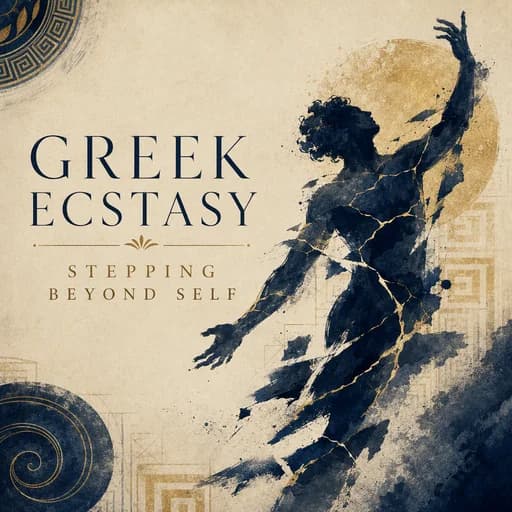
    Ekstasis: The Greek Art of Stepping Outside the Self

    17분
    |
    |
    2026년 8월 21일
    Philosophy & SpiritualityHistory & Society

    Explore the ancient Greek concept of Ekstasis. Discover how rituals and philosophy helped Athenians step outside the self to find higher sanity and divine truth.

    Ekstasis: The Greek Art of Stepping Outside the Self
    전달 방식을 선택하세요

    하나의 에피소드, 다양한 청취 방식.

    Ekstasis: The Greek Art of Stepping Outside the Self의 같은 아이디어를 나에게 맞는 목소리, 깊이, 속도로 만나보세요. 언제든 바꿀 수 있습니다.

    전체 대본 및 챕터

    챕터 1

    The Threshold of the Soul and the Art of Stepping Out

    Imagine you are standing on the edge of a bustling Athenian street over two millennia ago. The air is thick with the scent of roasted meats from a nearby sacrifice and the rhythmic, hypnotic thrum of a flute playing in a minor key. Suddenly, a group of people rushes past you—not walking, but dancing with an intensity that seems to vibrate in their very bones. Their eyes are wide, looking through the physical world rather than at it. This is your first glimpse of what the Greeks called ekstasis—a word that literally means standing outside oneself. If you have ever felt so absorbed in a moment—a piece of music, a deep conversation, or a breathtaking sunset—that you forgot your own name for a second, you have touched the hem of this ancient concept. For the Greeks, this was not just a fleeting feeling; it was a fundamental way of engaging with the divine. It mattered to them, and it matters to you, because it represents the human attempt to break the invisible walls of the ego. In this episode, you are going to discover how this "standing outside" was both a wild, communal ritual and a disciplined, philosophical pursuit of truth. You will see that ekstasis was never about losing your mind in a negative sense, but rather about finding a higher sanity by stepping out of your everyday limitations. This journey takes us from the wine-soaked revelries of Dionysus to the quiet, intense meditations of Socrates, revealing a culture that didn't just tolerate altered states of consciousness but celebrated them as essential gifts from the gods. So, let us dive into the linguistic roots of this experience and see how the Greeks built a bridge between the human and the transcendent.

    챕터 2

    Displacement and the Linguistic Escape From the Ordinary

    To understand ekstasis, you have to start with the language itself, because the ancient Greek vocabulary for the mind is incredibly spatial. The word comes from ex, meaning "out," and stasis, meaning "standing" or "placement". In its most basic, physical sense, the Greeks used it to describe a displacement—like a joint popping out of its socket or a ship being hauled out of the water and onto the sand. But when they applied this to the human spirit, it became something far more profound. It was a "moving outwards" from the center of the self. Think about the "now" you inhabit—the constant stream of "I am doing this" and "I am thinking that." Ekstasis is the moment that stream is interrupted. The philosopher Martin Heidegger, reflecting on these ancient roots, noted that temporality itself is the ultimate ekstatikon because it is always pulling us "towards" the future, "back to" the past, and "alongside" the present. For the Greeks, being human meant being naturally "outside oneself" through time and thought, but they recognized specific moments where this displacement became divine. This state was often called mania, but not in the way a modern doctor might use the term. To the Greeks, mania was a "god-sent" alteration of consciousness that was treated with cautious respect rather than suppression. They saw it as an "inborn human proclivity"—a natural need to occasionally leave the cramped quarters of the individual ego and breathe the air of the cosmos. You can see this in their medical texts too, where ekstasis could mean a distraction of the mind caused by terror or astonishment, but also a "silent" version of the same state. It was a spectrum of experience that ranged from the shock of a sudden surprise to the deep, trancelike stillness of an oracular priestess. By understanding that ekstasis was a literal "standing aside" from one's normal position, you begin to see why it was so central to their religious life. It wasn't about being "crazy"; it was about being mobile enough in your soul to visit places where the gods lived.
    이 에피소드로 더 깊이 배우기

    이 에피소드의 아이디어를 BeFreed의 가이드 학습 경험으로 더 깊이 탐구해 보세요.

    챕터 3

    The Thiasos and the Roar of Divine Madness

    Now, let's step into the most famous arena of this experience: the Dionysian mysteries. If you were a follower of Dionysus—the god of wine, theater, and ritual madness—ekstasis was the goal of your worship. This wasn't a solitary meditation; it was a collective "shaking up" of the soul. Groups of worshippers, known as the thiasos, would head into the mountains, driven by the sound of drums and flutes to a state of baccheia—a specific kind of frenzy that Euripides, the great playwright, described as being "stung" with mania. It is easy to look at this from a distance and see only chaos, but for the Greeks, this was a sacred "alteration of consciousness" that brought them into a direct, face-to-face encounter with the deity. In these rites, the boundaries between people dissolved. You weren't just an individual citizen anymore; you were part of a living, breathing wave of divine energy. This was the "imagistic" mode of religion—it didn't rely on secret books or long sermons, but on intense, "revelatory images" and experiences that burned themselves into your memory. This state of being "filled with the god" was also called enthousiasmos—the root of our word enthusiasm—meaning literally "having a god within". You'll find that wine played a complex role here. While some critics, like the later satirist Lucian of Samosata, tried to dismiss this as mere "common intoxication," the Greeks themselves saw wine as a "sobering" spiritual tool when used correctly. It helped lower the gates of the ego so the divine could enter. This wasn't a loss of control, but a shift in who was in control. You were "standing aside" so that Dionysus could "stand in." This ritual ekstasis served as a pressure valve for a highly structured society. It allowed people to temporarily shed their social roles—their wealth, their status, their grief—and return to a primordial state of unity. It was an experience that "transformed their disposition," making them feel as though they had touched the very source of life.

    챕터 4

    Socrates and the Stillness of Intellectual Ecstasy

    As you move from the wild mountainside to the quiet courtyards of Athens, you encounter a different, but no less intense, version of ekstasis. This is the world of Socrates. You might think of Socrates as the ultimate rationalist—the man of logic and questions—but his contemporaries saw him as a deeply "ecstatic" figure. He was known to stand in the middle of a public street for hours, completely "lost in his thoughts" and "lost to the world," in a state of deep meditation. This was his own form of "standing outside." He wasn't dancing, but he was displaced from the mundane world of politics and gossip. In Plato's Symposium, Socrates' philosophical inspiration is described as an ecstatic experience that leaves his audience "astounded and possessed". The character Alcibiades, a brilliant but troubled young aristocrat, compares the effect of Socrates' words to the "orgiastic rites of the Corybantes"—dancers who would leap into a frenzy to heal the soul. Alcibiades confesses that when he hears Socrates speak, his "heart leaps" and "tears pour down" his face, a reaction far more intense than any ritual dance. This is "divine madness" in an intellectual form. Plato argues that the philosopher is a kind of "lover" who uses erōs to climb a ladder of beauty, eventually reaching a "sudden" vision of the Beautiful itself. This "suddenness" is key—it is an epopteia, a further experience that mirrors the climax of the Eleusinian Mysteries. For Socrates, the goal of philosophy wasn't just to collect facts, but to undergo a "conversion"—an altered state of consciousness where the soul "sees" the truth directly. This wasn't about "learning" in the classroom sense; it was about "experiencing" and "transforming one's disposition". Socrates showed that you don't need a flute or a mountain to achieve ekstasis; you need a question so deep that it pulls you out of your everyday self and into the presence of the eternal. He was "sober" in the eyes of his friends, yet "intoxicated with wisdom" in a way that regular people couldn't understand.

    이 에피소드로 더 깊이 배우기

    이 에피소드의 아이디어를 BeFreed의 가이드 학습 경험으로 더 깊이 탐구해 보세요.

    챕터 5

    The Drama of the Profane and the Error of Possession

    But there is a dark side to this desire for the divine, and it is perfectly captured in the tragic figure of Alcibiades. You'll find that his story is a cautionary tale about what happens when you try to "possess" ekstasis rather than participate in it. Alcibiades was famous—and later infamous—for "profaning the mysteries" of Eleusis by performing them in a private home for his friends. To the Greeks, this wasn't just a prank; it was an "arrogant appropriation" of a communal sacred symbol for private gain. This same "overreaching appetite," or pleonexia, defined his relationship with Socrates. Alcibiades claimed he had seen "divine golden statues" hidden inside the unassuming, Silenus-like exterior of Socrates. He was so dazzled by this beauty that he tried to "take possession" of it through a sexual exchange, offering his own youthful beauty for Socrates' wisdom. Socrates, however, rebuked him, pointing out that wisdom is not a "thing" that can be handed over like a piece of jewelry. You see, Alcibiades made a fundamental category error: he thought ekstasis was a commodity. He tried to "snatch the golden statues" instead of following the path they pointed toward. His "idolatrous attachment" to the person of Socrates prevented him from actually standing outside himself. He was still trapped in his own ego, his own desire for power and honor. This tells you something vital about the nature of the Greek mysteries: they work through closer contact with the divine. You cannot bring the mysteries into your living room and keep them as pets. Real ekstasis requires a "renunciation" of the self. Alcibiades failed because he wanted to be the center of the mystery, rather than letting the mystery decenter him. His life became a "spectacular disaster" because he mistook the "trappings and symbols" for the reality they represented. He was a man who saw the light but tried to grab it and put it in his pocket, only to find his hands empty.

    챕터 6

    Plotinus and the Flight of the Alone to the Alone

    As we travel further down the timeline of Greek thought, we reach the Neoplatonists, specifically Plotinus, who lived in the third century CE. For Plotinus, ekstasis became the literal "end of all our journeying". He took the seeds planted by Plato and grew them into a rigorous system of mystical ascent. To Plotinus, the soul's ultimate goal is a "mingling with the Supreme" where the "beholder becomes one with the beheld". This is ekstasis at its most refined. It is not a "vision" in the sense of seeing an object across the room; it is a "unity apprehended". He describes this state as a "perfect stillness" where the very self is "caught away" and "filled with God". Notice the language he uses: "all the being calmed," "turning neither to this side nor to that," "utterly resting". This is the "going forth from the self" that the linguistic root of ekstasis always promised. Plotinus famously called this "the life of gods and of the godlike and blessed among men—the passing of solitary to solitary". You'll notice that this is a very different image from the Dionysian crowd. It is a quiet, internal "simplification". But the core mechanism is the same: the "essential man" must outgrow his own being to become "identical with the Transcendent". Even for a philosopher as abstract as Plotinus, the imagery of the mysteries remained the best way to describe this. He compares the soul to someone who has "penetrated the inner sanctuary" and left the "temple images" behind to converse with the "very Truth". He reminds you that while we are "fallen back" into our everyday lives, we carry the "image impressed upon us" from those moments of union. This is why the Greeks valued these states so highly—they weren't just "trips" or "escapes"; they were recalibrations. They allowed you to "awaken the virtue within" and see the order of the world more clearly once you returned to your normal "standing".

    이 에피소드로 더 깊이 배우기

    이 에피소드의 아이디어를 BeFreed의 가이드 학습 경험으로 더 깊이 탐구해 보세요.

    챕터 7

    The Modern Practice of Ancient Stepping Out

    You might be wondering how this ancient, high-altitude philosophy applies to your life today, in a world that feels very far from Athenian mysteries or Neoplatonic sanctuaries. The takeaway isn't that you need to find a hidden cult or spend days standing still in a courtyard—though Socrates might recommend the latter. Instead, the lesson of ekstasis is about recognizing the "inborn human proclivity" to seek something beyond the ego. You can start by identifying the "Marsyas tunes" in your own life—those experiences that "possess the soul" and reveal your need for something higher. Whether it is art, nature, or a deep intellectual pursuit, these are your "entry points" to a different state of consciousness. But you must remember the "rule of the mysteries" that the Greeks were so careful about: the holy things may not be uncovered to the stranger, rather than trying to "possess" it or use it for status. Avoid the "error of Alcibiades" by realizing that the beauty you see in the world is a "sign" pointing toward a deeper truth, not a commodity to be snatched. Practice what Plotinus called "simplifying"—the intentional act of turning away from "mortal rubbish" and "human flesh and colors" to focus on the "divine beauty itself". This can be as simple as a moment of "perfect stillness" where you "turn neither to this side nor to that". You are looking for those "sudden" flashes of insight that come after long effort—the "vision of the Beautiful" that makes all previous "toils" worth it. Treat your own moments of "standing outside" with the "cautious respect" the Greeks did, recognizing them as "god-sent" gifts that allow you to return to your everyday life "all order once more". By viewing your life through the lens of ekstasis, you stop seeing yourself as a static "thing" and start seeing yourself as a "become identical with the Transcendent of Being," always capable of reaching toward something more.
    챕터 8

    Returning to the Center With a New Perspective

    As we draw this journey to a close, take a moment to look back at the ground we've covered—from the rhythmic "leaping frenzy" of the Corybantes to the "perfect stillness" of the Neoplatonic union. You have seen that for the ancient Greeks, the human experience was never meant to be confined to the four walls of the individual self. The concept of ekstasis—that literal "standing outside"—offered them a way to bridge the gap between their mortal limitations and the infinite beauty of the cosmos. You've seen how this could manifest as a wild, communal roar on a mountainside, or as a quiet, "sober" intoxication with wisdom in the middle of a busy city. You have also seen the danger of trying to "possess" the divine, as Alcibiades did, and the profound "liberation from the alien" that comes when you truly let go. The Greeks believed that the term "mustai" refers to initiates in the Mysteries, and that Alcibiades’ "heart leaps" and tears run down his eyes when he hears Socrates’ speeches. Whether you find your "standing outside" in a moment of deep study, a shared laugh, or a quiet meditation, you are participating in an ancient and noble human tradition. You are "outgrowing being" and touching the "archetype" of your own potential. I want to thank you for spending this time with me, exploring the threshold where the soul meets the divine. I encourage you to look for one moment today where you can "stand aside" from your usual routines and worries. See what happens when you "close the doors of your ears" to the noise of the world and listen for the "Marsyas tunes" of your own life. You may find that the "divine golden statues" you have been seeking are much closer than you think, waiting for you to simply step out of the way and let them shine.

    ★★★★★

    Ekstasis: The Greek Art of Stepping Outside the Self의 끝까지 도달했어요

    “23일째 매일 사용하고 있어요. 이제 제 일상의 한 부분이 되었습니다.”

    jayallen

    Ekstasis: The Greek Art of Stepping Outside the Self 베스트 인용

    “

    Ekstasis was never about losing your mind in a negative sense, but rather about finding a higher sanity by stepping out of your everyday limitations and the cramped quarters of the individual ego.

    ”
    S

    Generated by Sean

    질문 입력

    Ancient Greek concept of Ecstasis (ekstasis), focusing on its philosophical and ritual origins, including its meaning as 'standing outside oneself' and its role in Dionysian mysteries or Platonic thought.

    호스트 음성
    Lenaplay
    지식 출처
    Alteration of consciousness in Ancient Greece: divine  mania
    link
    https://journals.sagepub.com/doi/10.1177/0957154X20909306
    Drunk with Wisdom: Metaphors of Ecstasy in Plato’s Symposium and Lucian of Samosata
    link
    https://www.mdpi.com/2077-1444/12/10/898
    Alcibiades the Profane: Images of the Mysteries in Plato╎s Symposium
    link
    https://repository.brynmawr.edu/cgi/viewcontent.cgi?article=1120&context=classics_pubs
    ἔκστασις - Ancient Greek (LSJ)
    link
    https://www.lsj.gr/wiki/%E1%BC%94%CE%BA%CF%83%CF%84%CE%B1%CF%83%CE%B9%CF%82
    Being and Time 377
    link
    https://www.beyng.com/pages/en/BeingandTimeMR/BeingandTimeMR.377.html
    The Enneads of Plotinus: THE SIXTH ENNEAD: NINTH TRACTATE... | Internet Sacred Text Archive
    link
    https://sacred-texts.com/cla/plotenn/enn714.htm

    자주 묻는 질문

    The term Ekstasis literally means "standing outside oneself." In the context of ancient Greece, it describes a state where an individual breaks through the invisible walls of the ego to engage with the divine. This could be triggered by intense music, communal rituals, or deep philosophical meditation, allowing a person to move beyond their everyday limitations and the physical world to experience a higher sense of reality.

    For the Greeks, Ekstasis was both a wild communal ritual and a disciplined philosophical pursuit. It ranged from the wine-soaked revelries associated with Dionysus to the quiet, intense meditations practiced by Socrates. Whether through the hypnotic thrum of a flute in an Athenian street or a breathtaking sunset, these experiences were fundamental ways for individuals to transcend their personal identity and connect with something greater than themselves.

    No, Ekstasis was not viewed as losing one's mind in a negative sense. Instead, Greek philosophy and ritual saw it as a way of finding a higher sanity. By stepping outside of the ego and everyday limitations, individuals were able to pursue a deeper truth. It was a purposeful engagement with the divine that allowed for a disciplined yet transformative shift in perspective, moving from the physical world toward a more profound spiritual or intellectual state.

    컬럼비아 대학교 동문들이 제작 | 샌프란시스코에서 개발

    BeFreed는 호기심 넘치는 글로벌 커뮤니티를 하나로 연결합니다

    4.7

    평균 평점

    앱 평가 7.84천 개 이상

    BeFreed 커뮤니티

    정말이지 아직 앱을 다 써 보지도 않았는데, 며칠 써 본 것만으로도 깊은 인상을 받았어요… BeFreed는 제가 써 본 어떤 학습 앱과도 차원이 달라요. 몰입감이 엄청나고 집중력도 실제로 좋아져서, 스마트폰을 하염없이 스크롤하는 분들께 딱이에요!

    @ladyInfinity

    정확히 23일 전에 BeFreed를 구입했는데, 그날부터 하루도 빠짐없이 쓰고 있어요. 제 일상 업무 흐름과 학습 습관에 완전히 자리 잡았어요.

    @jayallen

    솔직히 이 앱은 제 기대를 전부 뛰어넘었어요. 어떤 주제든 오디오로 만들어 달라고 할 수 있고, 결과물이 놀라워요. 제 전문 분야는 심리치료 쪽이고 여러 학문이 얽혀 있는데도 답변이 아주 정확해요.

    @Raguipa

    제일 고마운 건 스크롤하는 시간이 확 줄었다는 거예요. 검색하는 시간은 줄고 흡수하는 시간은 늘었어요. 오디오북 전권, 팟캐스트, 학습 플랜의 조합이 정말 훌륭해요.

    @colonyofcreatorsNGO

    저는 24년째 PhotoReading 속진 학습 강사로 일하고 있어요… 책과 독서, 배움이 제 전문인데, BeFreed는 정보를 소화하기 쉽게 전달하는 혁신적인 방식을 정말 잘 구현했어요.

    @BeFreed user

    단순한 책 요약 앱이 아니에요. '재미' 스타일을 써 봤는데, 전통적인 방식보다 훨씬 나은 요약이고 아이디어를 이해하기도 쉬워요. 이것만으로도 값어치를 해요.

    @austinakon

    이 앱이 정말 좋아요. 며칠 써 봤는데 듣는 걸 멈출 수가 없어요. 시작하기에 이보다 좋을 수 없어요.

    @jcrules328

    정말 마음에 들어요. 한 달 정도 써 봤는데 숨은 보석을 찾은 기분이에요. BeFreed로 제가 원하는 주제를 직접 만들 수 있어서 좋고, 목소리도 훌륭한 데다 내레이션 선택지가 무궁무진해요.

    @DanielCZ

    정말이지 아직 앱을 다 써 보지도 않았는데, 며칠 써 본 것만으로도 깊은 인상을 받았어요… BeFreed는 제가 써 본 어떤 학습 앱과도 차원이 달라요. 몰입감이 엄청나고 집중력도 실제로 좋아져서, 스마트폰을 하염없이 스크롤하는 분들께 딱이에요!

    @ladyInfinity

    정확히 23일 전에 BeFreed를 구입했는데, 그날부터 하루도 빠짐없이 쓰고 있어요. 제 일상 업무 흐름과 학습 습관에 완전히 자리 잡았어요.

    @jayallen

    솔직히 이 앱은 제 기대를 전부 뛰어넘었어요. 어떤 주제든 오디오로 만들어 달라고 할 수 있고, 결과물이 놀라워요. 제 전문 분야는 심리치료 쪽이고 여러 학문이 얽혀 있는데도 답변이 아주 정확해요.

    @Raguipa

    제일 고마운 건 스크롤하는 시간이 확 줄었다는 거예요. 검색하는 시간은 줄고 흡수하는 시간은 늘었어요. 오디오북 전권, 팟캐스트, 학습 플랜의 조합이 정말 훌륭해요.

    @colonyofcreatorsNGO

    저는 24년째 PhotoReading 속진 학습 강사로 일하고 있어요… 책과 독서, 배움이 제 전문인데, BeFreed는 정보를 소화하기 쉽게 전달하는 혁신적인 방식을 정말 잘 구현했어요.

    @BeFreed user

    단순한 책 요약 앱이 아니에요. '재미' 스타일을 써 봤는데, 전통적인 방식보다 훨씬 나은 요약이고 아이디어를 이해하기도 쉬워요. 이것만으로도 값어치를 해요.

    @austinakon

    이 앱이 정말 좋아요. 며칠 써 봤는데 듣는 걸 멈출 수가 없어요. 시작하기에 이보다 좋을 수 없어요.

    @jcrules328

    정말 마음에 들어요. 한 달 정도 써 봤는데 숨은 보석을 찾은 기분이에요. BeFreed로 제가 원하는 주제를 직접 만들 수 있어서 좋고, 목소리도 훌륭한 데다 내레이션 선택지가 무궁무진해요.

    @DanielCZ

    유용한 정보와 아이디어를 8~15분짜리 팟캐스트 스타일 오디오로 압축해서 들을 수 있다는 게 정말 좋아요. 원래 팟캐스트는 군더더기가 많아서 안 좋아했는데, 여기는 그걸 싹 걷어냈어요.

    @BeFreed user

    박사 과정을 마무리하는 중이라 낯선 자료를 많이 읽어야 해요… BeFreed에서는 프롬프트만 입력하면 앱이 자료를 찾아서 오디오 팟캐스트로 만들어 줘요. BeFreed의 과정이 NotebookLM보다 더 매끄럽게 느껴져요.

    @Brad

    아침을 준비하거나 산책하거나 출퇴근할 때 들을 것을 YouTube에서 자주 찾곤 했는데, BeFreed는 광고도 군더더기도 없이 훨씬 더 딱 맞는 걸 들려줘요!

    @BeFreed user

    이 플랫폼의 가장 큰 장점은 활용도예요. 다루지 못하는 주제가 말 그대로 하나도 없어요. 무엇을 던져도 다 소화해요… 제한이 전혀 없으면서 약속을 실제로 지키는 학습 도구는 정말 드물어요.

    @jayallen

    BeFreed는 환상적이에요. 디자인이 편해서 헤매는 시간은 줄고 배우는 시간은 늘었어요. 오디오북, 팟캐스트, 학습 플랜의 조합은 천재적이에요. 제 하루가 완전히 달라졌어요.

    @BeFreed user

    처음엔 이탈리아어로 팟캐스트를 만드는 방법을 이해하는 데 시간이 좀 걸렸는데, 알고 나니까 — 와! 정말 대단해요! 어떤 주제든 설명해 달라고 하면 정말 똑똑하게 잘 설명해 줘요!

    @matteo77

    BeFreed는 제가 매일 쓰는 오디오북 앱이 됐어요… 제일 마음에 드는 건 텍스트를 넣으면 이동 중에도 들을 수 있는 오디오로 만들어 준다는 점이에요.

    @kotanzu1

    유용한 정보와 아이디어를 8~15분짜리 팟캐스트 스타일 오디오로 압축해서 들을 수 있다는 게 정말 좋아요. 원래 팟캐스트는 군더더기가 많아서 안 좋아했는데, 여기는 그걸 싹 걷어냈어요.

    @BeFreed user

    박사 과정을 마무리하는 중이라 낯선 자료를 많이 읽어야 해요… BeFreed에서는 프롬프트만 입력하면 앱이 자료를 찾아서 오디오 팟캐스트로 만들어 줘요. BeFreed의 과정이 NotebookLM보다 더 매끄럽게 느껴져요.

    @Brad

    아침을 준비하거나 산책하거나 출퇴근할 때 들을 것을 YouTube에서 자주 찾곤 했는데, BeFreed는 광고도 군더더기도 없이 훨씬 더 딱 맞는 걸 들려줘요!

    @BeFreed user

    이 플랫폼의 가장 큰 장점은 활용도예요. 다루지 못하는 주제가 말 그대로 하나도 없어요. 무엇을 던져도 다 소화해요… 제한이 전혀 없으면서 약속을 실제로 지키는 학습 도구는 정말 드물어요.

    @jayallen

    BeFreed는 환상적이에요. 디자인이 편해서 헤매는 시간은 줄고 배우는 시간은 늘었어요. 오디오북, 팟캐스트, 학습 플랜의 조합은 천재적이에요. 제 하루가 완전히 달라졌어요.

    @BeFreed user

    처음엔 이탈리아어로 팟캐스트를 만드는 방법을 이해하는 데 시간이 좀 걸렸는데, 알고 나니까 — 와! 정말 대단해요! 어떤 주제든 설명해 달라고 하면 정말 똑똑하게 잘 설명해 줘요!

    @matteo77

    BeFreed는 제가 매일 쓰는 오디오북 앱이 됐어요… 제일 마음에 드는 건 텍스트를 넣으면 이동 중에도 들을 수 있는 오디오로 만들어 준다는 점이에요.

    @kotanzu1

    웹에서 BeFreed가 어떻게 논의되고 있는지 더 보기
    129.7K19.5K
    55.2K19.2K
    154.2K10827355
    48.1K2.5K
    81.2K6.6K
    82.3K1.8K
    지금 바로 학습 여정을 시작하세요
    BeFreed 앱
    BeFreed

    무엇이든 개인화된 학습

    DiscordLinkedIn
    추천 도서 요약
    Crucial ConversationsThe Perfect MarriageInto the WildNever Split the DifferenceAttachedGood to GreatSay Nothing
    인기 카테고리
    Self HelpCommunication SkillRelationshipMindfulnessPhilosophyInspirationProductivity
    유명인 추천 도서
    Elon MuskCharlie KirkBill GatesSteve JobsAndrew HubermanJoe RoganJordan Peterson
    수상작 컬렉션
    Pulitzer PrizeNational Book AwardGoodreads Choice AwardsNobel Prize in LiteratureNew York TimesCaldecott MedalNebula Award
    추천 주제
    ManagementAmerican HistoryWarTradingStoicismAnxietySex
    연도별 베스트 도서
    2025 Best Non Fiction Books2024 Best Non Fiction Books2023 Best Non Fiction Books
    추천 저자
    Chimamanda Ngozi AdichieGeorge OrwellO. J. SimpsonBarbara O'NeillWinston ChurchillCharlie Kirk
    BeFreed vs 다른 앱
    BeFreed vs. Other Book Summary AppsBeFreed vs. ElevenReaderBeFreed vs. ReadwiseBeFreed vs. Anki
    학습 도구
    Knowledge VisualizerAI Podcast Generator
    정보
    회사 소개arrow
    가격arrow
    FAQarrow
    블로그arrow
    채용arrow
    파트너십arrow
    앰배서더 프로그램arrow
    디렉토리arrow
    BeFreed
    Try now
    © 2026 BeFreed
    이용 약관개인정보 처리방침
    BeFreed

    무엇이든 개인화된 학습

    DiscordLinkedIn
    추천 도서 요약
    Crucial ConversationsThe Perfect MarriageInto the WildNever Split the DifferenceAttachedGood to GreatSay Nothing
    인기 카테고리
    Self HelpCommunication SkillRelationshipMindfulnessPhilosophyInspirationProductivity
    유명인 추천 도서
    Elon MuskCharlie KirkBill GatesSteve JobsAndrew HubermanJoe RoganJordan Peterson
    수상작 컬렉션
    Pulitzer PrizeNational Book AwardGoodreads Choice AwardsNobel Prize in LiteratureNew York TimesCaldecott MedalNebula Award
    추천 주제
    ManagementAmerican HistoryWarTradingStoicismAnxietySex
    연도별 베스트 도서
    2025 Best Non Fiction Books2024 Best Non Fiction Books2023 Best Non Fiction Books
    학습 도구
    Knowledge VisualizerAI Podcast Generator
    추천 저자
    Chimamanda Ngozi AdichieGeorge OrwellO. J. SimpsonBarbara O'NeillWinston ChurchillCharlie Kirk
    BeFreed vs 다른 앱
    BeFreed vs. Other Book Summary AppsBeFreed vs. ElevenReaderBeFreed vs. ReadwiseBeFreed vs. Anki
    정보
    회사 소개arrow
    가격arrow
    FAQarrow
    블로그arrow
    채용arrow
    파트너십arrow
    앰배서더 프로그램arrow
    디렉토리arrow
    BeFreed
    Try now
    © 2026 BeFreed
    이용 약관개인정보 처리방침

    비슷한 콘텐츠

    Ego Death: Losing Yourself to Find Freedom 책 표지
    Ego death - WikipediaWhat is Ego Death? Meaning, Symptoms, and CausesWhat Is Ego Death? - Verywell MindThe Psychedelic Explorer's Guide
    6 sources
    Ego Death: Losing Yourself to Find Freedom
    Explore the profound psychological phenomenon where your sense of self dissolves, revealing deeper truths about consciousness and offering unexpected healing from anxiety, trauma, and life's deepest suffering.
    9 min
    Spiritual Awakening: Beyond the Ego 책 표지
    After the Ecstasy, the LaundryEnergies of TransformationSpiritual Awakening: Definition, Signs and Symptoms • Yoga Basics21 Signs You're Going Through A Spiritual Awakening | mindbodygreen
    8 sources
    Spiritual Awakening: Beyond the Ego
    When the life you've built no longer feels like yours, you may be waking up. Explore the science and soul of shifting from your ego to your true self.
    22 min
    Unselfing: Quietening the Relentless Ego 책 표지
    Aesthetic Experience, Moral Vision, and ‘Unselfing’ in Iris MurdochAn Occasion for Unselfing: Iris Murdoch on Imperfection and How to Be More Unselfish – The MarginalianTechnologies for unselfing our Selfie culture — Philosophy for LifeEgo: Definition & What It Means in Psychology - Cleveland Clinic
    11 sources
    Unselfing: Quietening the Relentless Ego
    Our constant focus on self-image often masks the world around us. Learn to use nature and art to break through the ego and rediscover reality.
    15 min
    Breaking Free From Mental Autopilot 책 표지
    Living PresenceBe Here NowThe Art of LivingAwareness
    24 sources
    Breaking Free From Mental Autopilot
    Explore Eckhart Tolle's transformative insights on escaping the cycle of repetitive thinking and finding peace through present-moment awareness. Discover how to break free from the 'egoic mind' that creates suffering.
    11 min
    Greek Mystery Cults and the Sacred Way 책 표지
    The Eleusinian Mysteries: The Rites of Demeter - World History EncyclopediaDionysian MysteriesDionysian Mysteries - WikipediaPan (god)
    8 sources
    Greek Mystery Cults and the Sacred Way
    Ancient Greeks used secret rituals to conquer the fear of death. Explore the mysticism of Eleusis and Dionysus to find a deeper connection to the divine.
    22 min
    Arete: The Greek Path to Excellence 책 표지
    The Nicomachean EthicsOn the Good LifeRight Thing, Right NowThick Face, Black Heart
    21 sources
    Arete: The Greek Path to Excellence
    Explore the ancient Greek concept of Arete—excellence not as competition with others, but as the fulfillment of your complete human potential across mind, body, and spirit.
    52 min
    Beyond Ego: Mastering Your Mental Narrative 책 표지
    Advice Not GivenAtmamunYour Sacred SelfReclaim Your Brain
    27 sources
    Beyond Ego: Mastering Your Mental Narrative
    Discover how to break free from ego-driven thought patterns that fuel anxiety and self-doubt, and learn practical techniques to observe your thoughts rather than being controlled by them.
    62 min
    Ancient Wisdom, Modern Calm 책 표지
    A Handbook for New StoicsHow to Be a StoicThe Practicing StoicThe Art of Living
    20 sources
    Ancient Wisdom, Modern Calm
    Discover how Transcendental Meditation and Stoicism, despite their different origins, share profound connections in helping us transcend ego, gain perspective, and find resilience in chaos. Both traditions offer practical paths to inner peace.
    52 min