Section 1: The Hidden Sting of Helpful Words
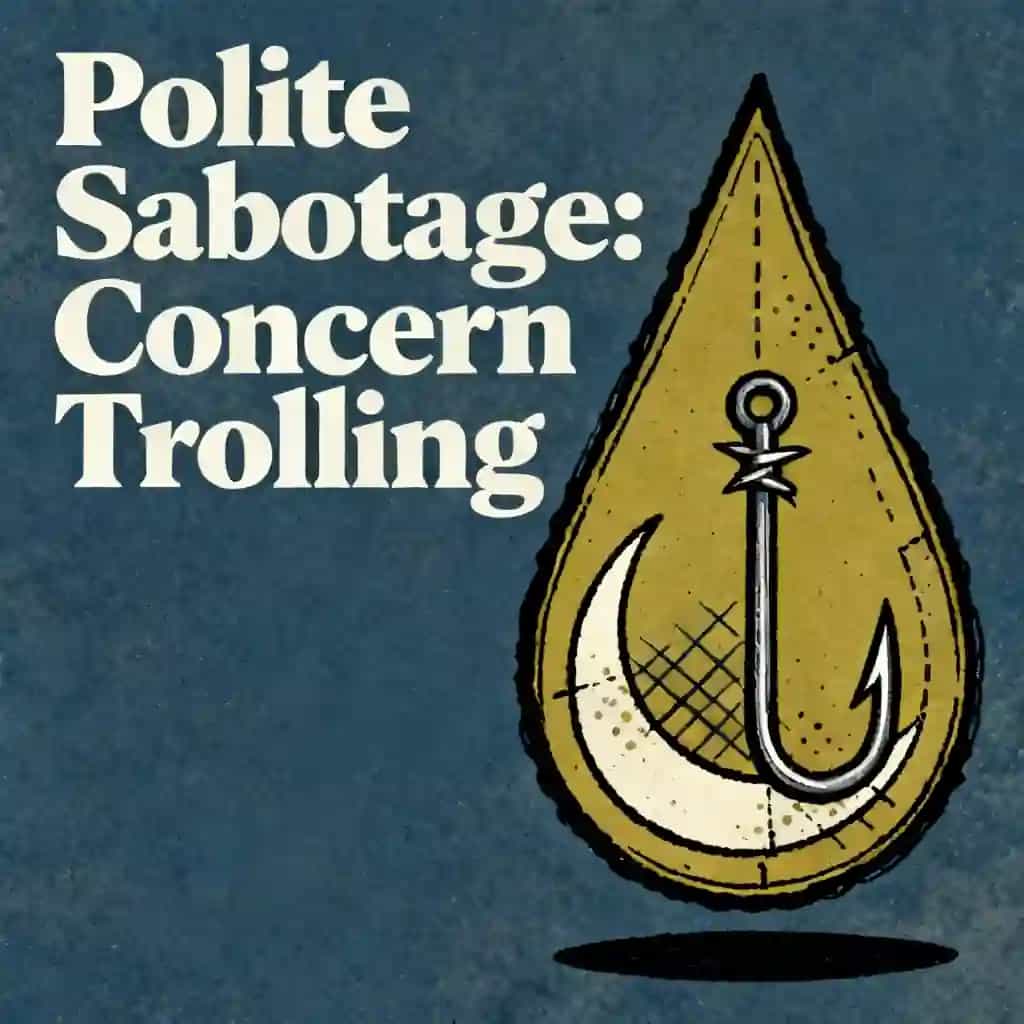
Welcome to a space of reflection and insight. Today, we are exploring a phenomenon that sits at the intersection of care and criticism—a subtle, often invisible form of manipulation that can leave you feeling drained and confused even when the words being spoken sound like kindness. Have you ever shared a success, a new outfit, or a lifestyle change, only to have someone respond with a tilted head, a soft voice, and a "worry" that feels like a weight? This is the world of concern trolling. It is one of the most deceptive anti-debate tactics because it allows someone to judge you under the pretense of being on your side . It is a behavior that has been documented in digital spaces since the mid-2000s, but it has existed in our living rooms, office cubicles, and dinner tables for much longer .
This episode matters for you because concern trolling is a massive drain on your emotional energy. It forces you into a defensive crouch, making you feel irritated or even paranoid, which the troll then uses as evidence that you are being "unreasonable" . By the end of our time together, you will understand how to recognize the five key markers of this behavior—from false assumptions to the "tone policing" that tries to silence your voice . We are going to look at why this tactic is so effective at making you doubt your own reality and how it can even escalate into a form of gaslighting . More importantly, we will discuss how to spot these patterns in your friendships, your dating life, and your workplace without losing your sense of peace. Because once you can name the pattern, you can start to interrupt it. So, let's begin by peeling back the layers of what is actually happening when "I’m just worried" becomes a weapon.