The Granite Fortress on the Hill
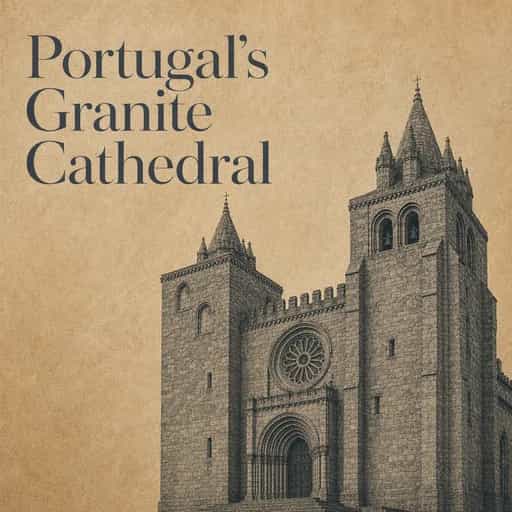
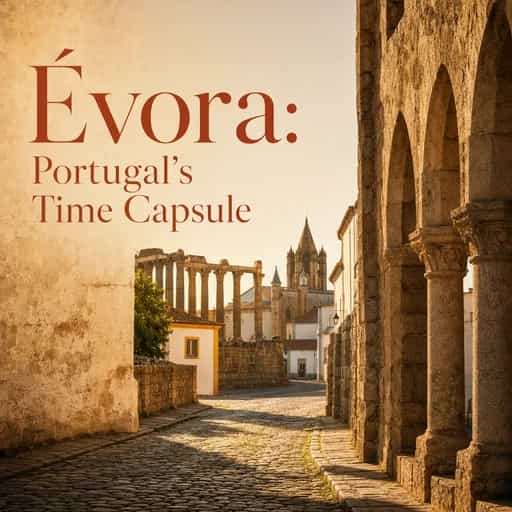
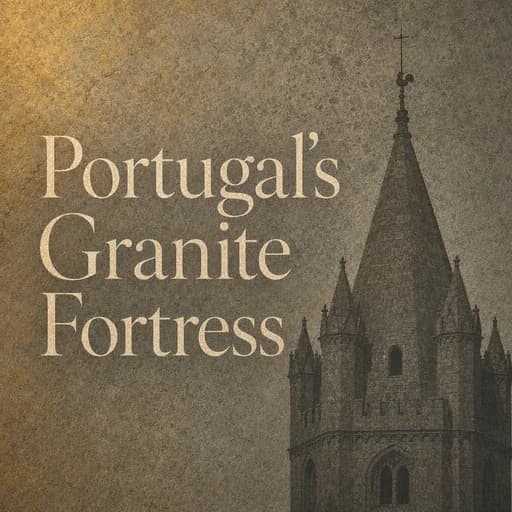
Imagine you are standing at the absolute highest point of a city that feels like it was carved from a single block of sun-bleached stone. To your left, you see the skeletal remains of a Roman temple—slender Corinthian columns that have stood for nearly two thousand years. But directly in front of you is something even more imposing: a massive, gray granite structure that looks less like a place of worship and more like a medieval war machine. This is the Cathedral of Évora, or the Sé de Évora, and today, August 19, 2026, it remains the largest medieval cathedral in all of Portugal. It sits on the acropolis of the city, dominating the horizon with a heavy, fortress-like silhouette that tells you everything you need to know about the era in which it was born. This wasn't just built to hold a congregation; it was built to hold a frontier. When you look at those twin asymmetrical towers and those jagged battlements along the roofline, you’re seeing the architectural equivalent of a deep breath taken after a long, brutal fight.
Why does this specific building matter to you? Because the Sé de Évora is a rare "transitional" monument—a physical bridge between the heavy, rounded Romanesque style of the early Middle Ages and the soaring, pointed Gothic style that would eventually define Europe’s great cities. It’s a place where history isn't just recorded in books but is layered in the very stone, from the 12th-century foundations to the 18th-century Baroque marble. In this episode, we are going to walk through those heavy oak doors and explore why this cathedral is the heart of a UNESCO World Heritage site. We’ll look at the "Pregnant Virgin," a statue so rare it draws pilgrims from across the Alentejo region, and we’ll climb the 135 steps to a rooftop that offers what many call the best view in Portugal. We’ll also dig into the museum’s "treasure," including a reliquary encrusted with over 1,400 gemstones that supposedly holds a piece of the True Cross. This isn't just a tour of an old church—it’s a deep dive into the soul of a city that has survived Romans, Moors, and the birth of a global empire. So, let’s start at the beginning, in the year 1166, with a man known as Gerald the Fearless and a city that was about to change hands forever.