Anatomy of a Million-Dollar Pitch
Investors often decide your fate in under two minutes. Learn how to lead with your unfair advantage and use data to turn skepticism into inevitability.

Anatomy of a Million-Dollar Pitch 베스트 인용
The best decks don't follow a rigid formula—they solve a very specific psychological problem. They convince a skeptical, busy, and often exhausted investor that your unconventional idea isn't just a possibility, but an inevitability.
Generated with BeFreed
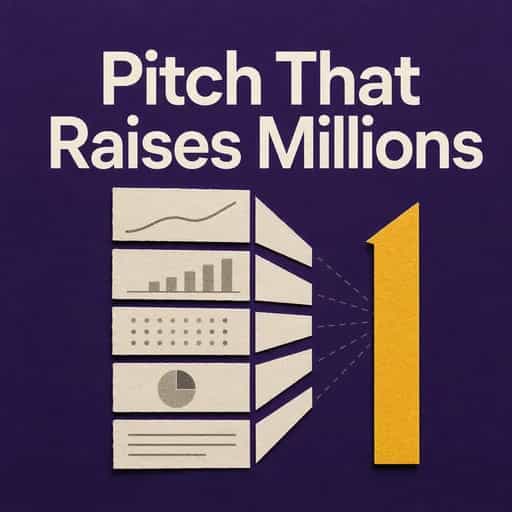
Anatomy of a Pitch That Raised Millions






자주 묻는 질문
The reality of investor attention is much shorter than most founders realize. In the current market, the average investor spends only one minute and fifty-six seconds looking at a seed-stage deck. This "two-minute decision window" means that your most important points must be front-loaded, as an investor will likely decide whether to grant a second meeting before they even reach the middle of your presentation.
This is a common mistake where founders lead with their product or invention on the second slide without first establishing a "villain." Without a clearly defined, painful problem, an investor sees the product as a "cool toy" rather than a viable business. To avoid this, you must first manufacture anxiety by describing a specific agony or inefficiency, making your product the necessary "hero" that resolves that tension.
Investors often view top-down logic—such as claiming a small percentage of a trillion-dollar global market—as a red flag because it suggests the founder doesn't truly understand their customer. Bottom-up math is more defensible because it starts with the specific number of reachable customers multiplied by your actual price point. This method proves you have a concrete sales goal and a realistic path to scale.
The "Why Now" slide addresses why your business is possible today when it might have failed in the past. It requires citing an external inflection point, such as a technological breakthrough, a regulatory change, or a massive shift in consumer behavior. By showing that you are riding a specific "wave," you create a sense of urgency that makes the investor feel they might miss a unique window of opportunity.
Instead of making a vague request for "growth capital," the final slide should be presented as a "milestone buy." You should state a specific dollar amount and clearly outline the concrete business outcomes that money will fund, such as reaching a specific revenue target. This approach de-risks the investment by showing that the capital is a tool to reach a defined stage of maturity rather than just a way to keep the lights on.
샌프란시스코에서 컬럼비아 대학교 동문들이 만들었습니다
"Instead of endless scrolling, I just hit play on BeFreed. It saves me so much time."


"I never knew where to start with nonfiction—BeFreed’s book lists turned into podcasts gave me a clear path."


"Perfect balance between learning and entertainment. Finished ‘Thinking, Fast and Slow’ on my commute this week."
"Crazy how much I learned while walking the dog. BeFreed = small habits → big gains."
"Reading used to feel like a chore. Now it’s just part of my lifestyle."

"Feels effortless compared to reading. I’ve finished 6 books this month already."
"BeFreed turned my guilty doomscrolling into something that feels productive and inspiring."

"BeFreed turned my commute into learning time. 20-min podcasts are perfect for finishing books I never had time for."
"BeFreed replaced my podcast queue. Imagine Spotify for books — that’s it. 🙌"

"It is great for me to learn something from the book without reading it."
"The themed book list podcasts help me connect ideas across authors—like a guided audio journey."
"Makes me feel smarter every time before going to work"
샌프란시스코에서 컬럼비아 대학교 동문들이 만들었습니다
"Instead of endless scrolling, I just hit play on BeFreed. It saves me so much time."
"I never knew where to start with nonfiction—BeFreed’s book lists turned into podcasts gave me a clear path."
"Perfect balance between learning and entertainment. Finished ‘Thinking, Fast and Slow’ on my commute this week."
"Crazy how much I learned while walking the dog. BeFreed = small habits → big gains."
"Reading used to feel like a chore. Now it’s just part of my lifestyle."
"Feels effortless compared to reading. I’ve finished 6 books this month already."
"BeFreed turned my guilty doomscrolling into something that feels productive and inspiring."
"BeFreed turned my commute into learning time. 20-min podcasts are perfect for finishing books I never had time for."
"BeFreed replaced my podcast queue. Imagine Spotify for books — that’s it. 🙌"
"It is great for me to learn something from the book without reading it."
"The themed book list podcasts help me connect ideas across authors—like a guided audio journey."
"Makes me feel smarter every time before going to work"
"Instead of endless scrolling, I just hit play on BeFreed. It saves me so much time."
"I never knew where to start with nonfiction—BeFreed’s book lists turned into podcasts gave me a clear path."
"Perfect balance between learning and entertainment. Finished ‘Thinking, Fast and Slow’ on my commute this week."
"Crazy how much I learned while walking the dog. BeFreed = small habits → big gains."
"Reading used to feel like a chore. Now it’s just part of my lifestyle."
"Feels effortless compared to reading. I’ve finished 6 books this month already."
"BeFreed turned my guilty doomscrolling into something that feels productive and inspiring."
"BeFreed turned my commute into learning time. 20-min podcasts are perfect for finishing books I never had time for."
"BeFreed replaced my podcast queue. Imagine Spotify for books — that’s it. 🙌"
"It is great for me to learn something from the book without reading it."
"The themed book list podcasts help me connect ideas across authors—like a guided audio journey."
"Makes me feel smarter every time before going to work"
"Instead of endless scrolling, I just hit play on BeFreed. It saves me so much time."
"I never knew where to start with nonfiction—BeFreed’s book lists turned into podcasts gave me a clear path."
"Perfect balance between learning and entertainment. Finished ‘Thinking, Fast and Slow’ on my commute this week."
"Crazy how much I learned while walking the dog. BeFreed = small habits → big gains."
"Reading used to feel like a chore. Now it’s just part of my lifestyle."
"Feels effortless compared to reading. I’ve finished 6 books this month already."
"BeFreed turned my guilty doomscrolling into something that feels productive and inspiring."
"BeFreed turned my commute into learning time. 20-min podcasts are perfect for finishing books I never had time for."
"BeFreed replaced my podcast queue. Imagine Spotify for books — that’s it. 🙌"
"It is great for me to learn something from the book without reading it."
"The themed book list podcasts help me connect ideas across authors—like a guided audio journey."
"Makes me feel smarter every time before going to work"