1장
When Love Transcends Death: A Journey Through Grief and Connection
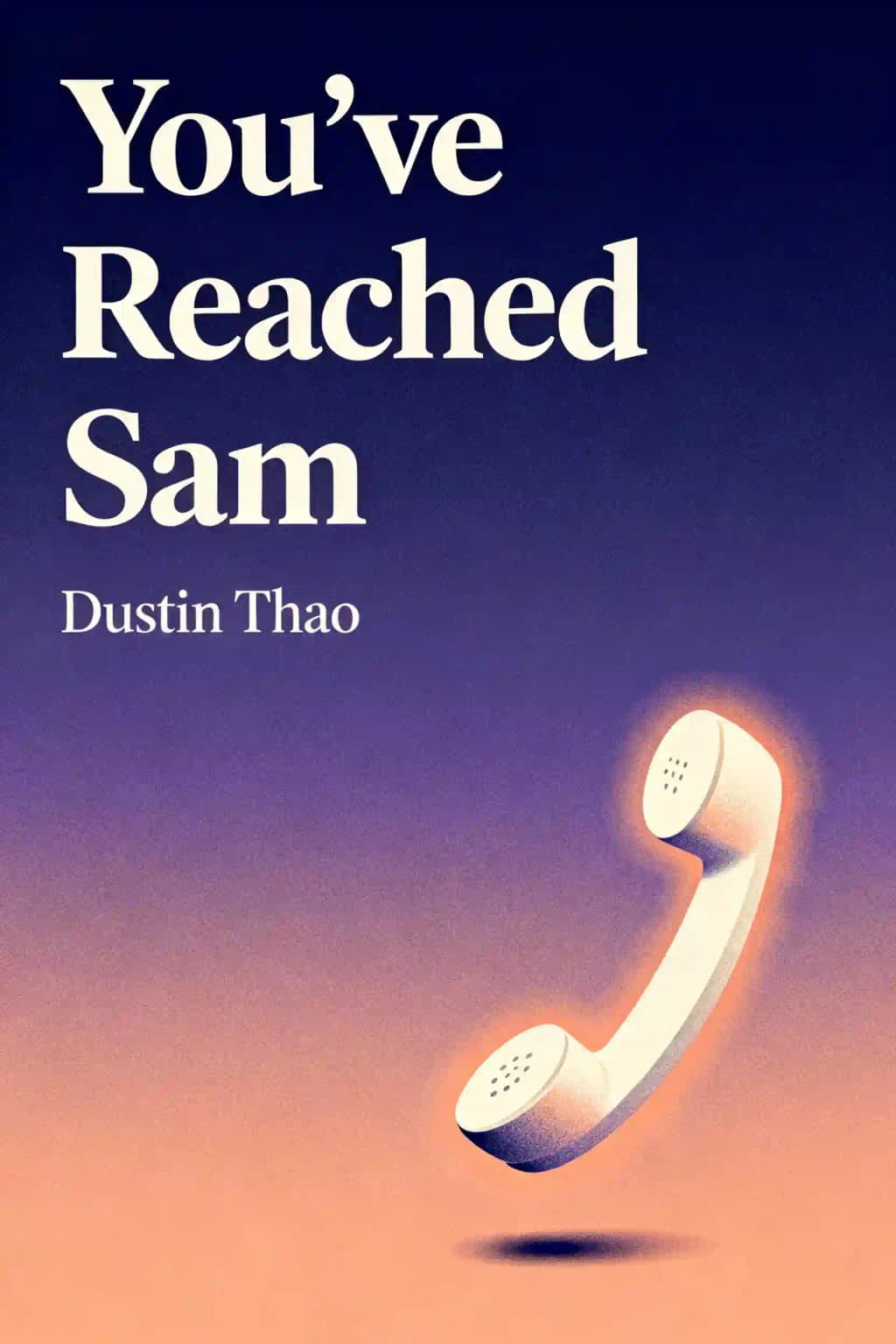
Taylor Swift called it "a beautiful exploration of grief and the ways love echoes across time." In Dustin Thao's heart-wrenching debut novel, we discover what happens when the impossible becomes possible-when a phone call connects the living with the dead. This New York Times bestseller has resonated deeply with readers of all ages, offering a unique perspective on grief that feels both magical and profoundly real. As TikTok's #BookTok community helped propel it to fame, "You've Reached Sam" has become a touchstone for anyone who's ever wished for one more conversation with someone they've lost.
2장
The Unbreakable Bond Between Julie and Sam
Julie and Sam's love story begins in the quiet moments of their small-town existence - her working at Pages & Prose, a local bookstore tucked between a laundromat and a diner, him leaving intricately folded paper cherry blossoms with hidden phone numbers pressed between used book pages. Their early courtship unfolds through carefully crafted lattes (she remembers he likes two pumps of vanilla, no foam; he never forgets her extra shot of espresso), and Thursday morning drives to school in his weathered blue Volvo, windows down despite the autumn chill, sharing playlists they spent hours perfecting the night before.
Their relationship deepens through an accumulation of small, meaningful gestures that become their own private language. They slow dance in empty parking lots when restaurant reservations fall through, creating romance from disappointment. During personal crises - like when Julie's dog dies or when Sam's parents announce their separation - they find each other without needing to call. Some of their most intimate moments happen in unexpected places: falling asleep together in convenience store parking lots under borrowed denim jackets, sharing earbuds on the roof of the community center, leaving notes in each other's lockers written in their own invented shorthand.
Their connection strengthens through shared dreams of escaping Ellensburg, a town that feels simultaneously too small for their ambitions and too big with its empty spaces. Julie, an aspiring writer who fills notebooks with stories about magical realism and complex female characters, sets her sights on Reed College in Portland. Sam, a talented musician who spends hours in his makeshift bedroom studio recording acoustic covers of everything from Leonard Cohen to The Smiths, creates personalized mixtapes that tell their story through carefully chosen lyrics. Together, they plan their future in Portland - a city big enough for Julie's writing workshops and Sam's indie music scene, yet small enough to feel like home.
They promise each other grand adventures that feel both impossible and inevitable: visiting Japan's cherry blossom festival after graduation (Sam learns basic Japanese phrases in secret), building floor-to-ceiling bookshelves in their first apartment (Julie sketches designs during chemistry class), and creating art that speaks to something larger than themselves. Their shared calendar becomes filled with future plans: concert venues they'll visit, cafes where they'll write and compose, galleries where they'll eventually showcase their work.
What makes their relationship particularly compelling is how they complement each other's personalities while challenging growth. Julie's methodical determination and detailed planning balances Sam's spontaneous creativity and ability to find beauty in chaos. When Julie gets too focused on future worries, Sam pulls her into impromptu dance sessions in his garage. When Sam doubts his musical abilities, Julie creates a blog showcasing his songs, attracting a small but devoted following. They push each other toward their dreams while maintaining a safe space for vulnerability and doubt.
Their love transcends typical teenage romance, rooted in deep understanding and unwavering support. When Julie's parents' marriage crumbles one rainy Tuesday, Sam searches every spot in town until he finds her at the abandoned train station at the edge of Ellensburg. When she whispers she wants to go "anywhere else," he drives her through backroads and highways until sunrise, playing soft music and holding her hand until she feels safe enough to sleep. These moments reveal a relationship built on intuitive understanding and presence - being exactly what the other person needs without judgment or expectation, creating a foundation strong enough to weather whatever challenges lie ahead.
3장
When Death Disrupts Dreams
Everything changes when Sam dies in a car accident on a rainy Tuesday evening. Julie, overwhelmed by the sudden void in her life, responds with a desperate attempt at self-preservation. She methodically throws away all his belongings-the worn leather jacket that still carries his scent, the collection of vintage records they spent weekends hunting down, even the half-finished sketch of her he was working on. She skips his funeral, unable to face the finality of a closed casket and the collective grief of those who loved him. Her absence becomes a statement, a rejection of the communal mourning that typically helps people heal.
Julie's coping mechanism is erasure-if she can remove all traces of Sam from her life, perhaps she can outrun the pain of losing him. She deletes their text messages without reading them one last time, untags herself from their photos on social media, and takes down every picture from her walls. This systematic elimination extends beyond physical objects to routines and places: she changes her jogging route to avoid their favorite coffee shop, switches grocery stores to dodge his mother who shops there, and even considers changing schools.
This approach creates deep rifts in her relationships, particularly with Mika, Sam's cousin and Julie's closest friend since middle school. Mika processes grief through commemoration-attending candlelight vigils, organizing memorial events at their high school, and keeping Sam's memory alive through stories and shared memories. She creates a memorial website, collects photos from friends, and arranges a scholarship in Sam's name. This stark contrast in grieving styles leads to an inevitable clash. Their confrontation at Rosie's Diner-where they used to share midnight pancakes with Sam-sets the tone for Julie's isolation. "Sam is dead," she says bluntly, silencing them both and effectively ending years of friendship.
Julie's grief manifests as a desperate desire to escape Ellensburg, a town now haunted by memories of Sam at every corner. The antique store where he bought her a single wing bookend (promising to find its mate someday), the record store where he always waited for her with new musical discoveries, the lake where they shared private moments and planned their future-each location has become a landmine of memories. Yet she's also paralyzed, unable to focus on college applications or envision a future that doesn't include Sam. Her grades slip, her art portfolio remains unfinished, and application deadlines pass unnoticed.
The turning point comes when Julie discovers Sam's yearbook message to her, written just days before his death, hidden in a book she hadn't opened since that last week. "I love you, Julie, and always will. Dream big, live bigger, and know that whatever happens, you're meant for amazing things. Yours forever, Sam." The word "forever" becomes both comfort and torment-a promise that can no longer be kept, yet somehow feels more real than ever. In a moment of desperation, during a sleepless 3 AM, Julie calls Sam's number, not expecting anyone to answer. But someone does. It's Sam's voice, somehow on the other end of the line, as clear and present as if death had never intervened.
4장
The Impossible Connection
What follows is a supernatural connection that defies explanation. Julie discovers she can call Sam's number and speak with him in real time, though he can't explain where he is beyond describing "an endless sky" and a sensation of weightlessness. Their conversations feel remarkably normal - discussing school days, sharing childhood memories, debating their favorite movies, offering comfort - yet are bounded by mysterious rules that become apparent through trial and error. There's no call history afterward, no text messages remain, no voicemails can be saved. Only the ephemeral connection of their voices exists across an impossible divide, leaving Julie to question whether each call might be their last.
This supernatural element serves as a powerful metaphor for grief itself - the way we continue relationships with loved ones after death through memory, imagination, and the persistent feeling of their continued presence in our lives. For Julie, these calls become both healing and harmful, creating a complex emotional tangle. They allow her the closure she desperately needs, giving her time to say the things left unsaid, to apologize for their last argument, to share her college acceptance news. Yet they also prevent her from moving forward, keeping her tethered to a relationship that can no longer grow or change in the natural way relationships should. She finds herself scheduling her life around potential calls, avoiding social interactions, and living in a state of suspended animation.
The calls follow certain patterns that become increasingly restrictive. They work best when Julie is alone, typically occurring late at night or in empty spaces. Any attempt to record or document them fails - voice recordings come out as static, phone logs show no activity, and screenshots appear blank. Most notably, the connection gradually deteriorates over time, with static interference cutting conversations increasingly short, words becoming garbled, and periods of silence growing longer. The timing becomes unpredictable, leaving Julie anxious and waiting by her phone.
When Julie eventually shares this secret connection with Mika, Sam's younger sister, allowing her to speak with Sam too, the calls become even more limited and fragile. The shared connection seems to strain whatever supernatural force enables these conversations, leading to shorter durations and more frequent disruptions. This development serves as a poignant reminder that even supernatural connections must eventually end - a parallel to the gradual process of accepting loss and learning to live with grief rather than in it. The deteriorating quality of these impossible calls forces both Julie and Mika to confront the temporary nature of this gift and the inevitable need to say goodbye once again.
5장
Learning to Say Goodbye
The heart of the story lies in Julie's struggle to say goodbye to Sam-not just once, but repeatedly, in different ways. Each time she thinks she's found closure, another layer of grief emerges. When Sam directs her to his house to retrieve the other half of the winged bookend he'd bought for her, she must confront the physical space he once occupied, now filled with wilting funeral flowers. When Oliver takes her to Sam's grave, she must face the finality of his name etched in stone.
These moments of confronting Sam's absence are balanced by the comfort of his continued presence through their phone calls. Sam uses these calls to help Julie heal-directing her to places meaningful to their relationship, like the field of golden barley that inspired their favorite song "Fields of Gold." In this field, Sam finally sings the song for her, fulfilling a promise he never kept in life.
Yet even as these calls provide comfort, Sam gently pushes Julie toward acceptance. When she tries to complete his unfinished song as his legacy, he firmly tells her to stop, insisting it's too late for him and urging her to focus on her own future. When she declines an invitation from Tristan to attend a film festival, Sam encourages her to go, suggesting she isn't moving forward properly.
The tension between holding on and letting go reaches its peak during a memory lantern ceremony organized by Julie's friends. While everyone else releases lanterns with final messages for Sam, Julie secretly whispers, "Don't go yet, Sam. Just stay with me a little longer." Unlike the others' lanterns that float upward, Julie's hovers momentarily before drifting low across the field. She chases after it desperately until finally, the lantern rises beyond her reach and disappears among the stars-a powerful visual metaphor for the inevitable release she must eventually accept.
6장
Finding Purpose After Loss
As Julie grapples with accepting Sam's death, she faces the profound challenge of reconstructing her identity and purpose in a world without him. Their meticulously planned future - moving to Portland, attending Reed College together, building a life intertwined with literature and art - suddenly feels hollow and impossible. The arrival of her rejection letter from Reed College serves as a crushing symbolic moment, forcing her to confront not just the loss of Sam but the dissolution of every carefully laid plan they had created together.
This period of recalibration affects every aspect of her life, particularly her relationships with those who were also touched by Sam's presence. Her deepening connection with Sam's family reveals new dimensions of grief and healing. James, Sam's younger brother, carries the devastating weight of their final argument, having run away believing Sam died hating him. Julie's decision to use her supernatural phone connection with Sam to facilitate a conversation between the brothers demonstrates her growing understanding that healing sometimes requires sacrifice - in this case, knowing that helping James find peace would inevitably weaken her precious connection to Sam.
Her relationship with her mother evolves into a source of unexpected wisdom and support. Through their conversations about writing and life's unpredictability, her mother shares the profound insight that "you don't write to reach the end, but because you enjoy the process." This metaphor becomes a touchstone for Julie, helping her understand that life's meaning isn't found in achieving predetermined goals but in embracing the journey itself, with all its unexpected turns and detours.
The various ways her friends process their own grief provide Julie with different models for moving forward. Oliver's confession of his unrequited love for Sam represents the complex layers of loss - not just of the person but of possibilities never explored and words never spoken. Mika's approach to grief through community gatherings and artistic commemoration shows Julie the healing power of collective memory and shared mourning. Meanwhile, Tristan enters her life as an unexpected catalyst for growth, demonstrating that new connections and creative endeavors can coexist with - rather than replace - her love for Sam.
Through these relationships, Julie begins to understand that finding purpose after loss isn't about replacing what was lost or forcing herself to move on, but about gradually expanding her world to include new possibilities while honoring the love that remains. Her journey reveals that healing isn't linear - it's a complex process of holding onto precious memories while slowly opening herself to new experiences and connections.
7장
The Final Goodbye
The novel reaches its emotional crescendo on graduation night, when Julie and Sam plan their final scheduled call-a moment that represents both closure and profound loss. The universe seems to conspire against even this last connection when Julie's phone shatters hours before their appointed time. In a desperate move that illustrates the depth of her need for this final conversation, Julie races to Sam's house, convincing his still-grieving parents to let her retrieve his old phone. The technical act of swapping SIM cards becomes a poignant metaphor for the temporary nature of their supernatural connection.
Their last conversation carries the weight of months of healing and unspoken truths. Sam's voice, familiar yet distant, guides Julie through what might be their hardest moment yet. His request-that she promise not to answer when he calls one final time-demonstrates his growth and acceptance that their connection must end. This moment transforms Sam from someone holding Julie back to the person helping her move forward, even at the cost of his own comfort.
When the unknown number appears on her phone after they hang up, Julie faces her ultimate test. Despite every instinct screaming to answer, despite her hands shaking and tears falling, she honors her promise to Sam. This choice represents her first real step toward accepting a future without him, though it breaks her heart to do so.
The voicemail Sam leaves becomes his true legacy-not the supernatural connection they shared, but his raw, honest confession. His admission that he stayed connected not for her benefit but because of his own fear of being forgotten reveals the deep vulnerability beneath his supportive exterior. This revelation reframes their entire post-death relationship, showing how their connection helped them both heal and grow.
Sam's fear of fading from memory touches on a fundamental human anxiety about mortality and legacy. His words-expressing love and hope that Julie will carry a piece of him forward-transform their supernatural story into a universal one about how love persists beyond death. The message shifts their extraordinary connection into something more profound: a reminder that those we lose live on through the ways they've changed us, the memories we cherish, and the love that continues to shape our choices long after goodbye.
This final exchange elevates their story beyond a tale of teenage romance or supernatural connection into an exploration of how we honor those we've lost while still embracing life. Julie learns that moving forward doesn't mean forgetting-it means carrying the best parts of Sam with her as she grows into her future.
8장
Living with Memories
The epilogue portrays Julie's journey of carrying forward Sam's memory while embracing her own future. She discovers that remembrance takes many forms, weaving through both mundane moments and significant milestones. During her first week of college, the sight of cherry blossoms in full bloom instantly transports her back to their shared spring afternoons. Their favorite coffee shop becomes a sanctuary of sorts - she orders his usual drink sometimes, finding comfort in the familiar ritual. Her long, late-night conversations with Mika often circle back to stories about Sam, their laughter mixing with tears as they share memories that keep him present in their lives.
Dating proves to be a complex emotional landscape. Some evenings end in awkward goodbyes that leave her missing Sam's easy companionship; others bring unexpected connections that remind her that her heart still has capacity for joy. Through it all, she discovers that new relationships don't diminish her love for Sam - they exist in parallel, each occupying its own space in her expanding emotional world.
Writing becomes a powerful tool for processing her grief. When she crafts their story for a writing contest, she pours their shared experiences onto paper - their first meeting, inside jokes, quiet moments, and profound conversations. The honorable mention she receives validates not just her writing but also the significance of their story, proving that Sam's impact extends beyond their immediate circle.
The Sunday dinners with Sam's family evolve into a cherished tradition, creating a space where his memory is celebrated rather than mourned. These gatherings become less about shared grief and more about maintaining the bonds he helped create. His mother still makes his favorite dishes, and his sister shares new stories Julie never heard before, gradually building a more complete picture of the person she loved.
When Julie finally moves to the city they had dreamed of together, she feels both the weight of their unrealized plans and the possibility of new beginnings. She finds herself unconsciously seeking signs of him - in coffee shops that would have been "their spots," in parks they would have explored together, in the skyline they once discussed watching change over the years.
The ending demonstrates how grief transforms rather than diminishes over time. Julie learns that remembering doesn't mean being stuck in the past - it means allowing her love for Sam to evolve alongside her own growth. She keeps her promise to remember him, not just in conscious moments of reflection, but in the way his influence shapes her choices, her perspective, and her capacity for love. When she closes her eyes and imagines them together in the fields, it's no longer with sharp pain but with a bittersweet appreciation for how their story, though shorter than planned, changed her life forever.
9장
The Power of Connection Across Boundaries
At its core, "You've Reached Sam" explores the profound power of human connection across seemingly impenetrable boundaries. The supernatural phone calls serve as a powerful metaphor for how relationships transcend physical limitations - through memory, love, and the lasting impact we have on each other's lives. These mysterious calls highlight how emotional bonds persist even when conventional communication becomes impossible, reflecting the way love creates its own form of immortality.
The novel suggests that while death ends a life, it doesn't end a relationship. Julie and Sam's connection continues to evolve even after his death, demonstrating how grief itself is a form of ongoing dialogue with those we've lost. Their final conversations allow them both to grow - Julie toward acceptance and healing, and Sam toward the peace of knowing he won't be forgotten. These exchanges reveal how the process of letting go paradoxically strengthens the bonds of love, transforming them into something more permanent and profound.
This message resonates deeply in our digital age, where connections often exist across distances and through technological mediation. The phone - a device designed to bridge physical separation - becomes the perfect symbol for how love can transcend even the ultimate separation of death. In an era where relationships increasingly rely on virtual connections, the story speaks to our collective experience of maintaining intimacy despite physical absence. The supernatural element of the phone calls mirrors our modern reality, where technology allows us to feel close to those who are far away.
Through Julie's journey, we learn that saying goodbye doesn't mean forgetting or stopping loving. Instead, it means transforming a relationship into something new - a cherished memory that continues to guide and inspire us as we move forward. The story shows how grief evolves from raw pain into a gentler form of remembrance, where memories become a source of strength rather than sorrow. In this way, Sam remains present in Julie's life not through supernatural means but through the natural magic of love's lasting impact, illustrated in small moments like the way certain songs trigger memories or how shared jokes continue to bring smiles long after they were first shared.
The novel ultimately suggests that true connection exists beyond physical presence - in the ways we carry others within us, in how they've shaped our worldview, and in the ongoing internal dialogue we maintain with their memory. This transformation of love from something tangible to something spiritual reflects the universal human experience of learning to live with loss while honoring the connections that continue to define us.