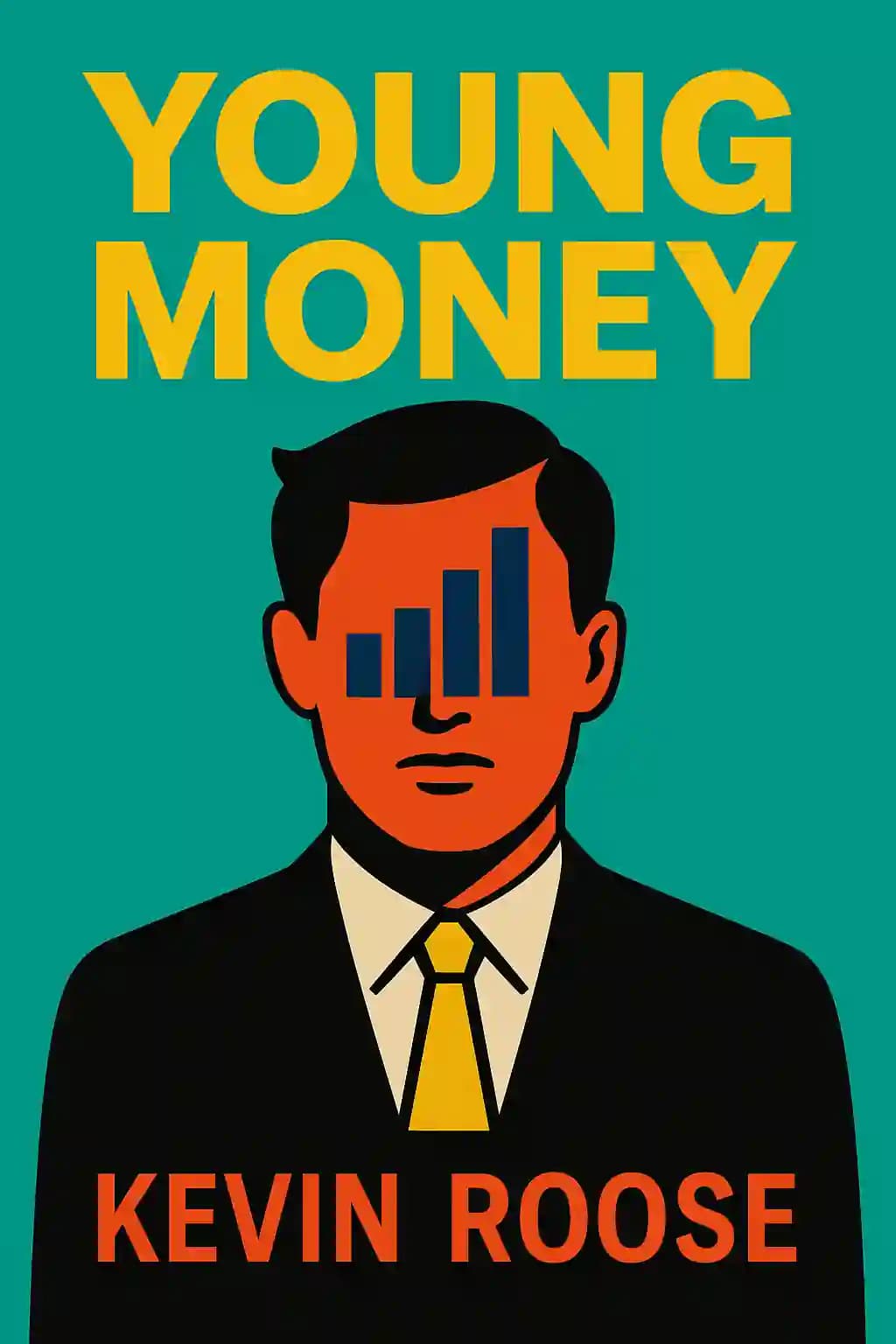
Step into Wall Street's hidden post-crash world where young recruits face moral dilemmas, crushing workloads, and six-figure bonuses. Endorsed as "required reading" by industry titans, Kevin Roose's unauthorized expose reveals why finance's allure persists - despite the drugs, burnout, and ethical compromises.
Kevin Roose, bestselling author of Young Money and award-winning technology columnist for The New York Times, combines sharp investigative journalism with insights into finance and ambition. Young Money—a gripping exploration of post-2008 Wall Street through the eyes of eight junior bankers—showcases his knack for immersive storytelling rooted in firsthand experience.
Before joining The Times, Roose embedded himself at Liberty University for his debut book, The Unlikely Disciple, and later produced the documentary series Real Future, cementing his reputation for boundary-pushing narratives.
A co-host of The New York Times’ tech podcast Hard Fork and the acclaimed Rabbit Hole series, Roose regularly analyzes AI, automation, and digital culture for mainstream audiences. His work has earned spots on the Forbes 30 Under 30 list and in global media outlets.
Young Money solidified his status as a chronicler of modern professional life, alongside his later book Futureproof, which tackles surviving technological disruption. In 2021, Roose made headlines by auctioning a Times column as an NFT, raising $560,000 for charity—a testament to his innovative approach to storytelling and technology.
Young Money provides an insider’s view of Wall Street’s post-2008 crash culture through the experiences of eight entry-level bankers at firms like Goldman Sachs and Bank of America Merrill Lynch. It explores their grueling workloads, moral dilemmas, and the industry’s transformation after the financial crisis, blending personal stories with analysis of prestige, excess, and shifting values in finance.
This book is ideal for readers interested in finance, workplace culture, or post-recession economic shifts. It appeals to aspiring bankers, career-driven professionals, and anyone curious about Wall Street’s hidden mechanics, offering lessons on ambition, resilience, and the cost of success in high-stakes environments.
Roose reveals a world of 100-hour workweeks, intense pressure, and recreational drug use, where young bankers trade personal lives for six-figure bonuses. The book highlights the industry’s "glamour meets masochism" ethos, showing how post-crash austerity stripped away prestige, leaving behind a soul-crushing grind.
The crash reshaped Wall Street’s recruitment and priorities, forcing young bankers to navigate layoffs, reduced bonuses, and public distrust. Roose’s subjects grapple with the ethical fallout of the crisis while adapting to a more risk-averse, regulated industry.
While exposing excess and burnout, the book avoids outright condemnation. Roose balances critiques of exploitation and moral ambiguity with empathy for bankers’ personal struggles, offering a nuanced look at systemic and individual flaws.
Unlike Michael Lewis’s 1980s-focused Liar’s Poker, Roose’s book examines post-2008 Wall Street, where crises and scrutiny have replaced unchecked swagger. Both expose industry excess, but Young Money emphasizes generational shifts and the erosion of traditional perks.
Roose, a New York magazine writer and former Times reporter, combines investigative rigor with narrative storytelling. His three-year, unauthorized access to bankers provides authenticity, while his focus on millennial struggles adds generational context.
Some argue the book overly sympathizes with highly paid bankers despite their privileges. Others note it focuses narrowly on entry-level roles, omitting senior perspectives. Roose addresses these by highlighting systemic issues over individual blame.
As finance faces new challenges—tech disruption, remote work, and evolving worker expectations—the book’s insights into resilience and adaptation remain timely. It serves as a cautionary tale for industries prioritizing profit over well-being.
Through dilemmas like withholding client risks or justifying lavish bonuses, Roose shows young bankers reconciling ambition with ethics. Many ultimately leave Wall Street, questioning whether their work adds societal value.
저자의 목소리로 책을 느껴보세요
지식을 흥미롭고 예시가 풍부한 인사이트로 전환
핵심 아이디어를 빠르게 캡처하여 신속하게 학습
재미있고 매력적인 방식으로 책을 즐기세요
Analysts compete to determine who suffers most.
Money becomes life's primary subtext.
"You sort of lose your nonfinance friends"
Wall Street remains firmly dominated by white men.
Young Money의 핵심 아이디어를 이해하기 쉬운 포인트로 분해하여 혁신적인 팀이 어떻게 창조하고, 협력하고, 성장하는지 이해합니다.
Young Money을 빠른 기억 단서로 압축하여 솔직함, 팀워크, 창의적 회복력의 핵심 원칙을 강조합니다.

생생한 스토리텔링을 통해 Young Money을 경험하고, 혁신 교훈을 기억에 남고 적용할 수 있는 순간으로 바꿉니다.
무엇이든 물어보고, 목소리를 선택하고, 진정으로 공감되는 인사이트를 함께 만들어보세요.

샌프란시스코에서 컬럼비아 대학교 동문들이 만들었습니다
"Instead of endless scrolling, I just hit play on BeFreed. It saves me so much time."
"I never knew where to start with nonfiction—BeFreed’s book lists turned into podcasts gave me a clear path."
"Perfect balance between learning and entertainment. Finished ‘Thinking, Fast and Slow’ on my commute this week."
"Crazy how much I learned while walking the dog. BeFreed = small habits → big gains."
"Reading used to feel like a chore. Now it’s just part of my lifestyle."
"Feels effortless compared to reading. I’ve finished 6 books this month already."
"BeFreed turned my guilty doomscrolling into something that feels productive and inspiring."
"BeFreed turned my commute into learning time. 20-min podcasts are perfect for finishing books I never had time for."
"BeFreed replaced my podcast queue. Imagine Spotify for books — that’s it. 🙌"
"It is great for me to learn something from the book without reading it."
"The themed book list podcasts help me connect ideas across authors—like a guided audio journey."
"Makes me feel smarter every time before going to work"
샌프란시스코에서 컬럼비아 대학교 동문들이 만들었습니다

Young Money 요약을 무료 PDF 또는 EPUB으로 받으세요. 인쇄하거나 오프라인에서 언제든 읽을 수 있습니다.
Picture this: A bleary-eyed 22-year-old stares at Excel spreadsheets at 3 AM in a Manhattan skyscraper, wondering if their six-figure salary justifies the soul-crushing hours. This is the world Kevin Roose infiltrated in "Young Money," following eight young financial professionals over three years as they transformed from bright-eyed graduates into hardened Wall Street veterans. The book struck a chord with millennials questioning traditional career paths during the aftermath of the Great Recession. The fundamental question at its heart remains painfully relevant: Is the promise of wealth worth sacrificing your twenties, your relationships, and potentially your moral compass? As we'll discover, the answer is far more complex than the glossy recruitment brochures suggest.
