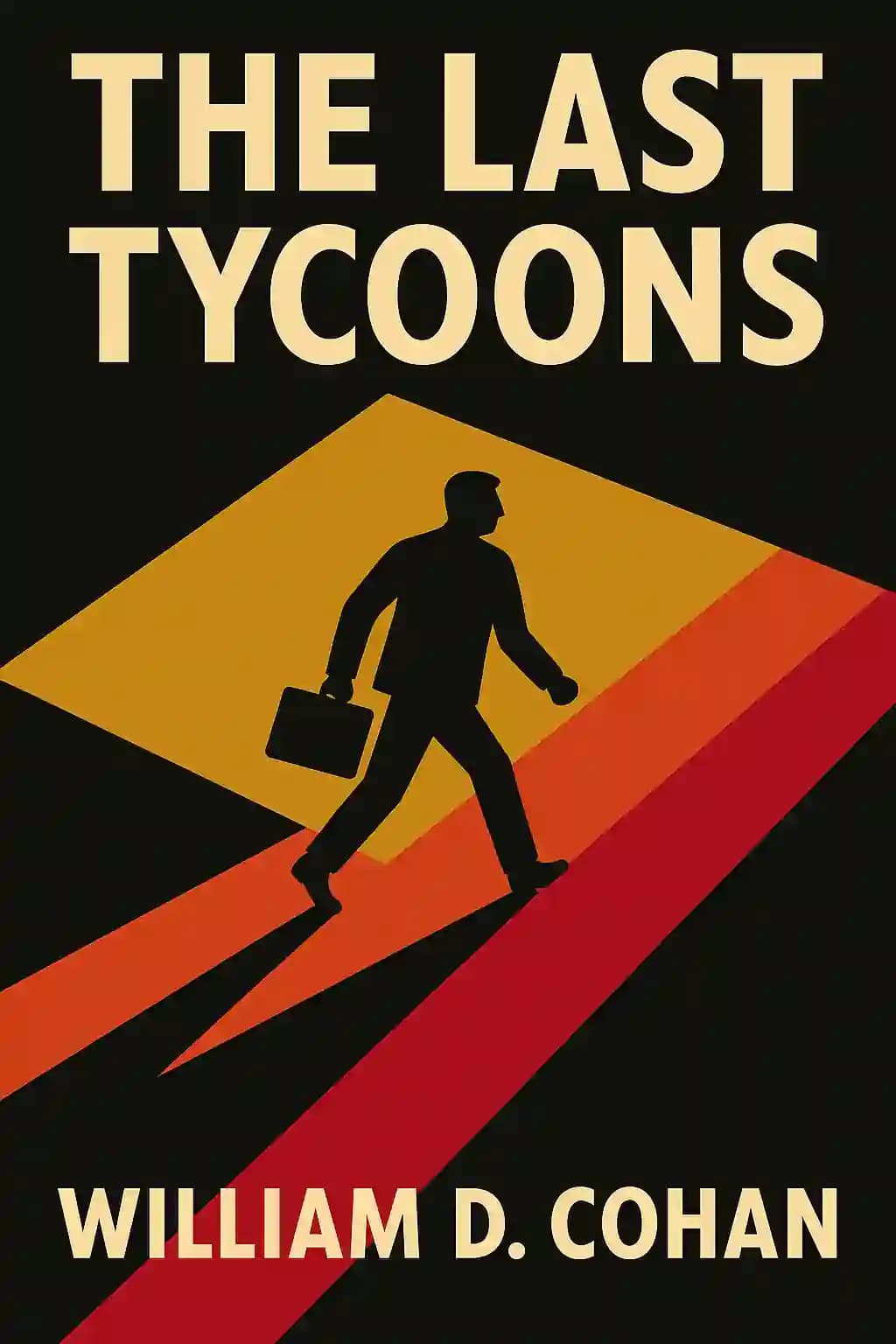
The Last Tycoons
The Secret History of Lazard Frères & Co.
The Last Tycoons 개요
Peek inside Wall Street's most secretive investment bank with this FT/Goldman Sachs award-winning expose. What power plays and explosive feuds built a financial empire that sent shockwaves through the entire industry when its secrets were finally revealed?
The Last Tycoons의 핵심 주제
- investment banking history
- corporate power struggles
- mergers and acquisitions
- wall street culture
- partnership dynamics
The Last Tycoons의 명언
Lazard Frères has long been shrouded in mystery.
Mergers and acquisitions are the firm's specialty.
The personal lives of these financial titans were as fascinating as their professional achievements.
This division hindered communication and cooperation within the firm.
It is a saga of power, prestige, and the relentless pursuit of legacy.
The Last Tycoons의 등장인물
- André MeyerGenius dealmaker and authoritarian leader
- Felix RohatynTitan of Lazard and diplomatic stabilizer
- Michel David-WeillFrench billionaire who controlled the firm
- Bruce WassersteinSuccessor who brought modern management changes
- Steve RattnerInvestment banker and rival to Felix Rohatyn
The Last Tycoons 요약 다운로드
The Last Tycoons 요약을 무료 PDF 또는 EPUB으로 받으세요. 인쇄하거나 오프라인에서 언제든 읽을 수 있습니다.
이 책에 대한 FAQ
The Last Tycoons exposes the secretive world of Lazard Frères & Co., chronicling its 150-year rise as Wall Street’s most elite investment bank. William D. Cohan unveils bitter rivalries between bankers like Felix Rohatyn and Steve Rattner, manipulative leadership under Michel David-Weill, and Bruce Wasserstein’s controversial takeover. The book blends financial history with tales of ambition, art collections, and personal feuds that shaped modern finance.
This book suits finance professionals, Wall Street historians, and readers drawn to corporate intrigue. Fans of Barbarians at the Gate or Den of Thieves will appreciate its unflinching look at power dynamics. Cohan’s insider perspective—honed during his six years at Lazard—makes it essential for understanding investment banking’s golden era.
Yes—it won the 2007 FT/Goldman Sachs Business Book of the Year for its meticulous research and gripping narrative. Cohan’s dual expertise as a banker and journalist provides rare insight into Lazard’s cloistered culture. While dense at 752 pages, its tales of greed and legacy-building remain unmatched in financial literature.
- Power struggles: Internal feuds between bankers like Rattner and Rohatyn destabilized Lazard.
- Leadership flaws: Michel David-Weill’s manipulative tactics exacerbated conflicts.
- Wealth and legacy: Profiles of tycoons’ art collections, mistresses, and rivalries reveal Wall Street’s opulent underside.
Wasserstein orchestrated a $1.4 billion deal to take control of Lazard in 2001, outmaneuvering Michel David-Weill during the firm’s decline. His aggressive leadership marked a departure from Lazard’s traditional “Great Man” ethos, symbolizing Wall Street’s shift toward ruthless dealmaking.
Some readers find its exhaustive detail overwhelming, particularly regarding lesser-known bankers. However, critics praise Cohan’s ability to humanize financial titans while exposing systemic flaws in Wall Street’s “advisory aristocracy”.
The book’s lessons on leadership hubris and fragile corporate alliances resonate amid today’s banking crises. Lazard’s survival tactics—like prioritizing client loyalty over short-term gains—offer counterpoints to modern fintech disruption.
Both dissect Wall Street excess, but Cohan’s focus on Lazard’s multi-generational saga contrasts with Barbarians’ single-deal narrative. Tycoons offers deeper cultural analysis, while Barbarians emphasizes transactional drama.
Rohatyn emerges as a conflicted figure: he saved New York City from bankruptcy in the 1970s but struggled to modernize Lazard. His feud with Steve Rattner underscored generational divides in investment banking’s evolution.
As debates about banking regulation and wealth inequality intensify, Cohan’s examination of Lazard’s insular power structures offers context for today’s financial reforms. The rise of activist investors echoes tactics used by Wasserstein.
Cohan drew from internal Lazard documents, 200+ interviews, and his firsthand experience as a former banker at the firm. This access enabled revelations about secret boardroom deals and personal vendettas.
Cohan’s six-year tenure at Lazard and subsequent journalism career let him decode complex financial maneuvers while crafting character-driven storytelling—a blend evident in his later works like House of Cards and Money and Power.


