1장
The Book That Changed Millions of Lives
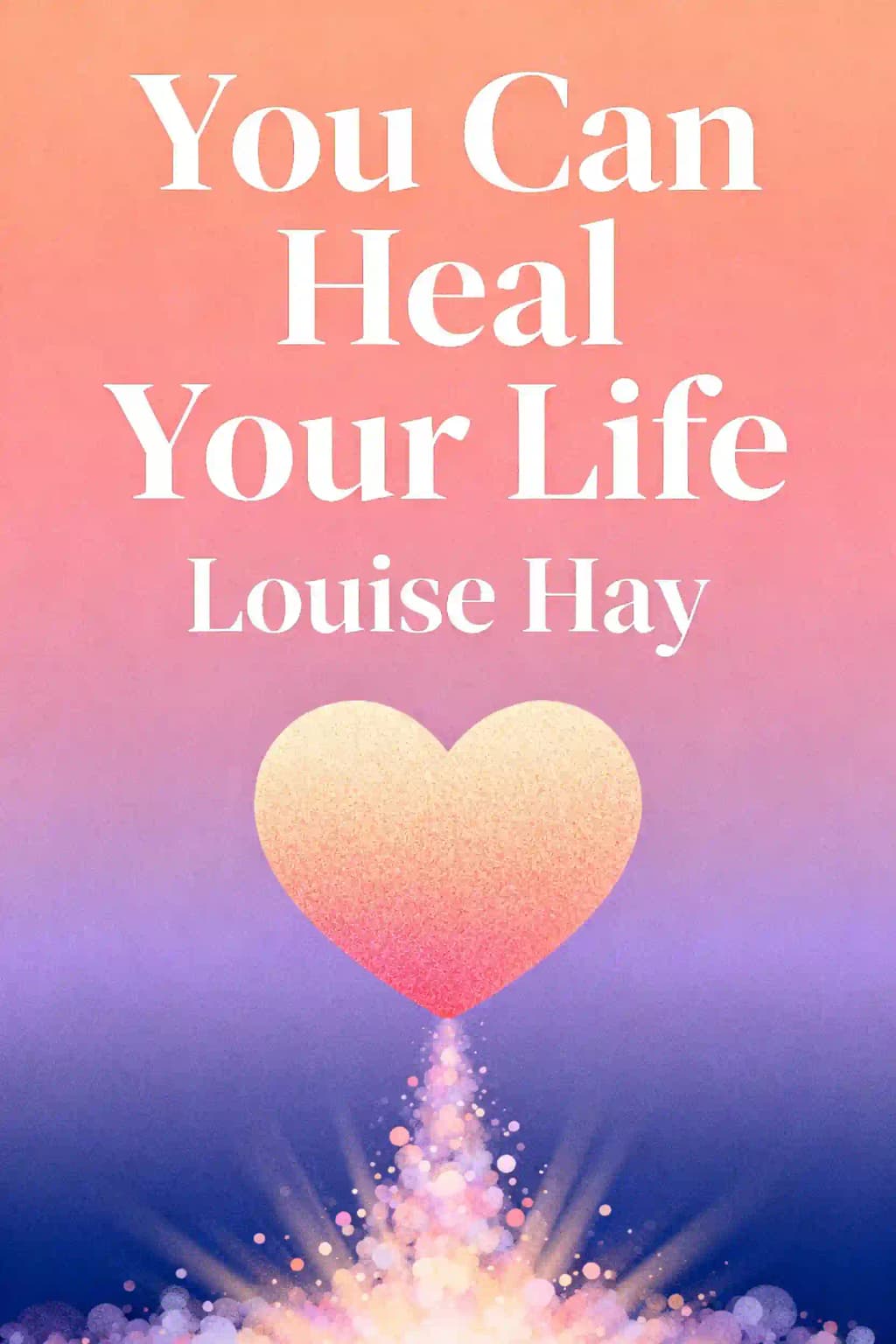
Louise Hay's "You Can Heal Your Life" isn't just another self-help book-it's a cultural phenomenon that has sold over 50 million copies worldwide and been translated into more than 30 languages since its publication in 1984. What makes this work so enduring? Perhaps it's the way it resonated with celebrities like Oprah Winfrey, who credits Hay's teachings as transformative in her own life journey. Or maybe it's how the book emerged during a time when Hay herself was healing from cancer using the very methods she describes. This groundbreaking text introduced millions to the radical notion that our thoughts directly create our reality-not metaphorically, but literally. Before the mainstream embraced mindfulness or manifestation, Louise Hay was quietly revolutionizing how we understand the connection between mind and body, creating a legacy that continues to influence wellness culture decades later.
2장
The Mind-Body Connection: How Thoughts Create Reality
Our thoughts aren't just fleeting mental events-they're powerful creators of our physical reality. This fundamental principle forms the cornerstone of Hay's philosophy. Every thought we think is creating our future, shaping not just our mental landscape but our physical bodies and external circumstances. The mind-body connection operates continuously, whether we're conscious of it or not.
Consider what happens when you think about something frightening. Your body immediately responds-your heart rate increases, muscles tense, and stress hormones flood your system. This isn't coincidental; it's a direct demonstration of how thoughts manifest physically. Similarly, when you recall a pleasant memory, your body relaxes, your breathing deepens, and feel-good chemicals are released. These reactions happen automatically, illustrating the intimate relationship between what we think and how our bodies function.
Hay explains that this connection extends far beyond momentary physical responses. Persistent thought patterns create persistent physical conditions. When we habitually think thoughts of fear, resentment, or inadequacy, our bodies remain in states of tension and stress. Over time, these states can manifest as illness or disease. Conversely, consistent thoughts of love, peace, and acceptance create physical states of relaxation and wellbeing that support health and healing.
What makes this understanding so revolutionary is its implications for healing. If negative thoughts contribute to physical problems, then changing those thoughts can contribute to physical healing. This doesn't mean simply "thinking positive" in a superficial way. Rather, it involves a deep recognition and transformation of the core beliefs that generate our habitual thought patterns.
Hay shares numerous examples of people who healed serious physical conditions by identifying and changing their negative thought patterns. One woman with chronic back pain discovered it stemmed from feeling financially unsupported; as she worked on beliefs about abundance and self-worth, her back began to heal. Another client with respiratory issues realized these connected to feelings of unworthiness to "take in life fully"; as she embraced her right to exist and thrive, her breathing improved dramatically.
This isn't about blaming ourselves for illness, but empowering ourselves to participate actively in our healing. By understanding the mind-body connection, we gain access to an internal healing resource that complements external treatments. The body responds to the mind, and the mind can be changed through conscious awareness and choice.
3장
The Power of Affirmations: Rewiring Neural Pathways
Affirmations-positive statements repeated regularly-serve as powerful tools for transforming thought patterns and, consequently, our lives. But how exactly do they work? Far from being magical thinking, affirmations operate on solid neurological principles. When we repeatedly think certain thoughts, we strengthen neural pathways in our brains. These well-worn paths become our default ways of thinking-our habits of mind. Affirmations deliberately create new neural pathways, offering alternatives to our established negative thinking patterns.
The brilliance of Hay's approach lies in her understanding that effective affirmations must address both the conscious and subconscious mind. Simply repeating positive statements while harboring deep-seated contrary beliefs often creates internal conflict rather than change. That's why Hay recommends beginning with awareness of current negative thoughts, acknowledging them without judgment, and then deliberately choosing new thoughts that better serve us.
For instance, someone with financial struggles might notice thoughts like "I never have enough money" or "I'm bad with finances." After acknowledging these patterns, they might create affirmations such as "Money flows to me easily and abundantly" or "I am capable of creating prosperity." The key is to choose affirmations that feel possible, even if challenging, rather than completely unbelievable.
Hay suggests speaking affirmations aloud while looking in a mirror, writing them repeatedly, or recording and playing them back. These multi-sensory approaches help embed new thought patterns more deeply. She also emphasizes the importance of present tense wording-saying "I am healthy" rather than "I will be healthy"-to signal to the subconscious that the desired state exists now.
The effectiveness of affirmations increases with emotional engagement. Dry, mechanical repetition yields limited results. But when we infuse affirmations with feeling-imagining and emotionally experiencing the truth of the statement-we accelerate the rewiring process. This explains why affirmations sometimes work quickly and dramatically, while other times requiring persistent practice before yielding results.
Hay shares the story of a client with severe arthritis who began affirming "I am flexible and moving with ease" while visualizing herself dancing. Initially, the gap between her affirmation and reality felt enormous, but she persisted. Gradually, her condition improved until she could indeed move with significantly greater comfort. Another client struggling with recurring relationship patterns used "I am worthy of loving, healthy relationships" until she began attracting very different partners.
What makes Hay's approach to affirmations distinctive is her emphasis on self-love as the foundation. Without self-acceptance, affirmations often feel like attempts to fix something "wrong" with us, which paradoxically reinforces negative self-perception. When rooted in self-love, however, affirmations become expressions of our evolving truth rather than corrections of our inadequacies.
4장
The Mirror Work: Facing Your True Self
Perhaps the most powerful-and initially uncomfortable-technique Hay introduces is "mirror work." This practice involves looking into your own eyes in a mirror while speaking affirmations or engaging in self-dialogue. The mirror reflects not just our physical appearance but our relationship with ourselves, making it impossible to hide from our true feelings. When we first attempt this practice, many of us discover how difficult it is to maintain eye contact with ourselves or speak words of love to our reflection-a revealing indicator of our level of self-acceptance.
The genius of mirror work lies in its directness. When we say "I love you" to our reflection and feel resistance or discomfort, we've uncovered valuable information about our relationship with ourselves. This discomfort points precisely to where healing is needed. Hay suggests beginning with simple statements like "I am willing to love you" if "I love you" feels too challenging. This acknowledges where we are while opening the door to growth.
Mirror work bypasses intellectual defenses that might dismiss written or silently thought affirmations. There's something uniquely powerful about witnessing ourselves speak words of love or forgiveness. The practice creates a visual and emotional feedback loop that accelerates transformation. Many clients report that while they initially couldn't maintain eye contact for more than a few seconds, with practice they developed a warm, loving relationship with their reflection-and by extension, with themselves.
One particularly moving example Hay shares involves a woman who couldn't look in mirrors at all following severe facial scarring from an accident. Through gentle, persistent mirror work-beginning with just glancing at her reflection and gradually building to longer periods of eye contact-she not only came to accept her changed appearance but developed deeper self-love than she had known before the accident.
The practice extends beyond affirmations to include emotional processing. Hay suggests using the mirror when experiencing difficult emotions, looking into your eyes and speaking to yourself with compassion: "I see you're feeling hurt right now, and that's okay. I'm here with you through this." This creates an internal parent-child dynamic where we become our own source of comfort and validation rather than seeking it exclusively from others.
Mirror work also powerfully addresses shame-that toxic emotion that thrives in secrecy. By literally facing ourselves while acknowledging past mistakes or perceived flaws, we bring healing light to shadowed aspects of our psyche. One client described how mirror work helped him process childhood abuse: "Looking in my eyes while saying 'What happened wasn't your fault, and I love you completely' broke something open in me. I sobbed for an hour, but afterward felt lighter than I had in decades."
For maximum benefit, Hay recommends daily mirror work, even if just for a minute or two. The cumulative effect of these brief encounters with ourselves creates profound shifts in self-perception and, consequently, in our external reality. The mirror becomes not an instrument of critical self-evaluation but a portal to deeper self-love.
5장
Healing Childhood Wounds: The Inner Child Within
Many of our most limiting beliefs and destructive patterns originate in childhood experiences. Hay explains that the child we once were still lives within us, influencing our adult reactions and decisions in ways we often don't recognize. Healing these childhood wounds isn't about blaming parents or caregivers-who were doing the best they could with their own limitations-but about reconnecting with and reparenting our inner child.
Our childhood selves absorbed messages about our worth, capabilities, and place in the world long before we had the critical thinking skills to evaluate them. A parent's casual remark that we were "too much trouble" or "not smart enough" could become a core belief that shapes our entire life trajectory. Even when our conscious mind rejects these ideas, our subconscious may still operate from them, creating patterns of self-sabotage or limitation.
Hay introduces several powerful techniques for healing the inner child. One involves visualization-imagining yourself as a child and engaging in dialogue with that younger self. What does your child-self need to hear from you? What reassurance, love, or permission would have changed everything? By providing these missing pieces now, we can begin healing old wounds. One client described visualizing her five-year-old self who had been told she was "selfish" for expressing needs. In her visualization, she held this little girl and assured her: "You deserve to have needs and express them. There's nothing wrong with you." This simple practice, repeated regularly, helped dissolve a lifelong pattern of self-denial.
Another approach involves writing with your non-dominant hand, which accesses different brain regions and often allows the inner child's voice to emerge. Hay suggests asking questions with your dominant hand, then allowing your non-dominant hand to answer. Many people are startled by the childlike responses that emerge-revealing needs, fears, and wisdom they hadn't consciously recognized.
Hay emphasizes that inner child work isn't a one-time event but an ongoing relationship. Our inner children need regular attention, validation, and play. Many adults have forgotten how to play altogether-a loss that diminishes joy and spontaneity. Relearning playfulness becomes part of the healing journey. One businessman described how reconnecting with his love of drawing-abandoned at age eight when his father called it a waste of time-brought unexpected creativity to his work and relationships.
Physical self-care also plays a crucial role in inner child healing. When we neglect basic needs for rest, nutrition, or movement, we unconsciously reinforce childhood messages that our needs don't matter. Simple acts like preparing nourishing food with love or ensuring adequate rest become powerful statements to our inner child that they are valued and worthy of care.
Perhaps most importantly, Hay teaches that healing the inner child requires patience and compassion. We wouldn't expect an actual child who had experienced neglect or criticism to transform overnight, yet we often demand immediate change from our inner children. Allowing this process to unfold gradually, with tenderness for our setbacks and celebrations of small victories, creates lasting transformation rather than temporary behavioral changes.
6장
Releasing Resentment: The Path to Forgiveness
Resentment acts as a poison in our system, creating more harm to ourselves than to those who hurt us. Hay considers forgiveness not as a gift to others but as an essential act of self-healing. When we hold onto grievances, we remain energetically connected to painful past experiences, essentially reliving them repeatedly in our minds and bodies. This continuous replay creates physical tension, depletes our energy, and blocks the flow of positive experiences into our lives.
The process of forgiveness Hay outlines differs significantly from conventional understanding. It doesn't require reconciliation with those who harmed us, nor does it mean condoning harmful actions. Rather, it involves releasing our emotional attachment to past hurts so they no longer control our present. This distinction is crucial-we can forgive someone while still choosing not to have them in our life if their behavior remains harmful.
Hay introduces several practical approaches to forgiveness. One powerful technique involves writing uncensored letters to those who hurt us-letters never meant to be sent. In these letters, we express everything we've held back: our pain, anger, disappointment, and the impact of their actions. After fully expressing these feelings, we burn the letters as a symbolic release. Many find that this process alone creates significant emotional shifts.
Another approach involves visualization. Hay suggests imagining the person who harmed us as a child who acted from their own woundedness. This doesn't excuse their behavior but helps us understand it contextually, making forgiveness more accessible. One client described visualizing her abusive father as the frightened child he once was, beaten by his own father. "Suddenly I could see the cycle of pain passing through generations. My anger transformed into compassion-not just for him but for all of us caught in this pattern."
Hay also addresses self-forgiveness, often the most challenging aspect of this work. Many of us hold ourselves to impossible standards, carrying shame about past actions or perceived failures. She suggests speaking to ourselves as we would to a beloved friend who had made similar mistakes-with compassion and an understanding of human imperfection. One technique involves looking in the mirror and saying, "I forgive you. You did the best you could with what you knew at the time. And now that you know better, you'll do better."
The forgiveness process isn't linear or one-time. We may need to forgive the same person or situation repeatedly as new layers of hurt emerge. Hay compares it to peeling an onion-each layer of forgiveness reveals deeper aspects requiring healing. This gradual unfolding allows for authentic transformation rather than premature or superficial forgiveness that doesn't address the full emotional impact.
Perhaps most revolutionary is Hay's assertion that forgiveness work creates ripple effects beyond our individual healing. When we release resentment, we contribute to breaking intergenerational cycles of pain and reactivity. Our healing becomes not just personal but collective, offering future generations freedom from patterns that may have persisted for centuries.
7장
Transforming Fear into Faith: Embracing Life's Flow
Fear constricts-physically, emotionally, and spiritually. It narrows our vision, tightens our muscles, and limits what we believe possible. Faith, by contrast, expands-opening us to possibilities beyond our current circumstances and allowing life to flow through us unimpeded. Hay views the journey from fear to faith as central to healing and creating the life we desire.
The fear Hay addresses goes beyond specific phobias to include the generalized anxiety many carry: fear of change, fear of inadequacy, fear of rejection, fear of success. These fears often operate below conscious awareness, influencing decisions and reactions without our recognition. One client discovered that her chronic procrastination stemmed not from laziness as she'd believed, but from deep fear of being visible and judged. This awareness allowed her to approach her resistance with compassion rather than self-criticism.
Hay offers several approaches for transforming fear. First is simply acknowledging its presence without judgment. Fear itself isn't problematic; it's our relationship with fear that creates suffering. When we resist or deny fear, we amplify it. When we meet it with gentle awareness, it often diminishes naturally. One businessman described how simply saying "I notice I'm feeling afraid right now" during high-pressure meetings changed his entire experience, allowing him to access his capabilities even while feeling nervous.
Another powerful technique involves physically releasing fear through movement or sound. Fear creates physiological responses-muscle tension, shallow breathing, increased heart rate-that can become chronic states. Conscious movement, deep breathing, or even making sounds (like sighing loudly or humming) helps discharge this physical activation. One woman with chronic anxiety developed a practice of "shaking out" fear several times daily, literally shaking her limbs while visualizing fear leaving her body. This simple practice dramatically reduced her anxiety levels.
Hay emphasizes that transforming fear requires developing trust in something larger than our individual selves-whether we conceptualize this as God, the Universe, Life Force, or simply the natural intelligence that keeps our hearts beating without conscious effort. This trust doesn't develop through intellectual agreement but through lived experience of being supported by life, even during challenges.
To cultivate this trust, Hay suggests starting with small "faith experiments." Rather than trying to eliminate fear of major life issues immediately, we can practice trusting in manageable situations. One client began by deliberately taking a different route to work each day without planning it in advance, trusting she would arrive safely. These small acts of surrendering control gradually built her faith muscles for larger life challenges.
Affirmations play a crucial role in this transformation. Statements like "Life loves me and always provides for me" or "I am safe in the universe and all life loves and supports me" may initially trigger resistance or disbelief. However, with persistent repetition, they begin reshaping our fundamental relationship with existence. One man described how after months of affirming "The universe is friendly to my plans," he began noticing opportunities and support that had always been available but previously invisible to his fear-focused perception.
Perhaps most importantly, Hay teaches that faith isn't about ensuring specific outcomes but about trusting the process of life itself. When we release our grip on exactly how things must unfold, we open ourselves to possibilities beyond our limited imagination. This surrender doesn't mean passive resignation but active participation with life's flow rather than resistance against it.
8장
Prosperity Consciousness: Abundance as Your Natural State
Money troubles often reflect deeper beliefs about worthiness, scarcity, and what we're allowed to receive from life. Hay challenges the common notion that financial struggles stem primarily from external circumstances, suggesting instead that our "prosperity consciousness"-our internal relationship with abundance-plays the decisive role in our material reality.
This perspective doesn't blame people for economic hardship but offers a pathway to transformation regardless of external conditions. Hay observed that people with virtually identical circumstances often experience dramatically different financial outcomes based on their beliefs and attitudes about money. One memorable example she shares involves two sisters raised in poverty. One remained financially struggling despite advanced education, while the other-with less formal education but a different mindset-created substantial prosperity. The difference wasn't their starting point but their internal prosperity blueprint.
Hay identifies several common limiting beliefs about money: that it's scarce, that having money is spiritually suspect, that we don't deserve abundance, or that financial success requires struggle. These beliefs often originate in childhood experiences or cultural messaging we absorbed without questioning. One client realized his persistent financial struggles stemmed from his father's frequent statement that "rich people are crooks." This unconscious association between wealth and immorality had created an internal conflict-he wanted financial ease but didn't want to be "immoral."
Transforming prosperity consciousness begins with awareness of these limiting beliefs. Hay suggests noticing our language around money ("I can't afford that" versus "I'm choosing to spend my money differently") and our emotional reactions to others' prosperity. Do we feel genuine joy when others succeed financially, or subtle resentment? These responses reveal our true beliefs about abundance.
Affirmations play a crucial role in rewiring prosperity consciousness. Statements like "Money flows to me easily and abundantly" or "I deserve prosperity in all forms" help counter lifelong negative programming. Hay recommends combining affirmations with visualization-actually seeing and feeling what it would be like to live in abundance. One woman described visualizing herself easily paying bills with money left over, experiencing the relief and joy this would bring. Within months of this regular practice, her income had indeed increased to match this vision.
Gratitude serves as another powerful tool for shifting prosperity consciousness. By appreciating what we already have-even if it seems insufficient-we signal to both our subconscious mind and the universe that we recognize and welcome abundance. Hay suggests creating daily gratitude lists that include even small financial blessings-finding a quarter on the sidewalk, receiving an unexpected discount, or simply having enough for today's needs. This practice shifts focus from scarcity to sufficiency and creates receptivity to greater abundance.
Hay also addresses the spiritual dimensions of prosperity, challenging the notion that material comfort conflicts with spiritual development. She suggests that poverty consciousness often reflects a misunderstanding of spiritual principles rather than spiritual virtue. True abundance includes but transcends money, encompassing rich experiences, loving relationships, creative expression, and contribution to others. When we align with this broader understanding of prosperity, financial flow often naturally improves.
Perhaps most importantly, Hay connects prosperity consciousness to self-worth. Many people unconsciously limit their financial receiving because they don't believe they deserve abundance. As self-love increases through other practices in the book, prosperity often increases correspondingly. One client who had struggled financially for decades found that as her mirror work deepened her self-acceptance, her income doubled-not through working harder but through allowing herself to receive more for the value she already provided.
9장
Creating Vibrant Health: The Body as Your Ally
Our bodies aren't separate from our consciousness but are physical manifestations of our thoughts, beliefs, and emotions. Hay presents a revolutionary perspective on health-not as the absence of symptoms but as a dynamic expression of our inner harmony or discord. This view doesn't replace conventional medicine but complements it by addressing the mental and emotional components of physical conditions.
Hay developed a comprehensive "metaphysical directory" connecting specific ailments to probable thought patterns that contribute to them. For instance, she associates throat problems with difficulty speaking up, knee issues with pride and inflexibility, and digestive troubles with difficulty "digesting" life experiences. While these connections aren't meant as simplistic cause-effect relationships, they offer starting points for exploration. One client with chronic sinusitis discovered that her condition flared whenever she was "irritated" by family members but suppressed expressing these feelings-literally becoming "sick of them" without acknowledging her emotions.
The body speaks in metaphors, and learning its language provides invaluable guidance for healing. Hay suggests asking yourself what message a particular symptom might be conveying. If your back hurts, are you feeling unsupported in life? If you have respiratory issues, is there something or someone you can't "breathe around"? These inquiries often reveal surprising connections between physical symptoms and life circumstances or emotional states.
This approach doesn't mean blaming ourselves for illness but taking responsibility for our contribution to our health. Hay distinguishes clearly between blame (which focuses on fault and generates shame) and responsibility (which focuses on our ability to respond and generate change). One cancer patient described how this distinction transformed her healing journey: "Instead of asking 'Why me?' or 'What did I do wrong?', I began asking 'What can I learn from this?' and 'How can I participate in my healing?' This shift alone reduced my fear and gave me a sense of partnership with my body."
Hay emphasizes that the body inherently wants to heal-its natural state is balance and wellbeing. Our role is removing the mental and emotional obstacles to this natural healing process. Techniques like visualization can support this partnership. One client with a slow-healing fracture began visualizing her bones knitting together while affirming "My body knows exactly how to heal itself." Her doctor was surprised by how quickly her healing accelerated after beginning this practice.
The mind-body connection works in both directions-physical practices can also shift mental states. Hay recommends movement, deep breathing, adequate hydration, and nutritious food as foundations for mental and emotional wellbeing. One client with depression found that a daily walking practice while affirming "I move joyfully through life" lifted her mood more effectively than previous treatments. Another discovered that simply drinking more water while thanking his body for its work improved both his physical energy and his outlook.
Perhaps most revolutionary is Hay's approach to working with serious illness. Rather than seeing disease as an enemy to battle, she suggests viewing it as a messenger indicating needed life changes. This perspective often reduces fear and creates openness to deeper healing beyond symptom management. One woman with autoimmune disease realized her condition reflected her tendency to "attack herself" with harsh self-criticism. As she developed self-compassion, her symptoms gradually improved alongside her self-relationship.
Hay's own healing from cancer without medical intervention (though she doesn't recommend this approach for everyone) demonstrated her principles in action. She identified connections between her cancer and unresolved childhood sexual abuse, engaged in intensive forgiveness work, made significant dietary changes, and worked with practitioners who supported her body's healing capacities. This integrated approach-addressing mind, emotions, spirit, and body-exemplifies the holistic healing she teaches.
10장
Living Your Purpose: Aligning with Your Soul's Journey
Beyond healing specific problems lies the broader question of purpose-why are we here, and how do we fulfill our unique contribution? Hay suggests that each person has distinctive gifts and a soul-level mission that, when expressed, creates both personal fulfillment and benefit for others. Finding and living this purpose isn't a luxury but essential to our wellbeing and healing.
Many health issues, relationship problems, and financial struggles stem from misalignment with our deeper purpose. When we're not expressing our authentic gifts, we experience what Hay calls "divine discontent"-a persistent sense that something important is missing despite external achievements or comforts. One successful attorney described feeling increasingly depressed despite career advancement until discovering her true calling involved creative expression through writing. As she integrated this passion into her life, her depression lifted without medication.
Hay offers several approaches for discovering purpose. First is following joy-noticing what activities create a sense of timelessness and deep satisfaction. These "flow states" often indicate alignment with our natural gifts. One client realized that her hobby of organizing friends' homes gave her more joy than her corporate job; she eventually built a successful business around this talent, finding both greater fulfillment and improved income.
Another approach involves reflecting on childhood interests before social conditioning narrowed our self-expression. What fascinated you as a child? What did you love doing before concerns about practicality or others' approval intervened? One man recalled his childhood love of storytelling, which he'd abandoned for a "sensible" career. Reconnecting with this passion through community theater and eventually screenwriting brought vitality back to his entire life.
Hay also suggests paying attention to what naturally draws others to us. What do people consistently seek from you? What problems do they bring for your help? These patterns often reveal our natural gifts. One woman noticed friends always sought her advice during life transitions; this recognition eventually led her to training as a life coach where she found her true calling.
Living purposefully doesn't necessarily mean changing careers-it might involve bringing more of our authentic qualities into our current work or expressing purpose through volunteer activities or creative pursuits. The key is alignment between our outer activities and inner values. One teacher described how reframing her work from "teaching mathematics" to "empowering young minds to discover their capabilities" transformed her experience without changing her job description.
Hay emphasizes that purpose evolves throughout life rather than being a fixed destination. Different aspects of our gifts emerge as we grow and heal. What fulfilled us at thirty may differ from what calls to us at sixty. Staying attuned to inner guidance allows this natural evolution. One client described how her purpose shifted from direct service as a nurse to teaching and mentoring younger nurses as she matured-both expressions of her core gift for healing but manifested differently across life stages.
Perhaps most importantly, Hay connects purpose to service-not from obligation but from the natural overflow of our authentic gifts. When we're aligned with purpose, contributing to others doesn't deplete but energizes us. This creates sustainable service rather than the burnout that comes from helping others from a sense of duty disconnected from our true nature. One social worker described how reconnecting with her purpose transformed her work: "I stopped seeing myself as rescuing clients and started recognizing I was simply sharing my natural gift for creating safe space. This shift made my work sustainable again when I'd been on the verge of leaving the field."