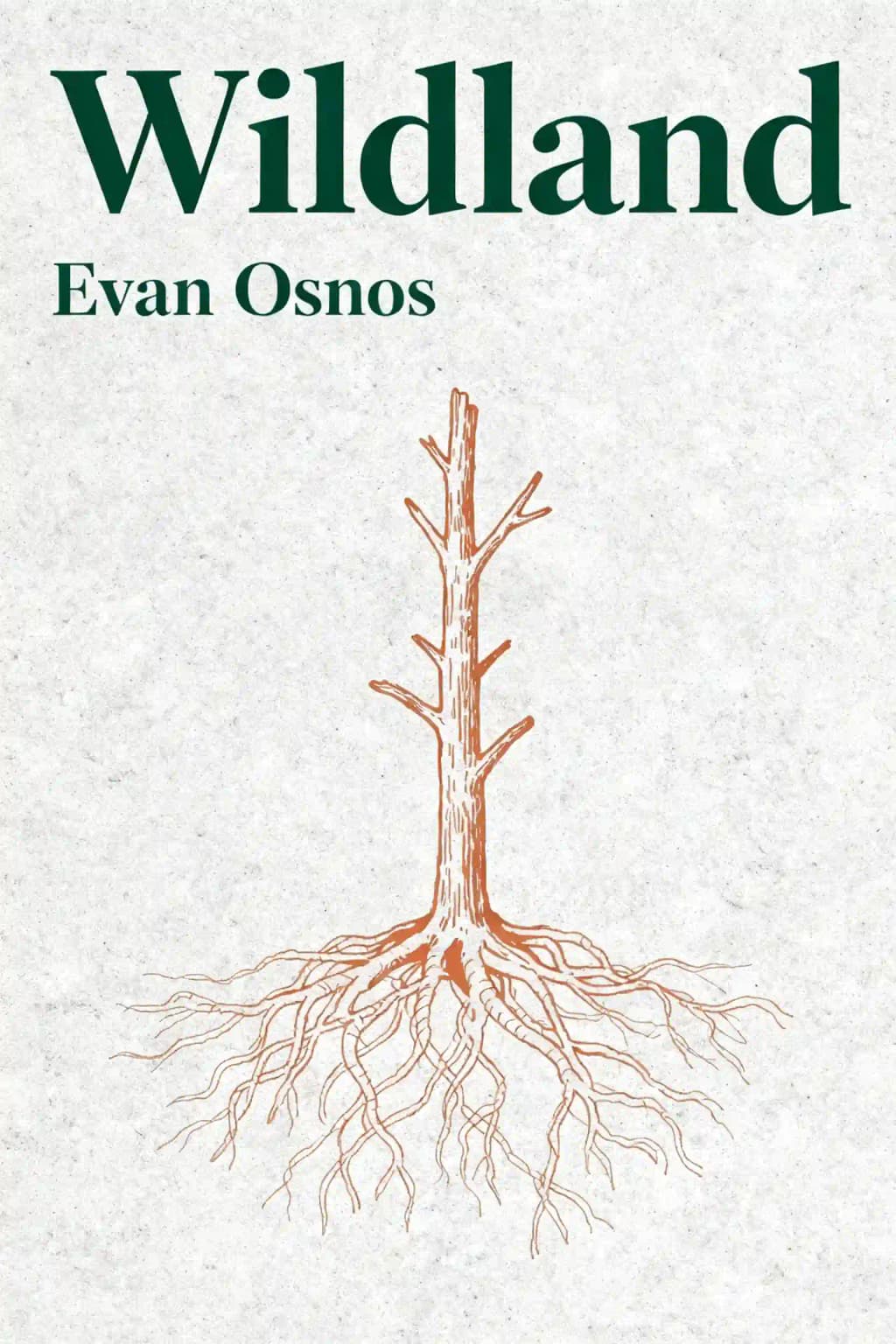
Wildland
The Making of America's Fury
Wildland 개요
In "Wildland," Evan Osnos journeys through three American cities to decode how we transformed from post-9/11 unity to Capitol insurrection. A sobering examination of wealth, poverty, and division that critics call "wildly partisan" yet essential for understanding America's deepening fury.

Wildland의 핵심 주제
- wealth inequality
- political polarization
- economic stagnation
- social fragmentation
- eroding public trust
Wildland의 명언
Land and people seemed to mirror each other's rage.
Money was on the tip of everyone's tongue all the time.
The rich had raced ahead.
The line between legal influence and criminal corruption had blurred dangerously.
A hostage worth ransoming.
Wildland의 등장인물
- Evan OsnosAuthor and journalist exploring American division
- Glenn KileCalifornia rancher who ignited a massive wildfire
- William EvertsbergReverend who observed Greenwich's wealth shift
- Lawrence LessigHarvard legal theorist and political activist
- Raj ChettyEconomist studying zip code-based opportunity
저자 소개
Wildland의 저자 소개
Evan Lionel Richard Osnos, National Book Award-winning author of Wildland: The Making of America’s Fury, is a Pulitzer Prize-winning journalist and staff writer at The New Yorker renowned for his incisive analysis of global politics and societal shifts.
A senior fellow at the Brookings Institution and CNN contributor, Osnos synthesizes decades of frontline reporting—from his work as The New Yorker’s China correspondent (2008–2013) to his Pulitzer-winning investigations for the Chicago Tribune—to dissect America’s fractures in Wildland, a penetrating exploration of polarization and civic decay.
His prior bestseller, Age of Ambition: Chasing Fortune, Truth, and Faith in the New China, won the 2014 National Book Award and established his reputation for weaving personal narratives into sweeping geopolitical critiques.
A Harvard graduate and term member of the Council on Foreign Relations, Osnos frequently appears on The Political Scene podcast and major media outlets. Wildland became a New York Times bestseller and was hailed as a “defining portrait of 21st-century America” by critics. His forthcoming book, The Haves and Have-Yachts (2025), continues his examination of inequality and power.
Wildland 요약 다운로드
Wildland 요약을 무료 PDF 또는 EPUB으로 받으세요. 인쇄하거나 오프라인에서 언제든 읽을 수 있습니다.
이 책에 대한 FAQ
Wildland examines America’s political and social fractures through the lens of three communities—Greenwich, CT (wealthy elites), Clarksburg, WV (declining industrial town), and Chicago, IL (segregated neighborhoods). Evan Osnos traces rising inequality, cultural divides, and the erosion of democratic norms from 9/11 to the January 6 Capitol riot, using personal stories to reveal systemic forces driving national discord.
This book is essential for readers interested in modern American politics, socioeconomic inequality, or grassroots perspectives on polarization. Journalists, historians, and policymakers will appreciate its blend of narrative storytelling and investigative rigor, while general audiences gain insight into the roots of today’s divisive climate.
Yes. Osnos’s reporting provides a visceral, humanized account of America’s unraveling, juxtaposing elite financial power in Greenwich with opioid-ravaged Clarksburg and racially divided Chicago. While critics argue it oversimplifies inequality’s causes, the book’s granular storytelling makes complex issues accessible, earning praise as “indispensable” for understanding 21st-century turmoil.
Osnos links polarization to diverging realities: Greenwich’s shift toward libertarian conservatism, Clarksburg’s loss of social cohesion post-industrial decline, and Chicago’s entrenched segregation. These microcosms illustrate how geographic, economic, and racial stratification fueled distrust in institutions and opened pathways for extremist movements.
Greenwich symbolizes the financial elite’s rightward political shift. Osnos details how hedge fund magnates embraced anti-government ideology, funding groups that weakened regulations and polarized policymaking. This section critiques the disconnect between ultra-wealthy agendas and broader societal needs.
Clarksburg represents the collapse of the American Dream in post-industrial regions. Once sustained by glass manufacturing and coal, the town’s economic decline, opioid crisis, and eroded public services exemplify the desperation that fueled anti-establishment politics.
Chicago’s chapters highlight racial segregation, police violence, and disinvestment in South Side neighborhoods. Osnos connects these issues to national patterns of inequality, showing how marginalized communities bear the brunt of policy failures while wealth concentrates elsewhere.
The book argues the Dream shifted from collective upward mobility to individual survival.
- In Greenwich, it manifests as wealth hoarding
- in Clarksburg, as struggles for basic dignity
- in Chicago, as systemic barriers to racial equity.
This fragmentation undermines shared national identity.
Some conservatives argue Osnos overstates inequality’s role in polarization, neglecting cultural factors like immigration and secularism. Others note minimal exploration of solutions, though the book’s focus is diagnostic rather than prescriptive.
Osnos frames these events as bookends to a “twilight era” of American confidence. Post-9/11 militarism, economic inequality, and partisan media eroded trust in democracy, culminating in the Capitol attack as a symptom of institutional decay.
Osnos combines immersive reporting (100+ interviews over six years) with macro-analysis. By anchoring themes in personal stories—e.g., a Clarksburg mayor battling opioid deaths—he humanizes data on wage stagnation, corporate power, and racial injustice.
Unlike top-down analyses (e.g., The Second Mountain), Wildland prioritizes grassroots voices. Its regional focus offers a nuanced alternative to coastal media narratives, aligning with J.D. Vance’s Hillbilly Elegy in empathy but critiquing systemic failures over individual blame.





