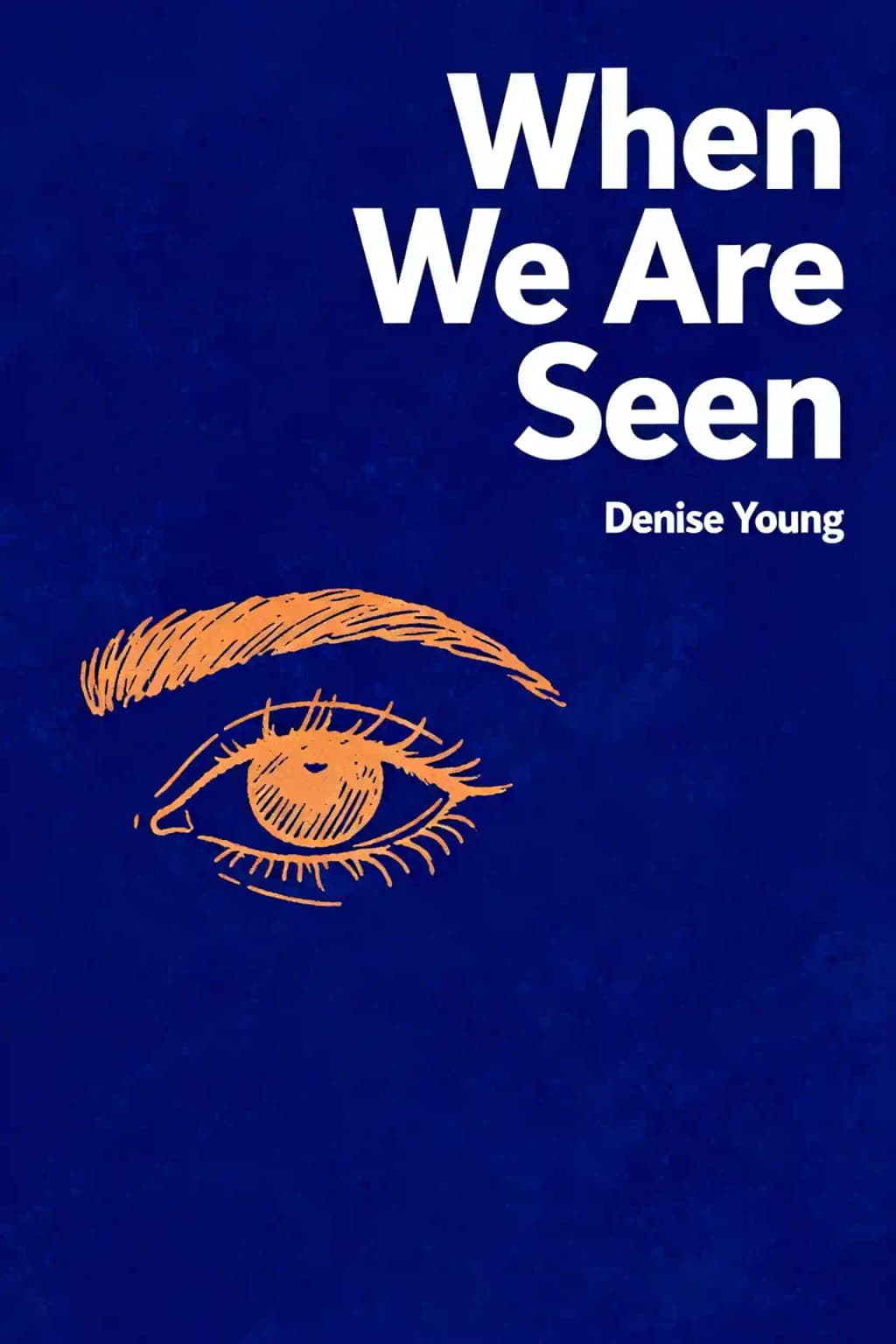
From Apple's first Black female executive comes a transformative guide to visibility and power. Praised by business titans like Ron Johnson and featuring a memorable encounter with Dave Chappelle, "When We Are Seen" offers the secret to authentic leadership: seeing others while being truly seen yourself.
Denise Young, author of When We Are Seen: How to Come Alive, Lead Better, and Create More Careful Organizations, is a renowned leadership and inclusion strategist with over two decades of executive experience at Apple, where she served as the company’s first Black chief of human resources and VP of inclusion and diversity.
Her groundbreaking work in corporate culture and equity stems from her career at one of the world’s most innovative companies, followed by her role as executive-in-residence at Cornell Tech. Blending memoir and actionable insights, When We Are Seen explores themes of belonging, empathy, and reclaiming agency in professional spaces, informed by Young’s expertise in fostering inclusive environments.
Named a “Most Powerful Woman” by Black Enterprise and featured in Fortune’s “Most Powerful Women” issue, Young advises global organizations on leadership and culture while maintaining a parallel career as a performing and recording artist. Her unique perspective bridges corporate rigor with creative expression, offering a roadmap for transformative, human-centered workplaces.
The book has been celebrated for its candid storytelling and practical frameworks, earning praise from industry leaders and inclusion advocates alike.
When We Are Seen blends memoir and leadership guidance, chronicling Denise Young’s journey as one of the first Black women executives at Apple. It offers a roadmap for fostering inclusion by embracing authenticity, leveraging personal narratives, and empowering others in workplaces not designed for marginalized voices.
This book is essential for DEI professionals, corporate leaders, and individuals navigating systemic exclusion. It resonates with anyone seeking strategies to thrive in unwelcoming environments while advocating for holistic inclusivity.
Yes. Critics praise its raw authenticity and actionable frameworks for leadership. Publishers Weekly highlights its unique focus on inclusivity as an intrinsic value rather than a profit-driven tactic, making it stand out among business memoirs.
Key themes include:
Young describes it as an active practice of valuing individuals’ unique attributes while dismantling exclusionary systems. This involves leaders creating spaces where marginalized voices holistically contribute without code-switching or minimizing their identities.
Some reviewers note the book leans more into personal memoir than organizational strategy, which may leave readers seeking concrete DEI policies wanting deeper tactical guidance.
It frames inclusivity as a moral imperative rather than a performance metric, rejecting the notion that diverse teams matter only for profitability or innovation. Young argues belonging itself is the goal.
As Apple’s first Black female VP, Young draws from 25+ years in tech leadership to expose systemic barriers while offering proven strategies for marginalized professionals to reclaim agency.
It merges gritty personal anecdotes (e.g., facing racism in boardrooms) with tactical DEI frameworks, bridging the gap between corporate theory and lived experience. Kirkus calls it “thoughtful” and “stirring” for its balance of vulnerability and authority.
저자의 목소리로 책을 느껴보세요
지식을 흥미롭고 예시가 풍부한 인사이트로 전환
핵심 아이디어를 빠르게 캡처하여 신속하게 학습
재미있고 매력적인 방식으로 책을 즐기세요
Seeing and valuing sows thriving.
Where Everybody Is Somebody.
Equity means treating people differently to help everyone succeed.
Finding one's voice means understanding what you're saying.
Feeling and emotion are often dismissed as weaknesses.
When We Are Seen의 핵심 아이디어를 이해하기 쉬운 포인트로 분해하여 혁신적인 팀이 어떻게 창조하고, 협력하고, 성장하는지 이해합니다.
When We Are Seen을 빠른 기억 단서로 압축하여 솔직함, 팀워크, 창의적 회복력의 핵심 원칙을 강조합니다.

생생한 스토리텔링을 통해 When We Are Seen을 경험하고, 혁신 교훈을 기억에 남고 적용할 수 있는 순간으로 바꿉니다.
무엇이든 물어보고, 목소리를 선택하고, 진정으로 공감되는 인사이트를 함께 만들어보세요.

샌프란시스코에서 컬럼비아 대학교 동문들이 만들었습니다
"Instead of endless scrolling, I just hit play on BeFreed. It saves me so much time."
"I never knew where to start with nonfiction—BeFreed’s book lists turned into podcasts gave me a clear path."
"Perfect balance between learning and entertainment. Finished ‘Thinking, Fast and Slow’ on my commute this week."
"Crazy how much I learned while walking the dog. BeFreed = small habits → big gains."
"Reading used to feel like a chore. Now it’s just part of my lifestyle."
"Feels effortless compared to reading. I’ve finished 6 books this month already."
"BeFreed turned my guilty doomscrolling into something that feels productive and inspiring."
"BeFreed turned my commute into learning time. 20-min podcasts are perfect for finishing books I never had time for."
"BeFreed replaced my podcast queue. Imagine Spotify for books — that’s it. 🙌"
"It is great for me to learn something from the book without reading it."
"The themed book list podcasts help me connect ideas across authors—like a guided audio journey."
"Makes me feel smarter every time before going to work"
샌프란시스코에서 컬럼비아 대학교 동문들이 만들었습니다

When We Are Seen 요약을 무료 PDF 또는 EPUB으로 받으세요. 인쇄하거나 오프라인에서 언제든 읽을 수 있습니다.
In the gleaming Fifth Avenue Apple Store on opening night, Denise Young Smith stood as the only Black woman executive who had helped shape Apple's revolutionary retail vision. When comedian Dave Chappelle approached her and simply said, "I see you, sis," those four words crystallized what had been missing throughout much of her professional journey: true recognition. This moment of authentic connection stood in stark contrast to her 2014 feature in Fortune magazine, where despite eighteen years at Apple - thirteen in leadership - she was bizarrely characterized as "Apple's New Voice," erasing her extensive contributions in establishing over 425 Apple Stores worldwide. The difference between being truly seen and being overlooked became the foundation for understanding how belonging works in spaces where difference is often misunderstood. Growing up in Colorado Springs, Young developed strong observation skills by absorbing adults' stories, watching their body language and tone. Unlike many Black children raised to be "barely seen and not heard" (a protective cultural remnant from post-enslavement), her parents encouraged her to develop her own viewpoints. These early experiences shaped her ability to see others deeply - a skill that would prove invaluable throughout her career, yet one that wasn't always reciprocated in professional settings where she was frequently "the only one."