1장
The Wolf's Playbook: Mastering the Art of Persuasion
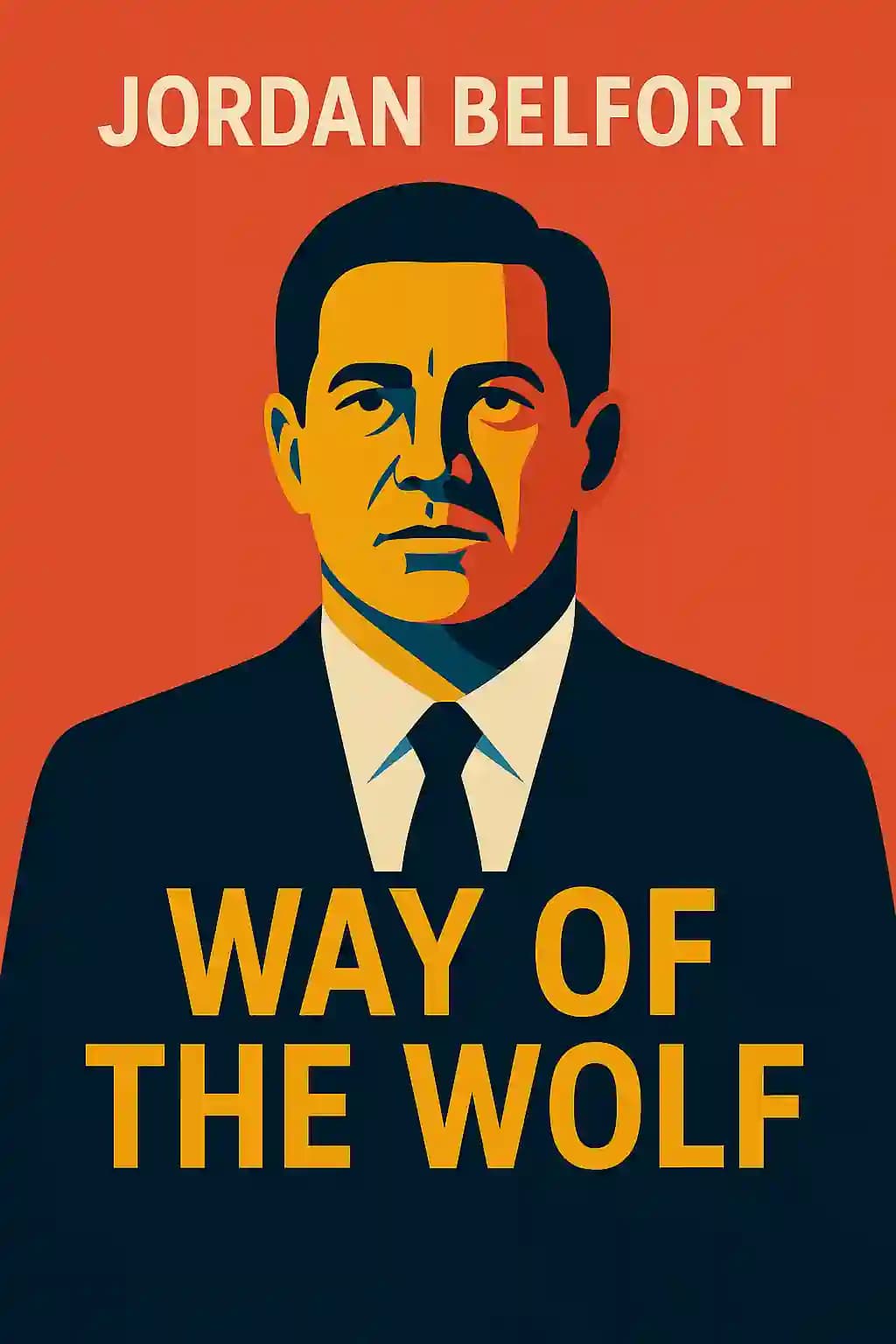
In 2013, Martin Scorsese's "The Wolf of Wall Street" catapulted Jordan Belfort into global notoriety. But beyond the film's depiction of excess lies something far more valuable - a sales methodology so powerful that even diluted versions transformed struggling salespeople into top producers. "Way of the Wolf" reveals this system in its entirety, refined and grounded in ethics. The book has become required reading at companies like Google and Tesla, with Elon Musk reportedly gifting copies to his sales teams. Even celebrities like Kevin Hart credit Belfort's system with helping them negotiate better entertainment deals. What makes this methodology so compelling is its universal application - whether closing million-dollar contracts or simply persuading your spouse to try a new restaurant, the Straight Line System works because it aligns perfectly with how humans actually make decisions. Let's dive into the method that transformed countless ordinary people into extraordinary closers.
2장
The Three Pillars of Every Successful Sale
Have you ever wondered why some people can sell anything while others struggle to give away free samples? The secret lies in what Belfort calls the "Three Tens" - three critical elements that must align in a prospect's mind before they'll say yes.
For any sale to succeed, prospects must reach absolute certainty (a "ten") about three things: the product, the salesperson, and the company. A prospect at a "ten" for the product believes it's "the best thing since sliced bread," while someone at a "one" thinks it's worthless. Similarly, they must trust you completely and have confidence in your company.
What's fascinating is that being at any point on this certainty scale is merely a temporary state, not a permanent condition. People naturally want to be influenced - a prospect at a "five" is essentially saying "please influence me now!" This understanding fundamentally changes how we approach sales.
Two distinct types of certainty drive decisions. Logical certainty comes from facts, figures, and whether your case makes intellectual sense - does your product truly fill their needs at a fair price? Emotional certainty creates a gut feeling and craving through "future pacing," allowing prospects to experience the benefits before buying.
While conventional wisdom says people buy on emotion and justify with logic, both types of certainty are crucial. Focus only on logic, and prospects will "think about it." Skip logic for emotion, and their internal BS detector will block the sale. Only by building high certainty on all Three Tens will you consistently close deals.
When prospects lack certainty, they don't directly tell you. Instead, they offer objections - those smoke screens like "I need to think about it" or "Let me talk to my spouse." These aren't the real issues; they're just socially acceptable ways to bow out without confrontation. Understanding this dynamic completely transforms how you handle objections.
3장
The Straight Line: Your Path to Closing
Imagine a perfectly straight horizontal line with an X at each end. The left X represents the opening of a sale, the right X represents the close. Everything you say should keep your prospect moving steadily along this straight line toward closing.
While rare "lay-down" sales follow this path perfectly, most prospects try to veer off course. Belfort illustrates this by drawing arrows pointing away from the line toward "Pluto" or "Your-anus" - representing irrelevant tangents. The key is establishing boundaries (dotted lines) above and below the straight line: within these boundaries, you maintain control; outside them, the client controls the conversation and the sale spirals off course.
When directly on the straight line, you do all the talking, with every word purposefully moving the prospect toward closing. When slightly off the line but still within boundaries, the prospect speaks while you listen - gathering crucial intelligence and building rapport.
The three basic tenets of the front half of the Straight Line are: taking immediate control of the sale, engaging in massive intelligence gathering while building rapport, and smoothly transitioning into a presentation that builds absolute certainty for the Three Tens. The back half begins after asking for the order the first time, when the real selling begins as you address objections.
What makes this system so powerful is its "combination lock" approach. Like a safecracker opening a vault, you must align five core elements: the Three Tens (product, salesperson, company certainty), the action threshold (how much certainty someone needs before buying), and the pain threshold (how urgently they need a solution). When these five elements align - click! - the sale opens naturally, without force or manipulation.
4장
The Critical First Four Seconds
Did you know that humans make snap judgments in just four seconds? These immediate decisions are incredibly powerful and difficult to overcome. To succeed in sales, you must establish three critical impressions in those first four seconds: that you're sharp as a tack, enthusiastic as hell, and an expert in your field.
Fail to establish these, and you face an uphill battle that becomes nearly impossible after about fourteen seconds. This happens because humans are conditioned from childhood to seek out and trust experts - from doctors in white coats to specialized coaches and professionals. We all want to deal with confident experts who speak with authority, not novices who speak tentatively.
But how do you convince prospects you're sharp, enthusiastic, and an expert in just four seconds? Not through words - there's no magic phrase that can bypass your prospect's logical mind to create an instant gut-level impression. Instead, it's your tone of voice and body language that make all the difference.
After millions of years of evolution, the human ear can detect subtle tonal shifts that dramatically impact meaning. Together, tonality and body language comprise about 90% of communication (roughly 45% each), while actual words account for only 10%. Despite this seemingly low percentage, words remain crucial - but only once you've established credibility through your tone and presence.
When you establish these three key impressions, they combine to convince prospects you're worth listening to. The prospect immediately understands you'll get to the point quickly, not waste their time, have a solution to their problem, and be a long-term asset. Their brain naturally extrapolates that you can help them achieve their goals, fulfill their needs, or alleviate their pain.
If you're perceived correctly, prospects will defer to you and let you take control of the sale. If perceived poorly - as dull, disinterested, or novice - the prospect takes control instead. This doesn't mean becoming a non-stop talker; the Straight Line System emphasizes becoming an expert listener, but you must first establish control of the conversation.
5장
Mastering Your Inner State
Before Stratton spiraled out of control, its boardroom was a meritocracy where the Straight Line System acted as a Great Equalizer, transforming even the most disadvantaged individuals. The key to this transformation wasn't money-these trainees were still broke-but rather a powerful visualization technique called future pacing.
This involved mentally projecting yourself into a successful future and experiencing those positive feelings in the present moment. Belfort would instruct trainees to "act as if"-act as if you're already wealthy, act as if you have unmatched confidence, and act as if you have all the answers. This practice of state management temporarily blocks troubling thoughts, maintaining a positive mindset that determines whether you can access your internal resources.
When in an empowered state like "certainty," you can access your internal resources for success. Conversely, in a disempowered state, you're blocked from these resources, setting yourself up for failure. It's like a valve-empowered states open the valve to your internal resources, while disempowered states close it.
Even with world-class sales skills, entering a prospect's door in a state of uncertainty renders those skills inaccessible. The same applies to personal life-even the most loving parent can't access their parenting skills when in states of anger or impatience.
For sales success, you must learn to trigger four key states at will: Certainty, clarity, confidence, and courage. These are the linchpin states for achieving wealth and success. Without the ability to trigger them, you're essentially hoping to be in the right state during sales encounters rather than ensuring it.
Belfort created a technique called olfactory anchoring to instantly trigger empowered states in challenging circumstances. During his global speaking tours, he needed to perform optimally despite exhaustion, jet lag, and burnout. This technique builds on NLP anchoring, which operates on the premise that the human brain functions like a computer that can be programmed to make instant behavioral changes.
The key insight is that humans can choose their emotional states rather than having them determined by external circumstances. Most people believe their emotional states result from outside forces-positive events create positive states, negative events create negative states. But you can control what you focus on and your physiology, allowing you to manage your state proactively rather than reactively.
6장
The Power of Tonality in Persuasion
When creating mystery and intrigue, lower your voice to just above a whisper and hang on the R in "reason" for an extra fraction of a second. This creates a sense of urgency and scarcity-our fourth core tonality.
Scarcity plays on people's natural inclination to want more of what they perceive as limited. There are three types: verbal scarcity (using words like "We only have one black-on-black 750iL left"), tonal scarcity (lowering your voice to just above a whisper with some "oomph"), and informational scarcity (suggesting the information itself is in short supply). When combined, these create powerful urgency that compels prospects to act now rather than later.
The next three tonalities work together when asking for the order: absolute certainty (a firm, definitive tone conveying conviction), utter sincerity (a calm, smooth tone implying heart-felt advice), and the reasonable man (raising your voice slightly at the end to imply reasonableness). For example: "You give me just one shot, Bill, and believe me [certainty]... you're going to be very, very impressed [sincerity]... sound fair enough? [reasonable man]."
When handling objections, use the hypothetical, money-aside tone to disarm resistance by making it an academic exercise: "I hear what you're saying, but let me ask you a question. Does the idea make sense to you?" The implied obviousness tonality creates the impression that benefits are a given: "Now, John, you'll make money with this, but more importantly..."
Finally, the "I feel your pain" tonality-mastered by Bill Clinton-conveys empathy when uncovering pain points. Without this sympathetic tone, you'll break rapport; with it, prospects feel deeply understood and cared for beyond just a commission.
These tonalities create an immensely powerful strategy that enhances your communication so profoundly that your prospect's conscious mind struggles to process all the additional unspoken words conveyed through tonal shifts. When this happens, you effectively take control of their inner monologue, making it work for you rather than against them.
7장
Building Rapport Through Body Language
Have you ever met someone who instantly repulsed you? Someone whose mere presence made you so uncomfortable you wanted protection from their "cooties"? That visceral negative response wasn't triggered by their words or tonality-it was their body language. Nonverbal communication hits with ten times the power of verbal communication, striking with the force of a cannonball to the gut.
In that first 1/24th of a second when someone lays eyes on you, they process everything about you: your posture, appearance, gestures, facial expressions, eye contact, even your smell. They instantly judge whether you're sharp and worth doing business with or someone repellent who lacks expertise or enthusiasm.
Before diving deeper into pacing and matching, let's explore active listening-a powerful rapport-building technique that works while you're not speaking. How you move your body, your facial expressions, smiles, and those little acknowledging sounds you make all contribute to showing genuine interest.
Nodding while your prospect speaks shows you understand them. When they discuss something important, look directly into their eyes with slightly narrowed eyes and a thoughtful expression, adding occasional nods with "ahas!" and "yups!" These signals make them feel truly heard and cared about.
Different facial expressions convey different emotions-compressed lips with a lowered head shows sadness, while compressed lips with slow nodding communicates sympathy. Bill Clinton mastered this art, making everyone feel he genuinely cared about them in just seconds.
Those audible cues like "aha" maintain rapport rather than build it, confirming you're still engaged. They're especially crucial on phone calls where body language isn't visible. In person, matching your prospect's physiology-their posture, breathing rate, even blinking-creates powerful unconscious rapport. This technique works over the phone too by matching speech rate and vocabulary.
Matching differs from mirroring-you don't copy someone's actions in real time (which appears creepy and obvious), but rather adopt similar postures and behaviors after a 5-10 second delay. This taps into likability, as people prefer doing business with those similar to themselves. The key is to pace, pace, then lead them in your desired direction-what Belfort calls "Pace! Pace! Freaking Lead!"-ninja-style, on steroids. When done correctly, this technique not only builds rapport but can transform negative emotional states into positive ones.
8장
The Art of Prospecting: Finding Your Gold
The art of prospecting begins with understanding that you can't sell to someone who doesn't need or want your product. Belfort demonstrates this through his famous "Sell me this pen" exercise, where novice salespeople typically launch into features and benefits without first determining if he even needs a pen. The correct approach is to start by asking questions: "How long have you been in the market for a pen?" This highlights the crucial difference between amateur and professional selling.
In Straight Line prospecting, we don't merely "qualify" prospects-we gather intelligence. This means learning everything relevant to closing the sale: needs, beliefs, values, hierarchy of values, past experiences with similar products and salespeople, financial situation, and pain points (both primary and secondary).
Your ability to gather this intelligence directly correlates with the power of your first impression. Only when prospects perceive you as a true expert-someone confident, eloquent, and enthusiastic who can help them achieve goals and resolve pain-will they answer your questions honestly and completely.
Without establishing this expert status, prospects give perfunctory answers or try taking control themselves, bombarding you with questions that knock you off the Straight Line. When you're in control, however, prospects defer to your expertise, allowing you to ask questions without interruption in a sequence that not only gathers intelligence but builds rapport simultaneously.
When prospecting, you'll encounter four distinct buyer types. Buyers in heat (10-20% of prospects) are your best prospects-they want your product, need it, can afford it, and are ready to decide now. Buyers in power (30-40%) lack urgency but intend to buy eventually. These first two groups should continue down your sales funnel. The dangerous lookie-loos disguise themselves as interested buyers but waste your time with no intention to purchase, showing telltale signs like asking questions they know answers to, excessive "tire-kicking," and vague financial responses. Finally, "mistakes" entered your funnel by accident and have zero buying potential.
Like a gold prospector sifting through water for nuggets, your job is to identify the valuable prospects already in your funnel, not transform unqualified prospects into buyers. Water doesn't become gold, just as lookie-loos don't magically transform into serious buyers.
9장
Creating World-Class Sales Presentations
The secret to making world-class sales presentations begins with understanding charisma. In sales, charisma is that magnetic quality allowing certain salespeople to effortlessly build rapport with prospects. Like Bill Clinton on the campaign trail, charismatic salespeople make others feel cared about, understood, and supported.
This foundation of rapport-"he cares about me, he understands me, and he feels my pain"-is essential to sales success. Fortunately, charisma isn't an inborn trait but a learnable skill with three core components: effective use of tonality (sounding so good that people hang on your every word), targeted body language (applying all ten principles with emphasis on active listening), and not saying stupid things (maintaining intelligent discourse throughout the interaction).
When constructing effective Straight Line scripts, avoid front-loading-the mistake of disclosing all major benefits upfront, leaving nothing powerful to say when objections arise. Instead, frame your presentation like building a house: establish the foundation first, then build bit by bit. Human beings don't go from zero to 100 mph in one shot; they need stopping points to consolidate thoughts and gradually raise their certainty level.
While this is Sales 101, most salespeople gravitate toward product features rather than benefits. The key is to briefly mention a feature, then expand on its benefit, showing prospects why it matters to them personally. People care less about every feature and more about how the product will make their life easier, resolve pain, or give them more family time.
Multiple powerful statements without breaks cause them to blend together and lose impact. Well-written scripts include abundant stopping-off points where prospects interact and affirm you're on the same page. Simple yes-or-no questions like "You follow me so far?" or "Make sense?" keep prospects engaged, create a habit of saying yes, and serve as rapport checks. If they say "no," don't move forward-loop back with more information until they understand.
Speak casually using layman's terms rather than formal English or technical jargon. Your script should sound natural, as if speaking to a friend while trying to connect emotionally. Balance is crucial-still sound educated and expert without talking above your prospect with technical buzz phrases. Use colloquialisms and contractions to keep your prose natural and snappy while maintaining your expert positioning.
Perfect scripts require multiple drafts, testing by reading aloud to identify glitches in rhythm or flow. Look for tongue-twisters, unbalanced sentences, or awkward transitions that need smoothing. Rewrite until every word flows like silk, ensuring even rookie salespeople sound impressive.
10장
The Art of Looping: Handling Objections Like a Master
The sale truly begins after your prospect hits you with the first objection-that's when you finally earn your paycheck. When asking for the order, prospects respond in only three ways: "Yes" (the rare lay-down sale), "No" (which should happen only 1-2% of the time if you've properly qualified), or "Maybe" (the most common response, consisting of standard objections like "Let me think about it" or "I need to speak to someone else").
When facing objections, the key is deflection rather than direct answers. This two-step process starts with acknowledging what your prospect said using "I hear what you're saying" in a reasonable man tone, maintaining rapport by showing respect. Then redirect with "Let me ask you a question: Does the idea make sense to you? Do you like the idea?" using the money-aside tonality to avoid making the prospect feel pressured.
This deflection technique works regardless of which common objection you receive. Your goal is to measure your prospect's certainty level about your product based on their enthusiasm. A lukewarm response like "Yeah, it sounds pretty good" indicates around a 6 on the certainty scale-not nearly high enough to close. At this point, you must loop back to build more certainty rather than moving forward toward closing.
After deflecting an objection and gauging your prospect's certainty level, you respond with "Exactly-it really is a great buy down here! In fact, one of the true beauties here is..." before launching into your follow-up presentation. This presentation must be utterly compelling and irrefutable from every angle-mathematically, economically, logistically-while using maximizers, minimizers, justifiers, power words, comparisons, metaphors, and trustworthy figures to build both logical and emotional certainty.
After your presentation, you check in with a leading question: "You see what I'm saying here, Bill? Do you like the idea?" Your goal is to reach at least an 8 on the certainty scale for the first Ten, though a 9 is typically achievable and sufficient to close 99% of prospects. When Bill enthusiastically responds "Absolutely! I love the idea!", you've successfully picked the first number in his buying combination lock.
After establishing logical certainty, you must address the second Ten-trust in you as a salesperson. Rather than prematurely asking for the order, you'll transition with mystery and intrigue tonality: "Now, Bill, let me ask you another question." Then using money-aside tonality: "If I'd been your broker for the last three or four years, making you money on a consistent basis, then you probably wouldn't be saying 'Let me think about it.' You'd be saying 'Pick me up a block of at least a few thousand shares.' Am I right?"
This powerful pattern forces prospects to admit that trust is the real issue, not their original objection. To build trust rapidly, you'll employ the Forrest Gump pattern-a simple yet profound technique that leverages humans' ability to swing from distrust to high trust in seconds. You'll say sympathetically: "Now, that I can understand. You don't know me, and I don't have the luxury of a track record; so let me take a moment to reintroduce myself." Then share your credentials, experience, ethics, and how you can be an asset to them long-term.
11장
Ethical Persuasion: The Ultimate Life Skill
The most common mistake salespeople make when applying the Straight Line System is being too rigid with the language patterns. While these patterns work perfectly in industries like insurance, financial services, and education, they need adaptation for different contexts.
For example, in retail, asking if a shirt "makes sense" sounds ridiculous-instead, adapt with phrases like "Is this what you're looking for?" or "Is this up your alley?" Use common sense as your guide when adapting the system to your specific industry.
The action threshold is the collective level of certainty a person needs before feeling comfortable enough to buy. Some people have very low action thresholds-they'll buy at a 7,8,7 on the certainty scale rather than needing perfect 10s.
When making buying decisions, humans run two parallel mental movies: a positive one showing the upside if the product delivers, and a negative one showing the downside risk. Low-threshold buyers like Belfort run long, empowering positive movies and short, less toxic negative ones. High-threshold buyers do the opposite-running long, toxic negative movies and short, uninspiring positive ones.
To lower a prospect's action threshold, you can: 1) offer a money-back guarantee, 2) provide a cooling-off period, 3) use reassuring phrases like "I'll hold your hand every step of the way," or 4) use language patterns that temporarily reverse their parallel movies. High-threshold prospects, once closed, often become your most loyal customers.
After running two loops, you'll need at least one more to address the prospect's pain threshold-the final number in their buying combination. People feeling significant pain act quickly, while those in denial act slowly, creating an inverse relationship between pain and action threshold.
To leverage pain, first identify it during intelligence gathering, then reintroduce it in your third loop with empathetic questions like: "Given how things have been deteriorating, where do you see yourself in a year from now?" This helps prospects acknowledge their situation will likely worsen without action.
The Straight Line System is an immensely powerful persuasion tool that can transform your life rapidly. People worldwide who never experienced success before have achieved beyond their wildest dreams after mastering these techniques. But remember-success without ethics and integrity isn't success at all. This book serves as your guide to avoid learning that lesson the hard way.
What they say about Belfort is true-he can sell anything to anyone. But his truly rare and valuable gift is the ability to transform people from all backgrounds into world-class closers almost instantly. This system offers a turnkey solution for applying persuasion to any business or life situation. For salespeople and business owners, it will shorten your sales cycle, increase closing rates, generate referrals, and create customers for life. But even "civilians" not in traditional sales need these skills-because selling is everything in life. Either you're selling or you're failing. We're always conveying our thoughts, ideas, hopes and dreams to move people to action while getting what we want. That's ethical persuasion-the linchpin skill for living an empowered life. Just remember: with great power comes great responsibility.