1장
The Million-Dollar Mindset: How Psychology Transforms Sales Results
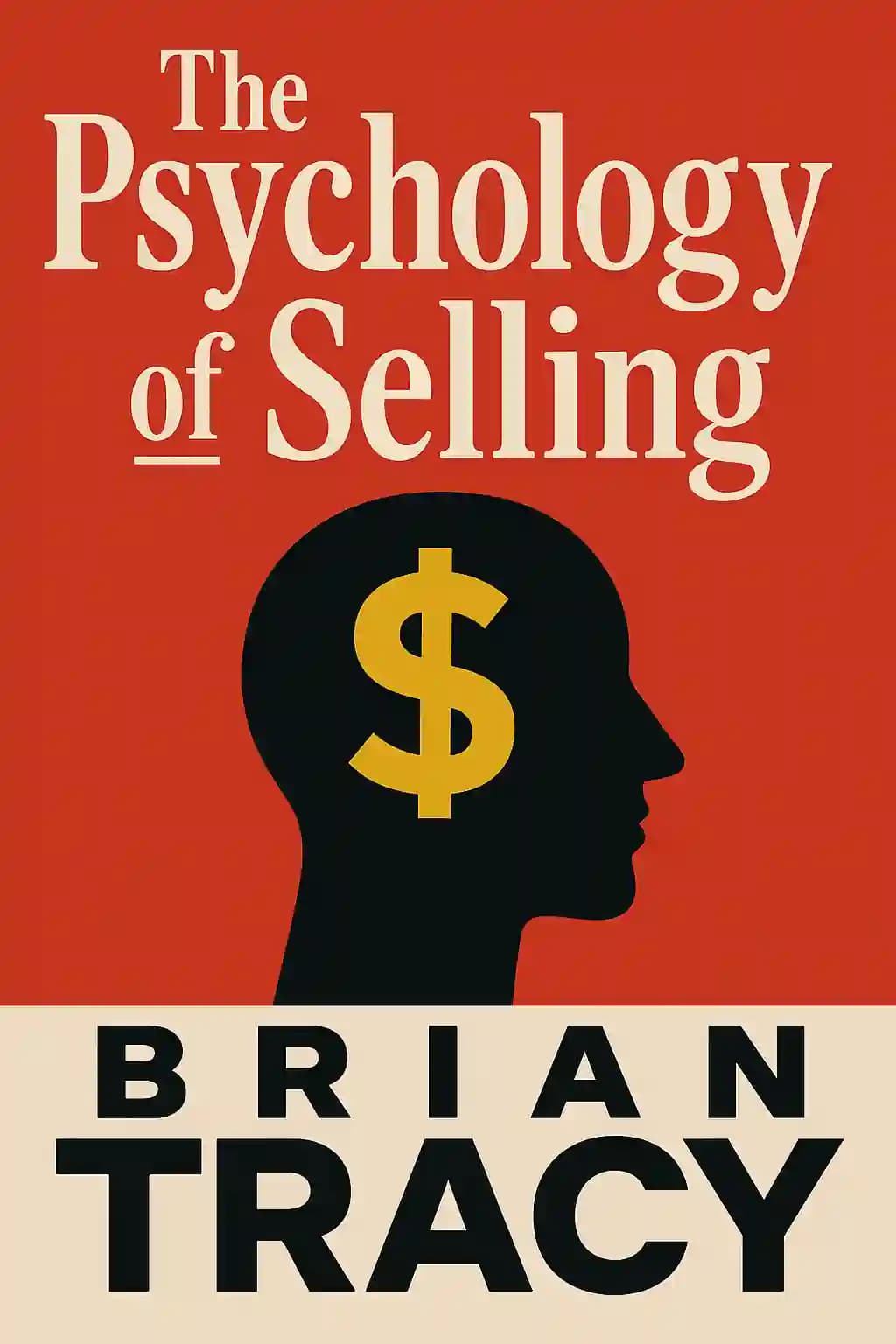
Have you ever wondered why some salespeople consistently earn six or seven figures while others in the exact same company, selling identical products at identical prices, struggle to make ends meet? Brian Tracy's groundbreaking work "The Psychology of Selling" reveals the startling truth: success in sales has remarkably little to do with your product knowledge or sales techniques-and almost everything to do with what happens between your ears. As a former high school dropout who transformed himself into one of the world's most sought-after sales trainers, Tracy discovered that the difference between average and exceptional performance comes down to psychological factors that anyone can develop. This book has become required reading at companies like IBM, Coca-Cola, and Microsoft, with executives crediting it for dramatic revenue increases. Even celebrities like Tony Robbins and Grant Cardone cite Tracy's methods as foundational to their success philosophies. What makes this approach so revolutionary is its focus not on manipulative closing tactics, but on the inner game-how salespeople think about themselves, their customers, and the selling process itself.
2장
The Inner Game: How Self-Concept Drives Sales Success
Nothing happens until a sale takes place. Salespeople are among society's most important contributors-without sales, our entire economy would grind to a halt. Despite this importance, sales was historically considered a second-rate occupation, with many people embarrassed to admit they worked in sales. This attitude has changed dramatically in recent years. Today, the best companies have the best salespeople, while second-tier companies have second-tier salespeople, and third-tier companies are failing. More Fortune 500 CEOs have risen through sales than any other department.
Professional selling offers both high income and lifelong job security. No matter how the economy changes, top salespeople remain in demand. By becoming excellent at sales, you can achieve any financial goal. In sales, the Pareto principle dominates: the top 20% of salespeople make 80% of the money, while the bottom 80% make only 20%. This rule extends further-the top 4% earn as much as all the rest combined.
The income gap in sales is staggering-the top 20% earn sixteen times more than the bottom 80%. Yet the difference between top performers and average ones isn't massive-often just a few small things done consistently and well. Like a racehorse winning by a nose but collecting ten times the prize money, salespeople who are just slightly better can achieve dramatically better outcomes.
The qualities separating successful salespeople from average ones are well-documented and learnable through practice. What happens inside a salesperson's mind makes all the difference. Harvard University studied sixteen thousand salespeople and found that success determinants were primarily mental. The average salesperson uses only a small percentage of their potential effectiveness-most people tap into just 10% of their capabilities, leaving 90% untapped.
The self-concept-your bundle of beliefs about yourself-is psychology's most significant breakthrough. It functions as your subconscious computer's master program, determining everything you say, think, feel, and do. Your performance directly reflects your self-concept; all improvement begins by altering this inner programming. Your self-concept affects every aspect of selling. With a positive prospecting self-concept, you eagerly call new prospects each morning. With a poor prospecting self-concept, you approach the task with anxiety and avoidance.
Every salesperson has an income self-concept. Psychologists found you'll never earn 10% more or less than this internal setting. You can never earn more externally than you believe internally. Your income functions like a thermostat set at a specific temperature, constantly adjusting your behaviors to maintain that level. To increase your income, you must first achieve your financial goals in your mind before reality.
In selling, there are seven key result areas (KRAs): prospecting, building rapport, identifying needs, presenting, answering objections, closing the sale, and getting resales and referrals. Your self-concept in each area determines your performance. The solution to fears or reluctance in any selling skill is mastery. The better you get in any area, the more positive your self-concept becomes.
The most important discovery in self-concept psychology is the central role of self-esteem-how much you like yourself. This is the critical determining factor of your personality and everything that happens to you, including your income and sales performance. The more you like yourself, the better you perform in any role. One of history's greatest discoveries is that you become what you think about most of the time. The most powerful words for building self-esteem are "I like myself!" Each repetition increases your self-esteem, causing a chemical change in your brain that releases confidence-boosting endorphins.
The two major obstacles to sales success are the fear of failure and the fear of rejection. The fear of rejection-that a prospect might say no-triggers anxiety about possible rudeness, disapproval, or criticism. Yet 80 percent of sales calls naturally end in rejection for countless reasons unrelated to you or your product. Studies show the average salesperson works only about ninety minutes per day face-to-face with customers. Most don't make their first call until around 11:00 AM and finish their last call by 3:30 PM. They spend mornings getting "warmed up" with coffee, chatting, reading papers, and shuffling business cards-all to avoid facing rejection.
As fears increase, you begin rationalizing your non-selling behavior. You create "make-work" at the office-reading newspapers to "stay informed," shuffling business cards, checking for calls from prospects who are "thinking it over." You waste mornings with coffee and office chat, then rush out for a token sales call just before lunch to justify your day. Another avoidance tactic is spreading sales calls across town, scheduling one call at each end of the city, creating an hour of driving time between appointments.
Everything that raises your self-esteem-positive self-talk, affirmative visualization, personal motivation, enthusiasm, and training-improves your personality and sales effectiveness. There's a direct relationship between self-esteem and income. The more you like yourself, the more sales you make and the higher your income.
3장
Setting and Achieving Sales Goals: The Path to Exceptional Income
Top salespeople are intensely goal oriented. The highest-paid salespeople know precisely how much they'll earn each period and how many calls they need to make to achieve specific sales levels. You must decide exactly how much you intend to earn yearly-without this clarity, your sales activities will be unfocused, like shooting at an invisible target.
Begin with your annual income goal-how much you intend to make in the next twelve months. Write this number down as the target for all your activities. Make it realistic yet challenging-perhaps 25-50% above your highest income year to date. Goals must be written down to be effective. The act of writing goals increases your likelihood of achieving them by 1,000 percent-ten times faster than expected.
Calculate how much you must sell this year to achieve your personal income goal. Break your annual income and sales goals down by month, determining how much you need to earn and sell monthly to achieve your annual targets. Then further divide these into weekly sales and income goals to maintain consistent progress. Finally, determine your daily sales requirements to meet your income goals.
Determine the specific activities needed to achieve your desired sales level. Calculate how many calls will generate how many appointments, and how many presentations will produce your target sales volume. While you can't control where specific sales come from, you can control your activities-the inputs that lead to results. By making your required number of calls consistently each day, the law of averages will work in your favor.
When you start setting systematic goals, you'll often achieve them faster than expected. Many salespeople hit one-year goals in six or seven months, some in as little as three. Writing down goals programs them into your subconscious mind, giving them a power of their own. Your subconscious works 24 hours daily, alerting you to opportunities, bringing you the right ideas at the right moment, and guiding your interactions.
Personal and family goals provide the reasons why you persist through difficulties. Make a list of everything you would be, have, or do if you doubled your income. The longer this list, the greater your motivation and determination will be to succeed despite temporary setbacks. With only one or two reasons for achieving financial goals, you'll be easily discouraged. But with fifty or a hundred reasons, you become virtually unstoppable.
Get a notebook and write down 100 goals you want to accomplish. List everything you'd like to have and do, imagining each will come at exactly the right time. Among 500,000 salespeople across 25 countries, commitment to goal setting has been the number one success factor for top performers. The highest-paid professionals write and rewrite goals daily, continually adding to their lists, activating their subconscious minds, and attracting the people and circumstances that help them achieve their goals.
Visualization is perhaps the most powerful skill you can develop with goal setting. Create clear mental pictures of yourself as calm, confident, and successful. See yourself excelling at prospecting, presenting, and closing. Before sales meetings, imagine prospects responding enthusiastically and signing orders. Your subconscious accepts strong affirmative statements as commands. Repeating "I like myself!" raises self-esteem and improves performance. When you combine affirmations with visualization, you take complete control over your mind and emotions.
Many "Columbus salespeople" start their day with vague plans, say whatever comes to mind during meetings, and return to the office unsure what happened. Top salespeople think through calls in advance, mentally rehearsing what they'll say before meeting prospects. Use visualization in two ways: directly, seeing the customer through your own eyes responding positively to your presentation; and indirectly, observing yourself and the customer from outside, like a third party. Continually imagine yourself as the very best in your field, among the highest earners in your business.
4장
Understanding Why People Buy: The Key to Persuasive Selling
People buy for their reasons, not yours. The ability to accurately identify your prospect's needs is the indispensable step upon which the entire sales process depends. Every human action aims at improvement-people buy because they believe they'll be better off with your product than without it or with a competitor's offering. The improvement must be substantial enough to justify the cost and implementation effort.
People value freedom above almost all other benefits. Having money gives them choices and options. When they buy something, they sacrifice some of that flexibility. If they purchase an unsatisfactory product, they're stuck with it and have lost their money. This experience creates buying resistance in every prospect.
Each person has different buying motivations, including invisible "psychic" or "emotional" values that make products feel more valuable. While salespeople often emphasize price, prospects may care more about company reputation or name recognition, willing to pay more for better-known products. People are sensitive to how others in their work or home environment will respond to their purchase decisions. No one wants to be criticized.
Most salespeople parrot "price and quality" as selling points, but in today's competitive market, these are assumed basics. Professional selling begins with needs analysis-asking enough questions and listening closely to understand the prospect's most intense need that your product can satisfy. Most salespeople focus on what their product is-its features, design, and production. But prospects only care about what your product will do for them. They're tuned to WII-FM: "What's In It For Me?"
People often buy for emotional rather than practical reasons. People buy for two main reasons: desire for gain and fear of loss. While desire for gain has a motivational power of 1.0, fear of loss has a negative motivational power of 2.5. People are much more motivated to avoid losing something than they are excited about gaining something new. The best sales presentations demonstrate both what the prospect will gain by buying and what they'll lose by not buying.
Believability is perhaps the most crucial requirement in your sales presentation. No matter how convinced you are about your product's benefits, customers remain skeptical. Your job is to raise your credibility to the point where the customer has no reluctance in proceeding.
Each customer has basic human needs that motivate buying action. You must identify which needs your product can satisfy for each particular customer, then convince them your solution fulfills that need better than anything else available. These include:
1. Money: Everyone wants more money. When you can link your product to making or saving money for the customer, you'll have their total attention.
2. Security: Everyone has a fundamental need for security. People buy because of how they anticipate feeling after owning your product. This emotional anticipation is what you must trigger.
3. Being Liked: Everyone wants to be liked, accepted and respected by others. We need to feel we belong and have self-worth.
4. Status and Prestige: One of the most powerful motivations is status or personal prestige. We want to feel important and have others look up to us.
5. Health and Fitness: Everyone craves longevity and vibrant health. Products that enhance physical quality of life in a cost-effective way will strongly attract those who are overtired, overweight, or suffering from physical discomfort.
6. Praise and Recognition: Our universal need for recognition drives many purchases. Self-esteem is essentially "the degree to which one feels praiseworthy."
7. Power, Influence, and Popularity: People crave power, influence, and popularity. Products or services that promise to increase these qualities naturally arouse buying desire.
8. Leading the Field: We all want to be seen as current and modern-leaders rather than followers. Many will purchase simply because a product is the newest on the market.
9. Love and Companionship: The millions subscribing to Internet dating services demonstrate our craving for companionship.
10. Personal Growth: The need for knowledge and skill development defines the twenty-first century. People want to feel competent, learn new skills, and excel beyond their competitors.
11. Personal Transformation: The most abstract need-and the one people will pay most to satisfy-is personal transformation. If prospects believe your product will elevate them to a new level in life or work, there's virtually no limit to what they'll spend.
All buying decisions are 100 percent emotional. People decide emotionally and then justify logically. You use logic to rationalize decisions after they're made. When you claim to do something because it's "logical," you're simply saying you have more emotion invested in that action than alternatives. The strongest emotion operating at any moment determines how a person decides and acts.
5장
Creative Selling: Finding Innovative Paths to Success
Creativity is a natural characteristic of top salespeople that can be developed with practice. It's not about artistic talent but about improvement-doing things differently to get better results. The more you believe yourself to be creative, the more creative ideas you'll generate. In selling, you're essentially creating business where none existed before.
Creativity is stimulated by three key factors: clear goals, pressing problems, and focused questions. The more intensely you desire to achieve a specific goal, the more creative you'll be in finding ways to accomplish it. In selling, creativity is especially important in prospecting (finding more and better prospects) and uncovering buying motives (determining what will cause customers to buy).
Creative selling begins with thorough product knowledge. The better you understand what you're selling and how it compares to competitors, the more creative you'll be in explaining its benefits and overcoming resistance. The fastest way to increase your income is to "spend more time with better prospects." Creative prospecting begins with planning and analysis: identifying your product's most attractive features, understanding what specific customer needs it satisfies, and determining your company's unique area of excellence.
To join the top 10% of money earners, you must master four strategic selling keys: specialization, differentiation, segmentation, and concentration. Specialization means determining exactly what your product does for customers. Differentiation identifies what makes your product superior to competitors'. Segmentation involves identifying which customers can most benefit from your unique offerings. Concentration means setting clear priorities and focusing single-mindedly on prospects with the best potential-always "fish for whales, not minnows."
Use creativity to identify your biggest sales opportunities through focused questions: Who is your ideal customer? Who buys your product now? Who will be your future customers? What are the market trends? What new markets might exist for your product? Why does your customer buy? Who are your competitors and what's your competitive advantage?
The greatest untapped market for your products are noncustomers-people who could use your product but don't buy from you or competitors. Often these are "late adaptors" who wait until products are proven before buying. Understanding the timing of customer purchases is crucial. Consider whether they buy during specific business cycles, seasons, or growth phases. Different customer types have distinct buying triggers. Impulse buyers (5-10% of customers) purchase immediately when products launch. Many others wait 2-4 years for market validation before purchasing.
Word-of-mouth is the most powerful form of advertising, with 85% of all sales happening only after someone recommends the product. Your satisfied customers are your best source of resales and referrals-ask them directly why they chose you over competitors to uncover your most compelling selling points.
The "20 Idea Method" is one of the most powerful creativity tools for salespeople. Write your biggest goal or problem as a specific question at the top of a page, such as "How can I double my income in the next twelve months?" Then force yourself to write at least twenty answers in personal, positive, present tense statements. The twentieth answer often provides the breakthrough insight. Immediately implement at least one idea. If you do this exercise five days weekly, you'll generate 5,000 ideas annually and implement 250 of them-dramatically transforming your results and income.
6장
The Art of Getting More Appointments: The Gateway to Sales Success
The fundamental rule for selling success is to spend more time with better prospects. Though prospecting causes the most stress and frustration for salespeople, it's a learnable skill that guarantees your success once mastered. Your first contact with prospects must accomplish specific goals to begin the sales process effectively. Every word of your approach should be carefully planned.
Your opening must break through the prospect's preoccupation with their own problems. Instead of immediately discussing your product, introduce yourself and ask if they have a couple minutes to talk. Never discuss your product or price on the phone unless you can conclude the sale without meeting. Young salespeople often kill sales by providing too many details too soon, resulting in immediate rejection.
When meeting prospects, don't start talking while they're distracted. Your first words should grab complete attention like throwing a brick through glass. Focus on benefits the prospect will receive, not the product itself. You have only thirty seconds to capture a prospect's attention. The first 15-25 words set the tone for the entire conversation, so choose them carefully and rehearse them regularly. Your opening statement should be planned word-for-word, rehearsed extensively, and memorized.
Expect resistance when cold-calling-you're interrupting someone who considers what they're doing more important than your call. When prospects say they're not interested, respond with: "That's all right. Most people in your industry felt the same way when I first called. But now they've become our best customers." This typically stops them in their tracks and prompts them to ask what you're offering. This technique leverages social proof-the powerful psychological principle that people follow others like themselves.
When prospects ask for information over the phone, respond: "I'd love to tell you, but I have something I have to show you. You need to see it personally." This triggers curiosity. Immediately offer appointment options: "Would Tuesday morning be convenient? Or would Wednesday afternoon be better?" Remember, your first call's purpose is solely to secure a face-to-face appointment-nothing else.
Before prospects will listen to you, they need five assurances: that you have something important to communicate, that they're the right person to hear it, that your visit will be brief, that they'll be under no obligation, and that you won't use high pressure tactics. Address these concerns immediately to get prospects to relax and listen.
Start your meeting with an interesting question aimed at your product's benefit. Questions are powerful because people are conditioned from childhood to answer them automatically. The person asking questions controls the conversation. To overcome resistance, mention other satisfied customers in their industry: "Another company in your industry, ABC Printing Services, is already using this product with great results." Social proof often transforms reluctant prospects into interested ones who want to learn what their competitors are already benefiting from.
Always reconfirm appointments before showing up-it's a mark of professionalism. Stand up when making prospecting calls to align your body's energy centers, making your voice stronger and more confident. Smile into the phone when speaking-people can "feel" your smile through the line. These two simple techniques project greater energy and sincerity, often providing that extra push needed to secure appointments.
Before meeting a prospect, take a few seconds to mentally picture yourself as relaxed, positive, and in complete control. Breathe deeply while visualizing yourself as the best salesperson possible. Remember a previous successful sales call and transfer those positive feelings to your upcoming meeting. When meeting a prospect, shake hands firmly and say, "Thank you very much for your time; you're really going to enjoy what I have to show you." This builds positive expectancy and curiosity.
Never present your product while standing up-it devalues your offering. No one buys a product standing up, so refuse to sell it that way. If a prospect tries to have you present in the reception area, politely say, "What I have to show you is really important, and I need about ten minutes of your time." If they won't sit down with you, suggest rescheduling when more convenient.
7장
The Power of Suggestion: Creating the Right Environment for Sales
Human beings are profoundly influenced by suggestive elements in their environments, particularly other people. The calm, confident presence of a professional salesperson creates a powerful suggestive influence. Top salespeople project confidence in themselves and their offerings, creating a soothing, convincing effect on customers.
Your physical environment dramatically impacts how you think, feel, and behave. Even small environmental changes, like a five-degree temperature shift, can significantly alter comfort levels and attention spans. The most powerful environmental influence comes from the people you interact with. Much of your reaction to others happens subconsciously-that instant positive or negative assessment before words are exchanged.
You control several key suggestive influences: your appearance, voice, and attitude. Looking professional, speaking clearly with confidence, and maintaining a calm, optimistic demeanor create positive impressions. Rehearse your presentation aloud before a mirror, like professional actors do. Project your voice as if speaking to the back row of an audience, then simply lower the volume while maintaining the same confidence and energy when with prospects.
Ninety-five percent of your first impression comes from your clothing. Prospects respond intensely to visual cues. Your appearance hits them like a wave against a breakwater, creating strong subconscious impressions. They assume your external appearance reflects your internal qualities. When well-dressed and groomed, customers unconsciously assume you represent a good company with quality products.
In thousands of seminars with over a million salespeople, I've consistently observed that the best-dressed salespeople earn the most money. Many salespeople unknowingly sabotage their success each morning by dressing poorly, and tragically, no one tells them how crucial appropriate business attire is to their success.
A fundamental truth in sales: people won't buy until convinced you're their friend acting in their best interest. Robert Cialdini's research confirms the importance of "liking" in sales success. If prospects like you, details won't impede the sale; if they don't, those same details become insurmountable obstacles. The first unspoken question every customer asks is "Do you care about me?"
Your grooming should never distract from your sales message. The focus should remain on your face during conversations. We naturally prefer dealing with people similar to ourselves-"birds of a feather flock together." The more your appearance harmonizes with your customer's environment, the less resistance they'll have to your message.
Your product or service should always appear clean, neat and presented optimally. People are strongly influenced by attractive, colorful products and negatively affected by dirty, sloppy sales materials. Your sales presentation should be well-organized, practiced and complete. As much as 80 percent of your product's perceived value comes from your presentation quality. A random, wandering presentation makes your offering seem less desirable, while a crisp, logical presentation increases perceived value and reduces price resistance.
Your business environment should convey success and professionalism. A clean desk projects success and competence, while clutter suggests confusion and incompetence. When you appear completely professional in dress, grooming, and presentation, customers unconsciously perceive your product as valuable and worth its price. As confidence in you increases, price resistance decreases.
Think of yourself as a "doctor of selling." The more time you spend asking logical, well-organized questions, the more your "patient" feels they're dealing with a professional. Body language constitutes 55% of your sales message, with tone of voice at 38% and actual words only 7%. Walk confidently with head high, shoulders back, and spine straight. Move quickly and purposefully, projecting the image of a busy, confident sales professional.
Your handshake can make or break a sale. A strong, firm handshake suggests good character and a quality product. When meeting prospects, offer your hand, make direct eye contact, and say "How do you do?" rather than "Pleased to meet you." Always face prospects directly and sit with your back straight, leaning slightly forward. Never lean back, which suggests disinterest.
People can only concentrate on one thing at a time, making it crucial to minimize distractions during sales conversations. When sitting with prospects, avoid physical barriers like desks or tables. Politely ask if you could sit together at a table where you can easily show your materials. Always have the prospect sit on your left, making it easier for them to see your presentation materials as you turn pages.
8장
The Art of Closing: Making the Sale with Confidence
Everything in the sales process affects the outcome-nothing is neutral. All prospects have initial "generalized sales resistance," a natural defense against the thousands of commercial messages they face daily. Begin conversations with an "approach close" by saying: "Thank you for your time. Please relax; I'm not here to sell you anything right now. I just want to show you why others buy this product. All I ask is that you look with an open mind and tell me if it makes sense for you."
There are six key buyer personalities you'll encounter:
1. The Apathetic Buyer (5%): Pessimistic and uninterested, unlikely to buy regardless of offer.
2. The Self-Actualizing Buyer (5%): Knows exactly what they want and buys immediately when requirements are met.
3. The Analytical Buyer (25%): Detail-oriented, needs precise information and specifications.
4. The Relater Buyer (25%): Values others' opinions and needs relationship-building before purchasing.
5. The Driver Buyer (25%): Task-oriented and direct, wants immediate results without small talk.
6. The Socializer Buyer (25%): Outgoing, enjoys conversation, may agree quickly but forget details.
Trust is fundamental - prospects won't consider your offering until they like and trust you. Build trust through attentive listening and genuine interest in their situation. Present benefits one at a time to identify their "hot button," then focus on that specific advantage. When enthusiasm peaks, move directly to closing: "How soon would you need this?"
When prospects hesitate, maintain control through questions focusing on benefits. If they say they'll "think it over," remind them they already have all the information needed to decide.
Use planned presentations following a three-part structure: show the product, explain its business impact, and ask if it would help them. Remember that buying decisions are 100% emotional, though prospects need logical justification afterward.
Practice active listening: face prospects directly, lean forward, nod, and pause 3-5 seconds before responding. Use visual aids extensively - they're 22 times more effective than verbal communication alone. Create emotional word pictures throughout your presentation, as people make buying decisions based on stories and mental images.
9장
The Ten Keys to Sales Success: Your Path to the Top
The top 20 percent of salespeople earn 80 percent of the money, with the top 5-10 percent earning vastly more. Becoming one of these elite performers is easier than you might think when you understand the law of cause and effect-doing what successful people do will eventually produce the same results they achieve.
1. Do What You Love to Do: All truly successful, highly paid people love what they do. Commit yourself to becoming excellent in your field by investing whatever time is necessary and making any sacrifice required. Excellence is a decision most people never make. Self-esteem and success are directly connected-you can never genuinely like yourself until you've become very good at something that makes a difference.
2. Decide Exactly What You Want: Don't be wishy-washy or vague about your goals. Only about 3 percent of adults have written goals, and these are the most successful people in every field. Use the seven-step goals formula: decide exactly what you want, write it down, set a deadline, make a list of everything you need to do, organize by sequence and priority to create a plan, take action immediately, and do something every day toward your goal.
3. Back Your Goal with Persistence and Determination: Once you begin, refuse to consider the possibility of failure. Make a complete commitment to your goal and resolve that nothing will stop you. Your response to inevitable setbacks reveals your character and predicts your future success.
4. Commit to Lifelong Learning: Your mind is your most precious asset, and unlike physical possessions, it can appreciate in value. Fortune 500 presidents consistently advise: "Never stop learning and getting better." Read books, listen to audio programs, attend seminars, and continuously upgrade your skills.
5. Use Your Time Well: Your time is your primary asset and how you use it determines your standard of living. Begin each day with a list prepared the night before, which alone increases productivity by 25 percent. Set clear priorities by asking what one task would be most important if you could only do one thing before being called away.
6. Follow the Leaders: Do what successful people do. Identify the top performers in your field and pattern yourself after them. Ask them for advice on books to read, programs to listen to, and courses to take. Successful people are almost always willing to help others who genuinely want to succeed.
7. Character Is Everything: Guard your integrity as a sacred thing-nothing is more important to your success in sales. Credibility is essential; people must trust and believe in you. Studies consistently identify trust as the most critical factor distinguishing successful salespeople.
8. Unlock Your Inborn Creativity: Think of yourself as a genius with untapped creative potential. Every person has the ability to perform at genius levels in certain areas. Your task is to identify your special talents and develop them.
9. Practice the Golden Rule: Treat others as you would want to be treated. Put yourself in your customer's position-you'd want a salesperson who takes time to understand your needs, explains solutions thoroughly, deals honestly with you, and follows through on promises.
10. Pay the Price of Success: Resolve to work hard-one of the greatest keys to success. Research from "The Millionaire Next Door" found that 85% of self-made millionaires attributed their success not to superior intelligence but to working harder than others for longer periods. Start earlier, work harder, stay later, and do the things average people avoid.
You have unlimited potential to achieve all your goals through excellence in selling. By becoming excellent in your profession, you can achieve all your dreams, create a wonderful life, become valuable to your company, earn respect, and make a significant difference to others. The key is to take action on these principles immediately-start today by implementing just one idea from this book, then another tomorrow, and continue this pattern until excellence becomes your natural way of operating in the sales profession.