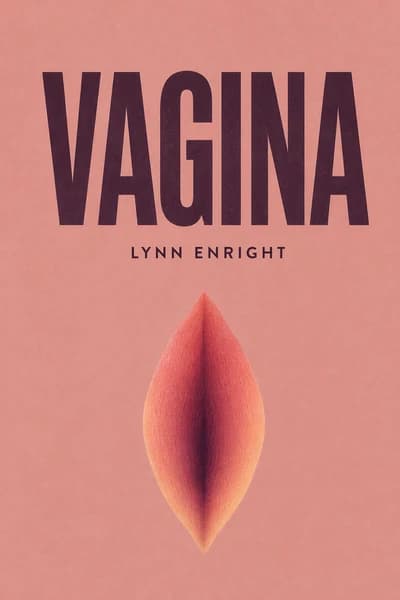
Vagina: A Re-education shatters myths about female anatomy that 40% of British women couldn't correctly identify. Lynn Enright's groundbreaking exploration challenges centuries of taboos while revealing how medicine's male-dominated history continues to impact women's health and autonomy today.
Lynn Enright, acclaimed Irish journalist and feminist author of Vagina: A Re-Education, is a leading voice in women’s health and sexual education. A Dublin-born, London-based writer, her work bridges rigorous reporting with personal narrative to dismantle societal taboos around female anatomy and reproductive health.
With bylines in Vogue, The Guardian, and Elle, and roles as digital director of Grazia and head of news at The Pool, Enright has spent over a decade amplifying underrepresented stories in mainstream media. Her Substack newsletter, How’s Everyone Doing?, extends her expertise into parenting and modern feminism.
Vagina: A Re-Education, a blend of memoir and manifesto, draws from Enright’s investigative rigor and lived experience to challenge historical myths about menstruation, fertility, and pleasure. The book, praised for its unflinching exploration of topics like endometriosis and FGM, has been featured on BBC Radio and The Irish Times Women’s Podcast. Enright’s interviews with luminaries like Zadie Smith and Marina Abramović underscore her credibility in cultural discourse. Recognized as an urgent contribution to feminist literature, the book has resonated globally, empowering readers to reclaim bodily agency through knowledge.
Vagina: A Re-Education by Lynn Enright is a comprehensive exploration of female reproductive anatomy, sexual health, and societal taboos. It debunks myths about the hymen, clitoris, and orgasms while addressing issues like endometriosis, FGM, menstruation stigma, and menopause. Combining scientific research with personal narratives, the book advocates for better sex education and challenges systemic neglect of women’s health.
This book is essential for anyone seeking accurate information about female anatomy, individuals impacted by reproductive health issues like endometriosis, and advocates for gender equity. It’s particularly valuable for those tired of patriarchal narratives in mainstream sex education and readers interested in feminism, bodily autonomy, and healthcare reform.
Key themes include anatomical literacy (e.g., demystifying the vulva, cervix, and Skene’s glands), systemic erasure of women’s pain (e.g., endometriosis misdiagnoses), and cultural taboos surrounding masturbation, infertility, and abortion. Enright also critiques historical practices like Victorian-era FGM and modern period poverty.
Yes, Enright confronts FGM’s global prevalence, noting 98% of women in Somalia undergo the procedure. She links its history to Victorian efforts to curb female masturbation and “hysteria,” emphasizing how patriarchal control perpetuates this human rights violation.
The book highlights how societal shame around periods leads to inadequate healthcare and “period poverty.” Enright advocates for destigmatizing conversations through education, citing gaps in school curricula that omit topics like menstrual pain management.
Some readers find sections on FGM and childbirth trauma emotionally jarring. However, these accounts are widely praised for their unflinching honesty and role in exposing systemic failures in women’s healthcare.
As an award-winning journalist for Vogue and The Guardian, Enright blends rigorous research with accessible storytelling. Her Irish roots and focus on feminism provide a global perspective on reproductive justice, informed by interviews with medical experts and personal health struggles.
Enright clarifies that the hymen isn’t a “virginity seal,” the clitoris has 10,000 nerve endings (not 8,000), and the vagina is self-cleaning. She critiques textbooks for omitting structures like the Bartholin’s glands, which aid sexual lubrication.
The book condemns the medical dismissal of menopausal symptoms, advocating for hormone replacement therapy (HRT) accessibility. Enright ties this to broader patterns of silencing women’s pain, from endometriosis to postpartum complications.
Yes, Enright shares her experiences with hormonal contraception side effects and fertility anxieties. These anecdotes humanize statistical data, illustrating how societal shame impacts individual health decisions.
Enright argues for curricula that prioritize pleasure, consent, and anatomical accuracy over fear-based messaging. She emphasizes teaching vulva diversity, clitoral function, and uterine health to combat lifelong ignorance.
Unlike purely medical texts, Enright merges journalism, history, and memoir while centering marginalized voices (e.g., transgender women, FGM survivors). The book’s explicit anatomical diagrams and candid prose redefine “re-education” as a radical act.
저자의 목소리로 책을 느껴보세요
지식을 흥미롭고 예시가 풍부한 인사이트로 전환
핵심 아이디어를 빠르게 캡처하여 신속하게 학습
재미있고 매력적인 방식으로 책을 즐기세요
This cultural blind spot isn't just embarrassing-it's dangerous.
Sex education emphasizes male pleasure while female orgasms go unmentioned.
This ignorance isn't accidental.
The vulva remains shockingly misunderstood despite being an external body part.
Focusing solely on penis-in-vagina sex erases non-heterosexual experiences.
Vagina의 핵심 아이디어를 이해하기 쉬운 포인트로 분해하여 혁신적인 팀이 어떻게 창조하고, 협력하고, 성장하는지 이해합니다.
Vagina을 빠른 기억 단서로 압축하여 솔직함, 팀워크, 창의적 회복력의 핵심 원칙을 강조합니다.

생생한 스토리텔링을 통해 Vagina을 경험하고, 혁신 교훈을 기억에 남고 적용할 수 있는 순간으로 바꿉니다.
무엇이든 물어보고, 목소리를 선택하고, 진정으로 공감되는 인사이트를 함께 만들어보세요.

샌프란시스코에서 컬럼비아 대학교 동문들이 만들었습니다
"Instead of endless scrolling, I just hit play on BeFreed. It saves me so much time."
"I never knew where to start with nonfiction—BeFreed’s book lists turned into podcasts gave me a clear path."
"Perfect balance between learning and entertainment. Finished ‘Thinking, Fast and Slow’ on my commute this week."
"Crazy how much I learned while walking the dog. BeFreed = small habits → big gains."
"Reading used to feel like a chore. Now it’s just part of my lifestyle."
"Feels effortless compared to reading. I’ve finished 6 books this month already."
"BeFreed turned my guilty doomscrolling into something that feels productive and inspiring."
"BeFreed turned my commute into learning time. 20-min podcasts are perfect for finishing books I never had time for."
"BeFreed replaced my podcast queue. Imagine Spotify for books — that’s it. 🙌"
"It is great for me to learn something from the book without reading it."
"The themed book list podcasts help me connect ideas across authors—like a guided audio journey."
"Makes me feel smarter every time before going to work"
샌프란시스코에서 컬럼비아 대학교 동문들이 만들었습니다

Vagina 요약을 무료 PDF 또는 EPUB으로 받으세요. 인쇄하거나 오프라인에서 언제든 읽을 수 있습니다.
What if I told you that most women can't identify their own anatomy on a diagram? That the clitoris-an organ dedicated entirely to pleasure-wasn't fully mapped by medical science until the 1990s? This isn't ancient history. This is now. We live in an age where you can pull up a 3D model of the human heart on your phone, yet female genitalia remains shrouded in mystery, shame, and dangerous misinformation. The consequences aren't just embarrassing-they're life-altering. Women undergo unnecessary surgeries to "fix" normal anatomy. They endure years of undiagnosed pain. They navigate sexual experiences without understanding their own capacity for pleasure. This knowledge gap isn't accidental. Throughout history, information about female bodies has been systematically controlled, suppressed, and distorted. From medieval midwives burned as witches to modern threats against reproductive rights, the pattern repeats: controlling women's bodies begins with controlling knowledge about them.