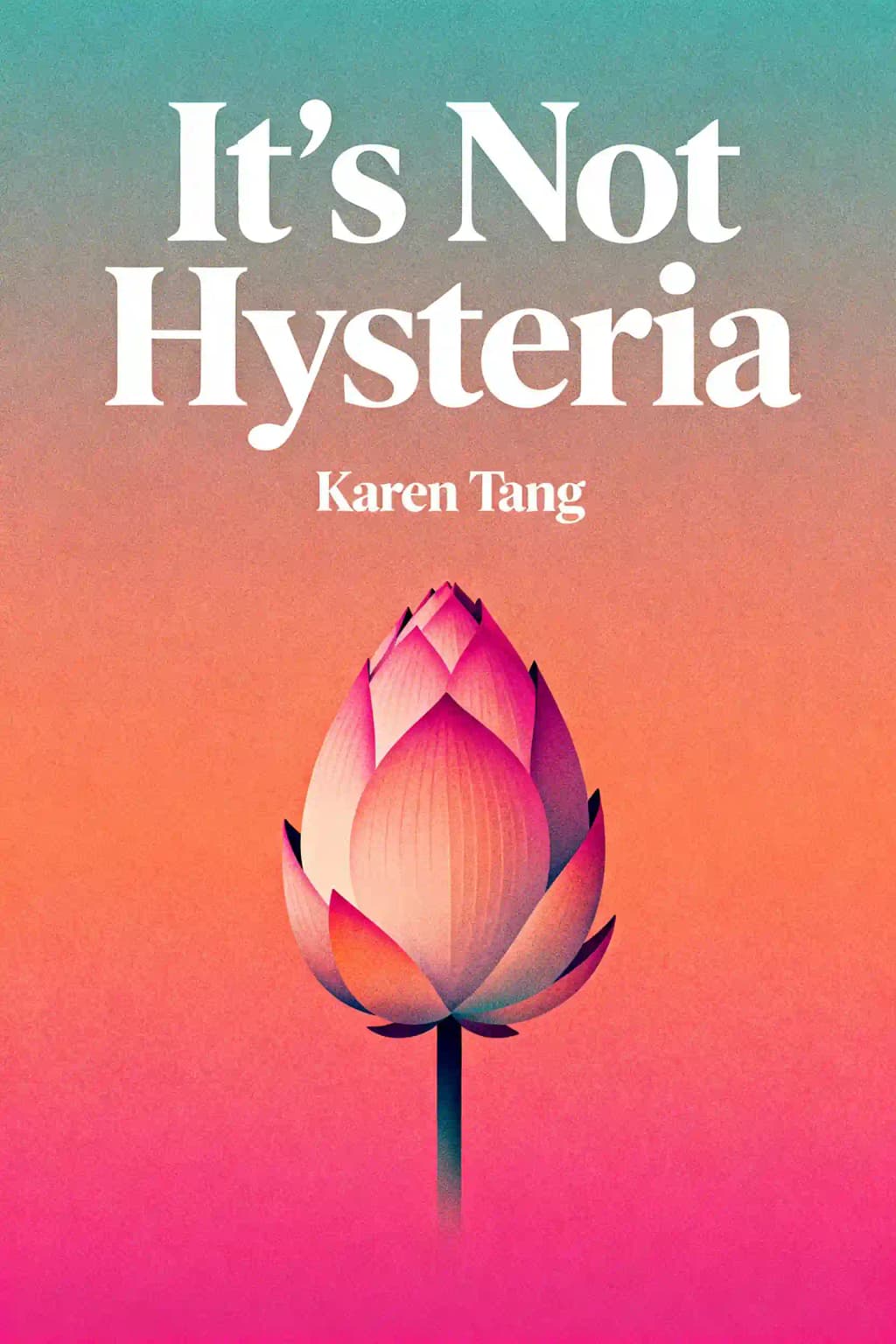
In "It's Not Hysteria," Dr. Karen Tang dismantles centuries of medical gaslighting with razor-sharp precision. Sharon Stone calls her "a literal godsend to women" - but what if the most dangerous diagnosis in healthcare isn't a disease at all, but society's dismissal of women's pain?
Dr. Karen Tang, a board-certified gynecologist, minimally invasive surgeon, and reproductive health advocate, is the author of It’s Not Hysteria: Everything You Need to Know About Your Reproductive Health (But Were Never Told). A Columbia-trained physician with a Harvard Medical School residency, Tang combines clinical expertise and public health insight to address pelvic pain, endometriosis, fibroids, and gender-affirming care in this groundbreaking health guide.
Her work bridges gaps in women’s healthcare education, informed by her roles as a World Health Organization advisor and social media educator (@KarenTangMD), where she reaches millions through TikTok, Instagram, and YouTube.
Tang’s research-backed yet accessible approach has earned features in The Washington Post, NPR, and Oprah Daily, alongside partnerships with institutions like Procter & Gamble. A sought-after speaker on LGBTQIA+ healthcare and reproductive rights, she champions patient empowerment through candid dialogue.
It’s Not Hysteria, a 2024 Goodreads Choice Awards Nonfiction nominee, distills her decade of surgical experience and viral advocacy into an essential resource, debunking myths and spotlighting underdiscussed conditions. Her TikTok videos alone have surpassed 65 million views, amplifying her mission to democratize reproductive health knowledge.
It's Not Hysteria by Dr. Karen Tang is a comprehensive guide to reproductive health, addressing misunderstood issues like fibroids, endometriosis, pelvic pain, and PCOS. It debunks myths, explains treatment options, and empowers readers to advocate for their care. Combining medical expertise with patient stories, the book critiques systemic gaps in gynecological healthcare while offering inclusive, evidence-based solutions.
This book is essential for anyone seeking clarity on reproductive health, including those experiencing pelvic pain, irregular cycles, or fertility concerns. It’s also valuable for allies, healthcare providers, and individuals exploring gender-inclusive care. Dr. Tang’s accessible approach helps readers navigate confusing symptoms and outdated medical practices.
Yes—It's Not Hysteria fills critical gaps in women’s health education, offering actionable advice rarely covered in traditional settings. Endorsed by experts like Megan Ranney and Sharon Stone, it provides frameworks for discussing stigmatized topics with providers and demystifies surgical/non-surgical treatments.
Dr. Tang is a board-certified gynecologic surgeon with an MD and MPH, specializing in minimally invasive procedures. A social media educator with millions of followers, she merges clinical expertise with public health advocacy to address systemic issues in reproductive care.
The book details diagnostic criteria, lifestyle adjustments, and advanced treatments for fibroids (e.g., UAE, myomectomy) and endometriosis (e.g., excision surgery). Dr. Tang emphasizes avoiding unnecessary hysterectomies and highlights pelvic floor therapy as a non-surgical option.
Dr. Tang explores root causes like vulvodynia and vaginismus, advocating for personalized care through physical therapy, nerve blocks, and hormonal treatments. She critiques dismissive attitudes toward pain and provides scripts to help patients insist on thorough evaluations.
The book uses gender-neutral language where applicable, acknowledging diverse reproductive health experiences beyond cisgender women. It addresses LGBTQ+ needs in sexual health screenings and fertility care, emphasizing equitable access.
She highlights biases in pain management, over-reliance on surgeries, and poor provider education on conditions like PCOS. The book calls for systemic reforms, including better tracking of menstrual cycles as vital signs and expanded insurance coverage for pelvic therapies.
Unlike broader wellness guides, it focuses on clinical precision for underdiagnosed conditions, blending patient narratives with surgical insights. It’s frequently compared to The Vagina Bible but emphasizes actionable pathways to diagnosis and treatment.
Key tips include:
She also outlines red flags for when to demand advanced imaging or specialist referrals.
Notable lines include: “Pain during sex isn’t normal—it’s a sign begging for investigation,” and “Your cycle is a vital sign, not a curse.” These underscore the book’s mission to reframe reproductive health as essential, not elective.
As debates over reproductive rights intensify, the book equips readers to navigate shifting policies and advocate for equitable care. Its focus on provider-patient collaboration aligns with growing demands for transparency in healthcare.
저자의 목소리로 책을 느껴보세요
지식을 흥미롭고 예시가 풍부한 인사이트로 전환
핵심 아이디어를 빠르게 캡처하여 신속하게 학습
재미있고 매력적인 방식으로 책을 즐기세요
This isn't a rare occurrence-it's the lived reality for millions.
Women's bodies and health concerns have been misunderstood and dismissed since the beginning of recorded history.
The foundations of gynecology are steeped in racism.
Most of the clitoris is not visible externally.
The key question isn't whether symptoms are common but whether they disrupt your quality of life.
It's Not Hysteria의 핵심 아이디어를 이해하기 쉬운 포인트로 분해하여 혁신적인 팀이 어떻게 창조하고, 협력하고, 성장하는지 이해합니다.
It's Not Hysteria을 빠른 기억 단서로 압축하여 솔직함, 팀워크, 창의적 회복력의 핵심 원칙을 강조합니다.

생생한 스토리텔링을 통해 It's Not Hysteria을 경험하고, 혁신 교훈을 기억에 남고 적용할 수 있는 순간으로 바꿉니다.
무엇이든 물어보고, 목소리를 선택하고, 진정으로 공감되는 인사이트를 함께 만들어보세요.

샌프란시스코에서 컬럼비아 대학교 동문들이 만들었습니다
"Instead of endless scrolling, I just hit play on BeFreed. It saves me so much time."
"I never knew where to start with nonfiction—BeFreed’s book lists turned into podcasts gave me a clear path."
"Perfect balance between learning and entertainment. Finished ‘Thinking, Fast and Slow’ on my commute this week."
"Crazy how much I learned while walking the dog. BeFreed = small habits → big gains."
"Reading used to feel like a chore. Now it’s just part of my lifestyle."
"Feels effortless compared to reading. I’ve finished 6 books this month already."
"BeFreed turned my guilty doomscrolling into something that feels productive and inspiring."
"BeFreed turned my commute into learning time. 20-min podcasts are perfect for finishing books I never had time for."
"BeFreed replaced my podcast queue. Imagine Spotify for books — that’s it. 🙌"
"It is great for me to learn something from the book without reading it."
"The themed book list podcasts help me connect ideas across authors—like a guided audio journey."
"Makes me feel smarter every time before going to work"
샌프란시스코에서 컬럼비아 대학교 동문들이 만들었습니다

It's Not Hysteria 요약을 무료 PDF 또는 EPUB으로 받으세요. 인쇄하거나 오프라인에서 언제든 읽을 수 있습니다.
Imagine experiencing debilitating pain that disrupts your daily life, yet doctor after doctor dismisses it as "just stress" or "all in your head." This isn't rare-it's reality for millions. The ancient Greek concept of the "wandering womb" continues to haunt modern gynecology, with women's health concerns consistently dismissed throughout history. The term "hysteria"-derived from the Greek word for uterus-contains all the judgments about female bodies that have persisted for thousands of years. While no modern doctor believes wombs literally wander, echoes persist when endometriosis patients are told to get pregnant as treatment or when women seeking sterilization are told they'll regret it. From medieval witch trials to 19th century surgical removals of clitorises and ovaries, women's symptoms have been consistently misattributed and mistreated. By the late 1800s, Charcot and Freud moved hysteria from a disease of the body to one of the mind, leading to the modern perception that unexplained physical symptoms must be psychological. Despite medicine's claims of being evidence-based, gender inequality permeates research. Until 1993, major clinical trials routinely excluded women entirely. Funding disparities remain troubling-in 2022, the NIH allocated $37 million for smallpox (eradicated since 1949) compared to just $27 million for endometriosis (affecting 10% of women).