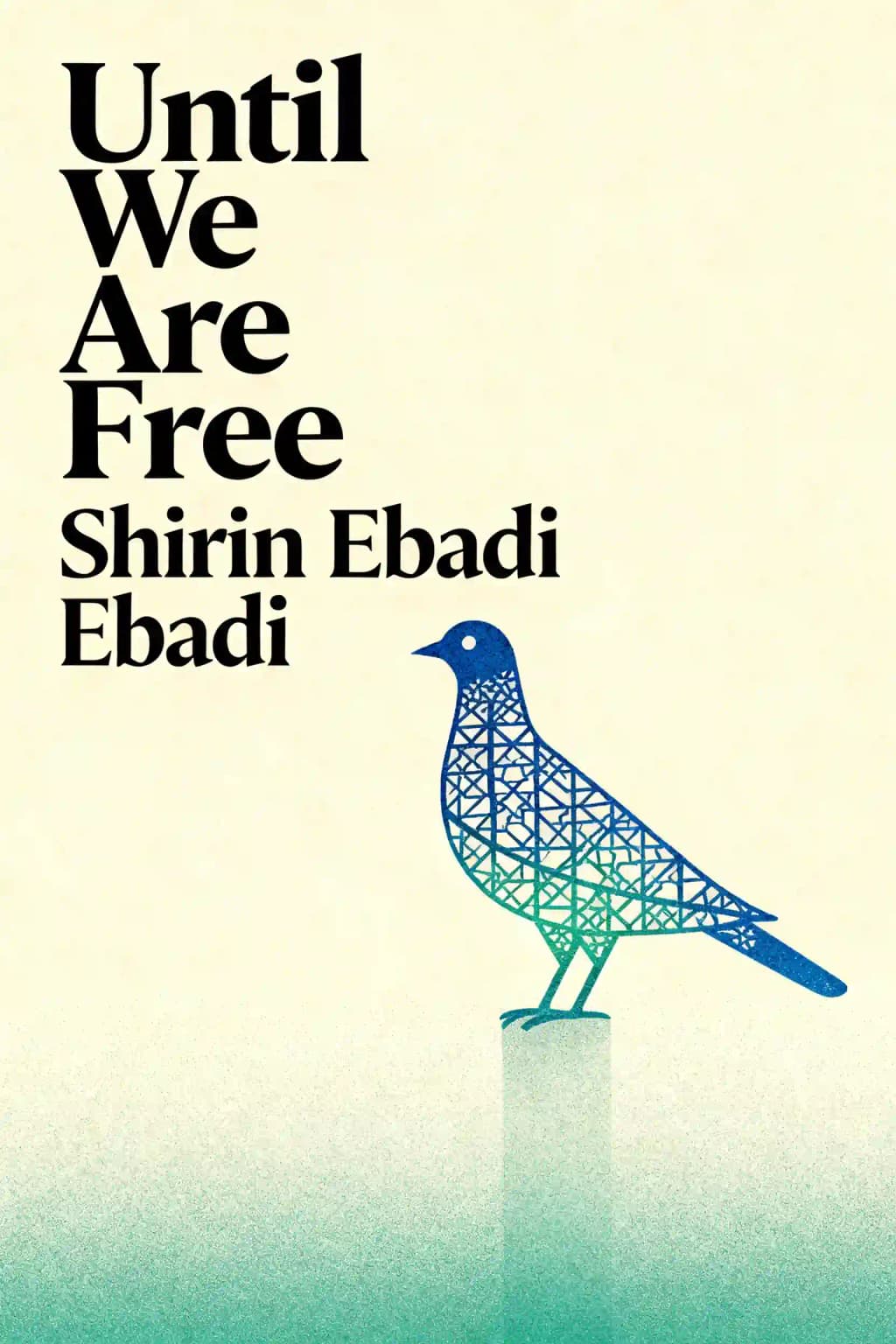
Nobel laureate Shirin Ebadi's gripping memoir reveals her defiant battle against Iran's oppressive regime. Endorsed by Desmond Tutu, this intimate account asks: What price would you pay for justice? Discover why her story of courage continues inspiring human rights defenders worldwide.
Shirin Ebadi, Nobel Peace Prize laureate and renowned human rights advocate, explores themes of resilience and dissent in her memoir Until We Are Free.
A trailblazer as Iran’s first female judge before the 1979 Revolution, Ebadi pivoted to defending political dissidents and advocating for women’s and children’s rights after being barred from the judiciary. Her expertise in international law and fearless activism, documented in acclaimed works like Iran Awakening, reflects her lifelong fight against systemic oppression.
A co-founder of Iran’s Defenders of Human Rights Center, Ebadi has earned global recognition, including the Rafto Prize and France’s Legion of Honour, while enduring exile since 2009.
Her writings, translated into over 20 languages, blend personal narrative with urgent calls for justice, cementing her status as a leading voice in human rights literature. Until We Are Free follows her 2003 Nobel win, making her the first Muslim woman and Iranian to receive the honor.
Until We Are Free chronicles Shirin Ebadi’s relentless fight for human rights in Iran, blending her political activism with personal struggles under an oppressive regime. The memoir details her exile, the 2009 election’s aftermath, and her family’s persecution, emphasizing themes of resilience and justice. Ebadi reveals the costs of dissent while advocating for global solidarity to challenge authoritarianism.
This book is essential for readers interested in human rights advocacy, Iranian political history, and personal narratives of resistance. Activists, students of Middle Eastern studies, and those exploring the intersection of gender and authoritarianism will find it particularly impactful. Ebadi’s story also appeals to memoir enthusiasts seeking firsthand accounts of courage under repression.
Yes—it offers a gripping, firsthand perspective on Iran’s human rights struggles and the personal toll of activism. Ebadi’s unflinching honesty about her sacrifices, combined with insights into navigating state persecution, makes it a vital read for understanding modern Iran and the global fight for justice.
The book frames the 2009 election as a turning point, exposing the regime’s brutal crackdown on dissent. Ebadi describes widespread voter fraud, protests, and the government’s tactics to silence critics, including surveillance, threats, and her sister’s arrest. This period intensified her activism and forced her into exile.
Ebadi stresses that global awareness and pressure are critical for amplifying local human rights efforts. She highlights how international accolades, like her Nobel Peace Prize, provided a platform to expose Iran’s abuses while also making her a target for state retaliation.
As Iran’s first female judge—later demoted after the 1979 Revolution—Ebadi combines legal expertise with firsthand experience of institutional sexism. This dual lens sharpens her critiques of discriminatory laws and judicial corruption.
Some argue the memoir prioritizes personal narrative over structural analysis of Iran’s politics. Others note its intense focus on Ebadi’s sacrifices may overshadow broader activist movements, though this intimacy underscores the human cost of dissent.
Ebadi details how Iran’s regime targeted her loved ones to destabilize her: her husband was coerced into betraying her, her sister falsely imprisoned, and her daughter threatened. These tactics illustrate authoritarianism’s weaponization of familial bonds.
Ebadi emphasizes persistence, adaptability, and leveraging international networks. Her ability to rebuild after setbacks—such as fleeing Iran or losing her Nobel medal—models how to sustain advocacy amid repression.
The Nobel heightened her global influence but intensified state hostility. She describes the prize as a “double-edged sword,” enabling advocacy while making her family vulnerable to retaliation. It underscores the paradox of visibility in activism.
The book remains a blueprint for resisting autocracy, offering parallels to global surges in authoritarianism. Its themes of exile, digital surveillance, and grassroots mobilization resonate with contemporary struggles for democracy.
저자의 목소리로 책을 느껴보세요
지식을 흥미롭고 예시가 풍부한 인사이트로 전환
핵심 아이디어를 빠르게 캡처하여 신속하게 학습
재미있고 매력적인 방식으로 책을 즐기세요
Killing you is the easiest thing we could do.
Leaving was unthinkable to me.
Justice was bought rather than deliberated.
My land mine initiative led to an unexpected opportunity.
Until We Are Free의 핵심 아이디어를 이해하기 쉬운 포인트로 분해하여 혁신적인 팀이 어떻게 창조하고, 협력하고, 성장하는지 이해합니다.
Until We Are Free을 빠른 기억 단서로 압축하여 솔직함, 팀워크, 창의적 회복력의 핵심 원칙을 강조합니다.

생생한 스토리텔링을 통해 Until We Are Free을 경험하고, 혁신 교훈을 기억에 남고 적용할 수 있는 순간으로 바꿉니다.
무엇이든 물어보고, 목소리를 선택하고, 진정으로 공감되는 인사이트를 함께 만들어보세요.

샌프란시스코에서 컬럼비아 대학교 동문들이 만들었습니다
"Instead of endless scrolling, I just hit play on BeFreed. It saves me so much time."
"I never knew where to start with nonfiction—BeFreed’s book lists turned into podcasts gave me a clear path."
"Perfect balance between learning and entertainment. Finished ‘Thinking, Fast and Slow’ on my commute this week."
"Crazy how much I learned while walking the dog. BeFreed = small habits → big gains."
"Reading used to feel like a chore. Now it’s just part of my lifestyle."
"Feels effortless compared to reading. I’ve finished 6 books this month already."
"BeFreed turned my guilty doomscrolling into something that feels productive and inspiring."
"BeFreed turned my commute into learning time. 20-min podcasts are perfect for finishing books I never had time for."
"BeFreed replaced my podcast queue. Imagine Spotify for books — that’s it. 🙌"
"It is great for me to learn something from the book without reading it."
"The themed book list podcasts help me connect ideas across authors—like a guided audio journey."
"Makes me feel smarter every time before going to work"
샌프란시스코에서 컬럼비아 대학교 동문들이 만들었습니다

Until We Are Free 요약을 무료 PDF 또는 EPUB으로 받으세요. 인쇄하거나 오프라인에서 언제든 읽을 수 있습니다.
Rain washed the toxic smog from Tehran's sky as I stood on my brother's balcony, gripped by inexplicable anxiety. I had just finished documenting Iran's execution of children-including a sixteen-year-old girl killed for "crimes against chastity" by a judge who personally acted as her executioner. Driving home through empty streets, I found a note thumbtacked to my door: "If you go on as you are now, we will be forced to end your life... Killing you is the easiest thing we could do." This wasn't the first threat I'd received, but something about that rainy evening felt different. How does a person continue fighting when the cost keeps rising? When your own government becomes your stalker, your tormentor, your thief? This memoir reveals what happens when you refuse to stop-when you choose principle over safety, country over comfort, truth over survival. It's the story of how a Nobel Peace Prize laureate was systematically stripped of everything: her office, her home, her marriage, even the medal itself. Yet somehow, the one thing they couldn't take was her voice.
