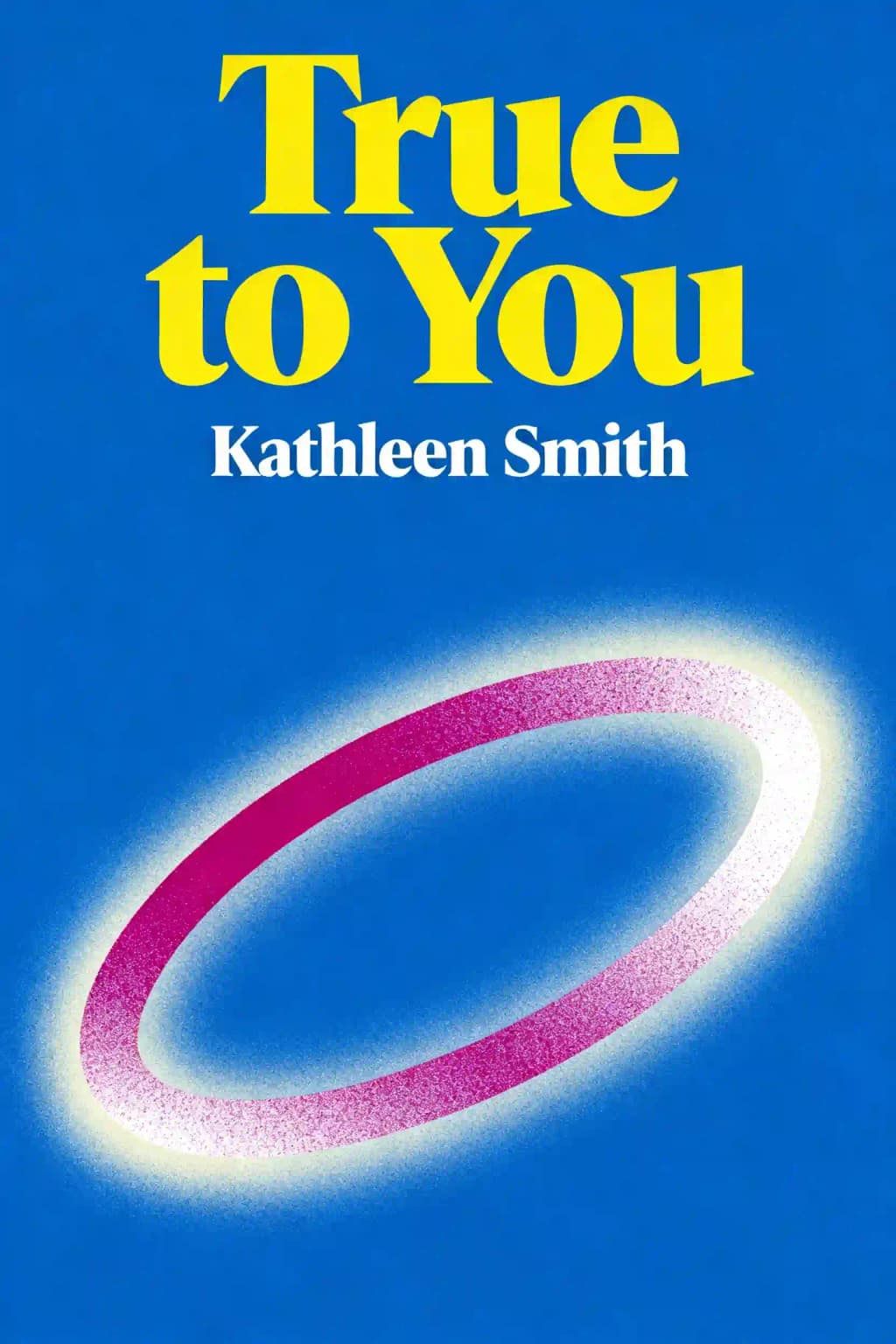
In "True to You," therapist Kathleen Smith reveals why people-pleasing sabotages your authentic self. Featured on The Second City podcast, this guide unpacks Bowen theory's revolutionary approach to relationships. What if the key to genuine connections isn't accommodation, but defining your own principles?
Kathleen Smith, PhD, LPC, is the author of True to You and a licensed therapist celebrated for her expertise in anxiety management and Bowen Family Systems Theory.
A mental health journalist and former faculty member at the Bowen Center for the Study of the Family, she bridges clinical insight with accessible self-help strategies. Her work, including the bestselling Everything Isn’t Terrible: Conquer Your Insecurities, Interrupt Your Anxiety, and Finally Calm Down, combines personal stories with evidence-based frameworks to address modern emotional challenges.
Smith’s writing has graced Salon, Slate, New York Magazine, and Psychology Today, while her TV show Family Matters amplifies her mission to demystify mental health. True to You expands her exploration of authenticity and resilience, rooted in her decade-long therapy practice.
Her books are frequently cited by mental health professionals and recommended in academic curricula for their pragmatic approach to emotional well-being.
True to You is a self-help guide offering strategies to overcome people-pleasing tendencies and build authentic relationships. Dr. Kathleen Smith combines Bowen Family Systems Theory with actionable steps to help readers interrupt toxic relationship patterns, reduce reliance on external validation, and cultivate self-trust. Key themes include managing anxiety, setting boundaries, and fostering genuine connections through self-reflection.
This book is ideal for individuals struggling with burnout, chronic approval-seeking, or anxiety in personal/professional relationships. It’s particularly relevant for those wanting to break cycles of over-responsibility for others’ emotions while developing stronger self-defined principles.
Yes—readers praise its relatable examples, humor, and practical exercises for building self-reliance. Reviewers highlight its effectiveness in addressing modern anxiety and providing tools to navigate complex social dynamics without losing one’s authenticity.
Smith teaches readers to identify and interrupt “borrowed confidence” cycles—where individuals over-rely on others’ approval. The book offers frameworks to differentiate between healthy compromise and self-betrayal, emphasizing boundary-setting techniques and self-accountability practices.
Smith rejects quick-fix solutions, instead teaching readers to tolerate discomfort through self-observation and principled decision-making. The book emphasizes “staying in your own lane” during stressful interactions rather than trying to control others’ reactions.
Some readers note the concepts require consistent practice to implement effectively. Critics suggest the Bowen theory framework might feel abstract initially, though case studies help ground the principles.
While both books address anxiety, True to You focuses specifically on relational patterns and identity development, whereas Everything Isn’t Terrible offers broader strategies for emotional regulation. The newer book includes more exercises for interpersonal boundaries.
Yes—the book provides tools for maintaining professionalism without over-identifying with colleagues’ opinions. Smith discusses managing upward feedback loops and avoiding “emotionally enmeshed” team dynamics through self-defined success metrics.
This refers to relying on others’ praise or attention to feel validated. Smith argues this creates fragile self-worth and teaches readers to build intrinsic confidence through self-honesty and principled action.
The book advocates for “calm persistence” in communicating needs, rather than aggressive confrontation. Techniques include practicing neutral responses to pushback and gradually increasing tolerance for others’ discomfort with your boundaries.
“Your best thinking happens when you’re not trying to think for everyone else.” This encapsulates the book’s focus on reducing over-responsibility for others’ emotions to achieve authentic self-expression.
저자의 목소리로 책을 느껴보세요
지식을 흥미롭고 예시가 풍부한 인사이트로 전환
핵심 아이디어를 빠르게 캡처하여 신속하게 학습
재미있고 매력적인 방식으로 책을 즐기세요
We humans are masters of pretending.
We become mind-readers and approval-seekers.
Accommodation robs us of learning to tolerate disagreement.
Differentiation offers a "third way" to relate.
Humans evolved to blend with their groups for survival.
True to You의 핵심 아이디어를 이해하기 쉬운 포인트로 분해하여 혁신적인 팀이 어떻게 창조하고, 협력하고, 성장하는지 이해합니다.
True to You을 빠른 기억 단서로 압축하여 솔직함, 팀워크, 창의적 회복력의 핵심 원칙을 강조합니다.

생생한 스토리텔링을 통해 True to You을 경험하고, 혁신 교훈을 기억에 남고 적용할 수 있는 순간으로 바꿉니다.
무엇이든 물어보고, 목소리를 선택하고, 진정으로 공감되는 인사이트를 함께 만들어보세요.

샌프란시스코에서 컬럼비아 대학교 동문들이 만들었습니다
"Instead of endless scrolling, I just hit play on BeFreed. It saves me so much time."
"I never knew where to start with nonfiction—BeFreed’s book lists turned into podcasts gave me a clear path."
"Perfect balance between learning and entertainment. Finished ‘Thinking, Fast and Slow’ on my commute this week."
"Crazy how much I learned while walking the dog. BeFreed = small habits → big gains."
"Reading used to feel like a chore. Now it’s just part of my lifestyle."
"Feels effortless compared to reading. I’ve finished 6 books this month already."
"BeFreed turned my guilty doomscrolling into something that feels productive and inspiring."
"BeFreed turned my commute into learning time. 20-min podcasts are perfect for finishing books I never had time for."
"BeFreed replaced my podcast queue. Imagine Spotify for books — that’s it. 🙌"
"It is great for me to learn something from the book without reading it."
"The themed book list podcasts help me connect ideas across authors—like a guided audio journey."
"Makes me feel smarter every time before going to work"
샌프란시스코에서 컬럼비아 대학교 동문들이 만들었습니다

True to You 요약을 무료 PDF 또는 EPUB으로 받으세요. 인쇄하거나 오프라인에서 언제든 읽을 수 있습니다.
Ever notice how you become a slightly different person depending on who's in the room? With your parents, you're the responsible one. With your partner, maybe you're the anxious one. At work, you're the capable problem-solver. But who are you when no one's watching? This question sits at the heart of one of our most universal struggles: we're so busy managing everyone else's reactions that we've lost track of ourselves. We've become emotional chameleons, shifting and adapting to keep the peace, earn approval, or avoid conflict. The exhaustion is real, and it's not a personal failing-it's a predictable pattern that plays out in families and relationships everywhere. Understanding these patterns offers something rare: a way to stop performing and start living authentically, even in our closest relationships.