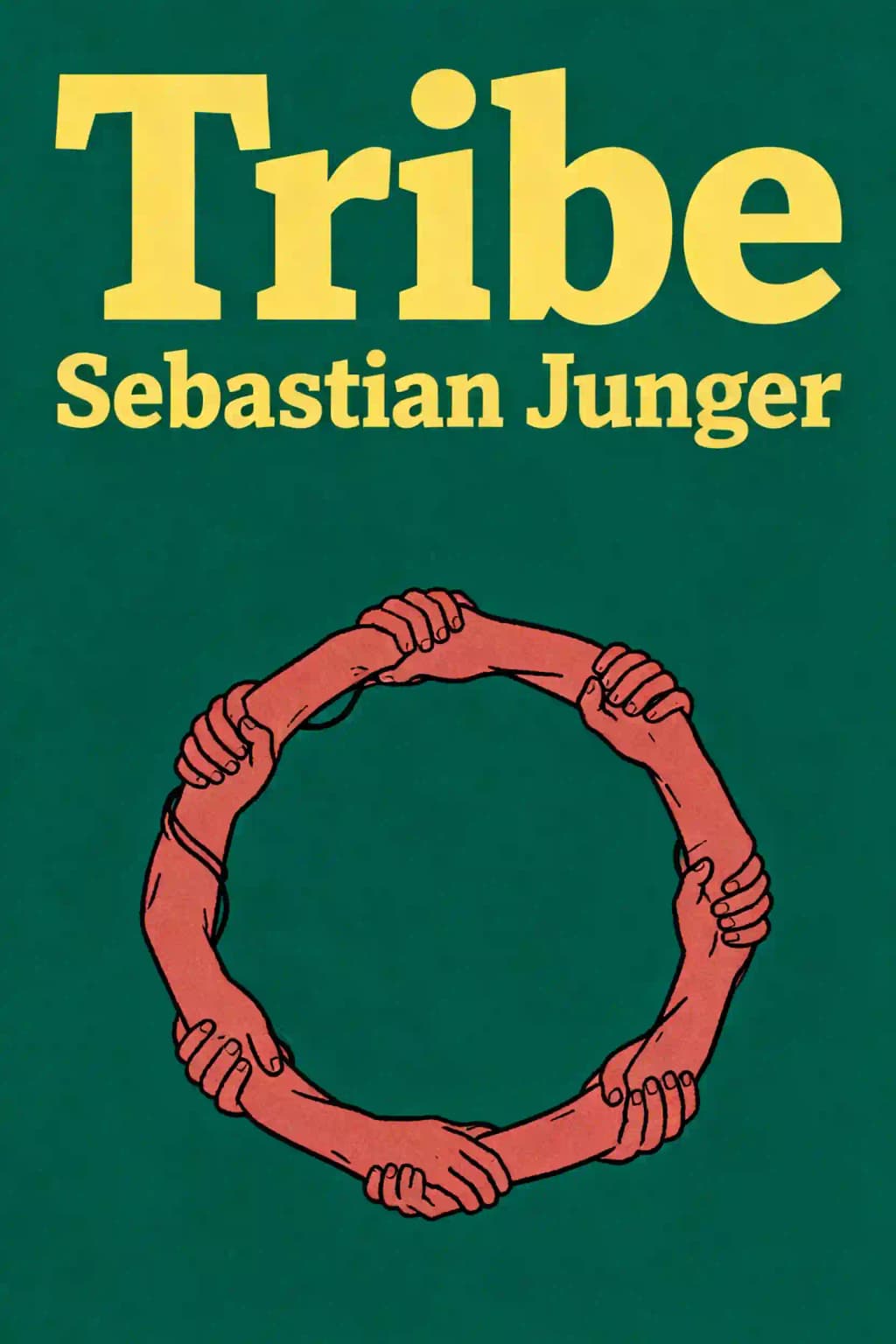
In "Tribe," Sebastian Junger explores why we crave community in our disconnected society. David Brooks notes it "raises the possibility that our culture is built on fundamental error about what makes people happy" - a revelation that's transforming how military leaders approach veteran reintegration.
Sebastian Junger, #1 New York Times bestselling author of Tribe: On Homecoming and Belonging, is an award-winning journalist and war correspondent renowned for his incisive explorations of human resilience and community. A contributing editor at Vanity Fair and Peabody Award winner, Junger’s work blends immersive reporting with psychological insight, particularly on themes of trauma, belonging, and the societal fractures faced by veterans.
His expertise stems from firsthand experience embedded with U.S. troops in Afghanistan’s Korengal Valley, documented in his Oscar-nominated film Restrepo and its companion book War.
Junger’s other notable works include The Perfect Storm, a national bestseller adapted into a major film, and Freedom, which examines humanity’s quest for autonomy. As founder of Vets Town Hall, he fosters dialogue between veterans and civilians, reinforcing themes central to Tribe. His documentaries, such as Korengal and The Last Patrol, further cement his authority on combat trauma and reintegration.
Recognized with a National Magazine Award and Sundance Grand Jury Prize, Junger’s writing and films have shaped global conversations on war, recovery, and the primal need for connection.
Tribe examines how modern society’s isolation contrasts with the tight-knit communities of tribal life, arguing that adversity fosters deeper human connections. Sebastian Junger uses historical examples, veteran experiences, and psychological insights to explore why people often feel more fulfilled during crises like war or disasters. The book challenges readers to reconsider the value of communal bonds in an individualistic world.
This book appeals to veterans, mental health professionals, sociologists, and readers interested in community dynamics or human behavior. It’s particularly relevant for those grappling with social isolation, post-traumatic stress, or the search for meaning in modern life. Junger’s blend of anthropology and storytelling also engages general nonfiction enthusiasts.
Yes—Tribe offers a provocative perspective on societal fragmentation and the human need for belonging. Praised for its clarity and interdisciplinary approach, it’s been cited by publications like The New York Times and endorsed by thought leaders like David Brooks. Its concise, 192-page format makes it accessible yet impactful.
Key themes include:
Junger argues that combat creates a “tribe-like” camaraderie, where shared purpose and mutual dependence override societal divisions. Soldiers may miss war’s intensity because it replaces modern alienation with profound belonging—a stark contrast to the isolation many experience post-deployment.
The book cites:
Junger critiques institutions like social media and urbanization for eroding face-to-face connections. He suggests embracing small-group collaboration and shared challenges to recreate tribal interdependence, offering pathways to reduce loneliness and depression.
Some scholars argue Junger oversimplifies tribal societies, romanticizing their hardships while downplaying systemic issues like violence or inequality. Others note limited solutions for replicating tribal cohesion in complex modern structures.
Like War and Freedom, Tribe explores human resilience under pressure. It expands on themes from Junger’s documentary Restrepo, examining how combat bonds soldiers—and why those bonds strain post-deployment.
These lines encapsulate Junger’s argument that crisis-driven unity highlights modern society’s emotional deficits.
The book suggests fostering collective goals, equity in responsibilities, and shared rituals to build trust. Teams facing challenges together—like tight deadlines—often mirror tribal cohesion, boosting morale and productivity.
Amid rising mental health crises and political polarization, Tribe’s call for community-driven solutions resonates deeply. Its insights into post-pandemic recovery and veteran support remain urgent, offering timeless lessons on human connection.
저자의 목소리로 책을 느껴보세요
지식을 흥미롭고 예시가 풍부한 인사이트로 전환
핵심 아이디어를 빠르게 캡처하여 신속하게 학습
재미있고 매력적인 방식으로 책을 즐기세요
Our modern comforts may be killing us spiritually.
Their lives were a continual round of pleasures.
Here I have no master... I am the equal of all women in the tribe.
Modern people can now go through entire days encountering only strangers.
Wealthy countries experience depression at eight times the rate of poor countries.
Tribe의 핵심 아이디어를 이해하기 쉬운 포인트로 분해하여 혁신적인 팀이 어떻게 창조하고, 협력하고, 성장하는지 이해합니다.
Tribe을 빠른 기억 단서로 압축하여 솔직함, 팀워크, 창의적 회복력의 핵심 원칙을 강조합니다.

생생한 스토리텔링을 통해 Tribe을 경험하고, 혁신 교훈을 기억에 남고 적용할 수 있는 순간으로 바꿉니다.
무엇이든 물어보고, 목소리를 선택하고, 진정으로 공감되는 인사이트를 함께 만들어보세요.

샌프란시스코에서 컬럼비아 대학교 동문들이 만들었습니다
"Instead of endless scrolling, I just hit play on BeFreed. It saves me so much time."
"I never knew where to start with nonfiction—BeFreed’s book lists turned into podcasts gave me a clear path."
"Perfect balance between learning and entertainment. Finished ‘Thinking, Fast and Slow’ on my commute this week."
"Crazy how much I learned while walking the dog. BeFreed = small habits → big gains."
"Reading used to feel like a chore. Now it’s just part of my lifestyle."
"Feels effortless compared to reading. I’ve finished 6 books this month already."
"BeFreed turned my guilty doomscrolling into something that feels productive and inspiring."
"BeFreed turned my commute into learning time. 20-min podcasts are perfect for finishing books I never had time for."
"BeFreed replaced my podcast queue. Imagine Spotify for books — that’s it. 🙌"
"It is great for me to learn something from the book without reading it."
"The themed book list podcasts help me connect ideas across authors—like a guided audio journey."
"Makes me feel smarter every time before going to work"
샌프란시스코에서 컬럼비아 대학교 동문들이 만들었습니다

Tribe 요약을 무료 PDF 또는 EPUB으로 받으세요. 인쇄하거나 오프라인에서 언제든 읽을 수 있습니다.
A homeless man once shared his only meal with a stranger. That simple act-illogical by every economic measure-would eventually unlock one of the most profound mysteries of modern life: why we feel so empty despite having everything. In 1986, Sebastian Junger was hitchhiking across America when he encountered this man who had nothing yet gave freely. Decades later, as a war correspondent witnessing soldiers risk everything for each other while comfortable Americans suffered epidemic loneliness, Junger began connecting the dots. The resulting book became a cultural phenomenon, championed by everyone from Joe Rogan to military veterans, because it answers a question we're all secretly asking: Why does prosperity feel so hollow? The answer turns everything we believe about progress upside down.