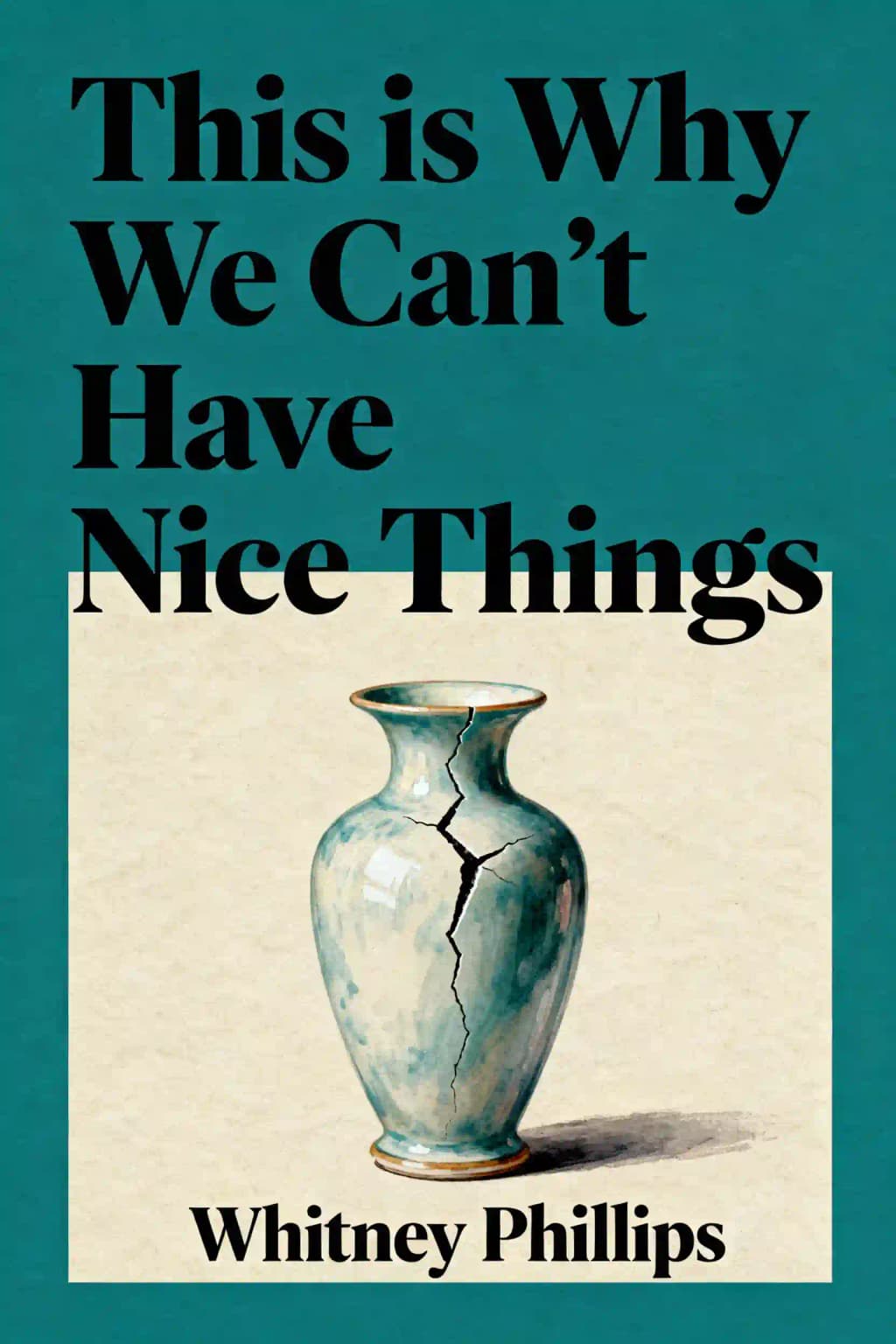
Whitney Phillips' groundbreaking exploration reveals trolling isn't just internet chaos - it's a mirror reflecting our mainstream culture's darkest impulses. This influential 2015 work sparked academic debates by exposing how media sensationalism and trolls share symbiotic relationships, challenging how we understand online behavior entirely.
Whitney Phillips is the author of This Is Why We Can’t Have Nice Things and an acclaimed scholar of digital ethics, media manipulation, and online subcultures.
A professor of information politics and ethics at the University of Oregon, Phillips combines her academic background in English, folklore, and creative writing to analyze the intersections of internet trolling, conspiracy theories, and mainstream media.
Her work, including co-authored books like The Ambivalent Internet and You Are Here: A Field Guide for Navigating Polarized Speech, Conspiracy Theories, and Our Polluted Media Landscape, examines how digital ecosystems amplify harmful rhetoric and shape public discourse.
A columnist for WIRED and frequent contributor to The Atlantic and The New York Times, Phillips provides expert commentary on media literacy and ethical journalism. Her research has informed Congressional hearings and newsroom guidelines, and This Is Why We Can’t Have Nice Things received the Association of Internet Researchers’ Nancy Baym Book Award for its groundbreaking analysis of online culture.
This Is Why We Can’t Have Nice Things explores the interplay between online trolling and mainstream culture, analyzing how trolls exploit media sensationalism and digital platforms to spread chaos. Phillips uses ethnographic research to argue that trolling isn’t isolated behavior but a reflection of broader societal norms and media dynamics.
This book is essential for media scholars, digital ethicists, journalists, and anyone interested in internet culture. It’s particularly valuable for understanding misinformation tactics, the ethics of online communication, and the historical roots of trolling.
Whitney Phillips holds a PhD in English with a focus on folklore and digital culture. She’s an assistant professor at Syracuse University, a WIRED columnist, and has authored multiple award-winning books on digital ethics, including The Ambivalent Internet and You Are Here.
Yes—it’s praised as a foundational text in internet studies, offering critical insights into trolling’s cultural impact. Reviewers highlight its accessible academic style, though some critique its sympathetic lens toward trolls.
Phillips argues that media outlets inadvertently empower trolls by sensationalizing their actions. Her 2018 Oxygen of Amplification report, cited in the book, provides guidelines for ethically reporting on extremism without amplifying harmful messages.
Phillips contends that trolling and mainstream culture are co-dependent: trolls exploit media weaknesses, while outlets profit from covering their antics. This cycle normalizes destructive behaviors and erodes digital discourse.
Some argue Phillips overly empathizes with trolls, downplaying their harm. Others note her 2015 analysis feels dated in addressing modern platforms like TikTok or AI-driven disinformation.
It’s widely taught in communication courses and cited in journalism ethics guidelines. Phillips’ work prompted outlets like The New York Times to reconsider coverage of extremist movements.
While Nice Things focuses on trolling’s origins, You Are Here (2021) addresses conspiracy theories and polarization. Both emphasize media literacy but shift from analysis to actionable strategies for navigating misinformation.
“Trolling is the substrate, not the aberration, of online culture.” “Media outlets don’t just report on the lulz—they’re active participants in the cycle.”
With AI-generated deepfakes and algorithm-driven polarization, Phillips’ analysis of attention economies remains critical. Her frameworks help decode modern misinformation tactics rooted in early trolling culture.
It’s a seminal text in digital media studies, frequently assigned in courses on internet culture, journalism ethics, and political communication. Its mixed-methods approach (ethnography + media analysis) is widely emulated.
저자의 목소리로 책을 느껴보세요
지식을 흥미롭고 예시가 풍부한 인사이트로 전환
핵심 아이디어를 빠르게 캡처하여 신속하게 학습
재미있고 매력적인 방식으로 책을 즐기세요
Trolls disrupt stupid conversations.
Lulz - amusement derived from others' anger, the only reason to do anything.
Trolls insist their troll selves operate under completely different rules.
4chan had become a meme factory.
This Is Why We Can't Have Nice Things의 핵심 아이디어를 이해하기 쉬운 포인트로 분해하여 혁신적인 팀이 어떻게 창조하고, 협력하고, 성장하는지 이해합니다.
This Is Why We Can't Have Nice Things을 빠른 기억 단서로 압축하여 솔직함, 팀워크, 창의적 회복력의 핵심 원칙을 강조합니다.

생생한 스토리텔링을 통해 This Is Why We Can't Have Nice Things을 경험하고, 혁신 교훈을 기억에 남고 적용할 수 있는 순간으로 바꿉니다.
무엇이든 물어보고, 목소리를 선택하고, 진정으로 공감되는 인사이트를 함께 만들어보세요.

샌프란시스코에서 컬럼비아 대학교 동문들이 만들었습니다
"Instead of endless scrolling, I just hit play on BeFreed. It saves me so much time."
"I never knew where to start with nonfiction—BeFreed’s book lists turned into podcasts gave me a clear path."
"Perfect balance between learning and entertainment. Finished ‘Thinking, Fast and Slow’ on my commute this week."
"Crazy how much I learned while walking the dog. BeFreed = small habits → big gains."
"Reading used to feel like a chore. Now it’s just part of my lifestyle."
"Feels effortless compared to reading. I’ve finished 6 books this month already."
"BeFreed turned my guilty doomscrolling into something that feels productive and inspiring."
"BeFreed turned my commute into learning time. 20-min podcasts are perfect for finishing books I never had time for."
"BeFreed replaced my podcast queue. Imagine Spotify for books — that’s it. 🙌"
"It is great for me to learn something from the book without reading it."
"The themed book list podcasts help me connect ideas across authors—like a guided audio journey."
"Makes me feel smarter every time before going to work"
샌프란시스코에서 컬럼비아 대학교 동문들이 만들었습니다

This Is Why We Can't Have Nice Things 요약을 무료 PDF 또는 EPUB으로 받으세요. 인쇄하거나 오프라인에서 언제든 읽을 수 있습니다.
In 2007, I reluctantly visited 4chan's infamous /b/ board on my brother's recommendation. After ten minutes of scrolling through anonymous posts filled with porn, gore, and offensive humor, I needed both a break and a shower. When I asked my thoughtful brother about the appeal, he explained: "Trolls disrupt stupid conversations" following two rules: "nothing should be taken seriously, and if it exists, there is porn of it." Their motivation? "Lulz" - amusement derived from others' anger, "the only reason to do anything." This bizarre introduction sparked what became an ethnographic odyssey spanning years of research into online trolling culture. What emerged was a disturbing revelation: trolling behaviors aren't aberrations but distorted reflections of mainstream cultural values. Like the 1980s anti-drug PSA where a son tells his father "I learned it by watching you," trolls simply push existing cultural logics to their extreme conclusions. Their actions hold up a funhouse mirror to society, exaggerating features we'd rather not acknowledge about ourselves.