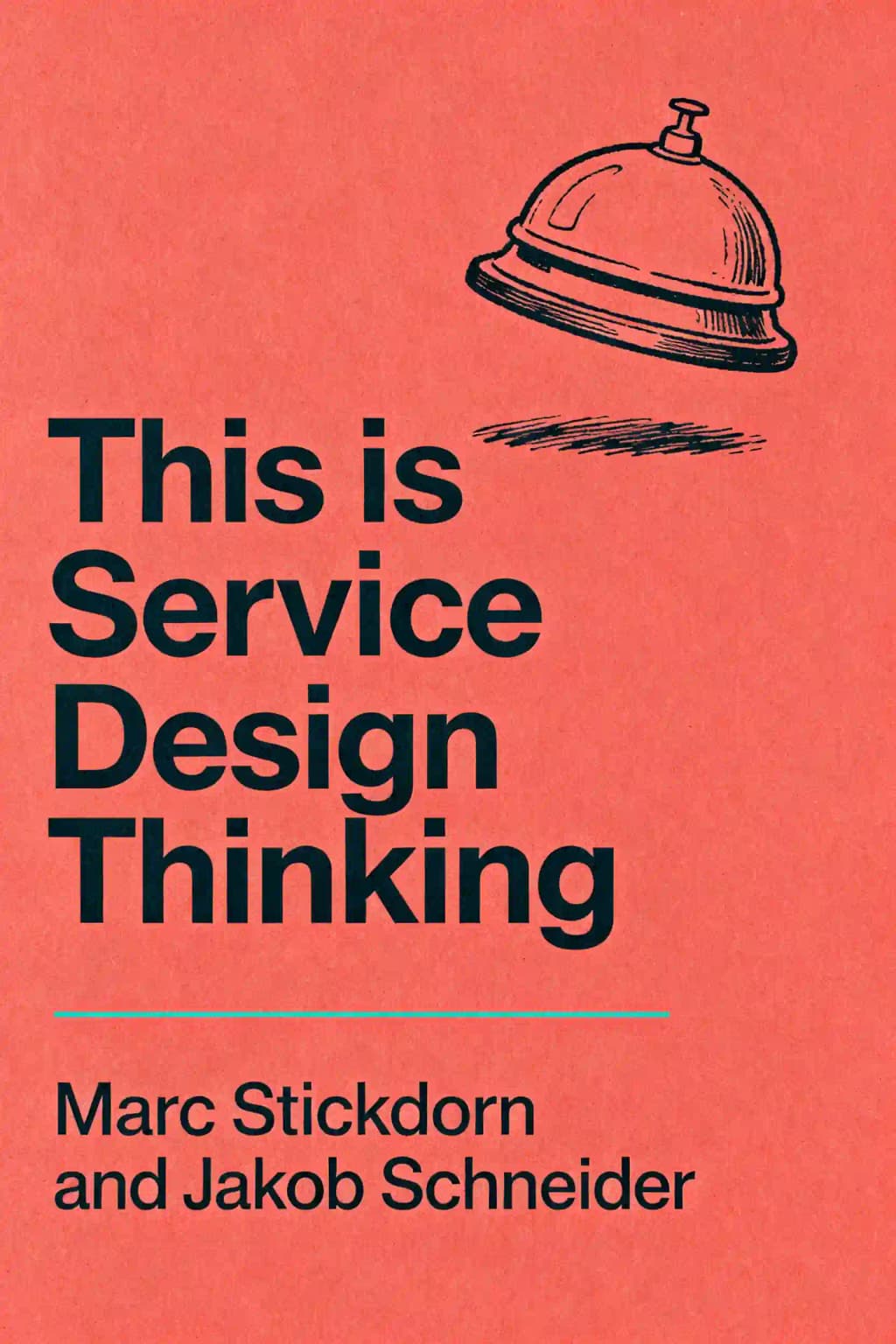
Revolutionizing how we design services, "This is Service Design Thinking" blends contributions from 23 international experts into a methodology that transformed business innovation. The book sparked the Global Service Jam, introducing tens of thousands to user-centered design principles that blur product-service boundaries.
Marc Stickdorn and Jakob Schneider, co-authors of This is Service Design Thinking, are pioneering figures in service design and customer experience innovation.
Stickdorn, a German service design consultant and entrepreneur, combines strategic management expertise with practical tools developed through his startups smaply and ExperienceFellow—web-based platforms for journey mapping and ethnographic research. Schneider, an award-winning visual designer and creative director at KD1 agency, brings brand communication expertise from collaborations with Volkswagen, Siemens, and Deutsche Telekom.
Their groundbreaking 2010 book established service design methodology through five core principles, blending academic rigor with real-world case studies from 23 international contributors. The co-authors expanded their impact with This is Service Design Doing (2018), offering advanced implementation frameworks.
Translated into 12 languages and adopted by leading business schools worldwide, This is Service Design Thinking remains the definitive guide in its field, underpinned by the authors' dual perspective as practitioners and educators.
This Is Service Design Thinking provides a comprehensive guide to designing customer-centric services through five core principles: user-centered focus, co-creation, sequencing interactions, evidencing value, and holistic perspective. It blends theory with actionable tools like customer journey maps and service blueprints, supported by real-world case studies. Ideal for innovators, it bridges disciplines like design and management to enhance user experiences.
Entrepreneurs, UX/UI designers, product managers, and organizational leaders seeking to improve customer experiences will benefit most. The book offers practical methods for breaking down silos, reducing development costs, and fostering collaboration across teams. It’s also valuable for academics studying service design’s interdisciplinary approach.
Yes—it’s an award-winning resource praised for its actionable frameworks, including 25 service design tools and global case studies. Marc Stickdorn’s expertise as a service design strategist and co-founder of Smaply adds real-world credibility. Readers gain strategies to visualize intangible services and align stakeholder efforts.
The book provides tools like personas, stakeholder maps, and prototyping techniques to align teams and reduce redundant workflows. For example, Smaply—software co-developed by Stickdorn—helps visualize customer journeys, enabling organizations to identify pain points and improve service delivery.
Unlike product-focused design, service design addresses dynamic interactions between users, employees, and systems. It treats services as evolving processes (e.g., a bus route’s efficiency depends on rider input) rather than static outputs. The approach integrates continuous feedback loops and interdisciplinary methods.
Examples include public transportation optimization and digital service redesigns. These illustrate how sequencing touchpoints and co-creating with users lead to improved efficiency and satisfaction. One case highlights using mobile ethnography to gather real-time customer data.
It advocates for “co-creation” workshops where stakeholders from diverse roles (e.g., marketers, engineers) jointly ideate solutions. This breaks departmental silos and ensures services align with both user needs and technical feasibility.
Some note the book’s academic tone may overwhelm beginners. Others suggest it focuses more on theory than step-by-step implementation. However, its companion volume, This Is Service Design Doing, addresses these gaps with hands-on guidance.
With digital transformation accelerating, its human-centered principles apply to AI-driven services, remote user testing, and omnichannel experiences. The rise of tools like ExperienceFellow (for mobile ethnography) further validates its emphasis on real-time customer insights.
저자의 목소리로 책을 느껴보세요
지식을 흥미롭고 예시가 풍부한 인사이트로 전환
핵심 아이디어를 빠르게 캡처하여 신속하게 학습
재미있고 매력적인 방식으로 책을 즐기세요
Service design is all about making the service you are designing useful, usable, desirable, efficient and effective.
Service design is a human-centered approach to creating services.
Service design is a collaborative and creative process.
Service design is a holistic approach.
Service design is an iterative process.
This is service design thinking의 핵심 아이디어를 이해하기 쉬운 포인트로 분해하여 혁신적인 팀이 어떻게 창조하고, 협력하고, 성장하는지 이해합니다.
This is service design thinking을 빠른 기억 단서로 압축하여 솔직함, 팀워크, 창의적 회복력의 핵심 원칙을 강조합니다.

생생한 스토리텔링을 통해 This is service design thinking을 경험하고, 혁신 교훈을 기억에 남고 적용할 수 있는 순간으로 바꿉니다.
무엇이든 물어보고, 목소리를 선택하고, 진정으로 공감되는 인사이트를 함께 만들어보세요.

샌프란시스코에서 컬럼비아 대학교 동문들이 만들었습니다
"Instead of endless scrolling, I just hit play on BeFreed. It saves me so much time."
"I never knew where to start with nonfiction—BeFreed’s book lists turned into podcasts gave me a clear path."
"Perfect balance between learning and entertainment. Finished ‘Thinking, Fast and Slow’ on my commute this week."
"Crazy how much I learned while walking the dog. BeFreed = small habits → big gains."
"Reading used to feel like a chore. Now it’s just part of my lifestyle."
"Feels effortless compared to reading. I’ve finished 6 books this month already."
"BeFreed turned my guilty doomscrolling into something that feels productive and inspiring."
"BeFreed turned my commute into learning time. 20-min podcasts are perfect for finishing books I never had time for."
"BeFreed replaced my podcast queue. Imagine Spotify for books — that’s it. 🙌"
"It is great for me to learn something from the book without reading it."
"The themed book list podcasts help me connect ideas across authors—like a guided audio journey."
"Makes me feel smarter every time before going to work"
샌프란시스코에서 컬럼비아 대학교 동문들이 만들었습니다

This is service design thinking 요약을 무료 PDF 또는 EPUB으로 받으세요. 인쇄하거나 오프라인에서 언제든 읽을 수 있습니다.
Imagine walking into a hotel where everything just works - from the seamless check-in to the room that seems to anticipate your needs. Now contrast that with the frustration of navigating a poorly designed healthcare system, where each department seems disconnected from the next. The difference isn't magic - it's service design thinking. This revolutionary approach transforms how organizations create experiences that truly work for people. Unlike traditional product design focused on tangible objects, service design addresses the invisible architecture of experiences unfolding over time. It's not just another business methodology but a fundamentally different way of seeing and creating value in our increasingly service-oriented world. What makes this approach particularly powerful is its interdisciplinary nature, combining methods from psychology, business strategy, interaction design, ethnography, and systems thinking to solve complex problems that single disciplines cannot address alone.