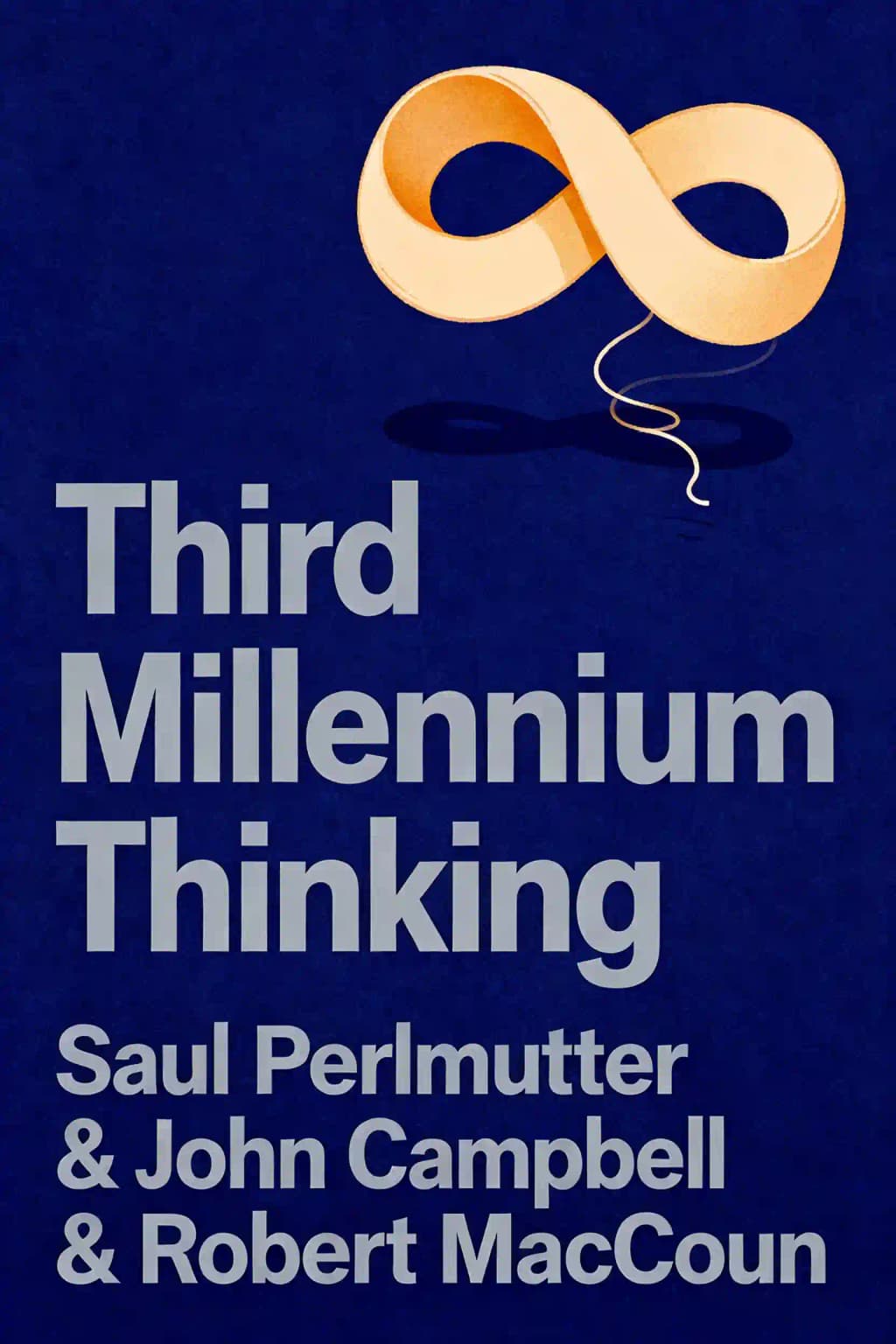
Nobel laureate Saul Perlmutter's guide to cutting through modern chaos with scientific thinking. Learn how deliberative polling is reshaping policy decisions worldwide. Can the tools that unraveled cosmic mysteries help solve our most divisive social problems? Berkeley's legendary "Big Ideas" course - now yours.
저자의 목소리로 책을 느껴보세요
지식을 흥미롭고 예시가 풍부한 인사이트로 전환
핵심 아이디어를 빠르게 캡처하여 신속하게 학습
재미있고 매력적인 방식으로 책을 즐기세요
A Nobel Prize-winning physicist walks into a room full of policymakers and asks a simple question: "How do we know what we know?" The silence that follows reveals something profound about our era. We've built a civilization on scientific knowledge-vaccines that save millions, technologies that connect billions, systems that feed the world-yet most of us have no idea how to evaluate the very expertise we depend on. This isn't just an intellectual puzzle. During the pandemic, this confusion killed people. When climate scientists issue warnings, this uncertainty paralyzes action. When doctors recommend treatments, this doubt breeds conspiracy theories. We're drowning in information while starving for wisdom, and the cost is mounting daily. Every meaningful choice we make involves a hidden tension between three forces: expertise, values, and autonomy. Consider a parent facing treatment options for their child's cancer. The oncologist provides survival statistics-that's expertise. But those numbers can't tell you whether avoiding brutal side effects matters more than maximizing survival odds by a few percentage points-that's values. And ultimately, you must live with the choice-that's autonomy. Get the balance wrong, and disaster follows. Overweight expertise, and you get the Challenger explosion, where NASA officials ignored engineers' warnings because they trusted their own confident (but wrong) calculations. Overweight autonomy, and you get people "doing their own research" on vaccines, making themselves vulnerable to charismatic conspiracy theorists. The sweet spot requires something counterintuitive: experts must persuade rather than command, explaining not just what they know but how they know it and what they don't know.
Third Millennium Thinking의 핵심 아이디어를 이해하기 쉬운 포인트로 분해하여 혁신적인 팀이 어떻게 창조하고, 협력하고, 성장하는지 이해합니다.
Third Millennium Thinking을 빠른 기억 단서로 압축하여 솔직함, 팀워크, 창의적 회복력의 핵심 원칙을 강조합니다.

생생한 스토리텔링을 통해 Third Millennium Thinking을 경험하고, 혁신 교훈을 기억에 남고 적용할 수 있는 순간으로 바꿉니다.
무엇이든 물어보고, 목소리를 선택하고, 진정으로 공감되는 인사이트를 함께 만들어보세요.

샌프란시스코에서 컬럼비아 대학교 동문들이 만들었습니다
"Instead of endless scrolling, I just hit play on BeFreed. It saves me so much time."
"I never knew where to start with nonfiction—BeFreed’s book lists turned into podcasts gave me a clear path."
"Perfect balance between learning and entertainment. Finished ‘Thinking, Fast and Slow’ on my commute this week."
"Crazy how much I learned while walking the dog. BeFreed = small habits → big gains."
"Reading used to feel like a chore. Now it’s just part of my lifestyle."
"Feels effortless compared to reading. I’ve finished 6 books this month already."
"BeFreed turned my guilty doomscrolling into something that feels productive and inspiring."
"BeFreed turned my commute into learning time. 20-min podcasts are perfect for finishing books I never had time for."
"BeFreed replaced my podcast queue. Imagine Spotify for books — that’s it. 🙌"
"It is great for me to learn something from the book without reading it."
"The themed book list podcasts help me connect ideas across authors—like a guided audio journey."
"Makes me feel smarter every time before going to work"
샌프란시스코에서 컬럼비아 대학교 동문들이 만들었습니다

Third Millennium Thinking 요약을 무료 PDF 또는 EPUB으로 받으세요. 인쇄하거나 오프라인에서 언제든 읽을 수 있습니다.