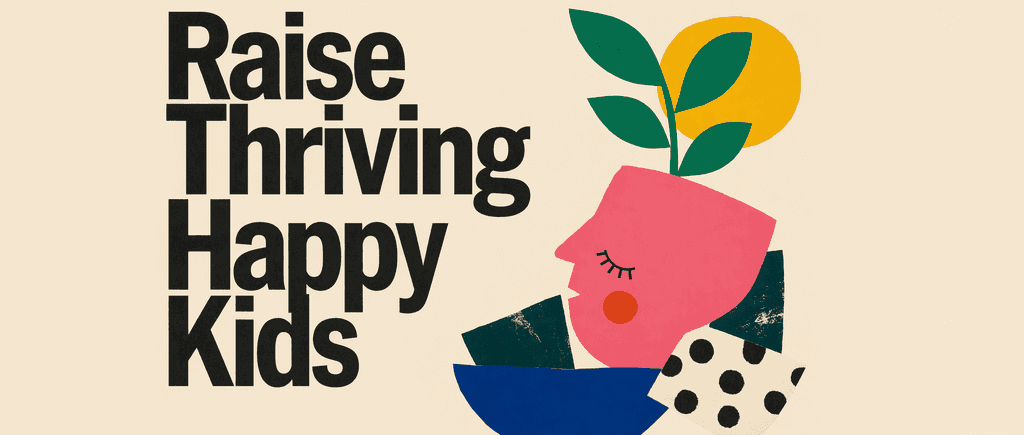
Discover how to nurture courage, curiosity, and resilience in your child with this NYT bestseller. Endorsed by mindset expert Carol Dweck as a "treasure chest of parenting insights," it reveals the neuroscience behind helping children develop a "Yes Brain" that thrives under pressure rather than shutting down.
Daniel J. Siegel, M.D., and Tina Payne Bryson, Ph.D., co-authors of The Yes Brain: How to Cultivate Courage, Curiosity, and Resilience in Your Child, are renowned experts in child psychology and neurodevelopment. Siegel, a Harvard-trained psychiatrist and clinical professor at UCLA, pioneered the field of Interpersonal Neurobiology, while Bryson, a psychotherapist and founder of The Center for Connection, brings practical parenting insights from her clinical work. Their collaboration merges cutting-edge brain science with accessible strategies for nurturing emotional resilience and cognitive growth in children.
The duo’s bestselling works, including The Whole-Brain Child and No-Drama Discipline, have sold over 3 million copies globally, establishing them as leading voices in modern parenting literature. Siegel’s academic rigor and Bryson’s hands-on expertise combine to create actionable frameworks for fostering balanced, adaptable mindsets in kids.
Their books are frequently cited by educators and mental health professionals, and their TED Talks and media appearances have amplified their reach. The Yes Brain builds on their signature approach, emphasizing how to transform challenges into opportunities for brain integration. Translated into 28 languages, their works remain foundational resources for parents and professionals worldwide.
The Yes Brain Child teaches parents to cultivate courage, curiosity, and resilience in children by fostering a receptive "Yes Brain" state—marked by emotional balance, adaptability, and problem-solving. Contrasted with a reactive "No Brain," the book provides science-backed strategies to help kids thrive through mindful parenting and emotional regulation techniques.
Parents, caregivers, and educators seeking to build children’s emotional intelligence and adaptability will benefit most. It’s particularly valuable for those addressing challenges like tantrums, rigidity, or anxiety, offering actionable tools grounded in neuroscience and child development research.
Yes—it distills complex neuroscience into practical parenting strategies, making it essential for fostering resilience. Authors Siegel and Bryson, experts in child psychology, provide frameworks like the Four S’s (Safe, Seen, Soothed, Secure) to create supportive environments for emotional growth.
The pillars include:
These elements work together to promote emotional agility and lifelong mental health.
Model emotional regulation, use daily interactions (e.g., playtime, car rides) as teaching moments, and prioritize connection during conflicts. The authors emphasize skill-building over punishment, encouraging environments where kids feel safe to explore and learn from mistakes.
This framework ensures children feel:
These principles foster resilience and self-confidence.
Connect emotionally first using techniques like reflective listening, then guide the child to understand their feelings. This approach transforms meltdowns into opportunities for teaching self-regulation through calming practices (e.g., deep breathing) and problem-solving.
A Yes Brain is open and curious (like Captain America’s adaptability), while a No Brain is rigid and fearful (akin to 80s movie villains). The book shows how parental responses can shift kids from reactive states to receptiveness.
Notable insights:
Some note the methods require consistent parental effort, which may challenge busy families. However, the authors offer flexible adaptations, like micro-moments of connection, to integrate strategies into daily routines.
It prioritizes internal growth over external achievements, introducing eudaimonia—a Greek concept meaning living authentically. Success is framed as emotional balance, meaningful relationships, and self-understanding rather than grades or social status.
Expanding The Whole-Brain Child’s foundations, it focuses specifically on cultivating receptivity. New frameworks like the Four S’s and Yes Brain elements provide targeted tools for raising emotionally resilient, self-aware children.
저자의 목소리로 책을 느껴보세요
지식을 흥미롭고 예시가 풍부한 인사이트로 전환
핵심 아이디어를 빠르게 캡처하여 신속하게 학습
재미있고 매력적인 방식으로 책을 즐기세요
When neurons fire together, they wire together.
Behavior serves as communication.
Parents essentially function as gardeners of their children's neural development.
The goal isn't perpetual happiness or problem-free living.
The upstairs brain is 'still under major construction' in children.
The Yes Brain의 핵심 아이디어를 이해하기 쉬운 포인트로 분해하여 혁신적인 팀이 어떻게 창조하고, 협력하고, 성장하는지 이해합니다.
The Yes Brain을 빠른 기억 단서로 압축하여 솔직함, 팀워크, 창의적 회복력의 핵심 원칙을 강조합니다.

생생한 스토리텔링을 통해 The Yes Brain을 경험하고, 혁신 교훈을 기억에 남고 적용할 수 있는 순간으로 바꿉니다.
무엇이든 물어보고, 목소리를 선택하고, 진정으로 공감되는 인사이트를 함께 만들어보세요.

샌프란시스코에서 컬럼비아 대학교 동문들이 만들었습니다
"Instead of endless scrolling, I just hit play on BeFreed. It saves me so much time."
"I never knew where to start with nonfiction—BeFreed’s book lists turned into podcasts gave me a clear path."
"Perfect balance between learning and entertainment. Finished ‘Thinking, Fast and Slow’ on my commute this week."
"Crazy how much I learned while walking the dog. BeFreed = small habits → big gains."
"Reading used to feel like a chore. Now it’s just part of my lifestyle."
"Feels effortless compared to reading. I’ve finished 6 books this month already."
"BeFreed turned my guilty doomscrolling into something that feels productive and inspiring."
"BeFreed turned my commute into learning time. 20-min podcasts are perfect for finishing books I never had time for."
"BeFreed replaced my podcast queue. Imagine Spotify for books — that’s it. 🙌"
"It is great for me to learn something from the book without reading it."
"The themed book list podcasts help me connect ideas across authors—like a guided audio journey."
"Makes me feel smarter every time before going to work"
샌프란시스코에서 컬럼비아 대학교 동문들이 만들었습니다

The Yes Brain 요약을 무료 PDF 또는 EPUB으로 받으세요. 인쇄하거나 오프라인에서 언제든 읽을 수 있습니다.
Picture a toddler melting down in the grocery store, screaming "No!" at everything. Now imagine that same rigid, reactive state hardwired into a teenager's brain-or worse, an adult's. This isn't just about tantrums. It's about how our children's brains learn to meet the world: with openness or defensiveness, curiosity or fear, resilience or fragility. The difference between these outcomes isn't luck or genetics-it's something parents can actively cultivate through everyday interactions. The concept is deceptively simple: when we hear "yes" repeatedly, our bodies physically relax. Shoulders drop, breathing deepens, muscles soften. Say "no" and watch the opposite happen-tension, guarding, preparation for conflict. This physical response mirrors what happens neurologically. A Yes Brain creates receptivity; a No Brain triggers defensiveness. What makes this revolutionary isn't the observation itself, but recognizing that parents can intentionally shape which state becomes their child's default setting.