1장
A Childhood Nightmare That Captivates Generations
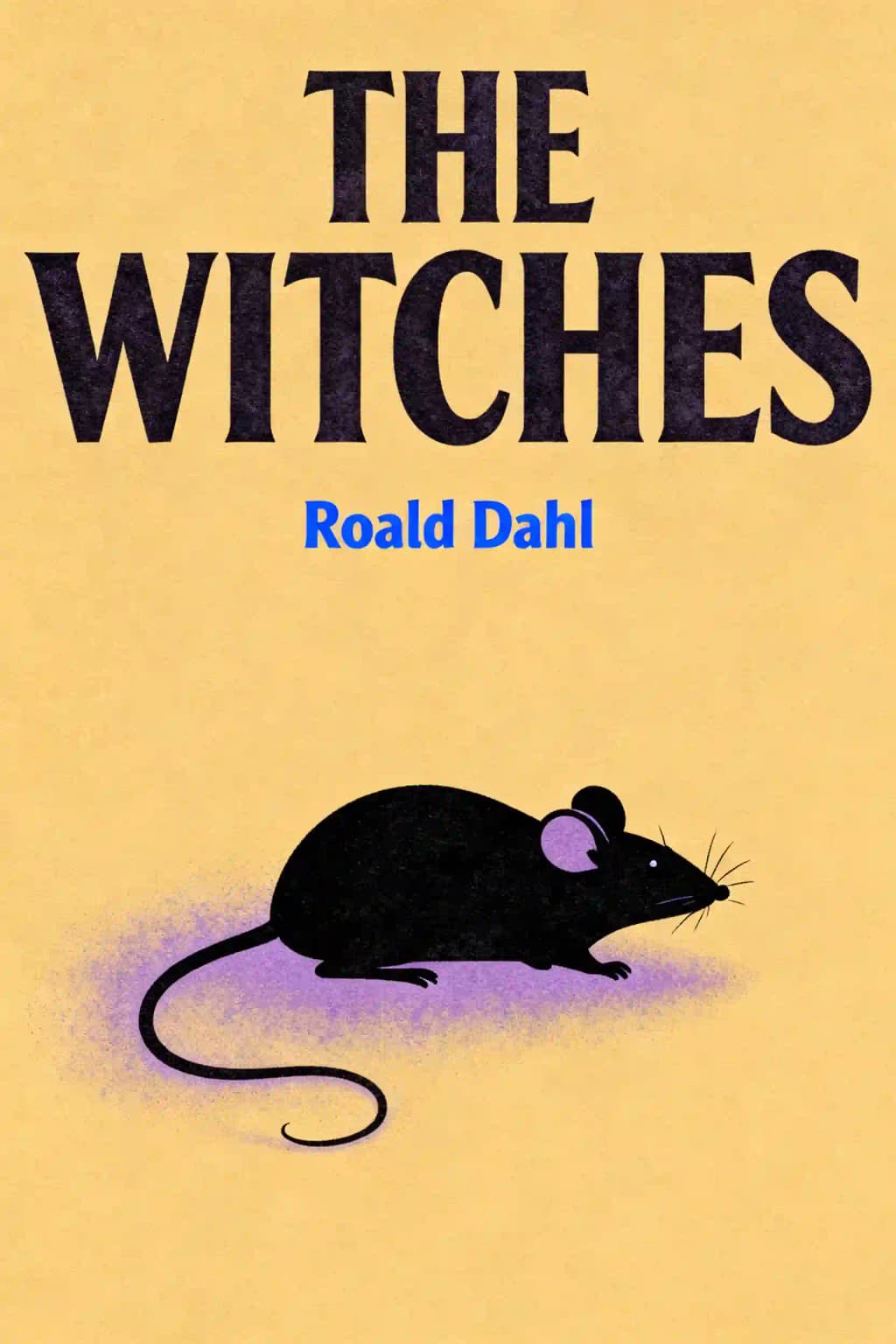
Imagine a world where the most dangerous creatures look exactly like ordinary women-your neighbor, your teacher, perhaps even someone sitting across from you right now. This is the chilling premise of Roald Dahl's "The Witches," a dark fantasy that has terrified and thrilled children since its publication in 1983. Unlike sanitized fairy tales, Dahl's witches don't ride broomsticks or wear pointed hats-they hide in plain sight, harboring an intense hatred for children and plotting their destruction. The book has sold over 10 million copies worldwide and remains a cultural touchstone, inspiring two major film adaptations. Despite (or perhaps because of) its controversial elements and macabre themes, "The Witches" consistently ranks among children's favorite Dahl works, alongside "Charlie and the Chocolate Factory" and "Matilda." J.K. Rowling has cited it as an influence on her portrayal of magical beings living secretly among humans, and the book's unflinching approach to frightening subject matter helped pave the way for today's darker children's literature.
2장
The Terrifying Truth About Witches
Real witches aren't the stuff of fairy tales with their silly black hats and broomsticks. They're far more insidious-they look like ordinary women, dress in ordinary clothes, and hold ordinary jobs. This is precisely what makes them so dangerous and difficult to identify. These creatures harbor an intense, sizzling hatred for children, dedicating their existence to eliminating one child each week-fifty-two a year! And they don't use crude methods like knives or poisons; their magic powers are truly horrifying.
While most women are perfectly lovely human beings, witches exist in every country around the world. They might be your neighbor, the woman sitting across from you on the bus, or even-imagine this-your own school teacher reading these very words. The thought sends shivers down your spine, doesn't it? What makes them so terrifying is their perfect disguise as nice, ordinary ladies, while secretly being the most dangerous creatures on earth.
If only there were some foolproof way to identify them! How much safer children would be if witches wore distinctive clothing or had some obvious physical trait that gave them away. But their camouflage is nearly perfect. Nearly, but not quite. There are subtle signals that might help an observant child escape being "squelched"-clues so small most people never notice them, but significant enough that they might just save your life. These signals become crucial knowledge for any child hoping to survive in a world where witches walk among us, hunting for their next victim.
3장
A Grandmother's Protective Love
After losing both parents in a tragic car accident on an icy Norwegian road, our seven-year-old narrator finds himself in the care of his beloved Norwegian grandmother. Their relationship transcends the typical grandparent-grandchild dynamic-she becomes his protector, his teacher, and his confidante in a world suddenly made dangerous by the knowledge of witches. "You will stay here with me," she tells him after the accident, holding him tight as they cry through the night. When he asks if he'll return to England, she simply replies, "Heaven shall take my soul, but Norway shall keep my bones"-a poignant foreshadowing of their enduring bond.
The grandmother possesses a special wisdom about witches that most adults lack or deny. She takes her responsibility to educate her grandson seriously, understanding that this knowledge might one day save his life. Their evening conversations after his bath become lessons in witch identification-crucial information passed down like precious family lore. When the boy questions whether witches really exist, his grandmother responds with absolute certainty born from personal experience.
There's something mysterious about Grandmother herself-particularly her missing thumb, which she refuses to discuss. "It's too horrible," she says when pressed, her lips shutting tight, conversation finished. This physical reminder of some past encounter with witchcraft adds credibility to her warnings and deepens the mystery surrounding these creatures.
Despite legal obligations forcing them to move to England to honor his parents' wishes for his education, their bond remains unbreakable. The grandmother's protective instincts only intensify when they relocate to a country she describes as home to "the most vicious witches in the world." When the boy has his first frightening encounter with a suspected witch-a strange woman with unnaturally curved lips who tries to lure him down from his treehouse-his grandmother turns "ashy grey" with fear, recognizing the immediate danger. From that moment, she refuses to let him walk to school alone, their lives now shaped by constant vigilance against an invisible threat.
4장
Identifying the Unidentifiable Enemy
How does one recognize a creature designed by nature to be unrecognizable? This question forms the heart of Grandmother's vital lessons. Witches may appear to be ordinary women, but they possess distinct characteristics that, once known, can save a child's life. The first shocking revelation: to witches, children smell like "dogs' droppings"-a fact of life the young narrator initially finds difficult to accept. But this revulsion explains why witches hunt children with such determination.
More disturbing still are the physical attributes hidden beneath their careful disguises. A witch's eyes contain shifting black dots with "fire and ice dancing in the center" that send shivers down your spine when you look directly into them. This unsettling gaze reveals their true nature-they aren't women at all but "demons in human shape" merely masquerading as humans.
Their hands offer another clue-witches always wear gloves, even in warm weather, to hide their claw-like fingernails. Most tellingly, witches have no toes. Instead, their feet end in square stubs that they painfully squeeze into pointed shoes to maintain their disguise. The discomfort explains their peculiar walking style and aversion to fashionable footwear.
Perhaps most distinctive is their spit-blue as a bilberry-which they even use as ink. This bizarre trait remains completely hidden from most of the world, known only to those few who have studied witchcraft closely, like Grandmother.
When pressed about her own encounter with witches, Grandmother grows silent, refusing to share what must be a traumatic memory. The missing thumb suggests a violent confrontation, but she keeps this story locked away, perhaps protecting her grandson from knowledge too frightening for a child. This personal history adds weight to her warnings-she doesn't merely know about witches; she has faced their evil firsthand and bears the physical scars of that encounter.
5장
The Hierarchical World of Witchcraft
The witch community operates with surprising sophistication-a global network with branches in every country, organized like a sinister corporation with the Grand High Witch of All The World as its CEO. This terrifying figure travels internationally, conducting Annual Meetings where witches gather to receive instructions and report on their child-elimination progress. These meetings occur in ordinary hotels, though strange phenomena often follow-unused beds, carpet burn marks, toads in bathtubs, and once even a baby crocodile discovered in soup.
English witches, according to Grandmother, are "the most vicious in the world," specializing in transforming children into creatures adults naturally hate-slugs to be stepped on, fleas to be poisoned, or pheasants released just before hunting season begins. American witches reportedly turn children into hot-dogs, creating the horrifying possibility of parents unwittingly consuming their own transformed offspring. Each country's witches have their own specialties, but all serve the same dark purpose.
The Grand High Witch remains the most mysterious figure in this hierarchy. Nobody knows where she lives, though "witchophiles" like Grandmother (now retired from witch-hunting) have dedicated their lives to searching. Her power is absolute, her cruelty legendary, and her authority unquestioned by the witches under her command.
This organizational structure makes witches far more dangerous than if they operated individually. They share techniques, coordinate attacks, and follow strategic plans designed by their leader. The young narrator's growing awareness of this global threat transforms his perception of the world-suddenly every woman becomes a potential witch, every friendly smile possibly concealing malevolent intent. He becomes "extremely witch-conscious," crossing the street whenever he sees a gloved woman approaching, his childhood innocence replaced by necessary vigilance in a world where evil hides behind ordinary faces.
6장
Vacation Plans Derailed
Summer approached with the promise of adventure as Grandmother and the boy eagerly planned their Norwegian vacation. They'd booked passage from Newcastle to Oslo with intentions to visit the southern coast near Arendal, where Grandmother had spent idyllic childhood summers. She painted vivid pictures of those days-rowing between tiny uninhabited islands, diving from smooth granite rocks into crystal-clear water, fishing for cod using mussel bait, and cooking fresh catches over beach fires. These stories created a tantalizing vision of the perfect summer, a chance to connect with family history while creating new memories together.
But just three weeks before term's end, disaster struck-Grandmother developed pneumonia. Though penicillin typically treats this illness effectively, her advanced age (over eighty) made her condition serious enough that the doctor wouldn't risk moving her to hospital. Instead, oxygen cylinders were brought to their home while Mrs. Spring moved in to care for the boy and a nurse tended to Grandmother. After ten anxious days, he was finally allowed to visit her bedside.
Though she recovered enough to dismiss Mrs. Spring within a week, the doctor strictly forbade their Norwegian journey, suggesting instead a hotel on England's south coast. Despite their protests-both desperately wanting to visit Norway-they reluctantly booked rooms at the Hotel Magnificent in Bournemouth, a seaside town popular with elderly vacationers. It wasn't the adventure they'd planned, but they made the best of the situation.
As consolation for their changed plans, Grandmother gave her grandson two white mice which he named William and Mary. He immediately began training them for his dream project-a Famous White Mouse Circus that would tour globally. This small act of kindness provided distraction from their disappointment, but it also created an unexpected complication when a chambermaid discovered the mice and reported them to the Manager. Grandmother cleverly deflected his objections by claiming she'd seen rats in the hotel, forcing him to back down rather than admit to a potential pest problem. Though the Manager reluctantly allowed the mice to remain in their cage, the boy couldn't train them there-leading him to search for an empty room where his mice could practice their tricks away from prying eyes.
7장
An Accidental Discovery
While exploring the hotel's ground floor with William and Mary hidden in his trouser pockets, the boy discovered an empty ballroom with a notice indicating it had been reserved for the "Royal Society for the Prevention of Cruelty to Children." Believing their meeting had concluded, he slipped inside this seemingly perfect training space. For extra caution, he positioned himself behind a large folding screen decorated with Chinese dragons at the back of the room.
Here, in what should have been a safe haven, he began teaching William to walk a tightrope-actually a string stretched between his hands with cake as motivation. Starting with just three inches of string, he gradually increased the distance to twenty-four inches as William mastered the balancing act, rewarding him with nibbles of currant cake after each successful crossing. Soon Mary was getting similar training as the boy dreamed of his future mouse circus.
Mid-training, voices approached-the RSPCC meeting wasn't over; it was just about to begin! Trapped behind the screen, the boy watched as Mr. Stringer, the hotel manager, ushered in about two hundred ladies wearing pretty clothes and hats. Initially, he wasn't alarmed-what could be safer than being surrounded by ladies dedicated to preventing cruelty to children?
But then he noticed something disturbing-all the women were scratching the backs of their necks in an odd, synchronized manner. When one lifted her entire head of hair to scratch underneath, the horrifying truth became clear: these weren't ordinary women but witches wearing wigs to hide their baldness! His blood turned to ice as someone chained the double doors shut, trapping him inside with two hundred of the very creatures his grandmother had warned him about.
What had seemed like innocent mouse training had led him directly into the Annual Meeting of all England's witches. Overwhelmed by fear, he briefly fainted before gathering his courage to peer through the crack again, witnessing a gathering that would forever change his life-and his very form.
8장
The Grand High Witch Revealed
The boy watched in horror as a small, black-clad figure entered the ballroom to thunderous applause. This was the Grand High Witch of All The World-not tall and thin as he'd imagined, but rather short and squat. When she reached the platform and turned to face her audience, the sight was so terrifying he had to clamp his hands over his mouth to prevent screaming.
Her face appeared almost beautiful from a distance-but only because she wore a mask. As she addressed the assembly, she suddenly reached up and peeled this mask away, revealing her true face-a sight so revolting the boy could barely comprehend what he was seeing. Where there should have been a chin, there was nothing. Where a mouth should have been, there was only a thin black line stretching from ear to ear. Most horrifying were her nostrils-twisted upward and flared-and her eyes, which glowed red like hot coals.
Speaking in a thick, guttural accent, she berated the assembled witches for their failure to eliminate England's children, calling them "miserable worms" and "lazy good-for-nothing brutes." When one brave witch dared question her plans, the Grand High Witch demonstrated her terrible power, reciting a deadly rhyming spell: "A stupid vitch who answers back must burn until her bones are black!"
Despite desperate pleas for forgiveness, sparks like white-hot metal filings shot from the Grand High Witch's eyes, striking the offending witch who screamed horribly as smoke rose around her. When the smoke cleared, nothing remained but something wispy-white fluttering out the window. "Frrrizzled like a frrritter," remarked The Grand High Witch coldly. "Cooked like a carrot. You vill never see her again."
This casual display of lethal magic established absolute authority over the terrified assembly. No one would dare question her again after witnessing such swift, merciless punishment. The Grand High Witch had created the perfect environment to reveal her master plan-a scheme so diabolical it would eliminate every child in England.
9장
The Diabolical Master Plan
With her authority firmly established through fear, the Grand High Witch revealed her "giganticus plan" for eliminating England's children. All witches were commanded to resign from their current jobs and use counterfeit money she would provide to purchase the finest sweet shops throughout the country. Each shop would host a "Great Gala Opening" offering free sweets to every child in the neighborhood-but these treats would contain her latest invention: Formula 86 Delayed Action Mouse-Maker.
This green liquid would transform children into mice exactly at 9 o'clock the next morning when they arrived at school. The transformation would take precisely 26 seconds-first shrinking, then growing fur and tails-creating chaos in classrooms across England. Teachers would bring out mouse-traps, and the children-turned-mice would be snapped dead by day's end. Parents would simply be told their children never arrived at school, creating an unsolvable mystery rather than a traceable pattern of disappearances.
The brilliance of the plan lay in its timing-by transforming children simultaneously in schools throughout England, no connection could be made between the sweet shops and the transformations. The Grand High Witch celebrated this scheme with a ghoulish song about destroying children while her audience cheered enthusiastically, caught up in the malevolent excitement.
She then revealed the bizarre recipe for her Formula 86 Delayed Action Mouse-Maker: boiling a telescope for twenty-one hours, chopping tails from forty-five brown mice and frying them in hair oil, simmering the tailless mice in frog juice, and roasting an alarm clock set for the desired transformation time. Additional ingredients included a gruntle's egg yolk, claw of a crabcruncher, beak of a blabbersnitch, snout of a grobblesquirt, and tongue of a catspringer-creatures unknown to human science but apparently familiar to witches.
When mixed together, this created a green liquid so potent that just one drop in a chocolate or sweet would transform a child into a mouse exactly at the preset time. The Grand High Witch warned emphatically against overdosing, as it would disrupt the timing mechanism and potentially cause immediate transformation-a critical detail that would later prove significant.
10장
From Boy to Mouse
The Grand High Witch demonstrated her potion's effectiveness by revealing she had already given a doctored chocolate bar to Bruno Jenkins, with the transformation set for precisely 3:30 that afternoon. Right on cue, Bruno arrived demanding his promised chocolate, oblivious to his impending fate. The narrator recognized him as an unpleasant, perpetually eating boy who had been cruelly burning ants with a magnifying glass the previous day.
As the Grand High Witch began an ominous countdown, Bruno jumped as though stung, then began transforming rapidly-shrinking, growing brown fur, developing whiskers and a tail, until nothing remained but a small brown mouse scurrying across the table. Though the Grand High Witch produced a mousetrap, clever Bruno managed to escape into some hidden corner of the room.
Just as the meeting concluded, disaster struck when a witch detected the "smell of dogs' droppings"-their term for children. Despite his hiding place behind the screen, their powerful noses tracked the narrator down. He tried to escape, running frantically around the ballroom, but with the doors chained shut, he was trapped. The witches cornered him, grabbed him by the arms and legs, and carried him struggling to the platform.
The Grand High Witch, grinning horribly, forced open his mouth and poured the entire contents of a Mouse-Maker bottle down his throat-a full five hundred doses. The pain was excruciating-like boiling water scorching through his body. His skin tightened and shrank as though he were being squeezed in an iron suit, followed by a fierce prickling as mouse fur sprouted all over him.
In moments, he had transformed completely into a mouse. But when the Grand High Witch reached for her mousetrap, he darted away with astonishing speed, hiding among the chairs. Surprisingly, she didn't pursue him, declaring the meeting over and dismissing him as "only a mouse now" that someone else would catch later-a fatal underestimation of his human intelligence combined with his new mouse abilities.
11장
A Daring Counter-Attack
Now a mouse but still fully himself mentally, the narrator found Bruno hiding under a chair. Bruno refused to accept his transformation, insisting "I'm not a mouse!" even when the narrator pointed out his hairy paws. When reality finally hit him-"Good grief! I am a mouse!"-his first thought was telling his father. Despite his initial distress, Bruno perked up when the narrator mentioned the benefits of mouse-hood, particularly unlimited nighttime access to food.
Together, they carefully made their way out of the ballroom, staying close to the walls to avoid detection. The narrator raced through the hotel with Bruno following, avoiding people by taking the stairs to the fifth floor where his grandmother's room was located. When a chambermaid approached, they hid in his grandmother's shoes, but when she picked them up, the narrator bit her finger in panic. His grandmother opened her door at the commotion, and they darted inside.
Seeing two mice, one speaking with her grandson's voice, she froze in shock, tears streaming down her face. "Don't cry, Grandmamma," he consoled her, explaining that he felt surprisingly okay about his transformation. She promised to care for him while Bruno attacked a bowl of bananas. When he described the witches' meeting, including The Grand High Witch's "getting fried" punishment and their plan to turn all English children into mice, his grandmother was horrified but impressed he'd witnessed it.
Stroking his fur, she explained they were still themselves-"human in mouse's clothing"-despite their appearance. Then inspiration struck the narrator: if The Grand High Witch's room was directly below his, he could climb down to steal a bottle of the Mouse-Maker formula. "We'd get rid of every witch in England in one swoop!" his grandmother exclaimed excitedly as they rushed to investigate room 454.
In a daring mission, his grandmother lowered him in a sock over the balcony to The Grand High Witch's room below. Inside, he found bottles of Formula 86 hidden inside the mattress. Using his sharp teeth, he tore a hole in the mattress, grabbed one bottle, and dragged it out. When The Grand High Witch unexpectedly returned, he hid behind a bedpost, eventually escaping with the precious bottle when she was distracted by other witches at the door.
12장
Sweet Revenge
With the stolen bottle of Formula 86 in their possession, the narrator and his grandmother devised a brilliant plan-they would dose all the witches with their own Mouse-Maker during supper. Rather than attempting to add the formula in the dining room itself, the narrator suggested infiltrating the kitchen, explaining that "a mouse can go places where human beings can't."
At 7:30 that evening, his grandmother took both mouse-boys to dinner in her handbag, then released the narrator under the table to begin his mission. He executed a daring trapeze-like swing across the kitchen using his new tail as a hook, making a perfect landing on a middle shelf. From there, he shinnied up a water pipe to the top shelf where he could remain hidden.
Positioned directly above the silver soup tureen designated for the witches' table, he poured his entire bottle of Formula 86 into it. Moments later, a cook added the steaming green soup and covered it. Mission accomplished! Even if he didn't survive, the witches would still get their Mouse-Maker! His escape was nearly thwarted when a cook spotted him and threw a carving knife, slicing off two inches of his tail. After causing chaos by running up a cook's trouser leg, he eventually made it back to Grandmother's table, wounded but triumphant.
Meanwhile, Bruno's father approached their table angrily, demanding to know where his son was hiding. Grandmother calmly explained that Bruno had been transformed into a mouse, which Mr. Jenkins refused to believe until Bruno himself popped his head out of the handbag and greeted him. The shocked Mr. Jenkins stammered in disbelief as Bruno cheerfully pointed out the advantages of his new condition-no more school or homework-though he insisted his mother's cat Topsy would have to go.
When Grandmother mischievously identified The Grand High Witch as the culprit, Mr. Jenkins, outraged, threatened legal action and marched across the dining room toward her table, ignoring Grandmother's warning about the witch's powers. Everyone watched as Mr. Jenkins confronted The Grand High Witch-just as she and all eighty witches began screaming and leaping from their seats as the soup took effect.
Within moments, all the witches stiffened like corpses and began shrinking just as the boys had done. Fur sprouted on their faces as the Mouse-Maker formula took effect with extraordinary speed-Grandmother explained they'd all received massive overdoses. The dining room erupted into chaos-women screaming, men turning pale, waiters attacking the mice with chairs and bottles, and chefs rushing in with frying pans and knives. Only the children seemed delighted by the spectacle, clapping and laughing as the witches transformed completely into small brown mice swarming across the tables.
13장
A New Life with Mouse-Sized Joy
Back in Norway, Grandmother's house became a different world to the narrator as a mouse-a landscape of carpets and table-legs. But Grandmother ingeniously adapted their home, creating tiny stepladders to reach tables, door-opening devices with springs and pulleys, and floor buttons to control the lights. She made him a toothbrush from a matchstick and bristles, and he used a silver sugar-basin as his bathtub.
One evening by the fire, he asked how long mice live. Grandmother gently explained that ordinary mice live only three years, but "mouse-people" might live three times longer-about nine years. This delighted him, as he wouldn't want to outlive his eighty-six-year-old grandmother. They agreed it would be perfect if they died together when he became an old mouse and she an even older grandmother.
She also told him the remarkable fact that his mouse heart beats five hundred times a minute-nearly nine beats every second-producing a soft humming sound she could hear when he slept close to her at night. When she asked if he minded being a mouse forever, he answered truthfully: "It doesn't matter who you are or what you look like so long as somebody loves you."
Their peaceful existence took an exciting turn when Grandmother revealed she had called the Bournemouth Police Chief, pretending to be Norway's Police Chief, to obtain The Grand High Witch's address. She discovered the witch's headquarters was actually a castle in Norway where the new Grand High Witch would now be living with her assistants. Most importantly, this castle would contain the names and addresses of every witch in the world!
Grandmother proposed he could sneak into the castle as a mouse, spy on them, and then use Formula 86 Mouse-Maker to transform all the witches. When he pointed out this would create dangerous "mouse-witches," they devised a brilliant solution-cats! After the cats eliminated the mouse-witches, they would collect all the witches' addresses and travel the world together, using Mouse-Maker to destroy every remaining witch on earth.
"What fun and excitement it's going to be!" he exclaimed as Grandmother kissed him, eager to begin their grand adventure-a mouse and his grandmother against the witches of the world, their bond stronger than any magic, their love more powerful than any spell.