
The War on Normal People: The Truth About America's Disappearing Jobs and Why Universal Basic Income Is Our Future

The War on Normal People: The Truth About America's Disappearing Jobs and Why Universal Basic Income Is Our Future 개요
Yang's urgent warning about automation's devastating impact on jobs has sparked national debate about Universal Basic Income. His "Freedom Dividend" proposal resonated so deeply that his campaign spent $240,000 on copies - proving this isn't just a book, but a movement.
- Automation’s “Great Displacement” erodes middle-class jobs faster than new industries emerge
- Universal Basic Income counters economic insecurity by providing $12,000 annual “Freedom Dividend”
- Yang redefines capitalism: markets must serve human needs over profit-driven efficiency
- Job loss drives community decay, mental health crises, and political instability nationwide
- Alaska’s oil-funded UBI model proves basic income reduces poverty and inequality
- Fourth Industrial Revolution prioritizes AI efficiency over 90 million displaced workers
- Scarcity mindset from unemployment erodes cognitive function and fuels social division
- UBI empowers small-town economic revival by injecting capital into local communities
- Automation threatens 30% of retail jobs as malls face mass closures
- Human-centered capitalism requires valuing individual welfare above GDP growth metrics
- Elite consolidation, wage stagnation, and state fragility mirror pre-revolution societies
- Freedom Dividend tests show reduced hospital visits and higher graduation rates
The War on Normal People: The Truth About America's Disappearing Jobs and Why Universal Basic Income Is Our Future의 저자 소개
Andrew Yang is the bestselling author of The War on Normal People: The Truth About America’s Disappearing Jobs and Why Universal Basic Income Is Our Future, a groundbreaking exploration of automation’s economic impact and advocacy for universal basic income (UBI).
A serial entrepreneur, philanthropist, and 2020 Democratic presidential candidate, Yang’s work is rooted in his leadership of Venture for America, a nonprofit that empowered entrepreneurs in economically struggling cities, and his founding of the Humanity Forward Foundation, which champions UBI pilots.
His insights on technological disruption stem from his economics background (Brown University) and legal training (Columbia Law School). Yang’s ideas have been amplified through his CNN commentary, Yang Speaks podcast, and appearances on platforms like The Joe Rogan Experience and The Breakfast Club.
His follow-up book, Forward, further examines systemic reforms for modern democracy. The War on Normal People became a New York Times bestseller, cementing Yang’s role as a leading voice on futurist economic policy.
The War on Normal People: The Truth About America's Disappearing Jobs and Why Universal Basic Income Is Our Future에 대한 자주 묻는 질문
What is The War on Normal People by Andrew Yang about?
The War on Normal People argues that automation and AI are driving a "fourth industrial revolution," displacing millions of jobs—particularly in rural and middle-class communities—and exacerbating economic inequality. Yang proposes a Universal Basic Income (UBI) of $1,000/month to mitigate this crisis, funded by a value-added tax, while advocating for reforms in healthcare, education, and economic policy to rebuild societal stability.
Who should read The War on Normal People?
This book is essential for policymakers, economists, and readers concerned about technological disruption’s impact on employment. It also appeals to those interested in progressive solutions like UBI, workforce retraining, and reimagining capitalism in an era of AI-driven automation. Yang’s data-driven approach makes it valuable for skeptics seeking evidence-based arguments about systemic economic risks.
Is The War on Normal People worth reading?
Yes—Yang combines rigorous research with accessible storytelling to highlight automation’s threat to jobs in sectors like manufacturing, retail, and transportation. His UBI proposal, dubbed the "Freedom Dividend," is framed as a pragmatic solution to poverty and economic stagnation, backed by historical precedents and bipartisan thinkers like MLK Jr. and Milton Friedman.
What is the "fourth industrial revolution" in The War on Normal People?
Yang defines it as the current wave of automation and AI replacing human labor at an unprecedented scale, unlike past industrial revolutions. He warns that roles in trucking, retail, and clerical work face extinction, potentially displacing 49% of U.S. workers. This transition risks deepening inequality without proactive policies like UBI.
How does Andrew Yang propose funding Universal Basic Income?
Yang’s "Freedom Dividend" would provide $12,000/year to every adult, financed by a 10% value-added tax (VAT) on goods and services. He argues this tax captures revenue from tech companies and automation-driven profits, while replacing fragmented welfare programs. The plan would cost ~$3 trillion annually, partially offset by economic growth from increased consumer spending.
What criticisms does The War on Normal People address about UBI?
Critics argue UBI could disincentivize work or strain government budgets. Yang counters that pilot programs show minimal workforce reduction, and his VAT-based model avoids overburdening income taxes. He also emphasizes UBI’s role in empowering workers to negotiate better wages and transition to new industries.
What are key quotes from The War on Normal People?
Notable lines include:
- “The average American will not benefit from self-driving cars unless they own part of them.”
- “We need to move from a mindset of scarcity to one of abundance.”
These underscore Yang’s focus on reallocating tech-generated wealth and redefining economic success beyond GDP.
What is the "Great Displacement" in Yang’s book?
This term describes the massive job loss caused by automation, financialization, and globalization. Yang highlights that 78% of Americans live paycheck-to-paycheck, and displaced workers often face cascaring crises—from opioid addiction to family collapse—without systemic safety nets like UBI.
How does Yang’s background influence The War on Normal People?
As a tech entrepreneur and founder of Venture for America, Yang witnessed automation’s impact firsthand. His policy ideas blend Silicon Valley innovation with grassroots economic realities, framing UBI as both a humanitarian imperative and a market-driven solution to sustain consumer demand.
Why is The War on Normal People relevant in 2025?
With AI advancing rapidly, Yang’s warnings about job displacement in healthcare, law, and logistics remain urgent. His UBI proposal has influenced global policy debates, and the book’s analysis of "trickle-up economics" offers a blueprint for addressing inequality in an automated future.
How does The War on Normal People compare to other economic books?
Unlike Thomas Friedman’s optimistic tech narratives, Yang emphasizes automation’s destabilizing risks. His UBI focus contrasts with Capital by Thomas Piketty, which prioritizes wealth taxes. The book’s blend of memoir, data, and policy makes it uniquely actionable among economic treatises.
What actionable solutions does Yang offer beyond UBI?
Yang advocates for:
- Modernizing healthcare (e.g., telehealth, mental health funding).
- Prioritizing vocational education over traditional college degrees.
- Measuring economic health via metrics like childhood success rates instead of GDP.
저자의 목소리로 책을 느껴보세요
지식을 흥미롭고 예시가 풍부한 인사이트로 전환
핵심 아이디어를 빠르게 캡처하여 신속하게 학습
재미있고 매력적인 방식으로 책을 즐기세요
The War on Normal People: The Truth About America's Disappearing Jobs and Why Universal Basic Income Is Our Future의 등장인물
- Andrew YangAuthor, entrepreneur, and presidential candidate
- Erik BrynjolfssonMIT professor and expert on technology's impact
- Amy IngramAn AI scheduling bot from x.ai
The War on Normal People: The Truth About America's Disappearing Jobs and Why Universal Basic Income Is Our Future의 핵심 주제
- automation job displacement
- universal basic income
- human-centered capitalism
- technological unemployment
- economic inequality crisis
The War on Normal People: The Truth About America's Disappearing Jobs and Why Universal Basic Income Is Our Future의 명언
The robots are coming for our jobs, and we're woefully unprepared.
The job creation engine itself is breaking down.
Financial insecurity is widespread - 59% of Americans can't handle an unexpected $500 expense.
The automation revolution isn't science fiction anymore - it's happening right now.
We're trying to replace them altogether.
나만의 학습 방법 탐색하기
 빠른 요약 모드
The War on Normal People: The Truth About America's Disappearing Jobs and Why Universal Basic Income Is Our Future 요약을 9분 만에 읽거나 듣기
The War on Normal People: The Truth About America's Disappearing Jobs and Why Universal Basic Income Is Our Future의 핵심 아이디어를 이해하기 쉬운 포인트로 분해하여 혁신적인 팀이 어떻게 창조하고, 협력하고, 성장하는지 이해합니다.

 재미있게 모드
The War on Normal People: The Truth About America's Disappearing Jobs and Why Universal Basic Income Is Our Future의 교훈을 23분 스토리로
생생한 스토리텔링을 통해 The War on Normal People: The Truth About America's Disappearing Jobs and Why Universal Basic Income Is Our Future을 경험하고, 혁신 교훈을 기억에 남고 적용할 수 있는 순간으로 바꿉니다.
 개인화 모드
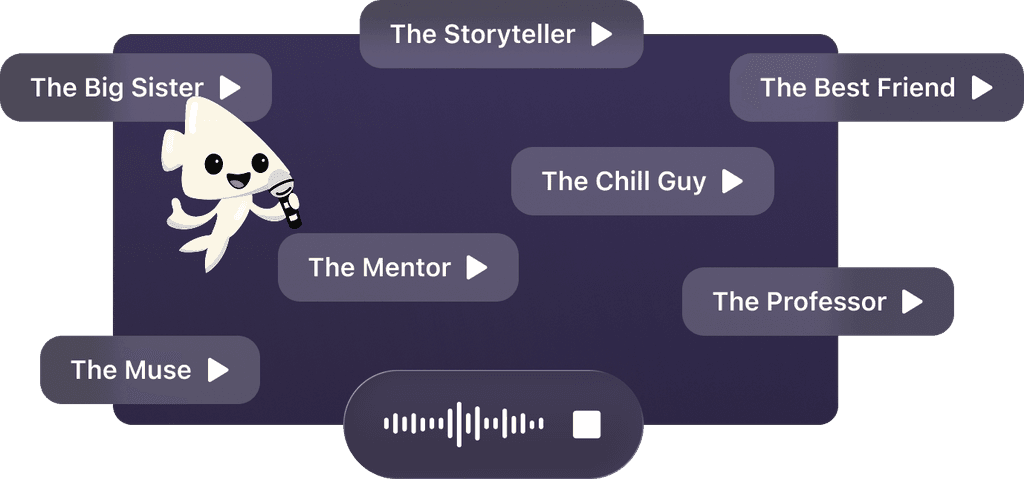
The War on Normal People: The Truth About America's Disappearing Jobs and Why Universal Basic Income Is Our Future을 나만의 학습 스타일로 경험하기
무엇이든 묻고, 학습 스타일을 선택하고, 나에게 맞는 인사이트를 함께 만들어보세요.
샌프란시스코에서 컬럼비아 대학교 동문들이 만들었습니다
"Instead of endless scrolling, I just hit play on BeFreed. It saves me so much time."


"I never knew where to start with nonfiction—BeFreed’s book lists turned into podcasts gave me a clear path."


"Perfect balance between learning and entertainment. Finished ‘Thinking, Fast and Slow’ on my commute this week."
"Crazy how much I learned while walking the dog. BeFreed = small habits → big gains."
"Reading used to feel like a chore. Now it’s just part of my lifestyle."

"Feels effortless compared to reading. I’ve finished 6 books this month already."
"BeFreed turned my guilty doomscrolling into something that feels productive and inspiring."

"BeFreed turned my commute into learning time. 20-min podcasts are perfect for finishing books I never had time for."
"BeFreed replaced my podcast queue. Imagine Spotify for books — that’s it. 🙌"

"It is great for me to learn something from the book without reading it."
"The themed book list podcasts help me connect ideas across authors—like a guided audio journey."
"Makes me feel smarter every time before going to work"
샌프란시스코에서 컬럼비아 대학교 동문들이 만들었습니다
"Instead of endless scrolling, I just hit play on BeFreed. It saves me so much time."
"I never knew where to start with nonfiction—BeFreed’s book lists turned into podcasts gave me a clear path."
"Perfect balance between learning and entertainment. Finished ‘Thinking, Fast and Slow’ on my commute this week."
"Crazy how much I learned while walking the dog. BeFreed = small habits → big gains."
"Reading used to feel like a chore. Now it’s just part of my lifestyle."
"Feels effortless compared to reading. I’ve finished 6 books this month already."
"BeFreed turned my guilty doomscrolling into something that feels productive and inspiring."
"BeFreed turned my commute into learning time. 20-min podcasts are perfect for finishing books I never had time for."
"BeFreed replaced my podcast queue. Imagine Spotify for books — that’s it. 🙌"
"It is great for me to learn something from the book without reading it."
"The themed book list podcasts help me connect ideas across authors—like a guided audio journey."
"Makes me feel smarter every time before going to work"
"Instead of endless scrolling, I just hit play on BeFreed. It saves me so much time."
"I never knew where to start with nonfiction—BeFreed’s book lists turned into podcasts gave me a clear path."
"Perfect balance between learning and entertainment. Finished ‘Thinking, Fast and Slow’ on my commute this week."
"Crazy how much I learned while walking the dog. BeFreed = small habits → big gains."
"Reading used to feel like a chore. Now it’s just part of my lifestyle."
"Feels effortless compared to reading. I’ve finished 6 books this month already."
"BeFreed turned my guilty doomscrolling into something that feels productive and inspiring."
"BeFreed turned my commute into learning time. 20-min podcasts are perfect for finishing books I never had time for."
"BeFreed replaced my podcast queue. Imagine Spotify for books — that’s it. 🙌"
"It is great for me to learn something from the book without reading it."
"The themed book list podcasts help me connect ideas across authors—like a guided audio journey."
"Makes me feel smarter every time before going to work"
"Instead of endless scrolling, I just hit play on BeFreed. It saves me so much time."
"I never knew where to start with nonfiction—BeFreed’s book lists turned into podcasts gave me a clear path."
"Perfect balance between learning and entertainment. Finished ‘Thinking, Fast and Slow’ on my commute this week."
"Crazy how much I learned while walking the dog. BeFreed = small habits → big gains."
"Reading used to feel like a chore. Now it’s just part of my lifestyle."
"Feels effortless compared to reading. I’ve finished 6 books this month already."
"BeFreed turned my guilty doomscrolling into something that feels productive and inspiring."
"BeFreed turned my commute into learning time. 20-min podcasts are perfect for finishing books I never had time for."
"BeFreed replaced my podcast queue. Imagine Spotify for books — that’s it. 🙌"
"It is great for me to learn something from the book without reading it."
"The themed book list podcasts help me connect ideas across authors—like a guided audio journey."
"Makes me feel smarter every time before going to work"

The War on Normal People: The Truth About America's Disappearing Jobs and Why Universal Basic Income Is Our Future 요약 다운로드
The War on Normal People: The Truth About America's Disappearing Jobs and Why Universal Basic Income Is Our Future 요약을 무료 PDF 또는 EPUB으로 받으세요. 인쇄하거나 오프라인에서 언제든 읽을 수 있습니다.


