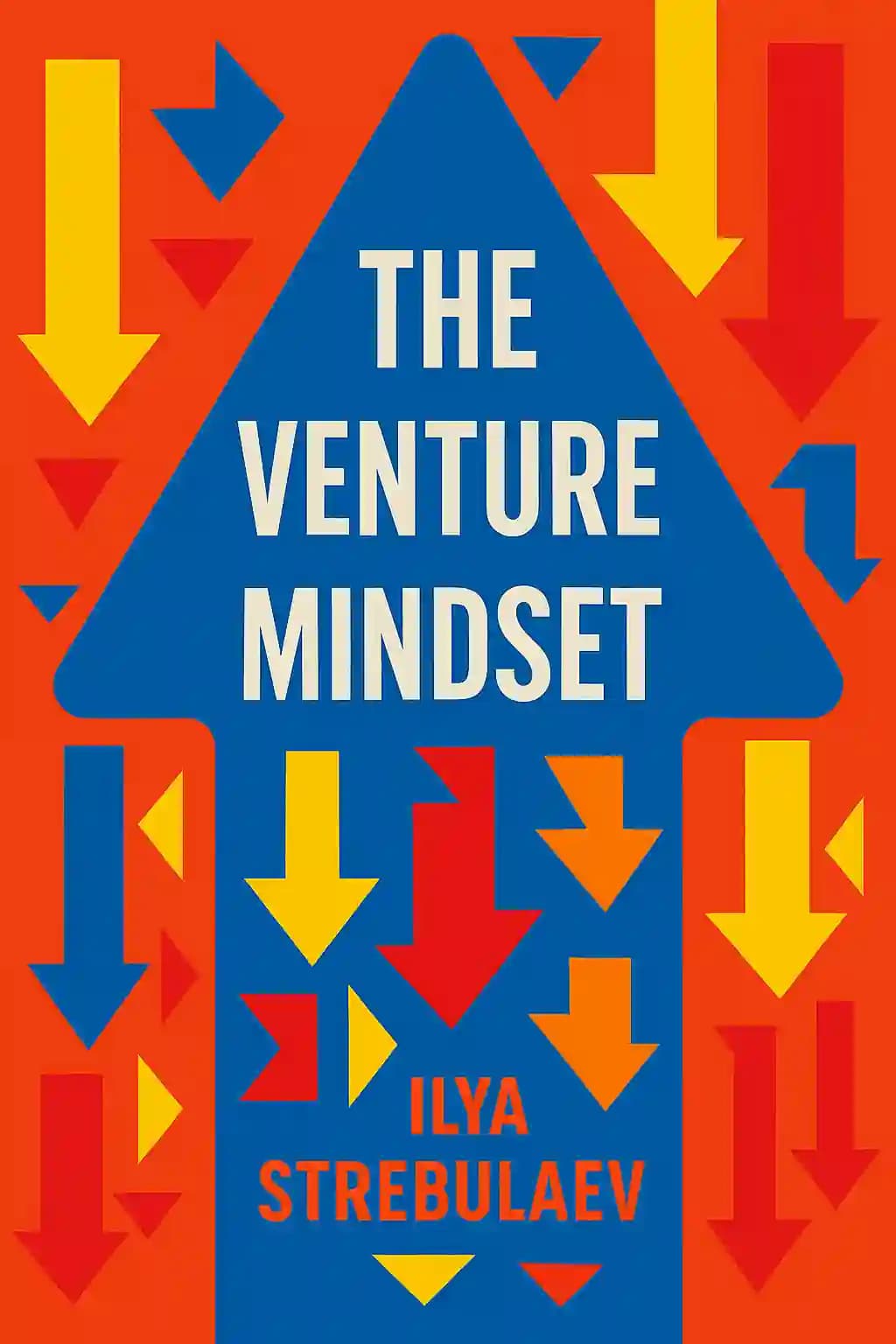
Stanford professor Ilya Strebulaev's bestselling "Venture Mindset" reveals how thinking like VCs drives extraordinary growth. What counterintuitive strategy did Google's Eric Schmidt call "full of powerful, practical lessons"? Learn the nine principles that transform failure into innovation.
Ilya Strebulaev and Alex Dang, co-authors of The Venture Mindset, are renowned experts in innovation strategy and venture capital principles.
Strebulaev is the David S. Lobel Professor of Private Equity at Stanford Graduate School of Business. He founded Stanford’s Venture Capital Initiative and is widely recognized as the foremost academic authority on VC decision-making.
Dang, a seasoned technology executive, led transformative initiatives at Amazon and advised global corporations as a McKinsey partner. Their book blends decades of research and real-world experience to teach organizations how to adopt risk-smart frameworks from top venture capitalists.
Strebulaev’s groundbreaking work has been featured in The Wall Street Journal, Harvard Business Review, and Bloomberg, while Dang’s operational expertise spans AI-driven ventures and scalable digital ecosystems. The book has earned praise from industry leaders like former Google CEO Eric Schmidt and was highlighted by the Financial Times for its timely insights on navigating AI disruption.
Both authors frequently lead executive workshops for Fortune 500 companies and governments seeking to cultivate innovation.
The Venture Mindset outlines a revolutionary approach to innovation inspired by Silicon Valley’s venture capital strategies. It teaches nine principles for making smarter decisions, embracing calculated risks, and fostering long-term growth, such as prioritizing teams over ideas, encouraging dissent, and cutting losses early. The book blends real-world examples (Netflix, MIT) with research to show how organizations can adopt this mindset for disruptive success.
Entrepreneurs, corporate leaders, investors, and innovation-focused professionals will benefit most. The book offers actionable strategies for venture capitalists seeking sharper decision-making, corporate teams aiming to overcome bureaucracy, and startups navigating scalability challenges. It’s particularly relevant for those in tech, finance, or industries undergoing rapid disruption.
Yes—it combines academic rigor with engaging storytelling, making complex concepts accessible. The nine principles, like “pattern recognition” and “staged investments,” are backed by Stanford research and case studies. Readers praise its practicality for decision-making in fast-paced environments, though critics note it leans heavily on Silicon Valley paradigms.
The framework includes:
Notable quotes include:
These emphasize resilience, external collaboration, and execution—core themes explored through case studies like Netflix’s pivot from DVDs to streaming.
While Atomic Habits focuses on individual behavior change, The Venture Mindset targets organizational decision-making. Strebulaev’s work emphasizes systemic innovation frameworks (e.g., staged investments, dissent cultures) versus Clear’s micro-habit strategies. Both advocate long-term thinking, but The Venture Mindset is tailored for teams and investors.
Some argue the principles are easier for VC-funded startups to adopt than traditional corporations. Others note the book underplays the role of luck in venture success. However, its structured approach to risk management and team dynamics is widely praised.
As a Stanford finance professor and founder of the Stanford GSB Venture Capital Initiative, Strebulaev combines 20+ years of academic research with insights from advising firms like Netflix. This dual expertise ensures rigorous analysis of VC trends and practical corporate applications.
Yes—principles like incentivizing long-term outcomes and decentralizing idea generation are tested in sectors from healthcare to wine production. The book cites MIT’s chemical engineering breakthroughs and traditional winemakers adopting iterative experimentation as cross-industry examples.
With AI accelerating disruption, its focus on adaptive decision-making helps organizations navigate uncertainty. The “staged investments” principle aligns with lean startup methodologies dominating AI deployment, while “pattern recognition” guides leaders in evaluating emerging tech risks.
It teaches investors and leaders to identify success signals by analyzing historical data and market trends. For example, VCs assess founder grit and market timing—not just business plans. The book illustrates this with case studies of unicorn startups that passed pattern-based screening.
It reframes failure as a necessary step for innovation, advocating “fast failure” tactics like killing underperforming projects early. Examples include Google’s discontinued projects (e.g., Stadia) freeing resources for AI advancements—a concept backed by Stanford’s venture research.
저자의 목소리로 책을 느껴보세요
지식을 흥미롭고 예시가 풍부한 인사이트로 전환
핵심 아이디어를 빠르게 캡처하여 신속하게 학습
재미있고 매력적인 방식으로 책을 즐기세요
VCs fear missing the next Google far more than backing failures.
Failure [is] an essential part of finding extraordinary success.
The Venture Mindset requires actively seeking opportunities in unexpected places.
Great innovations rarely emerge from within corporate walls.
The Venture Mindset의 핵심 아이디어를 이해하기 쉬운 포인트로 분해하여 혁신적인 팀이 어떻게 창조하고, 협력하고, 성장하는지 이해합니다.
The Venture Mindset을 빠른 기억 단서로 압축하여 솔직함, 팀워크, 창의적 회복력의 핵심 원칙을 강조합니다.

생생한 스토리텔링을 통해 The Venture Mindset을 경험하고, 혁신 교훈을 기억에 남고 적용할 수 있는 순간으로 바꿉니다.
무엇이든 물어보고, 목소리를 선택하고, 진정으로 공감되는 인사이트를 함께 만들어보세요.

샌프란시스코에서 컬럼비아 대학교 동문들이 만들었습니다
"Instead of endless scrolling, I just hit play on BeFreed. It saves me so much time."
"I never knew where to start with nonfiction—BeFreed’s book lists turned into podcasts gave me a clear path."
"Perfect balance between learning and entertainment. Finished ‘Thinking, Fast and Slow’ on my commute this week."
"Crazy how much I learned while walking the dog. BeFreed = small habits → big gains."
"Reading used to feel like a chore. Now it’s just part of my lifestyle."
"Feels effortless compared to reading. I’ve finished 6 books this month already."
"BeFreed turned my guilty doomscrolling into something that feels productive and inspiring."
"BeFreed turned my commute into learning time. 20-min podcasts are perfect for finishing books I never had time for."
"BeFreed replaced my podcast queue. Imagine Spotify for books — that’s it. 🙌"
"It is great for me to learn something from the book without reading it."
"The themed book list podcasts help me connect ideas across authors—like a guided audio journey."
"Makes me feel smarter every time before going to work"
샌프란시스코에서 컬럼비아 대학교 동문들이 만들었습니다

The Venture Mindset 요약을 무료 PDF 또는 EPUB으로 받으세요. 인쇄하거나 오프라인에서 언제든 읽을 수 있습니다.
What separates a $100 billion company from a forgotten startup? In 2011, when Eric Yuan pitched his videoconferencing idea, nearly every venture capitalist dismissed it. The market seemed saturated - Skype, WebEx, and countless others already existed. Yet three investors at Qualcomm Ventures saw something different. They bet $500,000 on what would become Zoom, one of history's most successful investments. This wasn't luck. It was a radically different way of thinking about risk, opportunity, and what makes ideas worth pursuing. Behind every unicorn - from Airbnb to Slack to DoorDash - lies a counterintuitive decision-making framework that rejects conventional wisdom and embraces what most consider reckless. This approach, honed through decades in Silicon Valley's high-stakes laboratories, offers a blueprint for anyone seeking to create extraordinary value in an uncertain world.