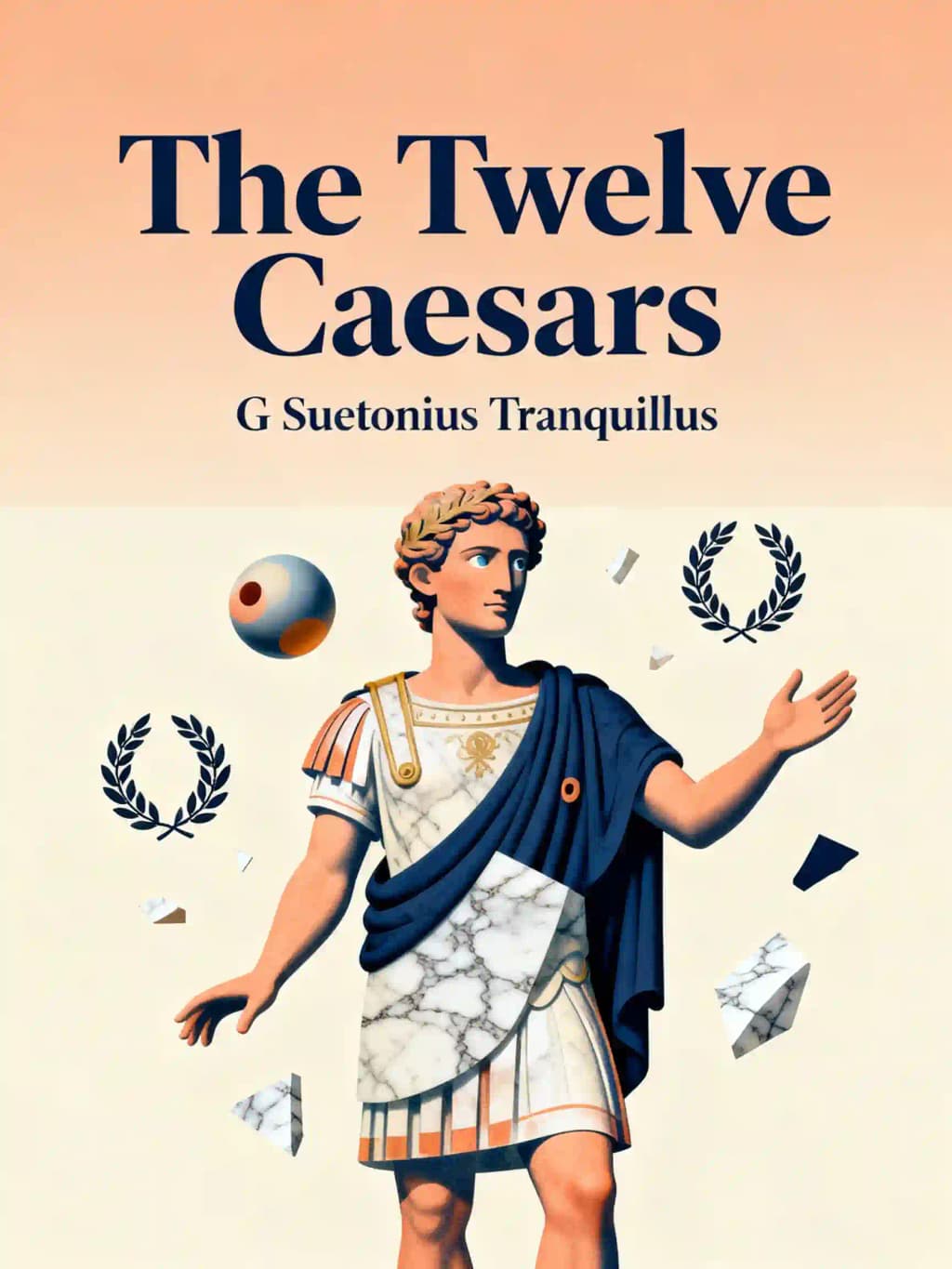
Suetonius's scandalous chronicle of Rome's first emperors - written in 121 AD using imperial archives - reveals the debauchery, brilliance, and madness behind absolute power. What shocking imperial secrets, inspiring Edward Gibbon's own masterworks, might change how you view today's leaders?
Gaius Suetonius Tranquillus (c. AD 69–after 122) was a Roman historian and imperial biographer, best known as the author of The Twelve Caesars, a landmark work of ancient biography. This book chronicles the lives of Julius Caesar and Rome’s first eleven emperors.
Born in Hippo Regius, Africa (modern-day Algeria), Suetonius served as Emperor Hadrian’s private secretary. This position granted him unparalleled access to imperial archives and firsthand accounts of Rome’s elite.
Suetonius's writings blend meticulous historical detail with vivid anecdotes, focusing on the personal habits, political maneuvers, and moral complexities of his subjects. The Twelve Caesars remains a seminal text for understanding power dynamics, leadership, and daily life in imperial Rome.
While many of Suetonius’ other works—including studies of Roman customs, oratory, and literary figures—have been lost, his surviving corpus established him as a pioneer of biographical historiography. Written in AD 121 and still widely cited by scholars, The Twelve Caesars has been translated into over 50 languages and inspired later biographers from Einhard (Charlemagne’s chronicler) to modern political historians.
The Twelve Caesars chronicles the lives of Rome’s first emperors, from Julius Caesar to Domitian, blending political history with personal scandals, military exploits, and court intrigues. Suetonius offers vivid accounts of their virtues, vices, and eccentricities—like Caligula’s megalomania and Nero’s artistic obsessions—while critiquing the corrosive impact of absolute power.
History enthusiasts, classical literature readers, and anyone interested in the drama of ancient Rome will find this work compelling. Its mix of biographical detail and juicy anecdotes appeals to both academic researchers and casual readers exploring Roman imperial culture.
Key themes include the fragility of power, the moral decay of leadership, and the intersection of public duty and private vice. Suetonius highlights how ambition and paranoia destabilized the Roman Empire, using examples like Tiberius’s isolation on Capri and Claudius’s manipulation by advisors.
Julius Caesar emerges as a cunning leader and ruthless strategist. Suetonius recounts his rise from populist reformer to dictator, emphasizing moments like his defiance of Sulla, his capture by pirates (whom he later crucified), and his assassination as a consequence of overreaching authority.
Unlike chronological histories, Suetonius organizes his biographies by thematic categories (e.g., military deeds, personal habits), offering gossipy insights into emperors’ lives. His access to imperial archives and court gossip provides a mix of factual reporting and sensational tales absent in drier chronicles.
Critics note Suetonius’s bias toward scandal over political analysis and his occasional reliance on unverified rumors. For example, his depiction of Tiberius’s debauchery on Capri is sensationalized, lacking corroboration from other contemporary sources.
While Tacitus analyzes political systems and moral decay structurally, Suetonius focuses on individual emperors’ quirks and excesses. Both critique autocracy, but Suetonius prioritizes biographical drama over historical causality.
Suetonius drew from imperial records, senators’ memoirs, and oral traditions. As Hadrian’s secretary, he accessed state archives, though his inclusion of salacious rumors (e.g., Caligula’s incest) remains controversial.
The work serves as a timeless study of power dynamics and human behavior under authoritarian rule. Its themes of corruption, ambition, and the cult of personality resonate in modern political discourse.
While factual on events like military campaigns and administrative reforms, Suetonius’s emphasis on emperors’ private lives risks overshadowing their political legacies. Scholars recommend cross-referencing with Tacitus or Cassius Dio for balanced perspectives.
The biographies warn against unchecked power, hubris, and isolation from reality—lessons exemplified by Nero’s artistic detachment during crises and Domitian’s paranoid purges. Effective leadership, Suetonius suggests, requires balancing authority with public trust.
저자의 목소리로 책을 느껴보세요
지식을 흥미롭고 예시가 풍부한 인사이트로 전환
핵심 아이디어를 빠르게 캡처하여 신속하게 학습
재미있고 매력적인 방식으로 책을 즐기세요
the die is cast
every woman's husband and every man's wife
Have I played my part well in the comedy of life?
shears his sheep but does not flay them.
Lives of the Twelve Caesars의 핵심 아이디어를 이해하기 쉬운 포인트로 분해하여 혁신적인 팀이 어떻게 창조하고, 협력하고, 성장하는지 이해합니다.
Lives of the Twelve Caesars을 빠른 기억 단서로 압축하여 솔직함, 팀워크, 창의적 회복력의 핵심 원칙을 강조합니다.

생생한 스토리텔링을 통해 Lives of the Twelve Caesars을 경험하고, 혁신 교훈을 기억에 남고 적용할 수 있는 순간으로 바꿉니다.
무엇이든 물어보고, 목소리를 선택하고, 진정으로 공감되는 인사이트를 함께 만들어보세요.

샌프란시스코에서 컬럼비아 대학교 동문들이 만들었습니다
"Instead of endless scrolling, I just hit play on BeFreed. It saves me so much time."
"I never knew where to start with nonfiction—BeFreed’s book lists turned into podcasts gave me a clear path."
"Perfect balance between learning and entertainment. Finished ‘Thinking, Fast and Slow’ on my commute this week."
"Crazy how much I learned while walking the dog. BeFreed = small habits → big gains."
"Reading used to feel like a chore. Now it’s just part of my lifestyle."
"Feels effortless compared to reading. I’ve finished 6 books this month already."
"BeFreed turned my guilty doomscrolling into something that feels productive and inspiring."
"BeFreed turned my commute into learning time. 20-min podcasts are perfect for finishing books I never had time for."
"BeFreed replaced my podcast queue. Imagine Spotify for books — that’s it. 🙌"
"It is great for me to learn something from the book without reading it."
"The themed book list podcasts help me connect ideas across authors—like a guided audio journey."
"Makes me feel smarter every time before going to work"
샌프란시스코에서 컬럼비아 대학교 동문들이 만들었습니다

Lives of the Twelve Caesars 요약을 무료 PDF 또는 EPUB으로 받으세요. 인쇄하거나 오프라인에서 언제든 읽을 수 있습니다.
When Julius Caesar crossed the Rubicon in 49 BCE, he uttered "alea iacta est" ("the die is cast") and transformed Western civilization forever. This moment marked the death of the Roman Republic and birthed an imperial system that would shape European politics for millennia. Suetonius' "The Twelve Caesars" offers us the most intimate, scandalous portrait of these rulers who wielded unprecedented power. From Augustus' masterful political maneuvering to Nero's artistic delusions, these figures continue to fascinate us precisely because they reveal timeless human dramas of ambition, corruption, and the intoxicating effects of absolute power. What makes these accounts so compelling is their unflinching portrayal of both greatness and depravity. These weren't distant figureheads but deeply flawed individuals whose personal quirks and psychological damage shaped an empire. Caesar addressed his troops as "comrades" rather than "soldiers." Augustus wore clothes woven by female relatives despite ruling the known world. Caligula appointed his horse as a consul. Through these details, we see how power magnifies both virtues and vices to extraordinary proportions.