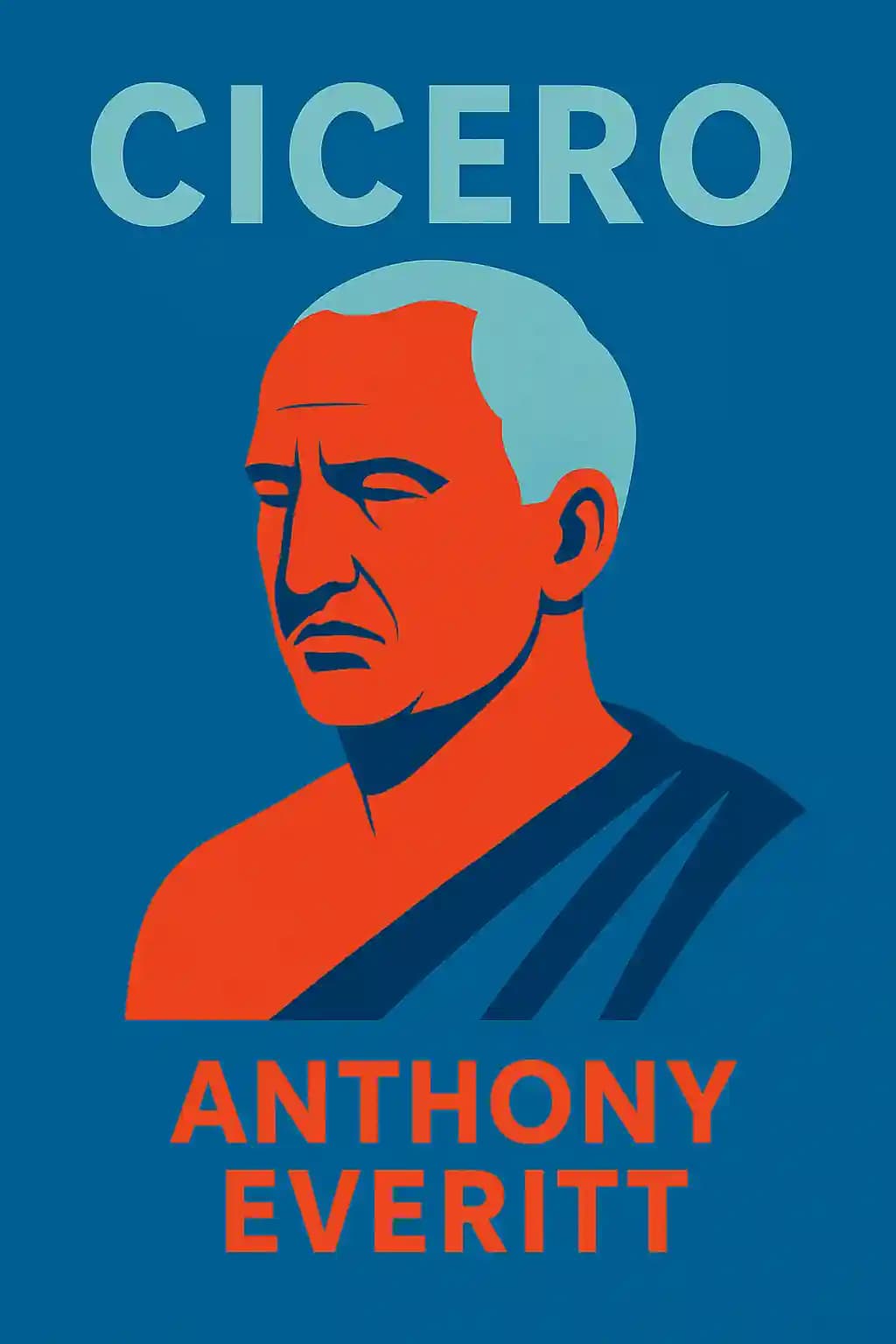
Discover Cicero, Rome's greatest politician, in Everitt's vivid biography that brings ancient political genius to life. Why do modern leaders still study this master orator's strategies? His blueprint for democratic governance continues to influence Western civilization 2,000 years after his assassination.
Anthony Everitt, acclaimed historian and bestselling author of Cicero: The Life and Times of Rome’s Greatest Politician, is renowned for his expertise in classical Roman history. A Cambridge-educated scholar, Everitt combines rigorous academic research with accessible storytelling, bringing ancient figures like Cicero to life through narratives rich in political intrigue and human drama. His works, including Augustus: The Life of Rome’s First Emperor and Hadrian and the Triumph of Rome, have established him as a leading voice in popular historical biography.
Formerly Secretary-General of the UK’s Arts Council and a visiting professor at Nottingham Trent University, Everitt’s institutional roles underscore his authority in bridging cultural and historical scholarship. He regularly contributes to The Guardian and The Financial Times, further cementing his public intellectual stature.
A companion of the Liverpool Institute for Performing Arts, Everitt’s Cicero remains a national bestseller, praised for its vivid portrayal of Republican Rome’s collapse and widely cited in academic curricula.
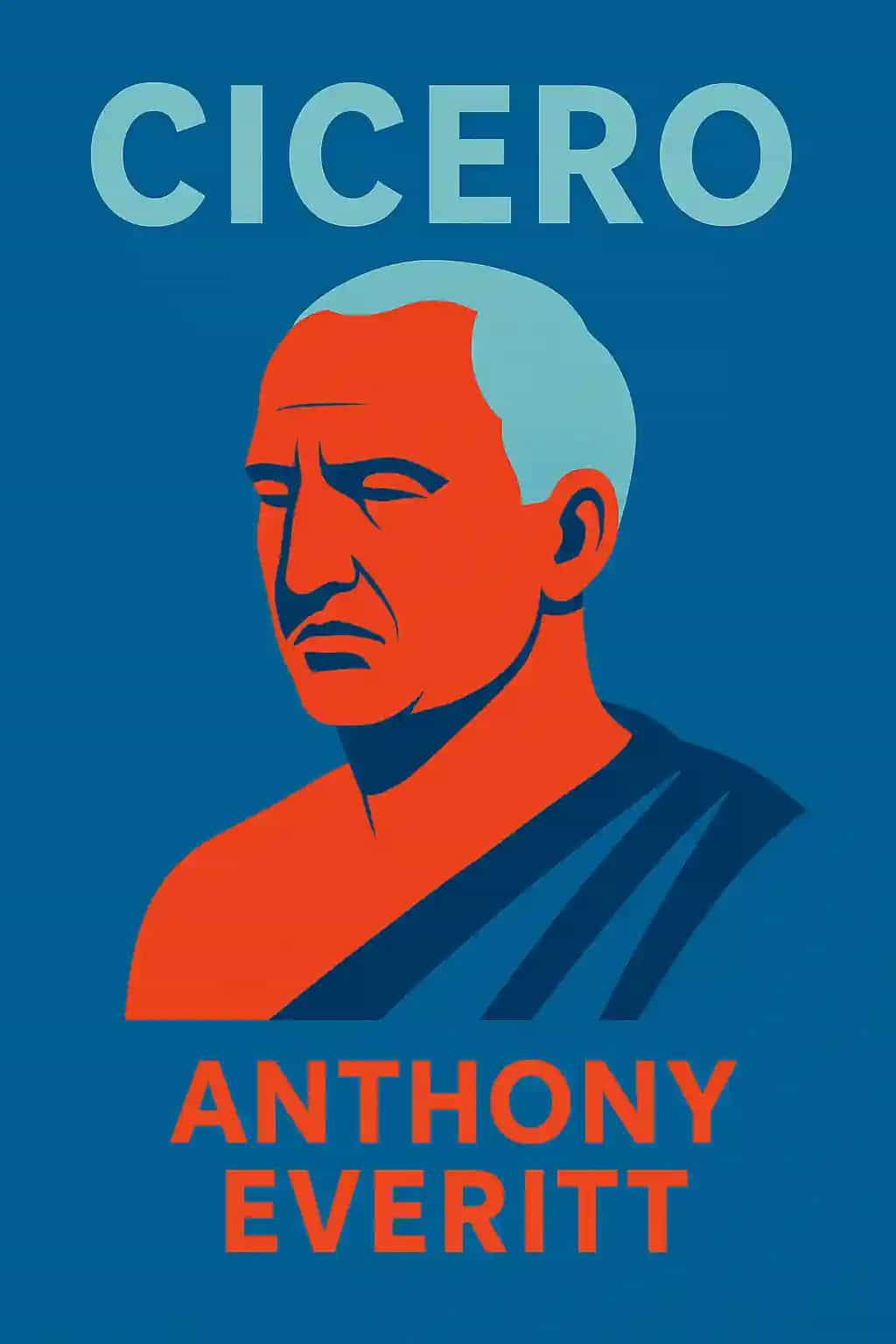
Cicero by Anthony Everitt is a biography exploring the life of ancient Rome’s foremost orator and statesman. It traces his political career, philosophical contributions, and turbulent clashes with figures like Julius Caesar and Mark Antony, while contextualizing his role in the collapse of the Roman Republic. The book blends historical rigor with vivid storytelling, emphasizing Cicero’s enduring influence on Western governance and rhetoric.
History enthusiasts, students of political philosophy, and readers fascinated by ancient Rome will find this book compelling. It appeals to those interested in leadership, rhetoric, and the interplay between personal ambition and public service. Everitt’s accessible style also makes it suitable for general audiences seeking a nuanced portrait of Republican Rome.
Yes. Everitt combines meticulous research with engaging prose, offering both scholarly depth and narrative flair. Critics praise its balanced portrayal of Cicero’s brilliance, vanity, and moral complexities, making it a standout biography for understanding late Republican Rome.
Everitt highlights Cicero’s advocacy for a mixed constitution blending monarchy, democracy, and oligarchy. The book emphasizes his belief in legal checks to prevent autocracy, as articulated in On the State, and his lifelong struggle to preserve Republican ideals amid civil wars and dictatorships.
Cicero opposed Caesar’s autocratic ambitions, fearing the Republic’s collapse. Though initially supportive of Pompey against Caesar, he later critiqued both leaders’ power grabs. His conflicts with Mark Antony after Caesar’s assassination ultimately led to his execution.
Everitt portrays Cicero as a devoted family man but also vain and politically opportunistic. The biography examines his exile after illegal executions, his strategic alliances, and his vulnerability to personal slights, humanizing him without excusing his missteps.
Cicero’s writings on governance, ethics, and rhetoric shaped Western political thought. John Adams called him “the greatest statesman and philosopher combined,” reflecting his enduring impact on democratic ideals. Everitt underscores his role as a martyr for Republican principles.
Yes. Everitt details Cicero’s 43 BC execution under Mark Antony’s orders, his severed head and hands displayed in the Roman Forum. This brutal end symbolizes the Republic’s final collapse and Cicero’s tragic fate as a defender of liberty.
Praised for its readability, the book synthesizes Cicero’s letters, speeches, and historical context into a cohesive narrative. Unlike drier academic texts, it balances political intrigue with personal anecdotes, making it a gateway for newcomers.
Everitt critiques Cicero’s vanity, political naivety, and tendency toward self-aggrandizement. His failure to ally effectively with Pompey and overestimation of his influence after Caesar’s death are framed as fatal flaws.
The biography draws on Cicero’s 900+ surviving letters (many to Atticus), speeches like Against Catiline, and works by Plutarch and Sallust. Everitt also references archaeological findings to reconstruct Republican Rome’s social dynamics.
Through Cicero’s career, Everitt analyzes corruption, populism, and military dictatorships that eroded Republican institutions. The biography serves as a cautionary tale about power imbalances and the fragility of democratic systems.
저자의 목소리로 책을 느껴보세요
지식을 흥미롭고 예시가 풍부한 인사이트로 전환
핵심 아이디어를 빠르게 캡처하여 신속하게 학습
재미있고 매력적인 방식으로 책을 즐기세요
This is really my country.
Always be the best, my boy, the bravest.
The breakdown of civilized values horrified him.
He saw oratory as akin to acting.
Cicero의 핵심 아이디어를 이해하기 쉬운 포인트로 분해하여 혁신적인 팀이 어떻게 창조하고, 협력하고, 성장하는지 이해합니다.
Cicero을 빠른 기억 단서로 압축하여 솔직함, 팀워크, 창의적 회복력의 핵심 원칙을 강조합니다.

생생한 스토리텔링을 통해 Cicero을 경험하고, 혁신 교훈을 기억에 남고 적용할 수 있는 순간으로 바꿉니다.
무엇이든 물어보고, 목소리를 선택하고, 진정으로 공감되는 인사이트를 함께 만들어보세요.

샌프란시스코에서 컬럼비아 대학교 동문들이 만들었습니다
"Instead of endless scrolling, I just hit play on BeFreed. It saves me so much time."
"I never knew where to start with nonfiction—BeFreed’s book lists turned into podcasts gave me a clear path."
"Perfect balance between learning and entertainment. Finished ‘Thinking, Fast and Slow’ on my commute this week."
"Crazy how much I learned while walking the dog. BeFreed = small habits → big gains."
"Reading used to feel like a chore. Now it’s just part of my lifestyle."
"Feels effortless compared to reading. I’ve finished 6 books this month already."
"BeFreed turned my guilty doomscrolling into something that feels productive and inspiring."
"BeFreed turned my commute into learning time. 20-min podcasts are perfect for finishing books I never had time for."
"BeFreed replaced my podcast queue. Imagine Spotify for books — that’s it. 🙌"
"It is great for me to learn something from the book without reading it."
"The themed book list podcasts help me connect ideas across authors—like a guided audio journey."
"Makes me feel smarter every time before going to work"
샌프란시스코에서 컬럼비아 대학교 동문들이 만들었습니다

Cicero 요약을 무료 PDF 또는 EPUB으로 받으세요. 인쇄하거나 오프라인에서 언제든 읽을 수 있습니다.
In 63 BCE, Rome faced an existential crisis. Lucius Sergius Catilina, a charismatic but desperate aristocrat, had assembled a ragtag army of indebted veterans and discontented citizens. His plan: burn Rome to the ground, massacre the Senate, and establish himself as dictator. Standing against this conspiracy was an unlikely defender - Marcus Tullius Cicero, a provincial outsider who had clawed his way to the consulship through sheer intellectual brilliance. When Cicero exposed the plot in a series of devastating speeches, he was hailed as "Father of His Country." Yet within a few years, this same hero would be forced into exile, his house burned, his reputation in tatters. What explains this dramatic reversal? The answer lies in Rome's fatal constitutional crisis - a political system designed for a small city-state that had become hopelessly inadequate for governing a vast empire. Through Cicero's eyes, we witness the Republic's death throes and the birth pangs of imperial Rome - not as distant events but as lived experience.