1장
Eastern Wisdom in a Bear of Very Little Brain
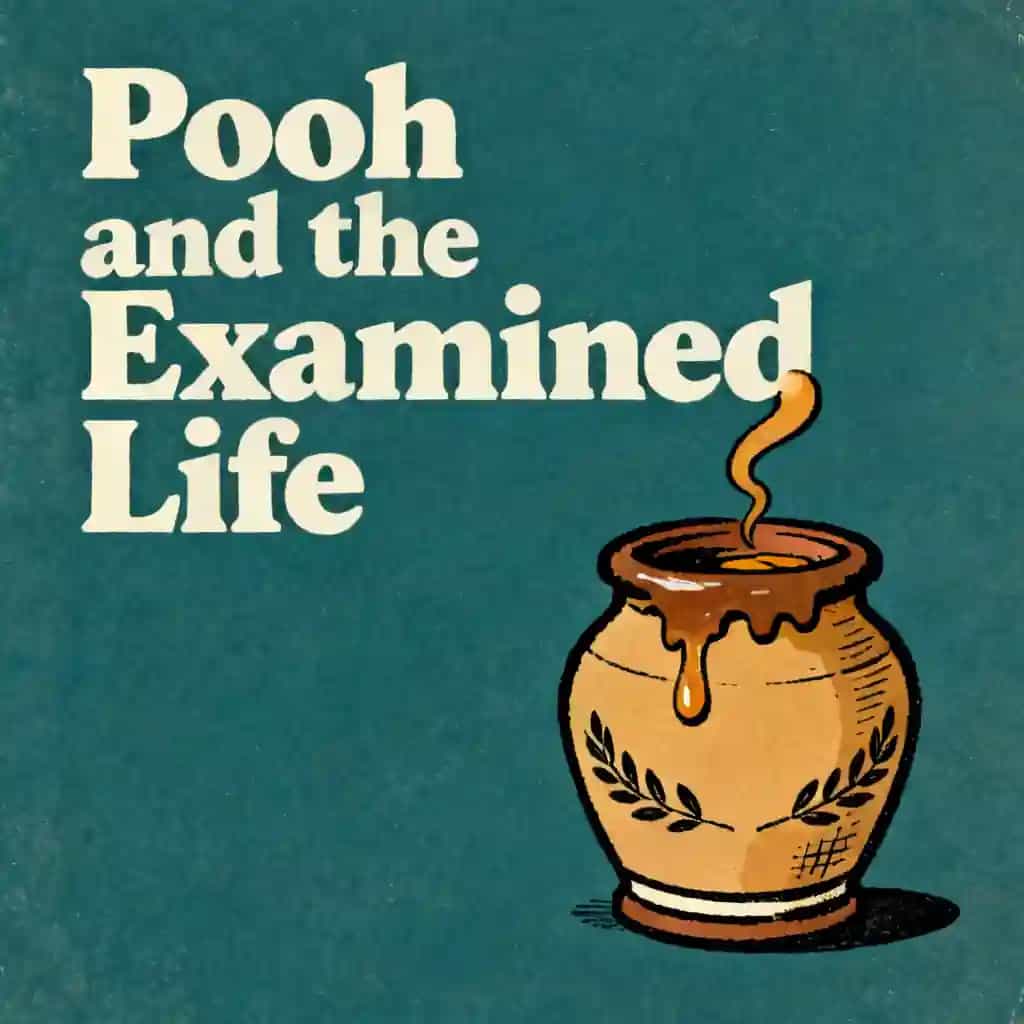
The Tao of Pooh has sold over 3 million copies since its 1982 publication, becoming a surprising cultural phenomenon that bridges Eastern philosophy and Western children's literature. This unassuming book found its way onto college syllabi, celebrity bookshelves (including those of Tom Hanks and Oprah Winfrey), and even corporate training programs. Benjamin Hoff's ingenious premise-using A.A. Milne's beloved bear to explain Taoist principles-created an accessible gateway to Eastern wisdom that resonated with readers seeking alternatives to Western philosophical traditions. What makes this book so powerful is how it demonstrates that profound wisdom often comes not from intellectual complexity, but from the simplest, most childlike perspectives. As we explore the surprising connections between a fictional bear and ancient Chinese philosophy, we discover why this unlikely pairing continues to transform lives decades after its publication.
2장
The Vinegar Tasters: Three Views of Life
Imagine three ancient Chinese philosophers-Confucius, Buddha, and Lao-tse-gathered around a vat of vinegar, each dipping a finger in for a taste. This famous allegorical painting, dating back to the Song Dynasty, serves as our entry point into understanding Taoism's unique worldview. Confucius finds the vinegar sour, representing his view that life has fallen out of harmony with heaven's rules. His solution? Impose strict rituals and social structures to correct humanity's course. He believes that through careful regulation of behavior, proper relationships, and adherence to moral codes, society can return to an idealized past of order and virtue.
Buddha tastes bitterness, seeing life as suffering caused by worldly attachment. His path requires transcending earthly desires through meditation, mindfulness, and the elimination of craving. The Buddhist perspective views the material world as a source of illusion and pain, suggesting that true peace comes only through detachment from worldly concerns and the pursuit of enlightenment.
But Lao-tse, founder of Taoism, smiles at the taste. Why? Because to the Taoist mind, life is fundamentally sweet when we work with its natural flow rather than against it. Unlike the others who seek to escape the world or control it, Taoism embraces "the dust of the world" as it is. This acceptance isn't passive resignation but rather an active engagement with life's natural rhythms and patterns.
This fundamental difference in perspective shapes everything about the Taoist approach. Rather than imposing artificial systems or seeking escape, Taoism recognizes the natural Way (Tao) that underlies all existence. Like water finding its path downhill, the Tao represents the natural course of things - effortless yet irresistible. This Way cannot be adequately captured in words-the opening line of the Tao Te Ching states, "The Tao that can be told is not the eternal Tao." It must be experienced directly, much like one cannot truly understand the taste of honey merely by reading about it.
The Taoist personality reflects this approach to life-characterized by serene happiness, subtle humor, and an acceptance of things as they are. Where others might see obstacles, the Taoist sees opportunities; where others fight against circumstances, the Taoist flows with them. This attitude manifests in practical ways: responding to conflict with flexibility rather than force, approaching problems with patience rather than haste, and finding contentment in simplicity rather than complexity. When we stop fighting against reality and instead align ourselves with nature's currents, we discover an effortless way of being that brings both effectiveness and joy. This is the wisdom that our unlikely guide-a stuffed bear with a fondness for honey-will help us discover, demonstrating through his simple, unaffected nature the profound truths of Taoist thought.
3장
The Uncarved Block: The Power of Natural Simplicity
At the heart of Taoism lies the concept of P'u-the Uncarved Block. This principle suggests that things in their original, simple state contain a natural power that gets lost when that simplicity is changed. The Chinese character combines "tree" and "thicket," meaning "things in their natural state." This ancient wisdom finds its unlikely but perfect embodiment in Winnie-the-Pooh, whose seemingly simple nature reveals profound truths about authentic living.
While others might dismiss Pooh as simpleminded, his uncomplicated nature represents not stupidity but a profound state of being that allows him to accomplish what others cannot. Consider the forest scene where Rabbit's cleverness leads the group in circles, while Pooh's simple thinking-"I wonder which way home is?"-finds the solution. His mind, unburdened by overthinking, sees what others miss. Similarly, when the characters face the challenge of getting Pooh unstuck from Rabbit's front door, it's not complex calculations but simple patience that eventually solves the problem.
This mirrors the Taoist ideal of the calm "mirror-mind" that reflects reality without distortion. While Rabbit schemes with excessive cleverness, Owl pontificates with misapplied wisdom, and Eeyore complains with perpetual pessimism, Pooh simply is. He approaches life's challenges with straightforward curiosity rather than predetermined strategies. When hunting Heffalumps, while others create elaborate traps, Pooh's simple approach of following his nose (and his stomach) often leads to better outcomes. He can't describe the Uncarved Block in words-he embodies it in every honey-seeking adventure and friendly interaction.
The secret revealed through Pooh's simplicity is disarmingly straightforward: Life is Fun. From this uncarved state comes the ability to enjoy simplicity and do things spontaneously that work out right. When caught in the rain, Pooh doesn't complain about the weather or devise complex shelter plans - he simply enjoys the experience of getting wet. When we discard arrogance and complexity, we discover that effectiveness often comes not from elaborate strategies but from returning to our original nature.
Think about how children solve problems before education complicates their thinking - they draw without worrying about technique, sing without concern for pitch, and make friends without social anxiety. Or how your best ideas often come not when you're straining to think, but when your mind is relaxed and open - perhaps during a shower or while walking. The Uncarved Block reminds us that sometimes our sophisticated adult minds become our greatest limitation rather than our greatest asset. This is particularly evident in creative pursuits, where overthinking can lead to writer's block or artistic paralysis, while a more natural, spontaneous approach often yields better results.
In business and personal relationships too, the principle of P'u suggests that authenticity and straightforward communication often achieve more than complex manipulation or strategic planning. Like Pooh's simple "Oh, bother" in response to difficulties, sometimes the most effective approach is the least complicated one.
4장
When Knowledge Gets in the Way
"The wise are not learned; the learned are not wise," wrote Lao-tse, highlighting a central Taoist critique of intellectualism divorced from practical wisdom. Owl perfectly represents the scholarly mind that mistakes information for understanding-using intimidating words, constructing elaborate theories, yet often missing what's right in front of him.
In ancient China, Confucianist scholars were seen by Taoists as "busy ants spoiling the picnic of life." Similarly, modern academics often approach Taoism intellectually rather than experientially, creating lifeless dissertations that lack the living spirit of Taoist wisdom. They use complex terminology to appear superior while confusing themselves with abstract thinking and neglecting practical matters.
Pooh's nonsensical poem captures this perfectly: "Now is it true, or is it not, That what is which and which is what?" The words sound impressive but signify nothing-much like academic jargon that obscures rather than illuminates.
True knowledge comes from direct experience, not merely being correct. Scholars provide information but miss the Something More that life is really about. They blame the mind of the Uncarved Block (what they call Ignorance) for problems they themselves cause through their own limitations.
This isn't an anti-intellectual position but a recognition that intellectual knowledge has limits. When Eeyore arranges three sticks as an "A" to impress Piglet with his knowledge, Rabbit easily identifies the letter, deflating Eeyore's pretensions. The incident beautifully illustrates how intellectual arrogance often collapses when confronted with simple reality.
Have you ever noticed how the most educated person in the room isn't always the wisest? Or how children sometimes grasp truths that adults have intellectualized away? The Taoist critique reminds us that knowledge should serve life, not replace it-and that sometimes, thinking less allows us to see more clearly.
5장
Cottleston Pie: Accepting Things As They Are
"Cottleston, Cottleston, Cottleston Pie, A fly can't bird, but a bird can fly." Pooh's seemingly nonsensical song actually contains profound wisdom: everything has its own nature that should be respected rather than forced into something it's not.
This simple principle-accepting things as they are-is violated daily by people trying to fit square pegs into round holes. We see it in parents pushing children into careers that don't match their talents, in relationships where we try to change our partners, and in our own struggles against our natural inclinations.
The Taoist sage Chuang-tse illustrated this when his friend pointed to a gnarled tree, saying it was useless for lumber. Chuang-tse replied that the tree had lived long precisely because of its "uselessness"-it was perfect for providing shade and rest. Everything has its proper place and function-including people stuck in wrong jobs or relationships.
When you know your Inner Nature, you know where you belong. Chuang-tse himself refused a prestigious court position because, like a tortoise that prefers mud to a silk box, he recognized that freedom suited his nature better than status. How many of us pursue prestigious positions that make us miserable rather than finding work aligned with who we truly are?
The wisdom extends to knowing our limitations. After Tigger is rescued from a tree he couldn't climb down from (despite his boasts), he claims to have learned his lesson-yet immediately heads off for another adventure. This illustrates the Taoist observation that "One disease, long life; no disease, short life"-those who acknowledge their weaknesses live longer than those who consider themselves invulnerable.
Sometimes limitations become strengths. When Owl's house fell down, it was Piglet-the Very Small Animal-who could squeeze through the letter-slot to get help. What we perceive as our greatest weakness often becomes our unique contribution.
Science puts labels on everything-"genes," "DNA," "instinct"-but these merely scratch the surface. When Science says something happens by "instinct," it really means "We don't know." The important thing is we don't need to know. Rather than peering through microscopes seeking answers that will never come, we need to recognize Inner Nature and work with Things As They Are.
6장
Wu Wei: The Art of Effortless Action
Imagine water flowing around rocks in a stream-never forcing its way, yet inexorably reaching its destination. This is Wu Wei, perhaps Taoism's most essential principle, meaning "without doing, causing, or making"-acting without meddlesome, combative, or egotistical effort.
Pooh embodies this effortlessness perfectly. When asked how he accomplishes things, he simply replies, "They just sort of happen." This aligns with the Taoist concept that "Tao does not do, but nothing is not done" (Wei Wu Wei)-allowing things to work naturally without force or interference.
Consider how Pooh rescues Eeyore from the river. While Rabbit takes command and Piglet worries about hitting Eeyore with stones, Pooh simply drops a stone to create waves that wash Eeyore ashore. No elaborate plans, no excessive effort-just the right action at the right moment.
When things work with Wu Wei, the round peg goes in the round hole without stress or struggle. Egotistical Desire forces things, Cleverness devises complicated solutions, and Knowledge overthinks problems-but Wu Wei just does what's needed without fuss.
At its highest level, Wu Wei becomes practically invisible, a reflex action. The mind of Wu Wei "flows like water, reflects like a mirror, and responds like an echo." Using Wu Wei means being sensitive to circumstances and letting decisions make themselves, as when Pooh wanders around deciding whom to visit and eventually finds himself at his own door.
The Taoist martial art T'ai Chi Ch'uan demonstrates Wu Wei by overcoming force with yielding-like a cork in water that bounces back when struck. Wu Wei neutralizes power rather than adding to conflict; it fights fire with water.
Have you ever noticed how your best work often happens when you're "in the zone"-not forcing things but allowing them to flow through you? That's Wu Wei. Or how problems that seem impossible when you're straining to solve them suddenly resolve themselves when you step away and relax? That's Wu Wei too.
In our achievement-oriented culture, we're taught that more effort equals better results. Wu Wei suggests the opposite-that sometimes doing less (or doing differently) accomplishes more. It's not about laziness but about aligning our actions with the natural flow of circumstances rather than fighting against them.
7장
The Bisy Backson: Always Running, Never Arriving
"GONE OUT, BACK SOON, BUSY"-or more accurately "BACK OUT, GONE SOON." The Bisy Backson is always on the run, always going somewhere else, anywhere but here and now. Unlike Pooh, who appreciates being in the present moment, the Backson is perpetually chasing an elusive Great Reward that supposedly waits just beyond reach-"behind the next molecule, in the executive suite, past the moon."
Look around at modern society. We're constantly rushing-checking emails while eating dinner, planning tomorrow during today, working through vacations. We've created a culture that values busyness over being, achievement over appreciation, and future rewards over present joy.
The Backsons' ancestry traces from Miserable Puritans to Restless Pioneers to Lonely Cowboys-people never at peace with the land or themselves. They view progress as fighting and overcoming rather than growing and developing internally. Their obsession with "Saving Time" ironically leaves them with less time than ever-"You can't save time. You can only spend it wisely or foolishly."
The contrast between Taoist immortals who lived youthfully into their hundreds through "inner quiet" and our youth-destroying society is stark. While Backsons rush through life, figures like Li Chung Yun lived 256 years through rejuvenative herbs, gentle exercise, and most importantly, inner tranquility.
The secret to enjoying life is found in what Pooh discovers when asked what he likes best-that moment of anticipation before eating honey, which is better than the eating itself. This awareness can be stretched to cover the whole experience. The goal matters less than the process of reaching it.
When we take time to enjoy our surroundings and appreciate being alive, we find we're no longer Bisy Backsons. As poet Lu Yu wrote: "Life is like clouds joining and separating, breezes coming and going-so why not relax? Who can stop us from celebrating?"
Next time you find yourself rushing through one activity to get to the next, or checking your phone while someone is speaking to you, ask yourself: Am I being a Bisy Backson? What might I be missing in this moment by always looking toward the next?
8장
Finding Your Special Something: The Power of Self-Trust
Everyone is Special in their own way, though sometimes it takes time to recognize our own value. Like Pooh, who proudly tells himself "Impossible without Me! That sort of Bear" after Rabbit declares an adventure would be impossible without him, we must learn to appreciate our unique contributions.
The Chinese story of The Stonecutter illustrates how we often fail to recognize our own worth. A dissatisfied stonecutter wishes to become increasingly powerful figures-a merchant, an official, the sun, a cloud, the wind-only to discover that the stonecutter himself has power over the seemingly mighty stone.
To accomplish something of lasting value, we must learn to Believe in our own inner power rather than imitating others or waiting for fate. When we trust ourselves and take risks, things begin to work. Buckminster Fuller, facing suicide after personal tragedy, found purpose by committing to work he believed the universe wanted from him. Thomas Edison, expelled from school after three months, became America's greatest inventor despite early failures.
True courage comes from compassion-caring deeply enough about something to act despite fear. The Latin word for heart, cor, forms the basis of "courage." Piglet demonstrates this when, despite being a Very Small Animal, he finds unexpected bravery during a crisis. When Owl's house blows over, trapping Pooh and Owl inside, Piglet squeezes through the letterbox and bravely climbs down to get help. His love for his friends gives him the courage to face danger.
Recognition strengthens our capacity for growth. When Pooh sings verses celebrating Piglet's bravery, Piglet "stood and glowed," never before having been celebrated in song. This recognition enables him later to perform a truly Noble Thing-giving up his own house to Owl when Owl needed a new home.
The lesson here is about appreciation and contentment. "Do you want to be really happy? You can begin by being appreciative of who you are and what you've got. Do you want to be really miserable? You can begin by being discontented." As Lao-tse wrote, great journeys begin with small steps, and wisdom, happiness, and courage form a continuous cycle that begins right here.
9장
The Great Nothing: Finding Fullness in Emptiness
"What do you like doing best in the world, Pooh?"
"Well," said Pooh, "what I like best-" and then he had to stop and think. Because although Eating Honey was a very good thing to do, there was a moment just before you began to eat it which was better than when you were, but he didn't know what it was called.
This moment of anticipation, of pure presence before consumption, points toward the Taoist concept of T'ai Hsu, the "Great Nothing." Christopher Robin and Pooh demonstrate this when they go to "Nowhere" together, with Christopher Robin explaining that doing Nothing means "just going along, listening to all the things you can't hear, and not bothering."
The value of an Empty mind is illustrated through Chuang-tse's tale where only Empty Mind could find the dark pearl of Tao after Knowledge, Distant Vision, and Eloquence failed. Similarly, when Eeyore lost his tail, it wasn't clever Rabbit, scholarly Owl, or know-it-all Eeyore who found it-it was Pooh with his uncluttered mind who recognized Owl's "bell-rope" as Eeyore's tail.
An Empty mind sees what's directly in front of it, while a mind "Stuffed-Full-of-Knowledge-and-Cleverness" is distracted by categorizing and analyzing rather than truly experiencing. The chapter celebrates Emptiness as refreshing and cleansing-like the space in Taoist paintings, fresh snow, or the silence between musical notes.
When Loneliness creeps in, many try to fill the void with television, groups, and purchases, but true fulfillment comes from embracing the fullness of Nothing. Emperor Hirohito exemplifies this when, arriving at an empty meeting hall, he bowed to the empty space and remarked that such appointments were most enjoyable.
As Lao-tse wrote: "To attain knowledge, add things every day. To attain wisdom, remove things every day." The dialogue between Yen Hui and his Master illustrates this progression toward enlightenment-forgetting rules, rituals, and finally everything to "join the Source of All Things."
In our information-saturated world, this may be the most radical Taoist teaching of all-that wisdom comes not from accumulating more but from clearing away until what remains is the essential. Next time your mind feels overwhelmed, try creating space rather than seeking more input. In that emptiness, you might find what you've been looking for all along.
10장
Choosing the Way of Pooh: Wisdom Beyond Cleverness
Why follow Pooh, a Bear of Little Brain? Perhaps because Brain isn't what truly guides us where we need to go. While the clever mind can accomplish many things, wisdom and contentment don't come from Knowledge and Cleverness. Our world faces disaster precisely because we've valued abstract cleverness over wisdom.
The masters of life know the Way because they listen to the voice of wisdom and simplicity within-a voice available to everyone, not just a select few. Within each person lives an Owl (intellect), a Rabbit (busyness), an Eeyore (pessimism), and a Pooh (simplicity). Having followed Owl and Rabbit for too long and complained like Eeyore about the results, we must now choose the way of Pooh-the voice of a child's mind that, though sometimes hard to hear, will guide us through the Forest.
As Pooh himself poetically summarizes:
"To know the Way,
We go the Way;
We do the Way
The way we do
The things we do.
It's all there in front of you,
But if you try too hard to see it,
You'll only become Confused.
I am me,
And you are you,
As you can see;
But when you do
The things that you can do,
You will find the Way,
And the Way will follow you."
The genius of Benjamin Hoff's book lies in showing us that profound wisdom often comes wrapped in the simplest packages. Through Pooh's adventures, we discover that the Taoist principles of natural simplicity, acceptance, effortless action, presence, and emptiness aren't abstract philosophical concepts but practical approaches to living well.
In a world increasingly dominated by complexity, information overload, and constant striving, The Tao of Pooh offers a refreshing alternative-a way of being that aligns with our true nature rather than fighting against it. By embracing our Inner Pooh, we might find that what we've been searching for has been with us all along, waiting patiently like a pot of honey on a shelf, requiring only that we slow down enough to notice it.