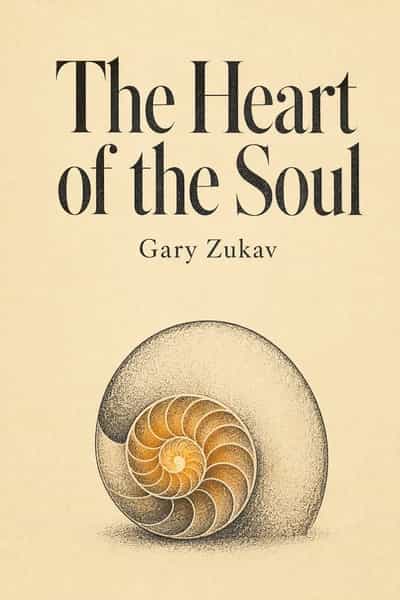
In "The Soul of the World," philosopher Roger Scruton challenges science's limits in explaining human existence. This profound meditation on transcendence has captivated Cambridge intellectuals by asking: Can our deepest experiences - love, music, faith - reveal truths that science simply cannot touch?
저자의 목소리로 책을 느껴보세요
지식을 흥미롭고 예시가 풍부한 인사이트로 전환
핵심 아이디어를 빠르게 캡처하여 신속하게 학습
재미있고 매력적인 방식으로 책을 즐기세요
Stand at the edge of a cliff and watch the sun set. Physics can tell you why the sky turns orange-light scattering through atmospheric particles. Biology explains why your heart rate slows as you relax. Neuroscience maps the dopamine release in your brain. But none of these answers the question that actually matters: Why does this moment feel sacred? Why does beauty pierce us? Why do we sense we're standing before something that demands reverence rather than measurement? We've become experts at explaining everything and understanding nothing. Evolutionary psychology has become our era's favorite hammer, and suddenly every human experience looks like a nail. Religion? Just a survival strategy for group cohesion. Art? A peacock's tail for attracting mates. Love? Chemical reactions optimizing reproductive success. Morality? Social contracts disguised as universal truths. This reductionist impulse promises to demystify human existence, yet it creates a peculiar paradox: if our brains evolved merely for survival rather than truth, why should we trust evolutionary theory itself? Here's the central insight: we can understand the world in two complete yet incompatible ways. Science explains through causes-tracking physical processes, identifying mechanisms, predicting outcomes. Personal understanding interprets through reasons-grasping intentions, recognizing meanings, appreciating purposes. Neither perspective is wrong; they're simply incommensurable, like trying to see both the duck and the rabbit in that famous optical illusion simultaneously. This isn't metaphysical dualism-the claim that minds and bodies are separate substances. It's cognitive dualism: one reality, two ways of knowing.
The Soul of the World의 핵심 아이디어를 이해하기 쉬운 포인트로 분해하여 혁신적인 팀이 어떻게 창조하고, 협력하고, 성장하는지 이해합니다.
The Soul of the World을 빠른 기억 단서로 압축하여 솔직함, 팀워크, 창의적 회복력의 핵심 원칙을 강조합니다.

생생한 스토리텔링을 통해 The Soul of the World을 경험하고, 혁신 교훈을 기억에 남고 적용할 수 있는 순간으로 바꿉니다.
무엇이든 물어보고, 목소리를 선택하고, 진정으로 공감되는 인사이트를 함께 만들어보세요.

샌프란시스코에서 컬럼비아 대학교 동문들이 만들었습니다
"Instead of endless scrolling, I just hit play on BeFreed. It saves me so much time."
"I never knew where to start with nonfiction—BeFreed’s book lists turned into podcasts gave me a clear path."
"Perfect balance between learning and entertainment. Finished ‘Thinking, Fast and Slow’ on my commute this week."
"Crazy how much I learned while walking the dog. BeFreed = small habits → big gains."
"Reading used to feel like a chore. Now it’s just part of my lifestyle."
"Feels effortless compared to reading. I’ve finished 6 books this month already."
"BeFreed turned my guilty doomscrolling into something that feels productive and inspiring."
"BeFreed turned my commute into learning time. 20-min podcasts are perfect for finishing books I never had time for."
"BeFreed replaced my podcast queue. Imagine Spotify for books — that’s it. 🙌"
"It is great for me to learn something from the book without reading it."
"The themed book list podcasts help me connect ideas across authors—like a guided audio journey."
"Makes me feel smarter every time before going to work"
샌프란시스코에서 컬럼비아 대학교 동문들이 만들었습니다

The Soul of the World 요약을 무료 PDF 또는 EPUB으로 받으세요. 인쇄하거나 오프라인에서 언제든 읽을 수 있습니다.