1장
A Divine Intervention in the Mortal World
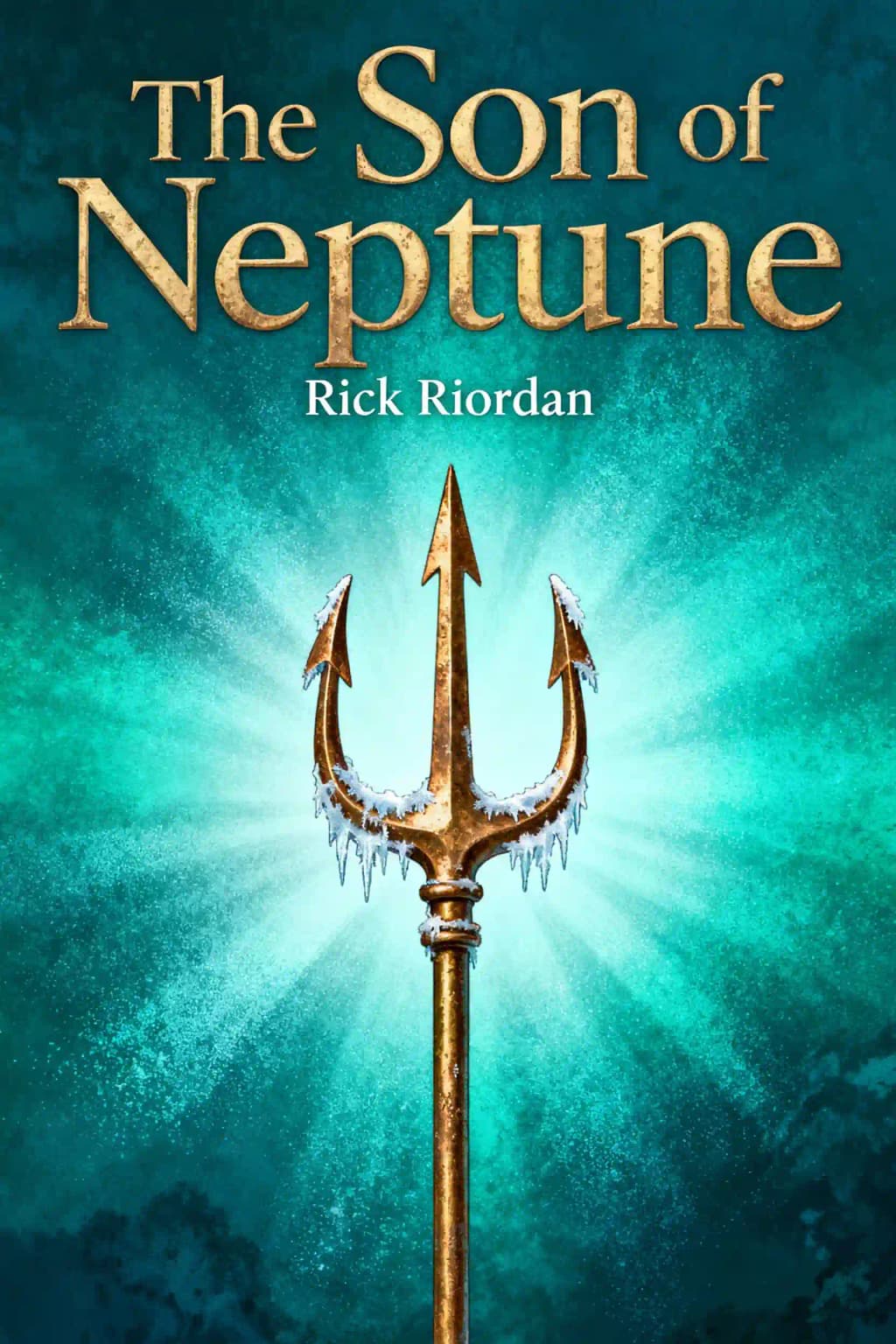
The Son of Neptune catapulted to bestseller status within days of its 2011 release, cementing Rick Riordan's status as the reigning monarch of modern mythology reimagined. This second installment in the Heroes of Olympus series brilliantly expands Riordan's universe beyond Greek mythology into Roman territory, captivating over 7 million readers worldwide. What makes this particular adventure so compelling is how it bridges two distinct mythological traditions while maintaining the heart-pounding action and character development that made the Percy Jackson series a cultural phenomenon. Even Hollywood took notice, with Logan Lerman (who portrayed Percy in the films) citing this book as his favorite in the extended series for its exploration of identity and belonging. The book's examination of memory and self-discovery resonates deeply with readers of all ages, explaining why it remains one of the most borrowed young adult titles in libraries across America nearly a decade after publication.
2장
Amnesia and Identity: Percy's Journey of Rediscovery
Percy Jackson awakens with no memory except his name and finds himself hunted by gorgon sisters who simply won't stay dead. These monsters, including the oddly customer service-oriented Stheno who offers him poisoned Cheese 'n' Wieners samples while trying to kill him, reveal they serve the earth goddess Gaea. The contrast between Stheno's cheerful retail demeanor and her lethal intentions creates an unsettling atmosphere that mirrors Percy's own confusion about his identity. His instincts and combat reflexes remain intact despite his amnesia - a fascinating psychological phenomenon where procedural memory persists even when declarative memory fails. This selective memory loss reflects real neurological conditions where patients retain physical skills while losing personal memories.
When Percy encounters an old hippie woman named June at the entrance to what appears to be a camp, he faces a critical choice: escape to the safety of the ocean or carry this strange woman to camp at great personal risk. The ocean calls to him with mysterious familiarity, offering sanctuary from the pursuing gorgons. This moment perfectly encapsulates the hero's journey - the call to adventure that requires sacrifice of comfort for the greater good. June's test of character reveals that even without his memories, Percy's moral compass remains true. Despite the danger of pursuing gorgons and his instinctive pull toward the sea, Percy chooses to help June, who is actually the goddess Juno in disguise, demonstrating that his fundamental nature transcends memory.
His arrival at Camp Jupiter marks a profound shift in Percy's understanding of himself. The Roman demigod camp, with its military structure, rigid hierarchy, and ancient traditions, stands in stark contrast to what readers of the original series know about Camp Half-Blood. The camp's architecture reflects Roman engineering prowess, with aqueducts, temples, and fortifications that would seem alien to a Greek demigod. Percy's Greek instincts clash with Roman discipline, creating an identity crisis that mirrors the experience of many adolescents who feel caught between different worlds or expectations. His unconscious reactions - preferring individual combat over formation fighting, struggling with the camp's strict chain of command - hint at his suppressed Greek heritage.
When June transforms into her true form as Juno and announces Percy as "the son of Neptune," we witness the beginning of Percy's new identity forming - one that must incorporate both his forgotten Greek past and his new Roman present. This duality becomes the central tension of Percy's character arc, raising profound questions about how much our memories define who we are. The way Percy navigates between Greek and Roman aspects of himself reflects deeper themes about cultural identity and adaptation. If Percy can still be heroic, loyal, and compassionate without remembering his past, what does that tell us about the core of human identity? His journey suggests that character exists independently of memory, that our essential nature persists even when our personal history is erased.
3장
The Roman Legion: Structure, Tradition, and Prejudice
Camp Jupiter represents a fascinating reimagining of how Roman demigods might organize themselves in the modern world. Unlike the cabin-based system at Camp Half-Blood where demigods are sorted by divine parent, Camp Jupiter operates as a military legion with five cohorts of forty kids each. This structure reflects the historical Roman emphasis on collective identity over individual heritage-you're a Roman first, a demigod second.
The camp's physical layout mirrors ancient Rome with its temples, coliseum, aqueducts, and military encampment. Beyond the camp lies New Rome, a sanctuary where adult demigods can live safely with families-offering something Camp Half-Blood never did: a future. This profound difference suggests that while Greek demigods live for the moment, Romans build for eternity, just as their historical counterparts did.
Social hierarchy at Camp Jupiter reveals much about Roman values. The First and Second Cohorts enjoy prestige while the Fifth Cohort suffers disgrace due to a failed expedition to Alaska decades earlier. This rigid class structure creates an underdog narrative when Percy joins the lowly Fifth, but also illustrates how Roman society values success and punishes failure across generations.
The camp's relationship with gods differs significantly from Greek tradition. Romans fear Neptune as a destructive force rather than respecting him as Poseidon. His neglected temple-a shed-like structure with moldy offerings-contrasts sharply with Jupiter's magnificent temple, demonstrating how Romans prioritized state gods over sea deities. This prejudice extends to demigods, with children of Neptune and Pluto considered bad luck, creating an immediate obstacle for Percy and Hazel.
Perhaps most fascinating is how Camp Jupiter preserves ancient traditions in a modern context. The Twelfth Legion Fulminata ("Armed with Lightning") has survived since Rome's fall, maintaining traditions like the eagle standard, military formations, and even the SPQR tattoos that mark legionnaires. Ancestral spirits called Lares wander freely, connecting present campers to their heritage. This continuity with the past gives Roman demigods a sense of belonging to something greater than themselves-a stark contrast to the more individualistic Greek approach.
4장
Hazel Levesque: Death, Redemption, and Second Chances
Hazel Levesque's story provides one of the most compelling character arcs in the novel. Born in the 1940s, Hazel died decades ago after sacrificing herself to delay the rise of the giant Alcyoneus. Her brother Nico di Angelo brought her back from the Underworld when Death went missing, giving her a second chance at life in the modern world.
Hazel's curse-causing precious metals to surface around her that bring misfortune to those who take them-originated when her mother summoned Pluto and wished for riches. This ability becomes both blessing and curse throughout the quest, allowing her to help her friends but also marking her as different. The curse serves as a powerful metaphor for how gifts can become burdens when not fully understood or properly controlled.
Her flashbacks to 1940s New Orleans reveal a complex mother-daughter relationship. Queen Marie Levesque, initially loving but increasingly corrupted by Gaea's influence, used Hazel's powers for personal gain before ultimately planning to sacrifice her daughter to resurrect Alcyoneus. Despite this betrayal, Hazel's love for her mother remained so strong that she refused Elysium in the afterlife to stay with her mother in Asphodel-a sacrifice that speaks volumes about her capacity for forgiveness.
What makes Hazel particularly fascinating is her perspective as someone from another era thrust into modern times. Her occasional confusion about contemporary technology and social norms provides both humor and poignant commentary on how much society has changed. When she sees Seward, Alaska in the present day, her disorientation at how much it's changed in seventy years reminds us how quickly human environments transform.
Hazel's journey is ultimately about redemption-seeking to right the wrongs of her past by preventing Alcyoneus from rising again. Her willingness to sacrifice herself a second time, knowing it might mean permanent death, demonstrates remarkable courage. When she tells Frank, "I died once for a bad cause. I'd rather die twice for a good one," we see the core of her character-someone determined to make her second life count.
5장
Frank Zhang: Ancestral Gifts and Life's Fragility
Frank Zhang embodies the complexity of mixed heritage-Chinese Canadian on his mother's side, Roman demigod on his father's, with an ancestral gift from Greek Poseidon through his ancestor Periclymenus. This multicultural background makes him uniquely positioned to bridge different worlds, foreshadowing his role in the larger prophecy.
The most compelling aspect of Frank's character is the literal connection between his life and a half-burned piece of firewood. His grandmother revealed that if the wood burns completely, he will die-a vulnerability that shapes his entire worldview. This physical manifestation of life's fragility creates constant tension; Frank must protect this external piece of himself while still functioning as a warrior. When he finally entrusts the firewood to Hazel, it represents not just practical protection but profound emotional trust-he's literally placing his life in someone else's hands.
Frank's transformation ability-inherited from his ancestor Periclymenus, a Greek prince who could change form in battle-emerges gradually throughout the quest. His journey to discover and master this power parallels his growth in confidence. Initially clumsy and self-doubting, Frank evolves into a capable leader who can literally become whatever his team needs, whether that's an eagle for reconnaissance or an elephant for combat. His mother's words-"You can be anything"-take on literal meaning through this gift.
His relationship with Mars, revealed as his father during the war games, adds complexity to his character. Frank initially resists this connection, seeing Mars as a "moron" and feeling the war god is nothing like him. Yet as the quest progresses, Frank discovers strategic thinking and leadership qualities that reflect his divine heritage. Mars's gift-a spear with a dragon tooth tip that can summon skeletal warriors-symbolizes how Frank must learn to command others rather than just fight alone.
Frank's family history contains both honor and shame. His mother died heroically in Afghanistan, while his great-grandfather Shen Lun was falsely blamed for the 1906 San Francisco earthquake that destroyed Camp Jupiter. This mixed legacy creates tension between pride in his heritage and fear of rejection by the Romans-a tension that resolves when Frank proves himself through the quest.
6장
Gaea's Awakening: The Earth Mother's Sinister Plan
Throughout the novel, Gaea emerges as a primordial antagonist far more terrifying than the Titans from the previous series. As the literal earth beneath the characters' feet, she represents an inescapable threat that can manifest anywhere. Her voice whispers in dreams, her face appears in landscapes, and her influence corrupts even loving mothers like Queen Marie Levesque.
Gaea's strategy reveals sophisticated psychological manipulation. Rather than attacking outright, she exploits weaknesses and resentments. She turned Hazel's mother against her by preying on greed. She tempts Percy with safety in the ocean while threatening his friends. She offers Hazel a chance to live forever in her happiest memory rather than face death again. These personalized temptations demonstrate her understanding of human vulnerability.
The earth goddess's plan centers on resurrecting her children, the giants, each born to oppose a specific Olympian god. Alcyoneus, designed to counter Pluto/Hades, can only be killed outside his homeland of Alaska. Polybotes, Neptune's counterpart, plans to capture Percy and use his blood to wake Gaea fully. This methodical approach to destroying the gods-targeting their children first, then their seats of power-shows calculated patience developed over millennia.
Gaea's manipulation of death itself proves particularly disturbing. By capturing Thanatos (Death personified), she prevents monsters from staying dead when killed, creating an enemy force that continually regenerates. This disruption of natural order allows her to resurrect ancient threats like the giant Alcyoneus and the ancient Amazon queen Otrera. The concept that death itself can be chained creates existential horror-without proper endings, even victories become temporary.
Perhaps most chilling is Gaea's patience. She orchestrated Hazel's original death in the 1940s, using World War II as a distraction for the gods while she attempted to raise Alcyoneus. Decades later, she continues the same plan with new pawns. Her timeline operates on a geological scale-what's a few more years when you've waited centuries? This perspective makes her fundamentally alien despite her motherly title, highlighting the vast difference between human and primordial consciousness.
7장
The Quest to Alaska: Beyond the Gods' Reach
The journey to Alaska represents both physical and spiritual challenges for our heroes. As "the land beyond the gods," Alaska exists outside divine protection, making demigods more vulnerable but also potentially more self-reliant. This geographical boundary becomes a powerful metaphor for growing independence from parental figures-both mortal and divine.
The quest's urgency creates relentless momentum-they must free Death and return to Camp Jupiter before the Feast of Fortuna in just four days, or the camp will be destroyed. This ticking clock drives the narrative forward while testing the characters' endurance and resourcefulness. Without easy access to godly assistance, they must rely on their own abilities and unexpected allies like Arion, the immortal horse only Hazel can ride.
Throughout their journey, the trio faces increasingly deadly challenges that force them to develop their powers. Gryphons attack their train, forcing Frank to discover his skeleton-summoning ability. The muskeg (treacherous boggy soil) nearly claims Percy and Hazel, requiring them to resist Gaea's temptations. Each obstacle serves not just as physical danger but as character development opportunity.
Alaska's landscape itself becomes a character-vast, beautiful, and deadly. The spectacular coast along their train journey, with its eagles, waterfalls, and mirror-like lakes, contrasts with the treacherous muskeg and the thunderous cracking of Hubbard Glacier. This setting creates a sense of both wonder and danger, reminding readers that nature's beauty often conceals its deadliest aspects-an appropriate backdrop for confronting Gaea's power.
The quest culminates at Hubbard Glacier, where they find a frozen replica of Camp Jupiter with Thanatos chained at its center. This symbolic battlefield-a twisted mirror of their home-forces them to confront what they're fighting for. The ghostly Roman legionnaires, shades from Asphodel promised new life by Gaea, create moral complexity; destroying them means condemning souls to eternal punishment. This ethical dimension elevates the final confrontation beyond mere physical combat to a test of principles.
8장
Death Unleashed: Sacrifice and Immortality
The novel's central conflict revolves around Death's imprisonment and the consequences of his absence. Without Thanatos enforcing natural order, monsters reform instantly instead of returning to Tartarus, and the dead can return to life. This disruption creates existential questions about mortality itself-if death becomes optional, what gives life meaning?
Thanatos himself subverts expectations. Rather than a hooded skeleton, he appears as a breathtakingly beautiful man with teakwood skin, honey-gold eyes, and shimmering wings. This portrayal suggests death can be not just terrifying but also strangely attractive-a release from suffering and completion of life's journey. His chains, which can only be melted by "the fire of life," create the central paradox: freeing Death requires potential sacrifice of life.
Frank's relationship with death becomes particularly poignant through his half-burned firewood. When he must burn more of it to free Thanatos, knowing it shortens his own lifespan, he demonstrates profound courage. His willingness to sacrifice himself for the greater good reflects his growth from insecure teenager to hero worthy of his ancestors. The moment he entrusts his life-stick to Hazel represents both practical protection and profound emotional trust.
Hazel's unique perspective as someone who has already died adds complexity to the theme. Her second chance at life makes her both more cautious and more willing to sacrifice herself for worthy causes. When Thanatos warns that freeing him means her own demise, she stands firm, stating she would rather "die twice for a good cause" than live through another catastrophe. This readiness to face death again demonstrates remarkable courage born from experience.
The novel explores different forms of immortality beyond just avoiding death. The Lares (ancestral spirits) achieve a form of immortality through remembrance. The giants gain conditional immortality through their connection to specific territories. Monsters achieve functional immortality through regeneration. Each type comes with limitations and costs, suggesting true immortality remains elusive even in a world of gods and magic.
9장
Uniting Greek and Roman: The Prophecy of Seven
As the novel concludes, Percy's memories fully return, revealing Juno/Hera's grand plan to unite Greek and Roman demigods against Gaea's rising threat. This reconciliation between historically opposed forces becomes the foundation for the larger Heroes of Olympus series, suggesting that ancient enmities must be overcome to face greater dangers. The historical antagonism between Greek and Roman cultures - marked by centuries of warfare, philosophical differences, and competing religious interpretations - mirrors the modern challenge of bridging seemingly insurmountable cultural divides.
The Prophecy of Seven - "Seven half-bloods shall answer the call" - gains new significance as we learn Frank, Hazel, and Percy are three of these chosen heroes. Each brings unique abilities: Frank's shape-shifting powers and strategic mind, Hazel's control over precious metals and connection to the Underworld, and Percy's mastery over water and natural leadership abilities. The prophecy's warning that "foes bear arms to the Doors of Death" directly connects to Thanatos's imprisonment and Gaea's manipulation of mortality itself. This manipulation manifests in disturbing ways, from the return of long-dead legionnaires to the inability of monsters to stay banished to Tartarus.
Percy's unique position as someone who has experienced both Greek and Roman traditions makes him "the glue that will unite the seven," as Juno explains. His journey from Camp Half-Blood to Camp Jupiter demonstrates remarkable adaptability - he maintains his characteristic wit and loyalty while embracing Roman discipline and hierarchy. When fighting Polybotes, Percy combines Greek improvisation with Roman tactical formation, creating a hybrid fighting style that proves more effective than either tradition alone. His success in leading the Fifth Cohort while utilizing Greek combat techniques proves that integration strengthens rather than weakens both traditions.
The arrival of the Argo II at the novel's conclusion creates a powder keg of tension and possibility. The massive Greek warship approaching New Rome carries both hope for alliance and echoes of ancient betrayals. Percy's optimism about introducing his "two families" clashes with Octavian's xenophobic rhetoric about "Greeks bearing gifts" - a direct reference to the Trojan Horse that resonates with both camps' collective memory. The diplomatic complexities are further complicated by prophecies, personal rivalries, and deep-seated cultural prejudices that can't be erased by simple goodwill.
The prophecy's ultimate significance extends beyond military alliance to suggest that only by combining different perspectives and abilities can the greatest threats be overcome. Frank's mixed heritage - Greek, Roman, and Chinese - represents the power of embracing multiple cultural traditions. Hazel's unique perspective as someone from the 1940s helps bridge temporal as well as cultural gaps. Percy's ability to thrive in both camps demonstrates that identity need not be singular or fixed. Their success foreshadows how the full team of seven will need to transcend their individual backgrounds to face Gaea's threat. This celebration of diversity as strength delivers a powerful message about cooperation across differences - suggesting that humanity's greatest achievements come not from uniformity but from harmony between distinct voices and traditions.
10장
Legacy and Identity: Finding Purpose in a Divine World
At its heart, The Son of Neptune explores how individuals find purpose and identity in a world shaped by divine forces beyond their control. Each main character struggles with their heritage and how it defines them-Percy without his memories, Hazel with her past life, and Frank with his ancestral gifts and literal life-stick.
Percy's journey without memories raises profound questions about identity. Despite forgetting his past, his core personality-loyalty, courage, and compassion-remains intact, suggesting character exists deeper than memory. When he finally remembers Annabeth and Camp Half-Blood, he doesn't become a different person but rather a more complete version of himself. This suggests our identities are not solely defined by our histories but also by our inherent qualities and choices.
Frank's struggle with his mixed heritage-Chinese, Roman, and indirectly Greek-reflects the complexity of multicultural identity. His grandmother's insistence on their "ancient blood of princes and heroes" initially feels like pressure, but ultimately becomes empowerment when Frank embraces all aspects of his lineage. His ability to shapeshift becomes the perfect metaphor for adapting to different cultural contexts while maintaining a core self.
Hazel's displacement in time creates unique identity challenges. Born in the 1940s but living in the 2010s, she must reconcile her past values and experiences with a radically different world. Her journey involves not just accepting her second chance at life but finding purpose in it-turning her curse into a gift and her guilt into motivation for heroism. When she finally stops having blackouts about her past, it symbolizes integration of her former and current selves.
The novel also explores institutional identity through Camp Jupiter's traditions. The legion's motto-"Twelfth Legion Fulminata"-and the SPQR tattoos physically mark members as part of something larger than themselves. This collective identity provides structure and purpose but can also create prejudice, as shown by the Fifth Cohort's pariah status. Percy's elevation to praetor suggests that individual heroism can transform even rigid institutions.
Ultimately, the characters discover that true identity comes not from divine parentage or prophecies but from personal choices and relationships. When Hazel, Frank, and Percy declare themselves family despite their different backgrounds, they assert that chosen connections can be as meaningful as inherited ones. This message-that we define ourselves through our actions and affiliations rather than our origins-provides the novel's most empowering theme.