1장
When Gods and Demigods Collide: A Clash of Mythical Proportions
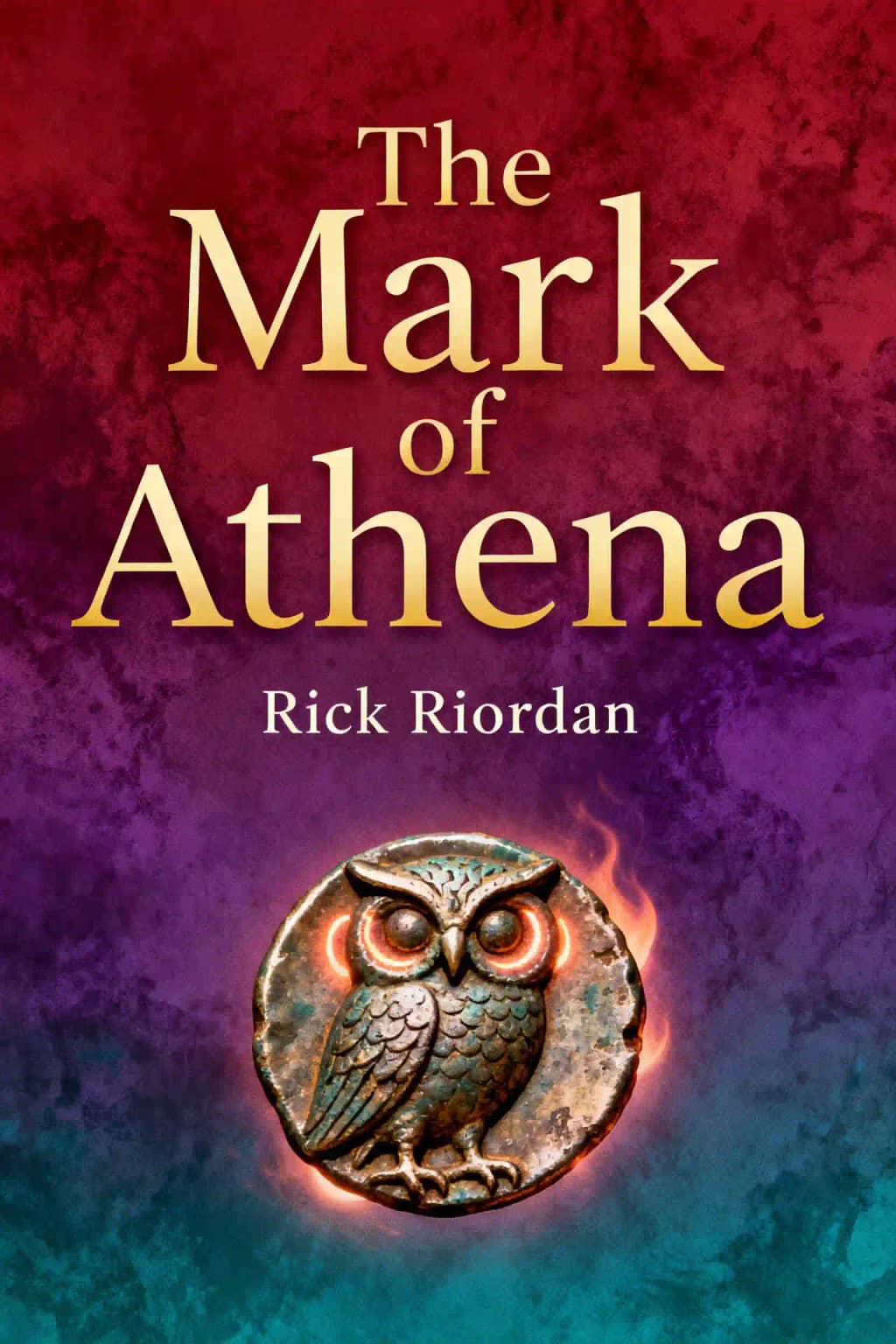
Rick Riordan's "The Mark of Athena" stands as a pivotal installment in the Heroes of Olympus series, captivating over 100 million readers worldwide with its blend of ancient mythology and modern adventure. The novel, which spent 45 weeks on the New York Times bestseller list, has been praised by critics for its seamless integration of Greek and Roman mythologies-a narrative innovation that transformed how young adult literature approaches classical myths. Celebrities like Lin-Manuel Miranda have cited Riordan's work as influential, with Miranda once tweeting that Percy Jackson was "the hero my younger self needed." The book's exploration of divided loyalties and cultural conflicts has made it particularly relevant in our increasingly polarized world, offering young readers a framework for understanding how ancient rivalries can poison modern relationships-and how they might be healed.
2장
Demigods Divided: The Perilous First Meeting
The Argo II hovers above Camp Jupiter, a magnificent warship carrying Greek demigods into Roman territory. For Annabeth Chase, daughter of Athena, this moment represents both hope and terror-the culmination of months searching for her boyfriend Percy Jackson, who was taken by the goddess Hera as part of a dangerous exchange program between the camps. Despite careful preparations, Annabeth feels an inexplicable chill, as if unseen eyes watch her every move.
Below, the Romans prepare for their arrival with a mixture of suspicion and curiosity. When Terminus, the boundary god, appears on deck demanding they disarm before entering New Rome, Annabeth cleverly suggests they hover above the forum and descend via rope ladder-a technical loophole that satisfies the fussy god's rules about weapons not crossing the Pomerian Line.
The reunion between Percy and Annabeth is electric-a passionate kiss followed by Annabeth flipping him onto the pavement, pinning him with her knee. "If you ever leave me again," she threatens through tears, to which Percy simply laughs, "Consider me warned. I missed you, too." This moment of joy proves fleeting when Leo Valdez, seemingly possessed, fires the ship's weapons on New Rome, shattering the fragile peace. As angry Romans mobilize, the seven demigods of prophecy-Percy, Annabeth, Jason, Piper, Leo, Frank, and Hazel-barely escape aboard the damaged Argo II, now fugitives from both camps.
The incident reveals a disturbing truth: malevolent spirits called eidolons have infiltrated the crew, possessing Leo and forcing him to attack. This sabotage, orchestrated by the earth goddess Gaea, successfully drives a wedge between Greeks and Romans at the precise moment unity was within reach. With Roman eagles in pursuit and the fate of both camps hanging in balance, the seven demigods must now navigate not only external threats but the fractures within their hastily formed alliance.
3장
The Ancient Grudge: Unraveling Athena's Mystery
A centuries-old feud between Greeks and Romans lies at the heart of their conflict-a mystery connected to something the Romans stole from the Greeks in ancient times. This artifact, the Athena Parthenos, was the most sacred statue of the goddess Athena, its theft leaving a wound that never healed. Throughout generations, children of Athena have been chosen to follow the Mark of Athena in search of this stolen relic, all failing in their quest.
Now Annabeth bears this burden. Her mother Athena, appearing disheveled and confused in Grand Central Terminal, gave her a silver coin-the Mark of Athena-and demanded vengeance against Rome. "Avenge me," she insisted, her personality fractured between her Greek and Roman aspects. This split personality affects all the Olympians, leaving them schizophrenic and unreliable as the Greek and Roman aspects of their identities war within them.
The quest becomes more urgent when they learn from Aphrodite that recovering the Athena Parthenos could heal the rift between Greek and Roman demigods-potentially uniting them against Gaea's forces. Yet the goddess warns that following the Mark of Athena means facing the guardian of the statue, a creature that has defeated every child of Athena who came before.
Meanwhile, a mysterious prophecy surfaces through Ella the harpy: "The Mark of Athena burns through Rome. Twins snuff out the angel's breath, who holds the key to endless death. Giants' bane stands gold and pale, won through pain from a woven jail." These cryptic lines haunt the crew, especially when they discover that Nico di Angelo-the "angel" referenced-has been captured by twin giants and imprisoned in a bronze jar with only days of air remaining.
As they sail toward Rome, the ancient grudge between Greeks and Romans manifests in their own interactions. Jason Grace, former praetor of Camp Jupiter, struggles with divided loyalties, while Percy Jackson, newly returned from the Roman camp, must reconcile his experiences with both groups. Their personal conflicts mirror the larger divine schism, suggesting that healing must occur at both human and divine levels.
4장
Gods and Monsters: Trials Along the Mediterranean
The journey to Rome becomes a gauntlet of mythological encounters, each testing different aspects of the heroes' characters. In Kansas, they meet Bacchus (the Roman Dionysus), who refuses to help against the giants without proper tribute but directs them to Atlanta to seek information from Phorcys, a bitter sea god who resents his mother Gaea.
This meeting proves disastrous when Phorcys and his sister Keto attempt to imprison Percy and Frank in an aquarium exhibit. Their narrow escape reveals Gaea has placed bounties on their heads and confirms that the twin giants Ephialtes and Otis are holding Nico prisoner as bait for a deadly spectacle in Rome.
At the Great Salt Lake, Leo and Hazel encounter Nemesis, goddess of revenge, who offers Leo a fortune cookie that will "solve his problem" when needed, though she warns it comes at a price. The goddess cruelly identifies Leo as "the seventh wheel" who will never find his place among the others. Nearby, they meet Echo, a nymph cursed to only repeat others' words, and Narcissus, still obsessed with his reflection thousands of years after his death. This encounter allows Leo to secure celestial bronze needed for ship repairs while reflecting on the dangers of self-absorption.
In Charleston, they face Roman pursuers led by Octavian while Annabeth, Piper, and Hazel meet Aphrodite/Venus, who explains more about the Athena Parthenos. A desperate battle at Fort Sumter ensues, where Annabeth discovers the map to the statue while facing her greatest fear-spiders-for the first time. As they escape, Reyna, praetor of Camp Jupiter, warns Annabeth they'll be enemies when they next meet.
Perhaps their most challenging encounter comes at the Pillars of Hercules, where the bitter demigod-turned-god forces Jason and Piper to steal the remaining horn of the river god Achelous. When they succeed but refuse to hand it over, Piper discovers the horn has transformed into a cornucopia that responds to her emotions, unleashing food that buries Hercules and allows their escape.
These trials reveal the complex nature of divine beings-petty, powerful, and often indifferent to mortal suffering. Yet they also showcase the demigods' growing abilities to overcome these challenges through cooperation rather than individual heroics.
5장
Personal Demons: The Heroes' Inner Journeys
Beneath the external adventures, each hero battles personal demons that mirror their mythological trials. Percy Jackson struggles with the burden of leadership and his fatal flaw-personal loyalty that might compromise the greater good. His nightmare vision of Gaea offers a terrible choice: surrender willingly with Annabeth or watch everything he loves be destroyed. This foreshadows the ultimate sacrifice he'll make rather than let Annabeth face Tartarus alone.
Annabeth confronts not only her paralyzing fear of spiders but her pride-a fatal flaw she shares with Arachne. Her solo quest forces her to rely solely on her intelligence rather than powers or weapons, proving that wisdom can overcome even the most terrifying adversaries. Her broken ankle during her quest symbolizes her vulnerability yet showcases her determination to succeed despite physical limitations.
Leo Valdez grapples with being the "seventh wheel," feeling disconnected from the others who have paired off romantically. His encounter with Nemesis reinforces this insecurity, yet his mechanical genius repeatedly saves the group. When he discovers Archimedes' workshop in Rome, it represents both personal validation and a turning point in his confidence. His decision to use Nemesis's fortune cookie to save his friends, despite knowing it will come at a terrible personal cost, shows his growth beyond self-doubt.
Jason Grace struggles with divided identity-Greek or Roman?-and the pressure of leadership expectations. His conversation with Piper on his birthday reveals his insecurity about not being the clear leader among equals. Piper helps him understand that true heroism comes from cooperation and recognizing others' strengths, not solo glory.
Hazel Levesque carries the burden of her past death and resurrection, along with the secret of Frank's life tied to a burning stick. Her flashbacks to the 1940s with Sammy Valdez (Leo's great-grandfather) help her reconcile her past life with her present one, allowing her to move forward with Frank while acknowledging her complicated feelings about Leo's resemblance to her first love.
Frank Zhang transforms not just physically (with his shapeshifting abilities) but emotionally, growing from an insecure boy into a confident warrior. His life's vulnerability-tied to a piece of firewood that, if burned completely, will end his life-becomes a metaphor for the fragility and preciousness of existence. His gradual acceptance of Leo, despite jealousy over Hazel and fear of Leo's fire powers, demonstrates his maturing perspective.
Piper McLean evolves beyond her insecurities about being just a "pretty face" or valued only for her charmspeak. When facing the nymphs in the nymphaeum, she realizes the power of sacrifice and selflessness, channeling Percy and Jason's powers through her cornucopia to save them all. This moment transforms her understanding of her own worth beyond physical beauty or magical ability.
6장
The Weaver's Trap: Annabeth's Ultimate Test
Annabeth's solo quest to find the Athena Parthenos becomes the emotional core of the novel. Following the Mark of Athena through Rome's underground ruins, she first confronts ghosts of the Mithras cult who have been paid by "the weaver" to destroy children of Athena. Using her intelligence, she collapses their chamber and escapes, though she breaks her ankle in the process.
Despite this injury, Annabeth pushes forward, crafting a makeshift splint and using a stair railing as a crutch. The Mark guides her through tunnels increasingly filled with cobwebs until she reaches a chasm with only two narrow wooden beams spanning it. With thousands of spiders advancing behind her, she creates a string bridge between the beams-using her mother's weaving skills against the creatures of Arachne.
In the final chamber, Annabeth discovers the magnificent Athena Parthenos-a forty-foot ivory and gold statue radiating power-but also meets its guardian: Arachne herself, a horrifying creature with a giant black widow's body and misshapen human face. Realizing she can't defeat the monster physically, Annabeth exploits Arachne's fatal flaw of pride by praising her tapestries and offering to display them on Mount Olympus.
Playing on Arachne's resentment toward Athena, Annabeth claims her mother has essentially disowned her and proposes becoming Arachne's agent. She then tricks the spider into weaving what she calls "Chinese Spidercuffs"-a trap that contracts around Arachne when she enters it to check for flaws. The enraged spider begins destroying the chamber, shooting silk randomly and pulling Annabeth toward her spinnerets before the Argo II blasts through the ceiling, sending a Fiat 500 crashing through the floor and taking Arachne into the abyss below.
This victory comes at terrible cost. As the crew secures the Athena Parthenos, Annabeth is suddenly pulled toward the pit-spider silk wrapped around her ankle connecting her to the falling Arachne. Percy grabs her arm but is dragged along until they dangle over the edge of Tartarus. Realizing they can't be saved without losing the statue and endangering everyone, Percy makes the ultimate choice of loyalty: refusing to let Annabeth go, he releases his grip on the ledge, and they fall together into endless darkness.
7장
The Price of Heroism: Sacrifices and Consequences
Throughout the novel, the demigods learn that heroism demands sacrifice. Percy and Annabeth's fall into Tartarus represents the ultimate price-willingly entering the pit of eternal torment rather than being separated. Their sacrifice creates a new mission: while they journey through Tartarus to find the Doors of Death from the inside, the remaining five must travel to Epirus, Greece to meet them at the mortal side of the doors.
Leo's use of Nemesis's fortune cookie to save his friends from the eidolons in Archimedes' workshop comes with the goddess's warning that it will exact a price later-one he'll regret. This foreshadows future suffering while demonstrating his willingness to pay personal costs for his friends' safety.
The novel explores how true heroism often means giving up what you want most. Jason relinquishes his position as praetor at Camp Jupiter, accepting that he may never return to the Roman life he once cherished. Hazel faces the possibility that saving her brother Nico might require another death-perhaps her own, having already died once before.
Even the gods must sacrifice. Bacchus/Dionysus eventually helps defeat the giants Ephialtes and Otis, but only after Percy and Jason prove themselves worthy by fighting to exhaustion. His assistance comes grudgingly, highlighting the complex relationship between gods and their demigod children-they help, but rarely without cost or condition.
Frank's entire existence embodies sacrifice, his life literally burning away with his firewood lifeline. His willingness to transform into creatures that put him at risk-from an eagle carrying Leo through the sky to a weasel squeezing through tiny passages-demonstrates his growing understanding that heroism means risking yourself for others.
The novel suggests that the greatest heroism isn't found in glorious battle but in smaller moments of sacrifice: Percy giving up safety to fall with Annabeth, Piper channeling all her strength through the cornucopia to save her friends from drowning, Leo working without rest to repair the ship that carries them all. These choices, made without expectation of reward or recognition, define true heroism in Riordan's world.
8장
Divided We Fall: The Threat to Both Camps
While the seven demigods journey toward Rome, an equally dangerous situation develops back home. Through Piper's knife visions, they glimpse Roman legionnaires marching toward Camp Half-Blood, led by Octavian who has seized control in Reyna's absence. This impending clash between camps creates a desperate timeline-they must not only rescue Nico and close the Doors of Death but somehow prevent their friends from destroying each other.
The novel explores how easily ancient hatreds can be rekindled. Despite Jason and Percy's friendship and the growing bonds among the seven, centuries of distrust between Greeks and Romans prove difficult to overcome. Octavian exploits these tensions, positioning himself as Rome's defender against Greek treachery after Leo's attack on New Rome.
Reyna represents a more moderate Roman perspective. Though duty-bound to pursue the Argo II after the attack on her camp, she gives Annabeth a chance to explain at Fort Sumter. When Annabeth promises to find the Athena Parthenos and heal the ancient grudge, Reyna's warning-"We will meet again. Next time, we will be enemies"-carries regret rather than eagerness.
The divine schism mirrors and magnifies these mortal conflicts. As the gods' Greek and Roman aspects war within them, they become unreliable allies at best, dangerous wild cards at worst. Athena's transformation into the vengeful Minerva, demanding her daughter kill all Romans, exemplifies how divine madness exacerbates human conflicts.
This multi-layered civil war-camps against camps, gods against themselves-creates a vulnerability Gaea exploits. By turning potential allies against each other, she divides her opposition while her forces grow stronger. The novel suggests that overcoming internal divisions may prove more challenging than defeating external enemies, a theme with powerful contemporary relevance.
9장
Rome's Darkest Depths: The Final Confrontation
The quest culminates in Rome, where multiple storylines converge in the ancient city's underground chambers. While Annabeth follows the Mark of Athena to face Arachne, Percy, Jason, and Piper search for Nico in the giants' lair beneath the Colosseum. Meanwhile, Leo, Hazel, and Frank explore Archimedes' workshop, seeking tools to aid their quest.
In the hypogeum beneath the Colosseum, Percy and his friends discover Nico di Angelo barely alive in a bronze jar, sustained only by pomegranate seeds from Persephone's garden. They face the twin giants Ephialtes and Otis, who have prepared an elaborate death spectacle involving various monsters and mechanical traps. Despite their coordinated efforts, the demigods cannot defeat the giants without divine assistance.
When Bacchus finally appears, he transforms the underground chamber into the restored Colosseum filled with ghostly spectators, turning their battle into entertainment. Only after Percy and Jason prove themselves by fighting to exhaustion does the god help destroy the weakened giants with casual taps from his thyrsus. This scene emphasizes both the gods' power and their capriciousness-they could easily help their children but often choose not to without sufficient "entertainment" value.
Leo's team discovers Archimedes' lost scrolls and a control sphere that can command ancient mechanisms. When possessed automaton warriors attack them, Leo uses Nemesis's fortune cookie to understand the sphere's workings, saving his friends but accepting an unknown future cost. This discovery provides them with new weapons against Gaea's forces while highlighting Leo's growing importance to the quest.
These parallel adventures demonstrate how each demigod contributes unique skills to their collective success. Percy's water powers, Jason's control of wind, Piper's charmspeak, Leo's mechanical genius, Frank's shapeshifting, Hazel's control over precious metals and underground navigation, and Annabeth's strategic thinking all prove essential in different ways.
10장
Into the Abyss: A Promise of Return
The novel ends with the most devastating cliffhanger in the series-Percy and Annabeth falling into Tartarus while their friends watch helplessly from above. This moment transforms their quest, splitting the seven demigods and creating parallel missions: Percy and Annabeth must survive Tartarus and find the Doors of Death from within, while the others must reach the mortal side of the doors in Epirus, Greece.
Before falling, Percy gives Nico crucial instructions: lead the others to the House of Hades and meet them at the Doors of Death. This passing of leadership to Nico, once an outsider to the group, signifies a new phase of the quest where unexpected allies become essential. Nico's declaration that Percy is "the most powerful demigod I've ever met" acknowledges Percy's heroism while foreshadowing Nico's own important role going forward.
The remaining five face overwhelming challenges: repairing their damaged ship, outrunning Roman pursuers, reaching Greece before Gaea's forces can stop them, and arriving at the Doors of Death in time to meet Percy and Annabeth-all while preventing war between the camps back home. Leo vows to upgrade the Argo II with Archimedes' sphere and ancient scrolls, creating new weapons to fight Gaea's armies.
Despite these daunting obstacles, the novel ends with determination rather than despair. Leo embraces his role as "Admiral," committed to saving his friends. The recovery of the Athena Parthenos offers hope of healing the rift between camps if they can transport the massive statue home. And Percy's final act-choosing to fall with Annabeth rather than save himself-demonstrates the power of love against even the darkest forces.
The closing image-two heroes falling hand in hand into the abyss, choosing to face the unknown together rather than survive apart-captures the novel's central theme: true heroism lies not in individual glory but in the bonds that connect us to others, bonds strong enough to endure even in the depths of Tartarus itself.
11장
Legacy of Divided Loyalties: The Heart of the Heroes' Journey
At its core, "The Mark of Athena" explores how we navigate divided loyalties and reconcile conflicting aspects of our identities. Each character embodies this struggle in uniquely compelling ways: Jason grapples with his Roman upbringing while leading Greek companions, constantly questioning whether his natural leadership style reflects Camp Jupiter's military precision or Camp Half-Blood's individualistic spirit. Hazel confronts not just her past and present lives, but the weight of decisions made in a different era - her sacrifice in 1940s Alaska haunting her modern choices. Frank Zhang's journey perhaps best exemplifies this duality, as he carries both Greek and Roman ancestry in his bloodline, his very powers reflecting this fusion through his ability to change forms.
Leo Valdez battles between his natural inclination toward isolation - shaped by years of foster homes and loss - and his crucial role among the seven, his mechanical genius both setting him apart and making him indispensable. Piper McLean navigates three worlds: her Cherokee heritage, her demigod destiny, and her former life as a celebrity's daughter, each identity layer adding complexity to her choices and relationships.
This theme resonates powerfully with adolescent readers navigating their own identity formation in an increasingly complex world. Modern teenagers often juggle multiple cultural identities, family expectations, and personal aspirations - much like these demigod heroes. The novel suggests that integration rather than choosing sides is the path forward - embracing all aspects of oneself rather than rejecting parts that seem contradictory. Percy and Annabeth's relationship symbolizes this possibility, their love bridging Greek and Roman divisions just as the recovered Athena Parthenos might heal the rift between camps. Their partnership demonstrates how differences can strengthen rather than weaken bonds.
The novel's exploration of ancient grudges carries contemporary relevance in a world where historical conflicts continue to poison present relationships - from ethnic tensions to religious divisions to national rivalries. Riordan suggests that understanding these origins - literally going underground to face buried history - is necessary for healing. Annabeth's quest for the Athena Parthenos represents this archaeological approach to reconciliation, digging through layers of history to find what was lost. Her journey through Rome's underground mirrors the psychological process of confronting buried trauma and hidden truths.
The characters' physical descent into ancient Rome parallels their deeper journey into understanding their heritage. Each obstacle they face - whether mechanical spiders, underwater sirens, or ancient Roman ghosts - forces them to confront not just external enemies but internal prejudices and fears. The novel suggests that true heroism lies not in martial prowess but in the courage to question inherited beliefs and bridge ancient divides.
As the characters fall or sail toward their next challenges, readers are left with questions that transcend the immediate plot: Can ancient enemies become allies? Can fractured identities be made whole? Can we honor our heritage without being imprisoned by its conflicts? In posing these questions through the lens of mythology, Riordan invites young readers to consider how they might answer them in their own lives - perhaps the most enduring legacy of his work. The story suggests that the answer lies in understanding that identity isn't about choosing between conflicting parts of ourselves, but about finding strength in their synthesis.