1장
When Darkness Becomes Your Sanctuary
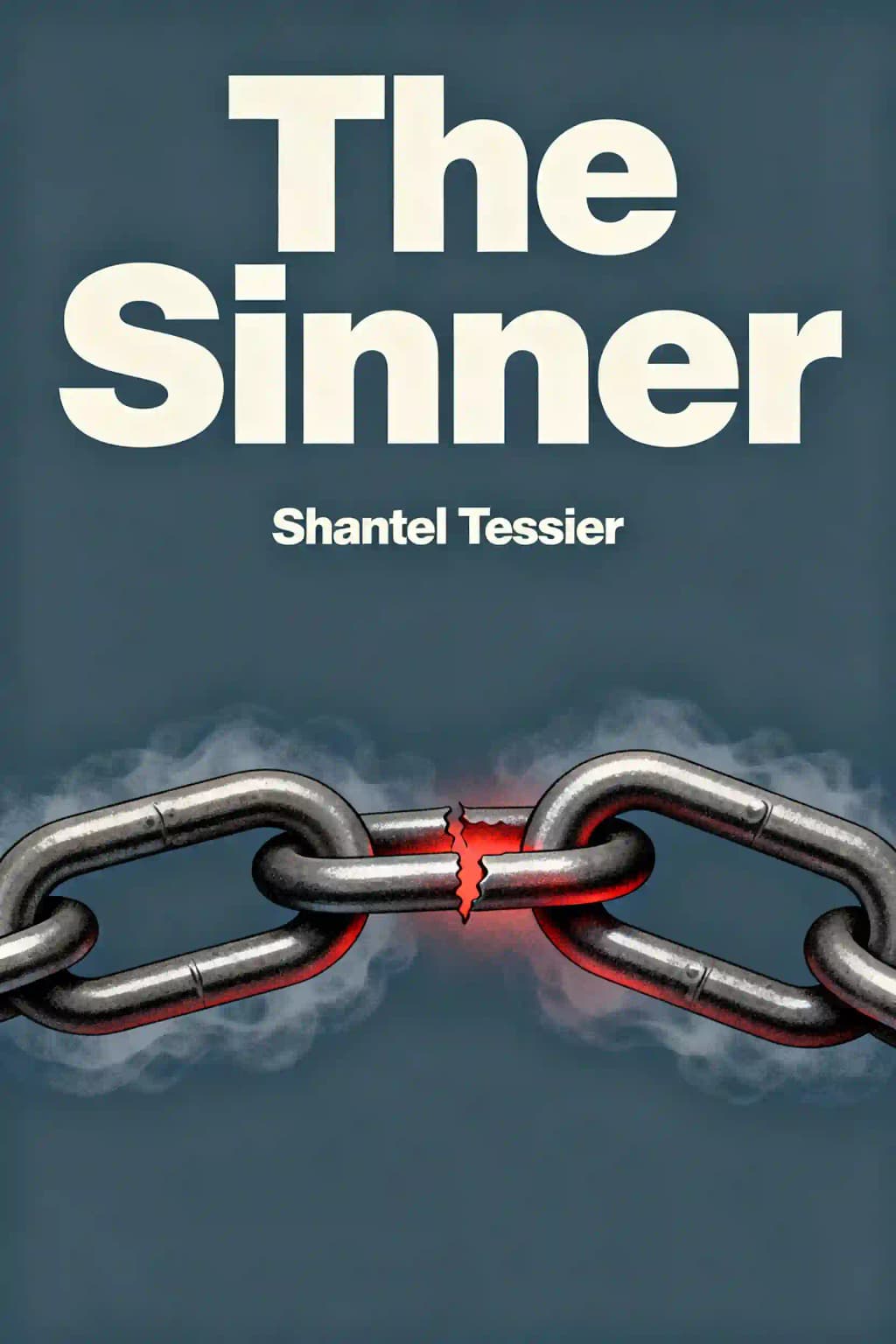
Imagine falling in love with someone who once held a gun to your head. Picture yourself craving the very person who has broken you repeatedly, yet somehow made you feel whole. This is the twisted reality at the heart of Shantel Tessier's "The Sinner" - a dark romance that has captivated millions and become a TikTok sensation with over 100 million views under its hashtag. Celebrities like Megan Fox have publicly praised its unflinching exploration of toxic desire. The book's popularity signals a cultural shift in romance literature, where readers increasingly embrace stories that venture into psychological extremes rather than fairy-tale fantasies. What makes this particular tale so compelling is not just its explicit content, but how it forces readers to confront uncomfortable truths about desire, power, and the human capacity to find beauty in darkness.
2장
The Lords: A Society Built on Power and Control
The novel introduces us to a secret society called "The Lords" - an elite brotherhood that operates as judge, jury, and executioner within their world. These powerful men follow strict rules that have been meticulously crafted over generations to ensure their dominance. During their first three years at Barrington University, they must remain celibate, a practice designed to build discipline and demonstrate control. In their final year, each Lord receives a "chosen one" - a carefully selected woman who becomes their exclusive property. After graduation, they must marry a "lady" who will serve them unconditionally, maintaining their facade of respectability while enabling their darker pursuits. Perhaps most chillingly, should a Lord die, his wife is "gifted" to another member, ensuring that the society's secrets remain buried beneath layers of loyalty and fear.
This framework establishes the novel's central power dynamics with brutal efficiency. The Lords aren't just wealthy or influential - they're untouchable, operating above conventional morality and law with an impunity that stems from generations of accumulated power. Their initiation rituals are designed to break any remaining moral compass, involving carefully orchestrated murders, systematic torture, and demonstrations of absolute loyalty. These experiences create men who believe they're entitled to take whatever they want, whenever they want it, with a conviction born of both privilege and practiced cruelty.
Easton Bradley Sinnett, nicknamed "Sin," embodies this mentality perfectly. His initiation scene serves as a masterclass in the making of a Lord. When presented with his first kill, he doesn't hesitate or flinch - instead, he executes the task with mechanical precision, watching impassively as blood sprays across marble floors and his victim's body goes still. The other Lords observe his performance with approval, noting his steady hands and unflinching gaze. When offered the ceremonial knife as a trophy, he accepts it readily, even reverently, marking his transformation into a Lord. This early scene sets the tone for Sin's character - calculated, merciless, and entirely comfortable with violence, suggesting a predisposition to the role that makes him particularly dangerous.
What makes the Lords truly terrifying isn't just their capacity for violence but their deeply institutionalized power. They represent a dark mirror of real-world patriarchal structures, where wealth and connection shield men from consequences. Their influence extends beyond Barrington's campus into local law enforcement, judiciary systems, and corporate boardrooms. The society's elaborate rules about women - treating them as objects to be "chosen," possessed, and transferred between men - create a framework where the novel's toxic relationships can flourish without external interference. This system is maintained through a combination of threats, blackmail, and strategic marriages that ensure their victims remain silent and their power absolute.
Their meetings take place in opulent secret chambers beneath the university, where centuries-old traditions blend seamlessly with modern methods of control. Each Lord maintains a carefully curated public image - philanthropist, business leader, devoted husband - while participating in increasingly darker activities behind closed doors. This duality, this ability to move seamlessly between public respectability and private depravity, makes them all the more dangerous and their influence all the more insidious.
3장
Ellington and Sin: A Dance of Predator and Prey
The relationship between Ellington Jade Asher and Sin forms the novel's twisted core. Their first significant encounter occurs when Sin, masked and unrecognizable, breaks into Ellington's home and murders her stepfather. Instead of fleeing, he sexually assaults her with his gun, degrading and violating her while justifying his actions with the phrase: "You are my heaven, and I am your hell."
What makes this relationship so disturbing - and so compelling to readers - is Ellington's response. Despite the trauma, she doesn't report him. Something in this violent encounter awakens a part of her that craves the darkness Sin represents. As she later reflects, "I want toxicity, insanity, someone who makes me question my sanity."
Ellington's character is shaped by early trauma. Her mother is a sexologist, exposing her to adult concepts from childhood. At twelve, she eavesdropped on therapy sessions, learning about sexual deviance. At thirteen, her stepfather James began grooming her, making her call him "daddy" and gradually introducing sexual elements to their relationship. These experiences warped her understanding of love and desire, creating a woman who equates pain with affection.
Sin, meanwhile, stalks Ellington obsessively for years, watching her through hidden cameras, breaking into her room while she sleeps, and eventually creating a masked persona who visits her at night. He's possessive to the point of psychosis, declaring: "I'll win every time, Elli. Run from me, I'll chase you. Challenge me, I'll break you." His fixation is total, consuming both their lives.
What develops between them isn't love in any healthy sense, but a mutual addiction. Sin needs to possess Ellington completely, while she needs the intensity only he provides. When he finally reveals his true identity by removing his mask during one of their encounters, Ellington is shocked but not entirely surprised - some part of her has always recognized the darkness in him.
4장
The Cycle of Trauma and Desire
Tessier masterfully illustrates how trauma shapes and distorts desire, creating a complex web of psychological damage and sexual expression. Ellington's diaries serve as a haunting chronicle of her descent into increasingly dark territory - page after page filled with fantasies that become progressively more extreme. Her writings detail scenarios of being bound, choked, used, and degraded, each entry more disturbing than the last. These aren't presented as healthy BDSM expressions or consensual power exchange, but rather as clear manifestations of her deep-seated psychological wounds and unresolved trauma.
When Sin discovers these diaries, he weaponizes them with calculated precision. Instead of recognizing them as cry for help, he uses them as a blueprint for control - methodically fulfilling her darkest thoughts while adding his own cruel flourishes. This creates a devastating cycle: her trauma feeds his control, her submission reinforces his dominance, and each interaction pushes them both further into darkness. The relationship becomes a feedback loop of pain and pleasure, each feeding off the other's damage.
The novel explores this destructive cycle through increasingly disturbing encounters that blur the line between consent and coercion. In one particularly harrowing scene, Sin chains Ellington's neck with heavy links and throws her overboard from his yacht, watching with clinical detachment as she struggles to stay afloat. The weight drags her down while he times her struggles with his watch, pulling her back only when she's nearly lost consciousness. He then takes her brutally on the deck, her body still heaving for air. "Perfect," he whispers, admiring how her blood mingles with sea water on the polished wood.
What's most unsettling - and most revealing about trauma's impact - is Ellington's response to these encounters. During one particularly violent assault, she lies on the deck looking at the stars, thinking she "would risk her life for this feeling. People have died for less." This moment powerfully encapsulates the novel's central thesis about how profound trauma can fundamentally rewire desire until self-destruction feels like salvation, and abuse masquerades as love.
Sin emerges not as the typical "dark but redeemable" romance hero, but as someone genuinely dangerous - a true product of his environment. He systematically eliminates any man who shows interest in Ellington, including three brutal murders that he forces her to witness. In one particularly graphic scene, he tortures her former professor with a blowtorch, making her watch as punishment for their past relationship. The branding of her thigh with the Lords' symbol - performed with his heated signet ring - serves as both a physical and psychological marker of ownership.
Yet the novel suggests that Sin's capacity for violence stems from his own deep indoctrination into the Lords' culture, where he was taught from childhood that "a Lord can have anything he wants, even if he has to take it." This creates a generational cycle of trauma, where the abused become abusers, perpetuating patterns of violence and control.
5장
The Web of Lies and Manipulation
As the story unfolds, we discover that virtually everyone in Ellington's life has woven an intricate web of deception around her. Her mother's betrayal cuts particularly deep - not only did she know about her husband's systematic abuse of her daughter, but she actively participated in the gaslighting by accusing Ellington of "seducing" him, a cruel victim-blaming tactic that left lasting psychological scars. Lincoln, her mother's new husband and a high-ranking Lord, represents an even more sinister form of betrayal. His previous sexual abuse of Ellington when she was younger wasn't just a singular event but part of a calculated long-term plan, waiting to reassert control once she's married to his nephew Chance - a marriage that would keep her trapped within the Lords' sphere of influence.
The revelation about Ellington's father, Nicholas, delivers perhaps the most devastating blow. The suicide she mourned at twelve - an event that shaped her entire adolescence and young adulthood - was an elaborate fiction. Nicholas is very much alive, his death orchestrated as part of Lords business operations. This discovery forces Ellington to question every childhood memory, every moment of grief she experienced, and every subsequent life decision influenced by his supposed death.
Sin's manipulation of Ellington operates on multiple levels, combining psychological control with practical machinations. His scheme to legally bind her to him through hidden marriage documents demonstrates both cunning and an understanding of her vulnerabilities. The replacement of her birth control pills reveals his determination to create permanent ties through pregnancy, while the hidden cameras throughout her home show his obsessive need for surveillance and control. Each boundary violation serves a dual purpose - asserting his dominance while simultaneously drawing her deeper into his world.
Yet paradoxically, Sin's very transparency about his darkness becomes his redemptive quality. "I'll be whoever you need me to be," he tells Ellington. "The boy who holds you when you fall apart or the one who chases you through the woods." This duality - the promise to be both protector and predator - speaks to Ellington's complex psychological needs. Unlike the others who masked their cruelty behind social respectability and family ties, Sin's honest acknowledgment of his capacity for violence and manipulation feels refreshingly authentic to Ellington. In a world where every "proper" relationship has been poisoned by betrayal, Sin's explicit darkness becomes a twisted form of truth - the devil she knows versus the devils who wore masks of propriety while destroying her trust in conventional relationships.
For Ellington, who has learned to distrust gentle words and proper behavior, Sin's brutal honesty about his intentions - however dark they may be - represents a form of reliability she's never known. Their relationship evolves into a dangerous dance between victim and protector, predator and prey, with the lines constantly blurring between these roles.
6장
The Price of Freedom
The novel's climax centers on Sin's ultimate sacrifice to free Ellington's father from Carnage-a shadowy facility operated by the notorious Spade brothers, whose reputation for brutality extends throughout the criminal underworld. Sin orchestrates an exchange, offering himself as a replacement prisoner, fully aware of the torture that awaits him. The facility lives up to its name as Sin endures unimaginable physical torment, including the ritualistic removal of the Lords' symbol from his flesh-a process done without anesthesia-and being branded with "666," marking him as property of the facility.
When Ellington uncovers Sin's self-sacrificial plan through a letter he left behind, she immediately rejects the notion of abandoning him to such a fate. Drawing on her newfound strength and the connections she's built, she assembles a rescue team comprising her father-who knows Carnage's layout from his imprisonment-and Tyson, a Lord whose loyalty to Sin runs deep despite their complicated history. The rescue operation reveals the true extent of Carnage's influence and the depths of depravity within its walls.
This sacrifice marks Sin's first genuine act of selfless love, representing a profound transformation for a character who began as the embodiment of ruthless self-interest. Throughout the novel, Sin has been portrayed as someone who takes-women, power, respect-without consideration for others. Yet in this pivotal moment, he willingly gives up everything, including his freedom and potentially his life. However, the complexity of his character remains evident even in this noble gesture. His farewell letter to Ellington reveals his inability to completely let go-he confesses that he couldn't bring himself to sign their divorce papers, wanting to maintain his claim on her even if he never saw her again.
The rescue mission succeeds through a combination of careful planning and desperate courage, but the victory comes with sobering revelations. The final chapters expose a darker truth: both Sin and Ellington's parents are being held within Carnage's walls, suggesting that the facility's reach extends further than anyone realized. This discovery implies that the cycle of violence, control, and revenge continues unabated, despite their best efforts to break free.
The novel concludes with Sin receiving an ominous text message from an unknown number-a reminder that their troubles aren't over. Yet in a significant departure from his previous behavior, he chooses to ignore the threat, prioritizing his relationship with Ellington and their chance at happiness. This decision represents both growth and risk, as Sin consciously chooses love over vigilance, even knowing the dangers that still lurk in their world.
7장
The Aftermath: Finding Balance and Growth
The epilogue advances eighteen years, showing Sin and Ellington's evolution as a married couple with two teenagers - fourteen-year-old Marcus and sixteen-year-old Lily. They've built a life that outwardly reflects suburban stability: shared family meals, academic meetings, after-school activities, and regular family gatherings. Sin has established himself as a corporate attorney, while Ellington manages a thriving interior design business from their historic home.
Their relationship has matured while maintaining its core dynamic. Sin's affectionate nickname for Ellington endures, though now reserved for private moments. They've designated a secure private space in their home for maintaining their intimate connection, while establishing clear boundaries to protect their family life. Sin's protective nature manifests through modern security measures and careful attention to family schedules and safety.
As parents, they demonstrate remarkable adaptation. Marcus and Lily have grown up in an environment of dedicated protection and unconditional support, benefiting from their parents' conscious efforts to provide stability. Sin channels his protective instincts into ensuring their children learn self-defense, while Ellington prioritizes their emotional wellbeing through counseling and open communication.
The conclusion raises thoughtful questions about personal growth and fulfillment. Have they achieved genuine contentment, or developed sophisticated coping mechanisms? The narrative suggests that relationship health exists on a spectrum rather than in absolutes. Their connection, shaped by shared experiences and strengthened over time, demonstrates how individuals can build meaningful partnerships while acknowledging past challenges. Their stability comes not from conforming to external expectations, but from creating a framework that honors their authentic selves while promoting growth.
The author invites readers to consider whether their journey represents healing or adaptation. Their successful partnership stems from accepting their unique dynamic while establishing healthy boundaries. They've found equilibrium not through fundamental change, but through mutual understanding and careful cultivation of their shared life.
8장
Beyond the Darkness: The Appeal of Toxic Romance
"The Sinner" exemplifies a provocative and expanding subgenre of romance that deliberately explores unhealthy relationships. Unlike traditional romance novels that offer escapist fantasies of perfect partners and fairy-tale endings, these dark romances present complex, often disturbing relationships that readers would never want to experience in reality but find deeply compelling on the page. The genre challenges conventional romance tropes by embracing morally ambiguous characters and exploring the shadowy territories of human desire.
The appeal of these stories lies partly in their raw intensity. Sin and Ellington's relationship burns with a destructive fire that conventional romances can't match - their connection is primal, desperate, and often violent. The constant push-pull dynamic creates an addictive tension that keeps readers engaged despite their moral misgivings. There's also the taboo element - the forbidden thrill of exploring desires and dynamics that polite society condemns. These books provide readers a safe space to examine darker impulses and fantasies without endorsing them in reality, offering a form of psychological release valve.
More profoundly, dark romances like "The Sinner" acknowledge trauma's lasting impact on desire and relationships. Many readers who have experienced trauma recognize the complicated ways it shapes attraction patterns and find validation in stories that don't oversimplify these connections. The novel presents characters whose damage shapes their desires - Sin's violent tendencies stem from his abusive past, while Ellington's self-destructive choices reflect her own trauma history. Rather than offering neat solutions or magical healing through love, the story suggests that sometimes the healthiest outcome isn't complete transformation but finding someone who accepts our jagged edges and complicated truths.
The genre also reflects a broader cultural shift toward examining toxic relationship patterns rather than romanticizing them. While these books may feature problematic dynamics, they often include subtle commentary on power, consent, and the cycle of abuse. Readers appreciate the psychological complexity and the way these stories validate difficult emotions without necessarily endorsing destructive behaviors. The popularity of dark romance speaks to a hunger for stories that acknowledge the messy, complicated nature of desire and healing - stories that suggest that sometimes the most authentic connections come not from trying to erase our darkness but from finding someone who can walk beside us through it.
9장
The Moral Ambiguity of Desire
What makes "The Sinner" particularly unsettling is its refusal to moralize. The novel doesn't condemn Sin and Ellington's relationship, nor does it fully celebrate it. Instead, it presents their connection as inevitable given their respective traumas and the world they inhabit. Their relationship emerges from a shared darkness - both characters carrying wounds that mirror and complement each other. This moral ambiguity forces readers to confront uncomfortable questions about desire, consent, and what constitutes a "healthy" relationship in a world where trauma and healing often wear the same face.
Ellington's agency is particularly complex, operating in shades of gray rather than black and white. Is she making free choices, or is she so damaged by trauma that genuine consent is impossible? When she tells Sin "I hate you" and he responds "No, you don't," is he gaslighting her or recognizing a truth she can't admit? The novel doesn't offer clear answers, instead presenting a relationship where power, desire, and trauma are so intertwined that traditional concepts of consent become inadequate. Their dynamic shifts constantly - sometimes Sin holds the power, sometimes Ellington does, and often the line between victim and perpetrator blurs beyond recognition.
The story explores how trauma shapes desire in ways that defy conventional morality. Sin's possessiveness, which might be considered toxic in another context, becomes a form of stability for Ellington. Similarly, Ellington's self-destructive tendencies find purpose in Sin's darkness. Their relationship operates by its own internal logic, one that challenges readers' preconceptions about love and healing.
In the end, "The Sinner" isn't just a love story but an exploration of how we survive in a world that has wounded us. Sin and Ellington find in each other not healing but recognition - the acknowledgment that they are damaged in compatible ways. Their relationship doesn't transcend their trauma but incorporates it, creating a bond forged in darkness rather than despite it. This dynamic is evident in their intimate moments, where vulnerability and violence often coexist, and in their conversations, which alternate between brutal honesty and protective lies. As Ellington reflects in one of the novel's most revealing lines: "Sin might be the devil, but I am the sinner" - a statement that encapsulates both her complicity in their dynamic and her acceptance of it.
The novel ultimately suggests that some relationships exist beyond conventional moral frameworks, neither wholly healthy nor entirely toxic, but necessary for survival in their own way. Through Sin and Ellington's story, it challenges readers to question their assumptions about love, healing, and the nature of consent in a world where trauma is not the exception but the rule.