1장
When Love and Darkness Collide: A Journey into Temptation
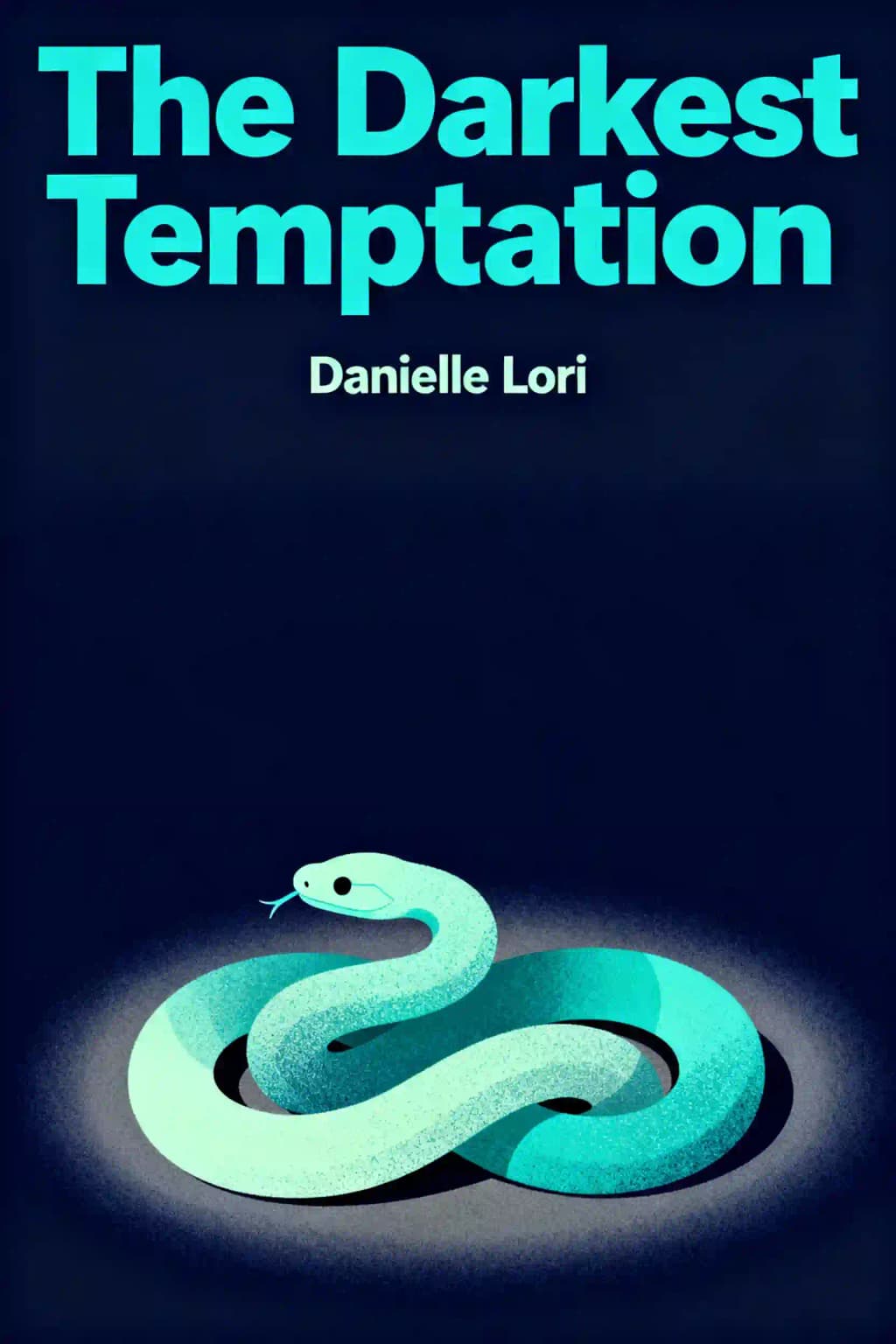
The Darkest Temptation has become a cultural phenomenon in the dark romance genre, captivating readers with its exploration of forbidden attraction and moral complexity. This New York Times bestseller has amassed a devoted following, with celebrities like Megan Fox and Kendall Jenner spotted carrying copies. What makes this book particularly fascinating is how it challenges conventional romance tropes by asking readers to empathize with morally ambiguous characters. As BookTok's most recommended dark romance of 2022, it sparked conversations about the psychology of attraction to dangerous personalities and the fine line between captivity narratives and genuine emotional connection. Let's dive into this complex tale of a young woman's journey into the heart of darkness and the unexpected love she finds there.
2장
The Captive and the Captor: A Dangerous Dance Begins
Mila Mikhailov arrives in Moscow clutching a worn photograph and a handful of cryptic letters - her only links to the mother she never knew. The bustling city's unfamiliar streets quickly turn threatening when she's cornered in a dimly lit alley by three men. Her rescue comes in the form of Ronan Sokolov, a towering figure whose elaborate tattoos hint at a criminal past. As owner of the upscale restaurant Volk, he projects both refinement and raw danger. Their first interaction crackles with electricity as he addresses her as "moy kotyonok" (my kitten), the endearment carrying an edge of possession that should frighten her but instead awakens something deep within. Despite her instincts screaming caution, Mila finds herself mesmerized by this man whose green eyes hold volumes of unspoken stories.
Their relationship evolves into an intricate dance of attraction and power. During a tense car ride through Moscow's rain-slicked streets, they engage in a heated debate that reveals their fundamentally opposed worldviews. Ronan's perspective has been shaped by Moscow's criminal underworld - he sees life as a brutal game where trust equals weakness. Mila, raised in the warmth of her father's bookshop in London, staunchly defends her belief in human goodness. "Your soft heart makes you vulnerable," he warns, tracing her cheek with calloused fingers. "Not everyone deserves your trust, kotyonok." She counters that without trust, life loses its meaning - a response that visibly unsettles him.
The mounting tension between them explodes in an unexpected encounter in a hotel hallway. Caught between the wall and his powerful frame, Mila experiences her first kiss - a fact that transforms Ronan's initial amusement into fierce possession. His expertise contrasts sharply with her innocence as she clutches his shoulders, desperate for more contact. The power dynamic shifts constantly: while Ronan maintains physical control, Mila's genuine responses clearly affect him deeply, creating cracks in his carefully maintained facade.
What elevates this dynamic beyond typical captive-captor tropes is Mila's active participation in their dangerous attraction. Though aware of Ronan's connections to Moscow's criminal element, she consciously chooses to pursue their connection. Her decisions aren't made from naivety but from a complex mixture of attraction, curiosity, and determination to uncover her mother's secrets - secrets she suspects Ronan might know. This agency within constraint creates a fascinating psychological dance, as both characters navigate their growing attachment while harboring their own hidden agendas. Their relationship challenges conventional power dynamics, suggesting that true vulnerability - even in the most dangerous circumstances - can be a form of strength.
3장
Revelations and Betrayals: The Truth Behind the Mask
The relationship takes a devastating turn when Mila discovers Ronan's true identity. After witnessing him torture a man in his basement - methodically breaking fingers while maintaining an eerily calm demeanor - she learns he is "D'yavol," the devil, a notorious Russian mafia boss whose reputation for brutality extends throughout Eastern Europe. The betrayal cuts deeper than mere deception; every tender moment they shared becomes tainted with doubt. Ronan has been meticulously orchestrating their relationship, recording their intimate encounters and collecting evidence to use as leverage against her father. Each kiss, each vulnerable confession, had been calculated moves in his elaborate game of revenge.
Held captive in Ronan's opulent mansion - a prison of marble and gold - Mila is forced to confront uncomfortable truths about her family. Her father, Alexei Mikhailov, isn't the loving businessman who attended her dance recitals and nursed her through childhood illnesses, but a high-ranking Russian mafia member with decades of violence in his wake. The revelation comes in pieces: photographs of brutal crimes, ledgers detailing illegal operations, and whispered conversations through mansion walls. More disturbingly, long-suppressed memories begin surfacing - particularly of a rain-soaked night when she was seven, watching through banister rails as her father murdered a blonde woman in their family room. The victim's pearl necklace had scattered across the hardwood floor, and Mila now realizes with horror that the woman was likely her mother.
These revelations trigger a profound identity crisis for Mila. "I realize love is a greedy monster without morals," she reflects during a particularly dark moment, understanding how her blind loyalty to her father led her to ignore warning signs and compromise her own moral compass. Her carefully constructed self-image - the kind-hearted ballet teacher who rescues stray cats and volunteers at homeless shelters - crumbles under the weight of her heritage. She questions whether her inherent goodness was ever real or merely a shield against her family's darkness.
The psychological impact of these betrayals is portrayed with remarkable nuance. Mila's feelings toward Ronan become a complex web of contradictions - burning rage at his calculated manipulation, visceral fear when she witnesses his capacity for violence, yet still an undeniable physical and emotional attraction that she can't fully extinguish. During their confrontations, her body betrays her mind, responding to his touch even as she recoils from his cruelty. This emotional complexity reflects the human tendency to seek connection even in traumatic circumstances - a psychological phenomenon similar to Stockholm syndrome but depicted with greater depth and agency through Mila's self-awareness and internal struggles.
Through these revelations, the narrative explores how our identities are shaped by the stories we tell ourselves, and how discovering the truth - however painful - can be the first step toward authentic self-understanding. Mila's journey becomes a meditation on the nature of truth and deception, questioning whether ignorance truly equals innocence, and if knowing the darkness in our past inevitably shapes who we become.
4장
The Psychology of Power and Vulnerability
The power dynamic between Mila and Ronan forms the psychological core of their relationship. Initially, the imbalance seems absolute-he is the captor, she the captive. Yet as their story unfolds, this dynamic reveals surprising complexities and reversals.
Despite being physically imprisoned, Mila discovers unexpected power in her vulnerability. When Ronan threatens to kill Khaos, the German shepherd who bit her, she throws herself between them, barefoot in the snow. "You don't throw things away just because they hurt you!" she cries. This moment of raw emotional honesty affects Ronan deeply, creating the first crack in his hardened exterior.
Similarly, when Mila discovers Ronan's childhood trauma-nearly drowning after his drug-addicted mother drove their car into the Moskva River-she sees beyond his monstrous facade to the wounded boy beneath. This understanding gives her emotional leverage that physical strength never could.
Ronan, despite his apparent power, gradually reveals his own vulnerabilities. His obsession with Mila grows beyond his control, threatening his position with his men and his plans for revenge. "Am I that easy to leave?" he asks her in a rare moment of insecurity, revealing how her potential departure affects him more than he wants to admit.
This psychological exploration extends to questions of moral identity. Mila must reconcile her self-image as a good person with her attraction to a violent criminal. Meanwhile, Ronan struggles with unfamiliar emotions that challenge his identity as the unfeeling "devil" of Moscow. Their relationship becomes a mirror reflecting their true selves back to them, forcing both to confront aspects of their personalities they've denied or hidden.
What emerges is a nuanced examination of how power operates in relationships-not just through physical control, but through emotional vulnerability, knowledge, and the courage to be authentic even when it costs us something.
5장
The Transformative Power of Desire
Physical desire serves as both a catalyst and a mirror for deeper emotional transformation in this story. The sexual tension between Mila and Ronan isn't merely physical attraction but a manifestation of their psychological connection - a complex interweaving of fear, fascination, and an almost magnetic pull that neither can fully resist or understand.
When Mila first experiences sexual pleasure with Ronan, it represents more than physical satisfaction - it's an awakening to parts of herself she never knew existed. Her inexperience contrasts with his expertise, yet she discovers her own power in vulnerability. The dynamic between them shifts with each encounter, from her initial trepidation to growing confidence. During one particularly charged encounter, Ronan challenges her to count down from thirty seconds, confident he can make her orgasm before she reaches zero. She barely makes it to fifteen seconds, revealing how completely he understands her body. This moment becomes symbolic of their larger relationship - his absolute certainty matched against her struggle for control.
Yet these intimate moments also expose Ronan's unexpected tenderness. Despite his violent nature and reputation for brutality, he shows surprising consideration for her pleasure and comfort. When he discovers she's a virgin, he initially stops, declaring he "doesn't fuck virgins." This moment of restraint contradicts his monstrous image, suggesting deeper complexity to his character. His careful attention to her responses, the way his hands gentle when touching her despite their capability for violence, reveals layers of complexity beneath his hardened exterior.
Their physical relationship evolves alongside their emotional one, moving through distinct phases that mirror their growing connection. Early encounters are marked by power struggles and Ronan's control, but gradually shift toward mutual vulnerability. The progression from purely physical attraction to something deeper is evident in small moments - the way his breathing changes when she touches him, how he watches her face during intimate moments, the increasing frequency with which he needs to be near her. After one particularly intense experience, Ronan whispers in Russian, "Sometimes it hurts to look at you" - revealing how her beauty affects him on an almost painful level, suggesting that his feelings for her have become both salvation and torment.
What makes this exploration of desire particularly compelling is how it serves as a language between two people who struggle to communicate their emotions directly. Through physical intimacy, they express feelings they cannot yet name, creating a bridge between their separate worlds. Their bodies speak truths their words cannot - in the way Mila's hands shake when she touches him, in how Ronan's control slips only when they're together, in the increasing tenderness of their post-intimate moments. This transformation through desire challenges both characters to recognize parts of themselves they've denied - Mila's capacity for darkness and passion, Ronan's ability to care and protect, and their shared need for connection despite the dangers it presents.
The evolution of their physical relationship becomes a metaphor for their broader journey from antagonists to lovers, each intimate encounter peeling away layers of pretense and revealing their true selves to each other. Their desire becomes both the catalyst for change and the measure of their transformation, proving that sometimes the body's wisdom precedes the mind's understanding.
6장
The Moral Complexity of Forgiveness and Redemption
As the relationship between Mila and Ronan deepens, questions of forgiveness and redemption move to the forefront. Can someone who has committed terrible acts be worthy of love? Can the victim of those acts offer forgiveness without losing themselves?
Mila's journey toward forgiving Ronan isn't portrayed as simple or immediate. She struggles with the reality of who he is-a man who tortures others, who kidnapped her, who planned to kill her father. Yet she also sees his humanity-his protection of her from others, his unexpected gentleness, his childhood trauma that shaped him.
When she ultimately chooses to save Ronan's life by pushing him away from her father's bullet, taking the shot herself, it represents not just forgiveness but a profound recognition of his worth despite his sins. "You don't get to die for me," he tells her afterward, revealing how her sacrifice has affected him.
Ronan's path to redemption is equally complex. He doesn't suddenly become a good man, nor does the narrative suggest he should be absolved of his crimes. Instead, his love for Mila creates space for growth without erasing his past. When he finally proposes to her months later, he offers her freedom rather than captivity-"not as his captive, but as his wife."
This nuanced approach to moral complexity avoids both easy condemnation and unearned redemption. It acknowledges that people can change while still being accountable for their actions. By exploring forgiveness without minimizing harm, the story presents a more mature vision of love-one that sees the whole person, flaws and all, without excusing their worst behaviors.
The moral questions raised extend beyond the central relationship to broader themes of justice, vengeance, and whether some actions place someone beyond redemption-questions that remain partially unresolved, inviting readers to form their own conclusions.
7장
Family Legacies and Generational Trauma
Family plays a crucial role in shaping both protagonists, with generational trauma forming the backdrop of their story. Mila discovers her father isn't just a businessman but a Russian mafia member with blood on his hands-including possibly her mother's. This revelation forces her to reconsider her entire childhood and identity.
A particularly powerful memory surfaces: five-year-old Mila witnessing her father killing a blonde woman, seeing "red paint" leaking under the library door and ruining her stuffed bunny. This childhood trauma, buried but not forgotten, represents how violence leaves lasting marks across generations.
Ronan's family background is equally shaped by trauma. Raised by a drug-addicted mother who tried to drown him in the Moskva River when he was a child, he learned early that survival required ruthlessness. A flashback shows eight-year-old Ronan returning to their squalid apartment, finding his mother passed out and flushing her drugs down the toilet, already taking responsibility beyond his years.
The contrast between their families creates an ironic connection-both were shaped by parents who failed them, though in different ways. Mila's father provided material comfort while hiding his violent nature; Ronan's mother offered neither protection nor stability, forcing him to become the "devil" to survive.
This exploration of family legacy extends to questions about breaking cycles of trauma. When Mila meets her grandmother Estelle in Paris, she learns her mother Tatianna "lacked something inside her" and "couldn't love normally." This raises the unspoken question: Will Mila inherit this inability to love? Will Ronan perpetuate the violence he experienced?
Their relationship, for all its darkness, represents a potential break in these generational patterns-a chance to build something new from the broken pieces of their pasts. By acknowledging rather than denying their family legacies, they gain the possibility of transcending them.
8장
Cultural Identity and Displacement
The Moscow setting provides more than exotic backdrop - it becomes integral to the characters' identities and conflicts. For Mila, Moscow represents both heritage and mystery. As an American with Russian roots, she arrives seeking connection to her mother's past, experiencing what the narrative describes as "fernweh" - an ache for a distant place one has never been. This yearning manifests in small moments: her fingers trailing along Soviet-era building facades, her fascination with the ornate metro stations, and her careful collection of family stories from locals who knew her mother.
Her outsider status is constantly emphasized through both subtle and overt encounters. She doesn't speak Russian, stumbling over basic phrases and relying on translation apps. She struggles with cultural norms - from the proper way to drink tea to navigating the complex social hierarchies of Moscow's elite circles. She finds herself literally and figuratively lost in this unfamiliar landscape, where even simple tasks like grocery shopping become adventures in cultural navigation. Yet something about Moscow calls to her, suggesting an inherited connection to a place she's never known, manifesting in unexpected moments of recognition and deja vu.
Ronan, in contrast, embodies Moscow's darker aspects with an authenticity born of experience. He represents the post-Soviet underworld, having risen from poverty in the turbulent 1990s to become one of the city's most powerful figures. "I own Moscow and everything in it," he declares, his identity inseparable from the city he controls. His character reflects Moscow's contradictions: brutal yet sophisticated, modern yet deeply traditional, Western-facing yet distinctly Russian.
Their relationship becomes a complex cultural negotiation as well as a personal one. Ronan frequently speaks Russian to Mila, sometimes translating, sometimes not - creating linguistic power dynamics that mirror their relationship. When he calls her "kotyonok" (kitten), it's both endearment and reminder of her vulnerability in his world. Their interactions are layered with cultural misunderstandings and discoveries, from their different approaches to family obligations to their contrasting views on privacy and personal space.
The narrative explores how displacement affects identity through multiple lenses. Mila's American upbringing clashes with her Russian heritage, creating internal conflict about where she truly belongs. She struggles with simple things like proper table etiquette at formal dinners and complex issues like reconciling American individualism with Russian collective mindsets. When she eventually chooses to return to Russia with Ronan, it represents embracing a part of herself she's only beginning to understand - a decision that comes with both gains and losses.
This theme culminates in Paris, where Ronan takes Mila to meet her grandmother Estelle before their wedding. This neutral ground - neither Russia nor America - becomes the place where they commit to each other, suggesting they're creating their own cultural identity together, one that transcends national boundaries while acknowledging their roots. In the City of Light, they find a metaphorical space where their different worlds can coexist, where American pragmatism meets Russian passion, and where past and present intertwine to create something entirely new.
9장
Finding Light in Darkness: The Journey to Self-Discovery
At its heart, this story is about two people discovering their authentic selves through their connection to each other. Mila begins as someone defined by external expectations-valedictorian, cheer captain, volunteer-with her goodness serving as her identity. Through her experiences with Ronan, she discovers her capacity for darkness, passion, and moral complexity.
"I realize the darkness within myself that longs for the devil," she acknowledges after kissing Ivan but feeling nothing compared to her desire for Ronan. This self-awareness doesn't diminish her goodness but makes it more authentic-chosen rather than prescribed.
Similarly, Ronan's journey involves recognizing his capacity for tenderness and love despite his violent nature. When he finally admits his feelings, telling his brother, "If this was what they called 'love,' then I'd own it. I never did anything half-ass," it represents acceptance of vulnerability he's long denied.
Their self-discovery culminates in mutual choice rather than captivity. When Ronan proposes four months after letting Mila go, he offers her conditions-freedom to watch TV, continue her modeling career, no involvement with her father. This respect for her autonomy represents his growth.
The symbolism of Mila's raven tattoo on her ring finger instead of a traditional wedding ring captures their unconventional journey perfectly. In literature, ravens often represent death and darkness, but also wisdom and transformation. By choosing this permanent mark over a removable ring, Mila acknowledges that her journey through darkness has fundamentally changed her-not by destroying her light but by making it more authentic.
Their final exchange in Russian and French-languages neither grew up speaking-symbolizes how they've created a new language of understanding between them. Mila realizes Ronan isn't her "Nevermore" but her forever, suggesting that embracing our complete selves-light and darkness-is the only path to genuine love and self-acceptance.
10장
The Duality of Human Nature: Beyond Good and Evil
The Darkest Temptation ultimately challenges binary thinking about good and evil, presenting characters who contain both light and darkness. This moral complexity extends beyond the main characters to everyone in their world.
Mila's father Alexei, initially presented as loving, is revealed to be involved in human trafficking and murder. Yet he genuinely loves his daughter and sacrifices himself to protect her. Ronan's brother Christian initially appears cold when he discovers Mila tied naked to the bed, dismissing her as "a Mikhailov," yet he's also a loving father to his daughter Kat.
Even minor characters embody this duality. Yulia, Ronan's housekeeper who quotes scripture about "burning whores," once fed him as a child and later butchered her abusive husband. The serving girl who poisons Mila does so because of her abusive father, leading to an unexpected moment of connection when Mila later helps her fold laundry.
This refusal to categorize people as simply good or evil creates a richer, more honest portrayal of human nature. When Mila reflects that her papa was "a good father but not a good man," she acknowledges this complexity without excusing his actions.
The narrative suggests that acknowledging our capacity for both cruelty and kindness is essential for authentic connection. Only when Mila and Ronan accept each other's full selves-virtues and flaws alike-can they build something genuine together.
This perspective offers a more nuanced alternative to traditional morality tales. Rather than suggesting redemption comes from rejecting our darkness, it proposes that integration-acknowledging all aspects of ourselves and others-leads to more honest relationships and self-understanding.
In the end, the darkest temptation isn't just the pull toward forbidden desire, but the temptation to see ourselves and others in simplistic terms. By resisting this urge and embracing complexity, the characters find not just love but a more authentic way of being in the world-one that acknowledges the devil and the angel that exist within us all.