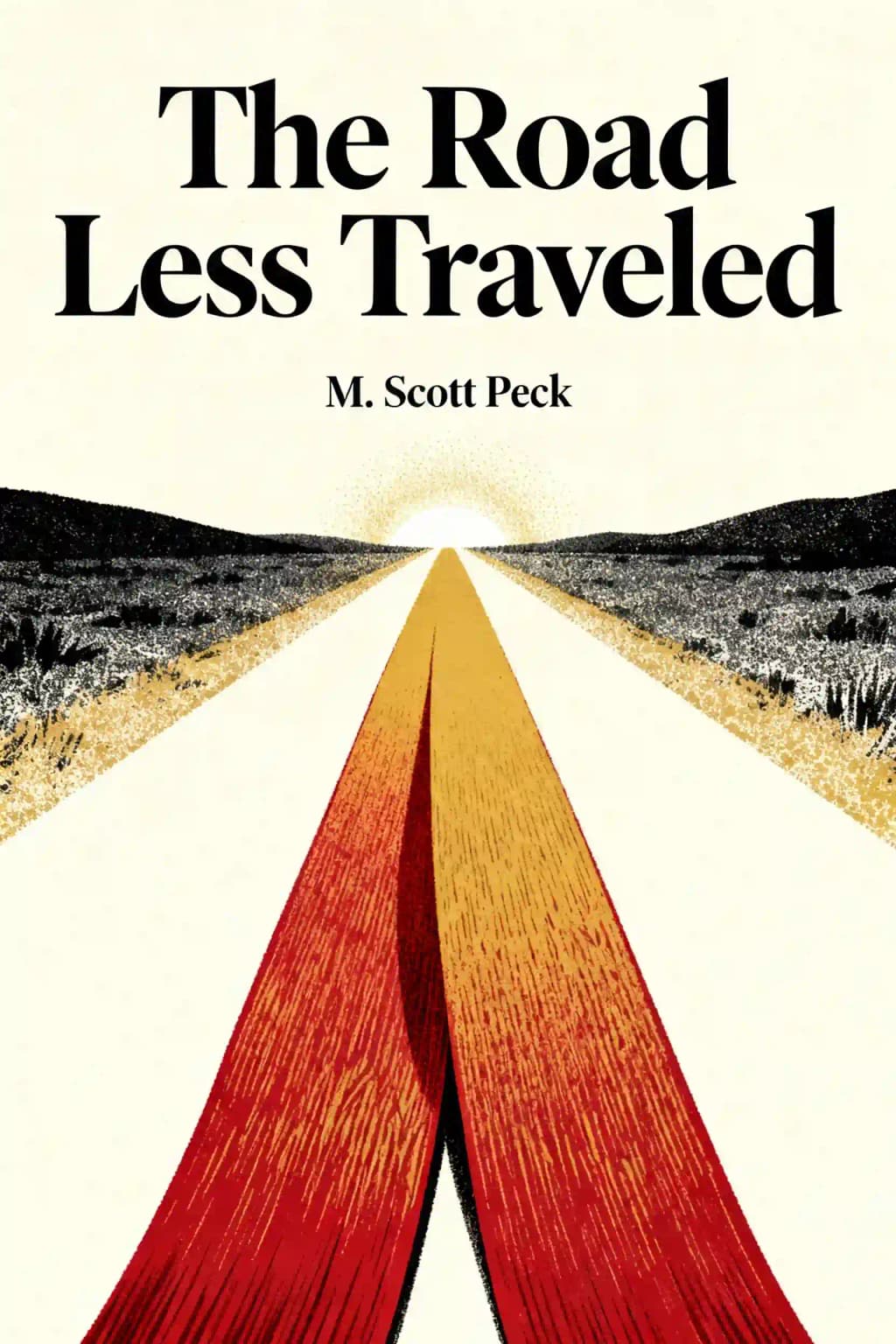
"The Road Less Traveled" challenges us to embrace life's difficulties through discipline, love, and spiritual growth. A 10-million-copy phenomenon that spent over 10 years on the NYT bestseller list, it's the rare self-help book entrepreneurs like Derek Sivers still passionately recommend decades later.
M. Scott Peck (1936–2005) was an American psychiatrist and bestselling author of The Road Less Traveled, a seminal work in self-help and spiritual psychology that blends clinical insights with themes of discipline, love, and spiritual growth.
A Harvard-educated psychiatrist and former Army Medical Center chief, Peck drew from decades of private practice to explore the intersection of mental health and morality. His groundbreaking follow-up, People of the Lie, established him as a pioneering voice in understanding human evil, while The Different Drum expanded his focus to community-building and peacemaking.
Peck co-founded the Foundation for Community Encouragement, reflecting his lifelong commitment to fostering interpersonal healing. A controversial yet influential figure, he integrated Christian philosophy with psychiatric practice after his 1980 baptism. The Road Less Traveled remains a cultural touchstone, selling over 10 million copies in North America alone and translated into more than 20 languages.
The Road Less Traveled examines personal growth through disciplined problem-solving, spiritual exploration, and redefining love as an action rather than a feeling. Peck argues that embracing life’s inevitable suffering—rather than avoiding it—leads to psychological maturity and fulfillment. Key themes include delayed gratification, accountability, and integrating scientific and religious perspectives to build resilience.
This book suits individuals seeking deeper self-awareness, improved relationships, or strategies to navigate life’s challenges. It resonates with readers interested in psychology, spirituality, or self-help frameworks that blend clinical insights with philosophical inquiry.
Yes—it remains a foundational text in personal development, having sold over 10 million copies. Its timeless exploration of discipline, responsibility, and spiritual growth offers actionable insights for managing stress, anxiety, and existential crises.
Peck describes love as “the will to extend oneself to nurture another’s spiritual growth.” This contrasts with romanticized notions, emphasizing intentional effort, sacrifice, and commitment over passive feelings.
This statement sets the book’s core thesis: Accepting life’s inherent struggles—rather than resenting them—allows individuals to develop resilience. Peck parallels Buddhist teachings, framing suffering as a catalyst for growth when approached with courage.
Peck advocates for a flexible, individualized spirituality that synthesizes scientific inquiry and religious traditions. He critiques rigid dogma while encouraging readers to cultivate their own “worldview” through introspection and learning.
Some critics argue Peck oversimplifies mental health issues or leans too heavily on Christian theology. Others note his examples reflect 1970s-era cultural norms, which may feel dated regarding gender roles or family dynamics.
Unlike quick-fix approaches, Peck emphasizes lifelong discipline and confronting pain. This contrasts with contemporary trends focusing on positivity or habit hacks, making it a rigorous alternative for readers seeking systemic change.
Peck uses case studies from his psychiatric practice to illustrate self-deception, avoidance patterns, and breakthroughs. He positions therapy as a tool for honest self-examination and breaking cycles of blame.
In later works like People of the Lie, Peck expands on his theory that evil stems from refusing to confront one’s flaws. He views malicious behavior as rooted in cowardice—attacking others to evade personal accountability.
Its focus on accountability, critical thinking, and emotional resilience aligns with modern mental health discourse. Readers grappling with anxiety, career stress, or relationship instability find practical frameworks for lasting change.
저자의 목소리로 책을 느껴보세요
지식을 흥미롭고 예시가 풍부한 인사이트로 전환
핵심 아이디어를 빠르게 캡처하여 신속하게 학습
재미있고 매력적인 방식으로 책을 즐기세요
Discipline provides the tools to solve life's problems.
Taking responsibility may be painful, but it's essential.
The world constantly changes, and so must our perspectives.
Balancing requires navigating between conflicting needs.
The ROAD LESS TRAVELED FLEXIBIND의 핵심 아이디어를 이해하기 쉬운 포인트로 분해하여 혁신적인 팀이 어떻게 창조하고, 협력하고, 성장하는지 이해합니다.
The ROAD LESS TRAVELED FLEXIBIND을 빠른 기억 단서로 압축하여 솔직함, 팀워크, 창의적 회복력의 핵심 원칙을 강조합니다.

생생한 스토리텔링을 통해 The ROAD LESS TRAVELED FLEXIBIND을 경험하고, 혁신 교훈을 기억에 남고 적용할 수 있는 순간으로 바꿉니다.
무엇이든 물어보고, 목소리를 선택하고, 진정으로 공감되는 인사이트를 함께 만들어보세요.

샌프란시스코에서 컬럼비아 대학교 동문들이 만들었습니다
"Instead of endless scrolling, I just hit play on BeFreed. It saves me so much time."
"I never knew where to start with nonfiction—BeFreed’s book lists turned into podcasts gave me a clear path."
"Perfect balance between learning and entertainment. Finished ‘Thinking, Fast and Slow’ on my commute this week."
"Crazy how much I learned while walking the dog. BeFreed = small habits → big gains."
"Reading used to feel like a chore. Now it’s just part of my lifestyle."
"Feels effortless compared to reading. I’ve finished 6 books this month already."
"BeFreed turned my guilty doomscrolling into something that feels productive and inspiring."
"BeFreed turned my commute into learning time. 20-min podcasts are perfect for finishing books I never had time for."
"BeFreed replaced my podcast queue. Imagine Spotify for books — that’s it. 🙌"
"It is great for me to learn something from the book without reading it."
"The themed book list podcasts help me connect ideas across authors—like a guided audio journey."
"Makes me feel smarter every time before going to work"
샌프란시스코에서 컬럼비아 대학교 동문들이 만들었습니다

The ROAD LESS TRAVELED FLEXIBIND 요약을 무료 PDF 또는 EPUB으로 받으세요. 인쇄하거나 오프라인에서 언제든 읽을 수 있습니다.
Life is difficult. This simple truth, once accepted, transforms everything. Most of us waste our lives trying to avoid this reality, seeking shortcuts around pain and discomfort. But what if these difficulties aren't obstacles to happiness but the very path to it? When we avoid problems, we invite mental illness; when we face them, we cultivate courage and wisdom. Haven't your most significant periods of growth followed your greatest challenges? The foundation of facing life's difficulties is discipline-specifically, delaying gratification. Remember the famous marshmallow experiment? Children who could resist eating one marshmallow to get two later showed better outcomes throughout their lives. This capacity develops primarily through quality parenting that balances love with consistent discipline. When parents model self-discipline and provide discipline from love rather than anger, children internalize proper behavioral norms and develop trust in the world's safety. Why do so many adults struggle with self-discipline? Often because they never developed the ability to delay gratification. When we rush through problems or assume they'll resolve themselves, we miss opportunities for growth. Consider how often you've made a situation worse by seeking the quickest solution rather than taking time to understand the real issue. The path to growth isn't about speed-it's about patience and persistence in facing what's difficult.